The Importance of Nature Play & Family Adventures
August 3, 2018 · Blog
Nature Play and Family Adventure are more important than ever
Even here in Colorado, children (and adults) are spending more time indoors and on screens than ever before.
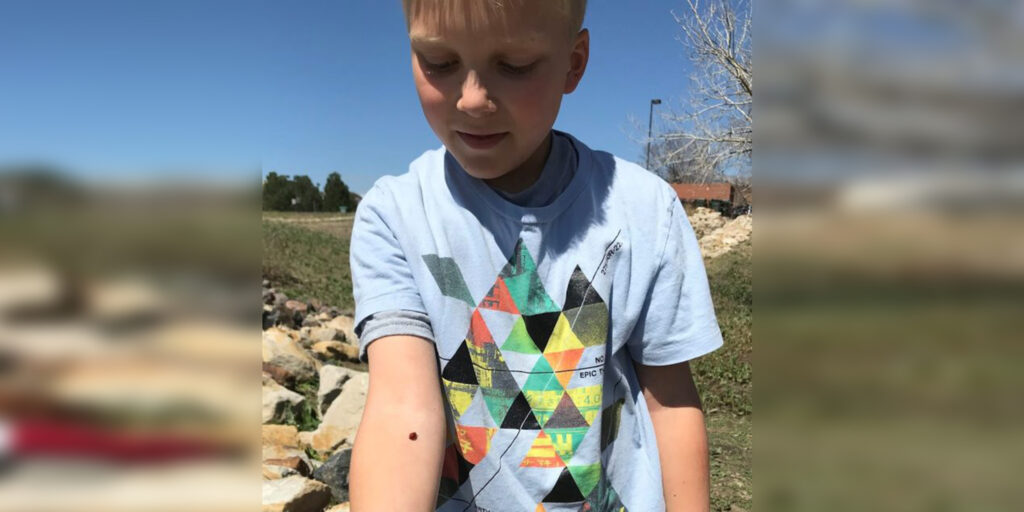
Look under that rock! It’s an earthworm! I wonder how they squirm like that… I wonder if I could wiggle like that! Let’s see how far we can wiggle like worms across the lawn!
Here at Butterfly Pavilion, we know that engaging children and families in outdoor nature play is vital to creating passion and inspiring nature conservation.
Over the past decade, focused research around nature play and time spent in nature has dramatically increased. We know that even here in Colorado, children (and adults) are spending more time indoors and on screens than ever before.
Did you know that on average, young children can identify over 1000 corporate logos but less than 25 plant species? (Armitage, 2007). How many do you know? Take the quiz from Next Nature at the bottom of this article to see how many you can get!
Collectively, scientific research shows that social, psychological, academic and physical health is positively impacted when they have daily contact with nature.
Just some of the many positive benefits of nature play include:
- Supports intellectual, emotional, social, and physical development
- Supports creativity and problem solving
- Improves academic performance
- Improves nutrition and physical health
- Reduces stress & symptoms of Attention Deficit Disorder
- Improves self-discipline
- Improves social relations
Children & Nature Network: CLICK HERE FOR THE FULL LIST
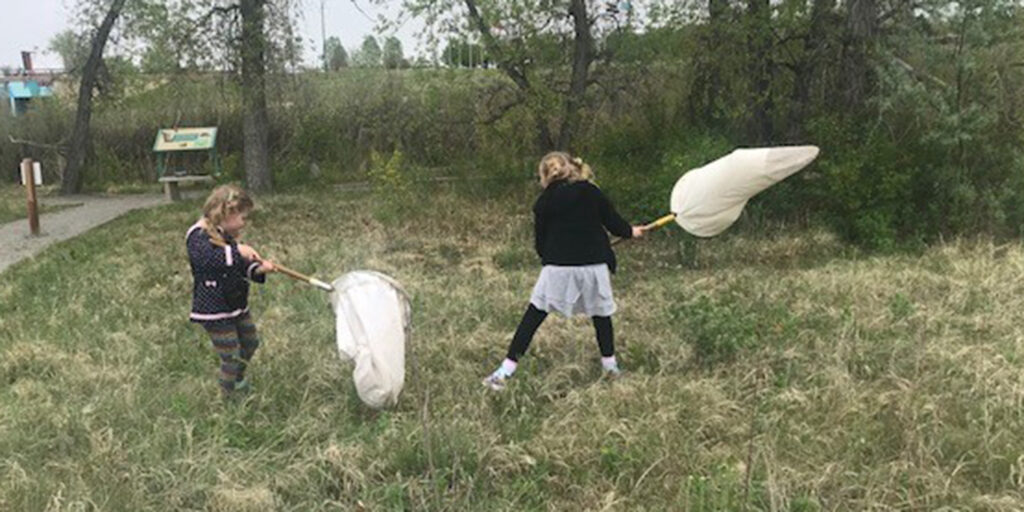
Additionally, research on intergenerational programming has found that the elderly, young adults and children surveyed in several programs reported increased feelings of well-being and life-satisfaction as a result of their involvement.
Since families are our key audience here at Butterfly Pavilion, we want to provide fun opportunities that meet YOUR needs! Plus – we’ve figured out the formula for the best family program. Want to know what it is?
Expert environmental educators + Amazing animals + Fantastic gardens and trails + Passionate participants = The Best Family Nature Experience Ever!
On Sunday, April 22 we held our first ever Party for the Planet Earth Day Family Cleanup! Participants ages 6 months through 75 years old came together to clean up litter in Big Dry Creek after a really windy week, and weed out Curly Dock from our open space. We replaced the weeds with native milkweed and ended with snacks, fun games and seed paper gifts made by Butterfly Pavilion volunteers! Thanks to Amy Yarger, Horticulture Director, for leading such an awesome family event.
In May, our Butterfly Pavilion Nature Nerds Family Club had a Bird and Bug Hike led by Zac Smith (Interpretation Lead) and Joe Barry (Horticulture) where we hiked to find the birds and bugs in our backyards and made solitary bee homes and backyard birdfeeders. In June we explored aquatic invertebrates in Big Dry Creek with Alex Gray! What a blast!
This summer, we have held Zoo Snooze overnight adventures for families, and held our first grandparent and grandkid intergenerational campthis summer!
Moral of our story? Get outside and mess around! Get dirty, get curious, and don’t be afraid to play (I’m looking at you, “adults”). Nature play is good for people of all ages and Butterfly Pavilion wants to help your family make their experience as fun, beneficial and connected as possible.
“My son LOVED his Zookeeper camp – especially having his own hissing cockroach to take care of for the week! He hasn’t stopped talking about it! So thanks to everyone there for running such an engaging program – the counselors were great!”
Sources Cited and Recommended Books/Articles to Check out!
Leafs and Logos Quiz: Take this quiz from Next Nature – how many can you get?
Armitage, K. C. (2007). “The Child Is Born a Naturalist”: Nature Study, Woodcraft Indians, and the Theory of Recapitulation. The Journal of the Gilded Age and Progressive Era, 6(1), 43-70.
Children and Nature Network (www. childrenandnature.org/research/), Annotated Bibliographies of Research and Studies, Volumes 1 and 2 (2007).
Recommended Reading: Richard Louv, Last Child in the Woods