
What’s the deal with Miller moths this time of year?
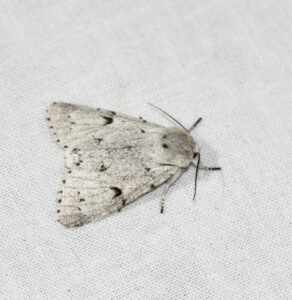
As the weather warms and spring descends on Colorado, Front Range cities and towns are beginning to witness the migration of Miller moths. These winged creatures are embarking on a journey from now through early June, flying from the plains to the mountains, and often catching the attention of Coloradans in the process. The migration of Miller moths begins on Colorado’s high plains, where adult moths lay their eggs underground. These eggs hatch in early spring, giving rise to army cutworm caterpillars (Euxoa auxiliaris) about the size of a grain of sand. These tiny creatures feed on vegetation, cutting through stalks of wheat and corn, and rapidly growing to about the size of a child’s forefinger. Then they turn into moths with wings, commonly called “Miller moths” due to their fine scales that rub off, resembling the dusty flour on millers’ clothing. During their migration, these resilient insects are capable of flying over 100 miles from the plains to the mountain ranges. Despite their large numbers and occasional presence in our homes, Miller moths pose no threat to humans or to our pets. They do not carry diseases, sting, or bite. In fact, their presence attracts animals that rely on them for food, like birds, who we often like to see in our backyards. Colorado is home to about 1000 known species of moths. However, compared to their more charismatic butterfly cousins, moths remain heavily understudied. Moths are not pests, but fill a vital role in our ecosystem, serving as a food source for birds, bats, spiders, and even bears. Additionally, moths function as pollinators, facilitating the reproduction of plants, which we require to sustain our economy, environment, and food systems.
As moths are nocturnal, they pollinate plants that daytime pollinators, such as bees, cannot, or cannot do nearly as efficiently. Moths are responsible for propagating crops worldwide, worth billions of dollars.
We can help these important animals and keep them away from our spaces by being mindful of our use of artificial light. Moths are nocturnal creatures; they rely on light from the moon and stars for navigation. When they see artificial lights such as a porch lamp, they become lost and confused and attempt to use it as a navigational source, thinking it is the moon or another celestial object. By reducing unnecessary lighting, we can help our invertebrate neighbors, including not only moths, but other nocturnal animals, such as Colorado fireflies, in maintaining their natural behaviors. It is important to view moths, with compassion, recognizing the vital role they play in our ecosystem. As Miller moths flutter through Colorado this year, try to approach them with curiosity and acknowledge their importance in maintaining our natural world. By valuing these creatures and implementing small changes, such as reducing unnecessary outdoor lighting, we can coexist. By educating ourselves and attempting to understand and protect these often-overlooked creatures, we contribute to the preservation of our environment.
As with all invertebrates, moths are understudied, underappreciated and misunderstood.
Butterfly Pavilion is a leader in pollinator protection and conservation, including creating pollinator habitat, conducting research, leading conservation programs and community science volunteer opportunities.
Learn more about invertebrates and pollinators at butterflies.org
Invertebrates play a critical role in maintaining the balance of our environment and supporting the growth of many crops. One group of invertebrates that is mainly affected by the decline is pollinators, including bees, butterflies, and other insects that help transfer pollen from plant to plant. Therefore, protecting pollinators and all invertebrates that play an essential role in the ecosystem has become even more important.
“With declines in global insect populations, protecting pollinators, and all invertebrates, animals without backbones, is even more critical today. Now it is our turn to help them, so they can continue to help us,” said Amy Yarger, Horticulture Director at Butterfly Pavilion.
Read the full article in Broomfield Lifestyle Magazine’s cover story and get some ideas about how you can help pollinators!
See the full article >>
Happy Valentine’s Day! To celebrate the season of love, let’s learn how Rosie and other tarantulas mate!
The mating process of these tarantulas can be very tricky as the female may try and eat the male if she gets caught hungry or in a bad mood. Males will begin the process by drumming their front leg-looking appendages (pedipalps) on the ground, which makes vibrations to communicate to the female that he is neither a meal nor a predator, that he is here “knocking” on the doors of love, specifically for reproduction.
If the female is also feeling frisky and accepts, the male will spin a “bundle of love” consisting of a hammock of silk containing a drop of sperm, also known as a sperm web. Mating for most tarantulas takes place in an upright position, which can be very dangerous due to the proximity of their fangs. The male protects himself using special spurs (hooklike structures) to hold the female’s fangs back and insets the sperm web into the female.
If the mating is successful and the eggs are fertilized the female will produce an egg sack within the following week. These egg sacks may contain as many as 500 cute baby spiderlings, or as we call them “eggs with legs”! The caring tarantula mom female will fiercely defend in their burrow until hatching.
Did you know that Butterfly Pavilion has its own breeding program? These tarantulas are safely bred by our conservationists as part of our SWARM program. A SWARM (Safety Web for Arthropod Reproduction and Management) is an AZA program that manages the breeding of invertebrates under human care, which is a more sustainable alternative to taking them from the wild.
We hope you learned something new, and happy Valentine’s Day to all of our guests, members, donors, and supporters!
Butterfly Pavilion’s Statement on Honey Bee Vaccine and Pollinator Habitat
The United States Department of Agriculture recently approved a conditional vaccine license for the first vaccine developed for honey bees. This is the first vaccine approved for any insect species in the United States. Although the vaccine will only be available for purchase to commercial beekeepers at first, the development of a vaccine for honey bees is a major breakthrough for beekeeping and the protection of bees worldwide. Butterfly Pavilion supports the introduction of this honey bee vaccine. This vaccine will help prevent the spread of American foul brood. American foul brood is a disease caused by the bacterium Paenibacillus larvae. This disease is spread through spores and while it does not harm adult honey bees, it is deadly to larvae (which are the immature bees that have hatched from their eggs, but have not yet transformed into fully developed adults). With no current treatment for this fatal disease, beekeepers must burn the entire infected colony, including the hive equipment, to avoid spreading the spores to other hives in their own apiaries or to other beekeepers’ bees foraging within the same 3-6 mile radius of the infected colony. According to the vaccine developer, the vaccine works by ingeniously incorporating killed Paenibacillus larvae bacteria into queen food consumed by worker bees. Worker bees then mix the vaccine into royal jelly which they feed the queen. Fragments of the vaccine move to the queen’s ovaries, exposing her eggs to the vaccine and providing immunity to future larvae. While this vaccine is a positive step toward developing vaccines for invertebrates and a big win for agriculture, it is not the ultimate solution for honey bee population declines nor for agriculture as a whole. The western honey bee (Apis mellifera) was introduced to North America in the 1620s and has become an essential asset to agriculture in the United States, as managed honey bee colonies pollinate many of our crops. Because honey bees provide significant agricultural production, the vaccine is valuable for protecting honey bees and maintaining crop pollination. However, there is more to the story. Honey bees, and our native pollinators, are currently impacted by four major threats: pesticides, pests, pathogens, and poor nutrition. While just one of these threats alone may not always prove fatal to a honey bee colony, studies have found that when bees are exposed to these threats together, they can synergistically affect the functions of honey bees’ immune and nervous systems, causing colony losses. While this vaccine aids in one of these four threats (pathogens), the other three threats must still be addressed to protect honey bees and our native bees, and other pollinators that are all in danger. Much of our crop production depends on honey bees, but with over ten viral, fungal, and bacterial diseases affecting honey bees in the United States, and many more infecting honey bees across the world, this puts us in a vulnerable position. It is vital that we realize the power of our native pollinators, which are more efficient pollinators than honey bees for many plant species. We must protect our valuable native pollinators to protect and bolster our food systems and to reduce our dependence on honey bees. By rewilding landscapes, using pollinator-friendly pest management, and supporting land conservation and habitat restoration, we can support healthy populations of both our beloved honey bees and wild pollinators. While this vaccine is a breakthrough in pollinator health, the most important steps towards long-term pollinator survival and protecting our food systems are to embrace our glorious diversity of pollinators and commit to increasing natural pollinator habitat and sustainable practices. In fact, honey bees are ill suited for pollinating thousands of types of flowering plants. Butterfly Pavilion is leading the way in supporting pollinators through initiatives such as working with industry partners to restore Colorado’s natural pollinator habitat, working with businesses and cities to develop pollinator districts, leading habitat projects such as the Urban Prairies Project and Healthy Habitat Gardening Program, and educating the public about pollinators and their conservation needs. Through greater habitat development, protection, and reestablishment of habitat everywhere, the honey bee could then reemerge as one of a multitude of pollinator species and naturally alleviate a demand for so many honey bees or need for a vaccine.
By Shiran Hershcovich, Lepidopterist Manager
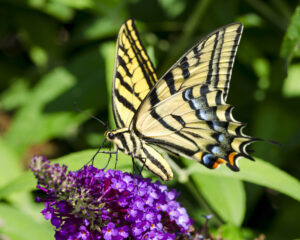
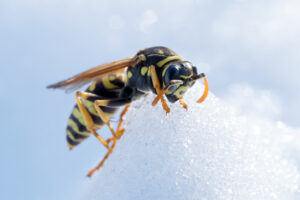
Invertebrates have some of the most impressive and unique survival strategies in the entire animal kingdom, which have allowed them to colonize some of the harshest habitats on Earth. You can find invertebrates thriving anywhere from the depths of the ocean to the canopies of dense rainforests. And yes, you can even find them in the middle of winter! You just may have to look a little harder. Each year, snow blankets our Colorado backyards, and insects prepare for winter in a lot of different ways. In butterflies, you can find a whole range of impressive strategies for coping with cold temperatures and short daylength. Colorado’s state insect is the Colorado hairstreak butterfly (Hypaurotis crysalus). Before winter hits, adults will lay eggs on twigs of their host plant, the Gambel oak (Quercus gambelii). The butterflies will spend the cold months as eggs. In the spring, caterpillars will hatch from eggs and feed on oak leaves to fuel their growth and metamorphosis into the iconic metallic blue butterflies we love to see. Colorado swallowtails, like the spectacular two-tailed swallowtail (Papilio multicaudata) will spend the winter inside their chrysalis. Once warmer temperatures arrive, they will emerge as butterflies ready to forage for nectar in flowers and lay their eggs in the leaves and flowers of their host plants, which include cherries (Prunus sp.) and ashes (Fraxinus sp.). Black swallowtails (Papilio polyxenes) will rely on dill and other members of the carrot family (Apiaceae) as their hosts. Some butterflies can even overwinter as adults! The mourning cloak butterfly (Nymphalis antiopa) will find warm nooks and crannies to spend their winter in, like bark or leaf litter. On warmer winter days, they may even fly about! If you spot a medium-sized dark butterfly on a February day, there’s a good chance you’re looking at a mourning cloak! One of the most impressive winter adaptations goes to the North American monarch (Danaus plexippus plexippus). To cope with the changing of seasons, they will undertake one of the most incredible migrations known to life. Each winter, monarchs will travel up to 3,000 miles from their summer range in the US and Canada to their winter homes in Mexico and California. In the spring, they will begin a journey north, and subsequent generations will reach the grounds their grandparents and great grandparents once foraged on. Did you know that Colorado is also home to native fireflies? Despite being often associated with warm and humid climates, select riparian habitats along Colorado house these bright beetles! As adults, they will only fly for around two weeks in the summer. Scientists presume they spend the winter burrowed underground in their larval stage, where temperatures are warmer and more stable than above ground. Butterfly Pavilion researchers are working on deciphering the Colorado native fireflies’ life cycle mysteries. There is still much to be known about our local microfauna!
You can support native invertebrates this winter by supporting the habitats that give them a safe and warm home.
- Leave the leaves! This winter, leave the fallen leaves from fall on the ground. Many invertebrates rely on leaf litter as cover from the elements. This includes a variety of butterflies and moths (like the incredible luna moth, Actias luna), spiders, millipedes, spiders, bumblebees, and more!
- Protect your gardens from pesticides. Pesticides can harm beneficial insects and drastically reduce their numbers. One of the biggest ways you can help your local critters thrive is by avoiding pesticides in your backyard spaces.
- Take a lazy approach with your gardening. Avoid excessive pruning or branch removal. Leave fallen logs and stumps in your backyard. These are valuable spaces for native insects in the winter.
- Plant native! If spring feels far away, get excited about flower season by planning your garden early! Look to include a variety of native flowers that provide nectar for pollinators, and host plants for butterflies. Look for pesticide-free native seeds in your local nurseries and plant providers.
- Join a community science program! Get curious about your resident invertebrates and volunteer with a local community science initiative for a fun, impactful, and hands-on way to recreate outdoors.
- Learn more about invertebrates by visiting Butterfly Pavilion
Buy Tickets!
By Jackson Howard, Social Media Intern
It was like any other normal afternoon in May of 2008, when Mary Ann Colley, at the time head of Butterfly Pavilion’s curatorial team and currently Butterfly Pavilion Chief Operating Officer, received a call she would never forget. A representative from BioServe Space Technologies was on the other end of the line. BioServe had a new project working with butterflies and spiders that would take place in… space and they needed to bring in an expert to guide them through this uncharted territory. Mary Ann silently danced at her desk with excitement and happily accepted the position of Head Butterfly Consultant. She began working with BioServe and Engineering students from the University of Colorado on creating a small habitat that would safely and viably accommodate animals in space. “This was the start of a special relationship which has spanned over several years and three separate flights into space all in an effort to further our understanding of invertebrate adaptations.” – Mary Ann
You may be wondering…
Why in the world, wait no, out of this world, would anyone want to send butterflies and spiders into space? The answer to that may surprise you. Animals as astronauts have actually been “exploring” space long before Alan Shepard’s 1961 successful suborbital flight. Prior to human astronauts, scientists were interested in investigating the space environment and seeing if living things could survive a space vacuum, wide temperature extremes, and cosmic radiation while in an egg-like capsule. While we have come an exceptionally long way from those early space missions and experiments, there is still extreme value in these unique research opportunities. The environment that is created in space offers scientists a chance to do something they cannot do for more than a few seconds on Earth – control the variable gravity. On this planet, scientists can only control variables such as temperature, chemical composition, light and other radiation, magnetic fields, pressure, and so on. One variable that has always been out of their full control was gravity. We could only speculate the effects of microgravity on living things. Today, space flight helps scientists answer these types of questions. While the International Space Station (ISS) is in Earth’s orbit, a unique environment is created which is called microgravity. “The weightless environment of space flight allows scientists to better understand gravity-dependent biological phenomena. Investigations focus on how the space environment can be used as a commercially viable tool, eventually becoming a “value added” factor for a commercial product or process.” (BioServe website) Scientists are also curious in seeing if microgravity affects an animal’s behavior. Do spiders adapt to a lack of up and down and spin normal webs? Can a butterfly wings pump to normal shapes or do they remain wrinkled? How successful are spiders and butterflies at feeding? This ability to control gravity provides scientists with a whole universe of new questions to begin to answer. Another unique component of these three programs were that they were designed to bring science into the classroom; countless students were able participate in near real time experiments conducted on the International Space Station. Classes created and observed ground control habitats in their classroom while downloading images and video from the ISS experiment/space flight habitats. Students asked questions, created hypotheses, and observed the differences of web building with gravity and in micro gravity. In 2008, ten lucky junior high schools based in Colorado and Texas followed the flight’s progress and evaluated and compared the differences between the effects of gravity on Earth and microgravity in space on animal life. The original 2008 pilot program lead way for two additional programs which were further developed and studied. Now, young scientists have the chance to follow Golden Orb Weaver spiders, Painted Lady and Monarch butterflies while in space by viewing photographs and video feed from the ISS and then comparing their findings to their own versions of the experiment here on Earth.
The final outcome…
During the first flight/experiment in 2008, the spiders were flown with fruit flies, which were originally intended to reproduce slowly and provide a steady source of food. Unfortunately, the fruit fly population grew so rapidly that the crawling fruit fly larvae quite literally “slimed” the interior of the spiders’ living chamber and the images became blurred. On this same mission the Painted Lady butterflies struggled and did not successfully go through their metamorphosis. After learning critical points of interest, the second flight and experimentation in 2009 was a major success! Four Painted Lady and three Monarch butterflies emerged successfully from their chrysalises. In 2011, two golden orb weaver spiders, Nephila clavipe, launched to the International Space Station on May 16, 2011, on Endeavour Space Shuttle Mission STS-134, the last flight for the shuttle Endeavour. The spiders became very special members to the flight crew and were named Esmerelda and Gladys, by an astronaut on the International Space Station. The spiders began having photos and video taken and downloaded to the BioServe Payload Operation and Control Center to allow educational partners and students across the nation to see these spiders’ behavior in micro gravity. The spiders immediately began spinning web, had successful molting (shedding of exoskeleton to grow), and acclimated well to their new habitat. Not long after launch Gladys molted into an adult male and his name was quickly changed to Glen! The spiders continued to have success throughout their time in space creating webs that were very similar to webs made in the ground control habitats, but there were a few instances when the spiders became obviously disoriented and created messy webs or in one case created two webs that were a mirror image of each other. Otherwise, the spiders continued to have success throughout their time in space creating webs that were very similar to webs made in the ground control habitats. Upon return to Earth only Glen survived and was on display for a short time at Butterfly Pavilion. NASA’s Destination Station tour stopped at Butterfly Pavilion on September 24, 2011 with Astronaut Kjell Lindgren. The day was filled with talks from Kjell Lindgren, Destination Station Space Suit Engineers and Butterfly Pavilion’s Mary Ann Colley. Displays of past experiments of Butterflies and Spiders in Space were displayed with preserved specimen, BioServe Space Technologies’ habitats and equipment and educational activities from NASA Outreach. “It was a tremendous honor personally and for Butterfly Pavilion to participate in a space program involving invertebrates and furthering research and education around these tiny, but mighty, creatures.” Said Mary Ann Colley.
Mi•crograv•i•ty mikro – gravite
An environment created by freefall in which gravity’s effects are greatly reduced.
By Jackson Howard
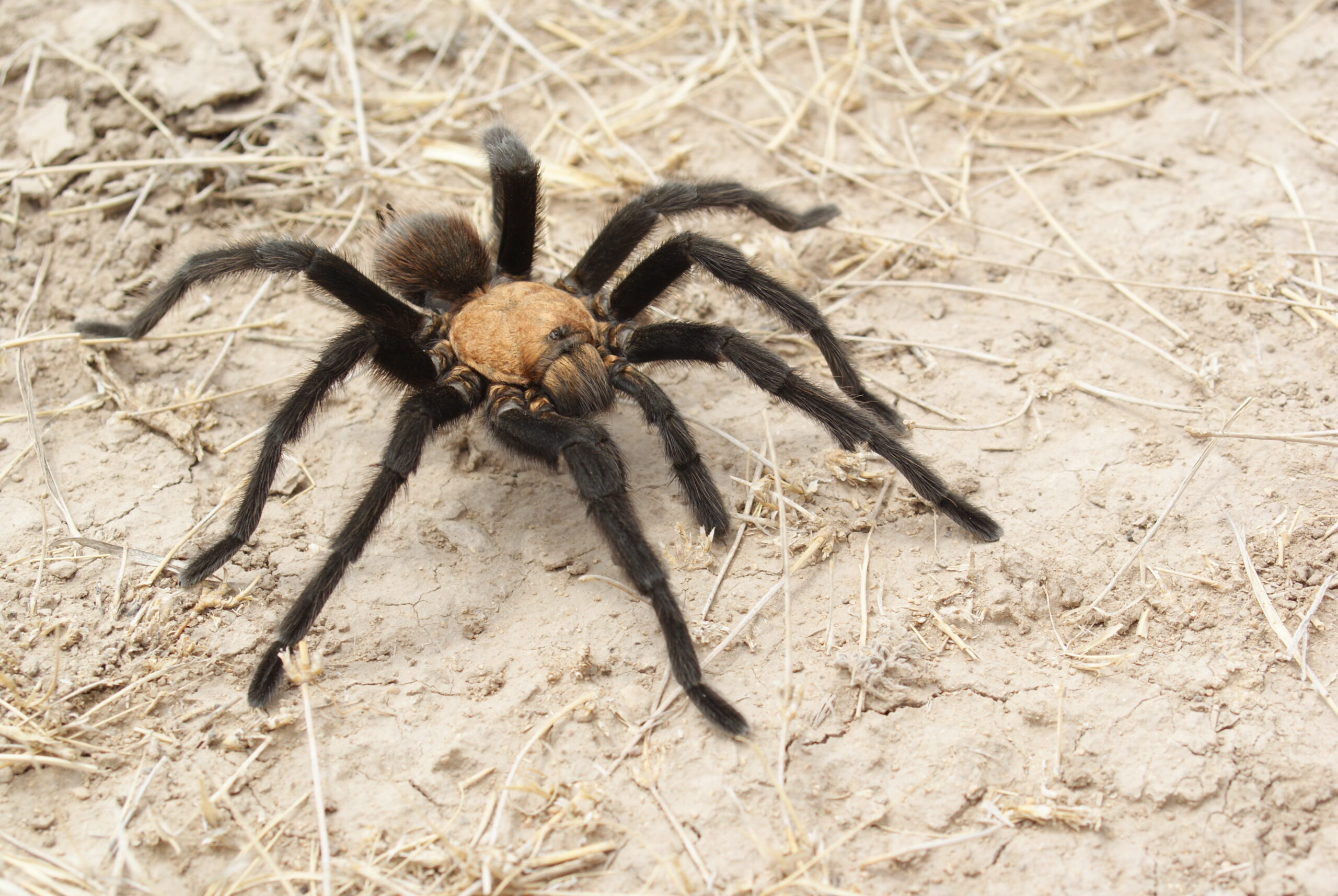
Each fall in the southeastern plains of Colorado, close to La Junta, hordes of tarantulas decides to make their trek across the landscape in search of love.
Yes, you read that correctly, tarantulas are out seeking love just like you and me.
This phenomenon has traditionally been called a migration but is actually an annual mating ritual performed by male tarantulas who roam over 440,000 acreson the Comanche National Grassland looking to mate.
There are numerous species of tarantulas that live here in Colorado, but you are most likely to spot the Oklahoma Brown Tarantula when in La Junta.
This dark brown to black species of the genus Aphonopelma is common here because its females prefer to make their burrows in the plentiful undisturbed prairies on the Comanche National Grassland of Southeast Colorado. Once these females have made their burrows, they tend to stick close to them for the entirety of their lives, which can be 25 years long.
This long journey to find a mate, unfortunately, comes with many dangers. Hundreds of tarantulas are killed by cars as they attempt to cross the highways. Tarantulas have an important influence on our environment, which all life depends on. Dr. Rich Reading, Vice President of Science and Conservation at Butterfly Pavilion stated in The Denver Post, “They are a critical part of the equilibrium of the prairie and grasslands. They are an important apex predator in the invertebrate population as well as being an important part of the food chain.”
While the amazing tarantula “mate-gration” may have come to an end in Southern Colorado, the research has not. Butterfly Pavilion’s research team led by Dr. Rich Reading, is working with the Colorado Department of Transportation, to explore possible solutions for these wandering tarantulas looking for love. We are now in the “next” stage of field studies, seeking to learn more about tarantulas and where there is the highest population near the highways for a potential project that could help protect tarantulas from danger on the highways, especially during mating season.
La Junta, Colorado hopes to become the Tarantula Are you interested in meeting your own 8-legged friend?
Read the full story on The Denver Post by photojournalist, Helen Richardson, who joined Butterfly Pavilion on this journey!
Photos: 2022 tarantula mating “migration” in Southern Colorado (denverpost.com)
Here are some quick Tarantula Viewing Tips:
– September is the ideal time of the year to view tarantulas
– Venture out on a day that is warm, and preferably not too windy
– Some tarantulas may be more active in the late afternoon
– The ideal viewing time is an hour before sunset
– Venture out around 5:45 – 6:00 pm
– Peak viewing will only last about an hour
– Scout areas where there are tarantula hawks – the spider hunting wasps that hunt tarantulas
– An ideal viewing is south of La Junta on Highway 109 on the Comanche National Grassland
– Be aware of cars and trucks traveling the roads at all times
– Park as far off the road as you can or find a turnout or intersection to view the tarantulas.
It is ultimately our ties with the natural world around us that may push us to save it.
By Shiran Hershcovich, Lepidopterist Manager at Butterfly Pavilion
The North American November is a time of change: leaves turn and then fall, days shorten, temperatures drop. Our favorite sights that were common in the summer, like wildflowers and butterflies, are replaced by the muted colors of winter. We may miss the buzzing bees and the hummingbird moths in the next few months, but we can rest assured knowing winter will eventually yield to spring and our beloved songbirds and swallowtails will once again visit our gardens… but what if they didn’t? What would it mean, not only for the ecosystem, but to you?
One hundred kilometers outside of my hometown of Panama City, nestled among the India Dormida range, right in the center of an ancient volcano, hid the sleepy town of El Valle de Anton. The valley’s cool and humid cloud forest climate allows for some of the region’s most unique flora and fauna, and the colorful nature has been deeply tied to the area. El Valle’s central market has lively alleys full of produce and crafts. Among the art pieces in straw and clay, one symbol reigned above all others.
The Panamanian golden frog (Atelopus zeteki) stared back at me everywhere I looked: painted in the vases, woven into blankets, intricately carved into wood, colored on canvas, or fashioned into toys. A celebrated symbol of fortune and prosperity, the golden frog is iconic and endemic to the high elevation streams that surround the valley. It was missing from one place only – the wild. The golden frog has been presumed extinct in the wild for over a decade, falling victim to the pressures of development, a changing climate, and the spread of the dangerous chytrid fungus. Chytridiomycosis, the resulting disease from the fungus, escalated to a pandemic that has claimed many species of amphibians on a global scale and fueled the modern biodiversity crisis. Today, this species is kept alive only in the zoos and reproduction centers serving as a biological Noah’s ark for the disenfranchised and imperiled victims of the Anthropocene. There is hope of one day reintroducing this living jewel back into its valley home when conditions are safer, but until then, the losses may extend beyond a simple frog.
Closer to our Colorado home, the monarch butterfly (Danaus plexippus) is one of those summer sights that have waned with the colder weather. In the last few weeks, they have been busy completing their southward journey to Mexico’s oyamel forests where they will spend the winter months. This inspiring journey carries a unique cultural significance. Their annual arrival in their winter homes coincides with Dia de los Muertos in early November, and the butterflies represent the souls of departed ancestors returning for a visit during this celebration of life. The significance is so strong that indigenous people in the region have tracked the monarch’s arrival in Mexico for centuries. Migratory monarchs are experiencing the growing pressures of habitat destruction, loss of native flora needed for feeding and reproduction, and extreme weather events. In the past decade, migratory monarchs have shown dangerous declines that have led to their ‘Endangered’ designation by the International Union for Conservation of Nature (IUCN) this summer.
The effects of species extinction ripple beyond the pragmatic and ecological. If we were to lose the monarch’s spectacular migration, the loss would be greater than its value to the trophic cascade. We stand to lose the centuries of traditions they have forged, the poetry they may yet inspire, and the intrinsic connection and wonder they incite in their observers. The loss of the golden frog erases mythos from a region. In the process of species loss, we stand to lose the most beautiful pieces in the patchwork of human culture; those pieces that tie us indelibly and irreversibly to nature and celebrate how the natural world has shaped and awakened us.
It is ultimately our ties with the natural world around us that may push us to save it. Would it surprise you to hear that the bald eagle, an American emblem, soared just above extinction? Through targeted and intensive conservation efforts, including banning the widespread use of synthetic pesticide DDT, the eagles made a remarkable recovery! Through these accounts, I encourage you to develop a personal relationship with nature. Think back to a species that captivated you, inspired you, or changed you – this species can now be your personal conservation flagship and connection to the natural spaces around you. Stand up for your them, admire the joy, wonder, and tradition they forge. By finding your connection with nature, and your reason for conservation, we avoid losing what makes us so us.
Backyard Bug- Tarantula Hawk
By Emily Racine, Guest Services & Membership Coordinator
Backyard Bug
Join us as we explore our backyards, gardens, and windowsills to learn more about our native Colorado invertebrates!
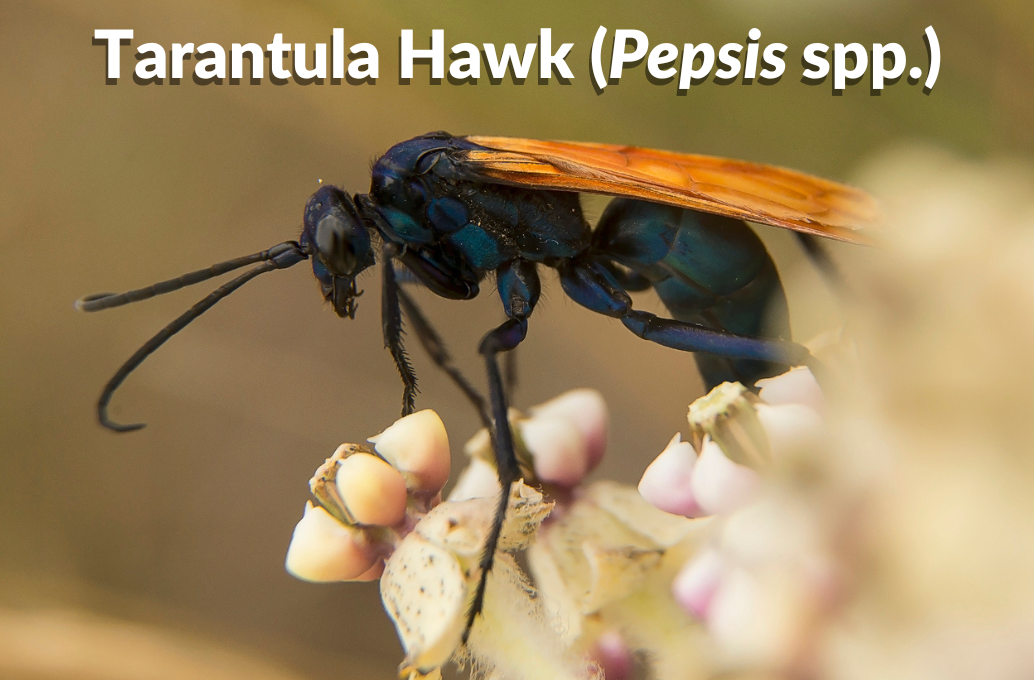
It’s a bird, it’s a plane, it’s a…. what is that? With the ability to reach up to four inches in length and color diversity that rivals that of butterflies, Tarantula Hawks or Tarantula Hawk Wasps (Pepsis spp.) are an intimidating force, especially if you
happen to be a tarantula.
Species Identifiers
Tarantula Hawks are a type of spider wasp, with 133 known species and ranges that span across South and Central America and the southern United States. Within Colorado, there are six different species that are known to occur, the most common being Thisbe’s Tarantula Hawk (Pepsis thisbe) which can typically be found in the southeastern portion of the state. These wasps have dark blue, iridescent bodies, bright orange wings, and grow up to two inches in length.
Common Misconceptions
Contrary to what their name may suggest, adult Tarantula Hawk Wasps do not consume the tarantulas they catch. Instead, female wasps will hunt and sting a tarantula to immobilize it, bring it back to its burrow or a similar shelter, and lay their eggs in the spider. The opening to the burrow is then covered with debris to provide a safe shelter for the wasp larvae to grow, and the tarantula provides them with a food source to do so.
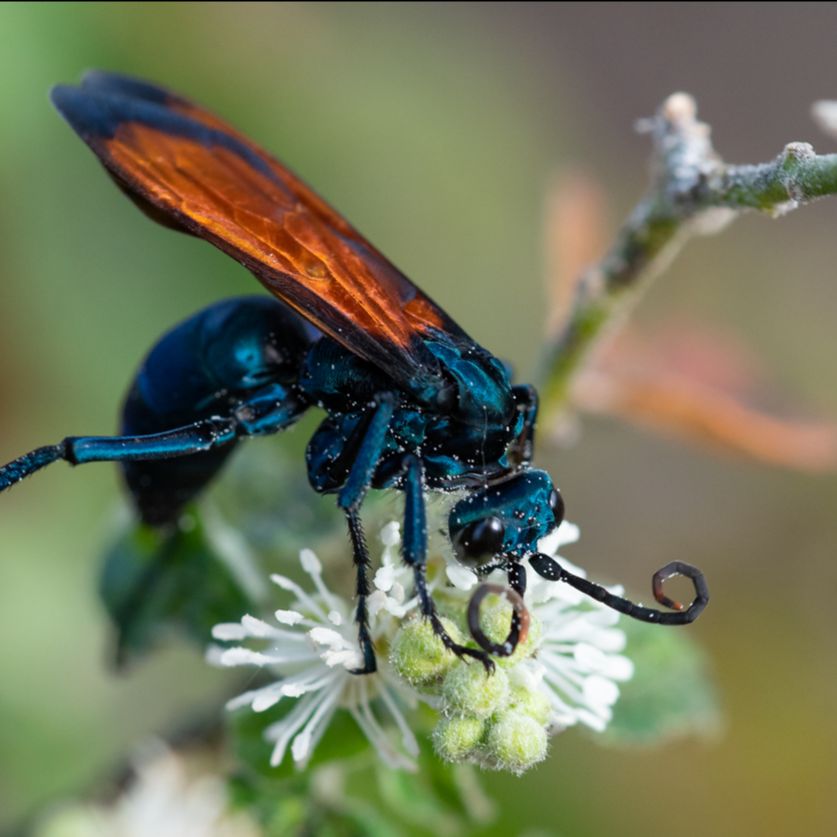
Despite their fearsome appearance, Tarantula Hawks are important pollinators! Adult wasps are nectivores, meaning both males and females feed almost exclusively on pollen and nectar from flowers, and even enjoy sipping on the juice of fruits and berries. Tarantula Hawks can also be excellent indicators of biodiversity within the habitats they occupy – even providing important information that can be used to survey their prey’s populations!
Join us for a day of live music, activities for all ages, food trucks, giveaways and more- a true pollinator party! Come celebrate with us!
One of the most-asked questions at Butterfly Pavilion used to be, “How do I attract butterflies to my yard without attracting bees?” The staff heard that question just slightly less often than “How long do butterflies live?” and “Where are the restrooms?” And it made sense – no one likes getting stung, and people were trying to be careful. I’ve noticed a sea change (or is it a bee change?) in the last couple of decades in the public’s understanding of bees and what they contribute to our lives. These days, we are more likely to hear questions about helping bees or about the challenges their populations are facing.
Colorado has 946 native species of bees – bees of various shapes, sizes, and colors. Bees that come out in early spring, bees that are out all year long. One of our most commonly spotted bees, the honeybee (Apis mellifera) is not originally from North America but now plays a huge role in the pollination of agricultural crops. We also have honey and beeswax, thanks to the tireless efforts of the 2.7 million honeybee hives across the United States. When people think of bees, the honeybee is probably what comes into their minds first. After all, we can relate to an insect that has a complicated social structure and division of labor, like we do. They symbolize persistence and industriousness, flying miles in search of food, sometimes at speeds of 20 miles per hour. Plus, they dance to communicate – what’s not to love?
But shouldn’t we love the other kinds of bees in the state? Or the hundreds of species of wasps, flies, beetles, butterflies, and moths that also provide pollination services? These species are well-adapted to both our climate and our native plant communities and are key in ensuring the continuing health of our natural areas. They may not be able to fly as long or build massive colonies, but they each have their special relationships that make them worth conserving. Responsible beekeeping practices and plentiful habitat are key to promoting the coexistence of honeybees and wild pollinators, so that we can continue to have healthy food systems and healthy ecosystems. Butterfly Pavilion is working closely with communities like Baseline to be certified as Pollinator Districts, so that we can ensure that pollinators will live among us over the long term.
This year, Butterfly Pavilion is excited to be participating in Baseline’s 2nd Annual Honey Bee Day on August 20 from 10:30 am – 2 pm at Checkers Square (16555 Shoshone Street, Broomfield 80023). Honey Bee Day celebrates honeybees and all the other pollinators that make our environment fruitful and beautiful. We will be leading a pollinator tour of Checkers Square and sharing preliminary results from this year’s pollinator survey of the Baseline Pollinator District. We will also have all sorts of information about how you can get involved in making the world better for pollinators and for people. The event also features live music, crafts, face painting, giveaways, and more – a true pollinator party! Come celebrate with us!