
At Butterfly Pavilion, we believe in conserving, protecting and educating the public about invertebrates from habitats around the globe. The reason we do this is because many of these animals are often forgotten.
They tend to be small, hide in dark places and may trigger a fear in many people. The truth is invertebrates make up 97% of the animal life on earth, with 1.2 million described species. Invertebrates are the foundation of countless food chains, control pests, pollinate our food, have vast research implications and are eaten by humans around the world.
In order to protect these important animals, Butterfly Pavilion participates in the Safety Web for Arthropod Reproduction and Management (SWARM). This program focuses on keeping vulnerable arthropods (invertebrates like insects, spiders and crustaceans) in zoo collections by breeding and refraining from wild collection. SWARM is a program sanctioned by the Association of Zoos and Aquariums (AZA) Terrestrial Invertebrate Taxon Advisory Group (TITAG). If you have ever been to Butterfly Pavilion, you have probably had an up close experience with one of our most important ambassador animals: Rosie the tarantula and she is the focus of the SWARM that Butterfly Pavilion holds. Our large collection of Rosie tarantulas (also called the Chilean Rose Hair, Grammostola rosea) allows us to communicate with other zoos about breeding, husbandry, welfare and conservation of this important species.
Chilean Rose Hair tarantulas are native to the edges of the Atacama Desert in Chile, which is the driest desert on earth. In their natural habitat, female Rosie tarantulas stay in their burrows and wait for an unsuspecting insect to walk by. These tarantulas may make their own burrow, or take a premade or naturally occurring space as their home. Males are much more active than females, as they wander around to find suitable mating partners. Once mated, a female tarantula produces a large egg sac made of silk which can hold hundreds of young. Males can live 5-10 years and female can live 20-25 years! It is because of this lifespan, that we can use tarantulas as an indicator species; they are sensitive to potentially massive changes in their environment and may not live to sexual maturity based on these changes.
Butterfly Pavilion believes that an up close interaction with animals such as Rosie can provide an invaluable experience to all of our guests, which helps them understand more about the importance of invertebrates to humans and the world at large. This is why we continue to work on keeping these magnificent animals in zoos and protect their habitats around the world.
If you like the work we are doing, please consider making a donation by clicking right here.
Nature Play and Family Adventure are more important than ever
Even here in Colorado, children (and adults) are spending more time indoors and on screens than ever before.
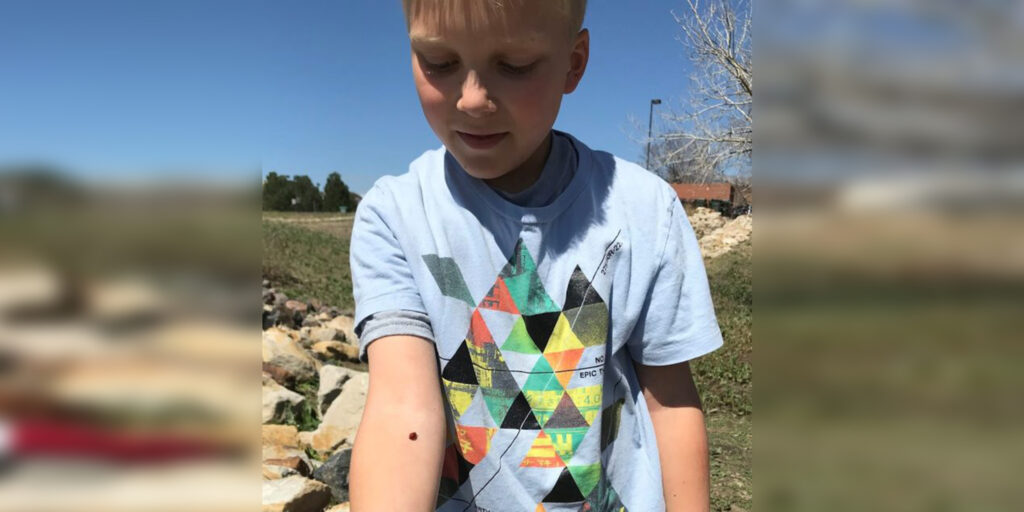
Look under that rock! It’s an earthworm! I wonder how they squirm like that… I wonder if I could wiggle like that! Let’s see how far we can wiggle like worms across the lawn!
Here at Butterfly Pavilion, we know that engaging children and families in outdoor nature play is vital to creating passion and inspiring nature conservation.
Over the past decade, focused research around nature play and time spent in nature has dramatically increased. We know that even here in Colorado, children (and adults) are spending more time indoors and on screens than ever before.
Did you know that on average, young children can identify over 1000 corporate logos but less than 25 plant species? (Armitage, 2007). How many do you know? Take the quiz from Next Nature at the bottom of this article to see how many you can get!
Collectively, scientific research shows that social, psychological, academic and physical health is positively impacted when they have daily contact with nature.
Just some of the many positive benefits of nature play include:
- Supports intellectual, emotional, social, and physical development
- Supports creativity and problem solving
- Improves academic performance
- Improves nutrition and physical health
- Reduces stress & symptoms of Attention Deficit Disorder
- Improves self-discipline
- Improves social relations
Children & Nature Network: CLICK HERE FOR THE FULL LIST
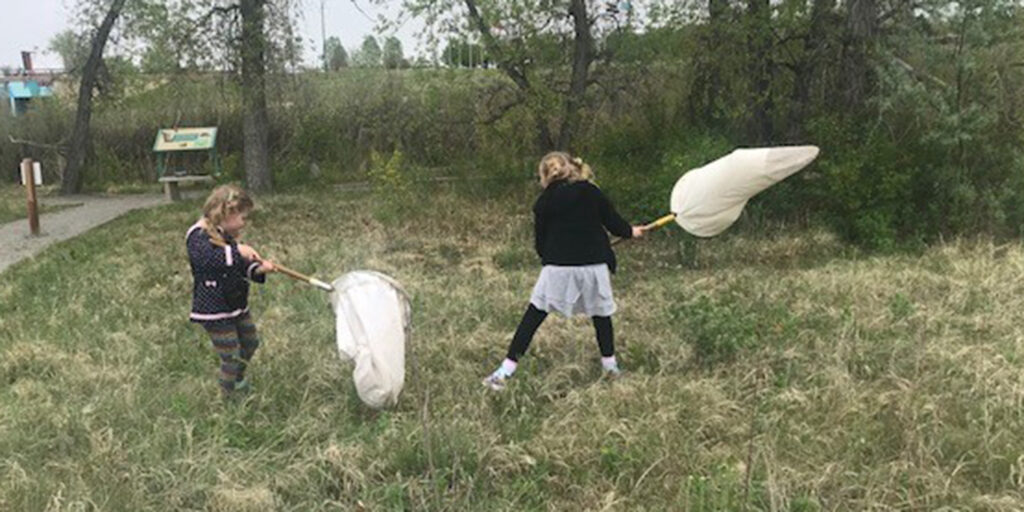
Additionally, research on intergenerational programming has found that the elderly, young adults and children surveyed in several programs reported increased feelings of well-being and life-satisfaction as a result of their involvement.
Since families are our key audience here at Butterfly Pavilion, we want to provide fun opportunities that meet YOUR needs! Plus – we’ve figured out the formula for the best family program. Want to know what it is?
Expert environmental educators + Amazing animals + Fantastic gardens and trails + Passionate participants = The Best Family Nature Experience Ever!
On Sunday, April 22 we held our first ever Party for the Planet Earth Day Family Cleanup! Participants ages 6 months through 75 years old came together to clean up litter in Big Dry Creek after a really windy week, and weed out Curly Dock from our open space. We replaced the weeds with native milkweed and ended with snacks, fun games and seed paper gifts made by Butterfly Pavilion volunteers! Thanks to Amy Yarger, Horticulture Director, for leading such an awesome family event.
In May, our Butterfly Pavilion Nature Nerds Family Club had a Bird and Bug Hike led by Zac Smith (Interpretation Lead) and Joe Barry (Horticulture) where we hiked to find the birds and bugs in our backyards and made solitary bee homes and backyard birdfeeders. In June we explored aquatic invertebrates in Big Dry Creek with Alex Gray! What a blast!
This summer, we have held Zoo Snooze overnight adventures for families, and held our first grandparent and grandkid intergenerational campthis summer!
Moral of our story? Get outside and mess around! Get dirty, get curious, and don’t be afraid to play (I’m looking at you, “adults”). Nature play is good for people of all ages and Butterfly Pavilion wants to help your family make their experience as fun, beneficial and connected as possible.
“My son LOVED his Zookeeper camp – especially having his own hissing cockroach to take care of for the week! He hasn’t stopped talking about it! So thanks to everyone there for running such an engaging program – the counselors were great!”
Sources Cited and Recommended Books/Articles to Check out!
Leafs and Logos Quiz: Take this quiz from Next Nature – how many can you get?
Armitage, K. C. (2007). “The Child Is Born a Naturalist”: Nature Study, Woodcraft Indians, and the Theory of Recapitulation. The Journal of the Gilded Age and Progressive Era, 6(1), 43-70.
Children and Nature Network (www. childrenandnature.org/research/), Annotated Bibliographies of Research and Studies, Volumes 1 and 2 (2007).
Recommended Reading: Richard Louv, Last Child in the Woods
Invertebrates do more than just survive, they thrive almost anywhere we think of life existing; outnumbering and outweighing us. Because of their massive presence throughout the world, invertebrate animals play a vital role in maintaining ecosystems and the overall health of our planet.

Considered to be the father of modern naturalist movement, E.O. Wilson is famously quoted that, “If all mankind were to disappear, the world would regenerate back to the rich state of equilibrium that existed ten thousand years ago. If insects were to vanish, the environment would collapse into chaos.”
While, not all invertebrates are insects, this beautifully stated observation showcases their importance. Spiders are estimated to consume 400–800 million tons of prey annually and have been found to be major factors in the creation and maintenance of a healthy agricultural system, keeping pests down and affectively preventing monumental crop loss. Many invertebrates act as cornerstone species, creating the environment necessary for certain ecosystems to exist. Sea stars are partly responsible for keeping ecosystems like kelp forests—which provide a large portion of the Earth’s oxygen—alive and act as home to many recognizable animals like sea otters, seals and sea lions, orcas, as well as countless fish. Numerous medications and medical technologies have been developed thanks to invertebrate animals. Horseshoe crab blood is utilized to check the purity and sterilization of medical instruments and treatments, and the venoms—considered by some to be a reason to fear invertebrate animals—from creatures such as the cone snail have given rise to non-opioid pain medications and heart drugs.
Despite these incredible facets of invertebrate life on Earth, most of these animals go underappreciated, at best; or even reviled and feared, at worst. Rarely do we explore the beautiful countryside of Colorado with intent to observe the smaller creatures that may buzz by us. Our pleasant summer evenings are seen as ruined by the presence of animals such as mosquitos or the sound of a cicada’s mating call. Studies have shown that people look at any animal considered a “bug” as creepy and disgusting; including insects, spiders, millipedes, centipedes, slugs, snails, pill bugs, and even worms. How many times have you heard tales about daddy long legs having supposedly dangerous, tiny fangs? How many of you have heard to protect your ears from an earwig? Who’s been told that tarantula over there could kill you? These are the kinds of stories that are told. However, here at Butterfly Pavilion we aim to tell the true, amazing stories of our world’s invertebrate animals. We believe in the messages these “bugs” can deliver.
To do this, our amazing team of volunteers and staff works tirelessly to bring you face to face with some of the most incredible creatures alive. Every day at Butterfly Pavilion we offer a wide range of programs that you are able to take part in. These range from live animal encounters, like our Butterfly Encounter, to learning about humans eating bugs through our Bug Bites program. During the coming spring and summer seasons we will be offering even more special programming that will take you, as our guests, outside to be right there with the invertebrate animals with which we share our backyards. You can have the opportunity to be a citizen scientist and help us conduct the Monarch Watch, a nationwide survey of Monarch Butterflies that is done every year to help monitor their numbers. You will be able to help us locate where on our grounds we are seeing these animals and learn how to find them in your own community.

To help emphasize the benefits of not using chemicals in our gardens we will be offering opportunities for you all to release live Ladybugs into our gardens. These voracious creatures are fantastic controllers of aphids, and feast happily on those little pests keeping a garden healthy without using chemicals that would harm other animals too. We will continue to showcase the incredible hunting techniques of various invertebrates with live feeding demonstrations of our Peacock mantis shrimp on Mondays and Thursdays and our Salmon pink tarantula on Tuesdays and Saturdays.
A large body of recent studies has shown how people—especially children—are spending less and less time outside. Since being in an outdoor environment can actually help increase a person’s skills in cooperation, independence, and risk taking, playing outside has been found to reduce symptoms of mental illness, mitigate most ADHD symptoms, and boost human immune systems. We are working hard to offer these benefits to all of you with what we do here at Butterfly Pavilion. Starting in June we will be offering special nature play activities and games outside in our gardens that will bring you out onto the grounds around the building to explore this lovely habitat.
Every day we hear our guests say things like “That’s amazing! I had no idea octopus were so smart!” and “I’m so glad I finally held the tarantula!” Come visit us at Butterfly Pavilion to experience a new story with our amazing animals.
Butterfly Pavilion, Pollinator Awareness through Conservation and Education, and Rice’s Honey
Butterfly Pavilion loves pollinators, and you should too!
Pollinators are animals that help feed the world. From the smallest fly to a large, lumbering bumble bee, pollinators are vital for food production and healthy and diverse ecosystems. By transferring pollen from flower to flower, pollinators initiate the reproductive process in plants, in agriculture and in the wild. This process gives us fruits, nuts, chocolate, coffee and even tequila! Almost one out of every three bites of food we eat is because of a pollinator. This vast importance led Butterfly Pavilion to create the Pollinator Awareness through Conservation and Education (PACE) Initiative.
The scary thing is, pollinators are in decline. From 2016-2017, beekeepers in the US have lost 33% of their colonies and native bees have not fared much better. One recent study analyzed the status of over 1,000 native bee species and found that over 50% were in decline and 25% are at risk of extinction. The cause for declines of both managed and native bee species can be summed up with the 4 Ps: parasites, pathogens, pesticides and poor nutrition. Butterfly Pavilion is aiming to curb these losses by taking a holistic approach to pollinator protection.
From local programs to work on a global scale, our work is focused around the study and monitoring of pollinators, pollinator habitat restoration, collaborative partnerships, sustainable business ventures via capacity building, and education. It is our duty to protect this vital group of animals now so they can continue to support successful ecosystems in the future.
Some local projects include: the Urban Prairies Project, which aims to restore our prairies to their original beauty to support native pollinators, Colorado Butterfly Monitoring Network, which trains citizen scientists around Colorado to identify native butterfly species to impact conservation decisions, and Beekeeping Bootcamp, which trains backyard beekeepers about the wonder of honey bees and how to keep them in a sustainable, environmentally friendly way. Global projects include work in Nepal with Honey Bee Fences, which provide a sustainable income via honey to farmers while keeping elephants out of their valuable crops. Elephants hate bees (who knew?)!
One innovative way Butterfly Pavilion is making all of this work happen is through a brand new partnership with Rice’s Honey. Rice’s Honey is a leading producer of high quality, U.S. only raw and unfiltered honey headquartered in Greeley Colorado, and has a mission to promote pollinators and sustainable bee farms across the country. To fulfill that mission, Rice’s Honey donates a portion of proceeds from every bottle of its Local Hive ™ honey sold to Butterfly Pavilion’s PACE initiative, which aims to promote and protect the prosperity of pollinators worldwide.
This partnership enables Butterfly Pavilion scientists and educators to have a local, regional, and global impact on pollinator declines. This work cannot be done alone, so it is vital to partner with like-minded organizations to protect these imperiled animals.
To purchase Local Hive by Rice’s Honey, please visit www.localhivehoney.com. To learn more about PACE, please visit www.pace4pollinators.org.

Helping save a beach one insect at a time
Butterfly Pavilion studies how the restoration of California’s coastal dunes could help conserve populations of invertebrates .
In the early 1900’s developers used a grass called European beach grass to help stabilize the ever-shifting sand dunes so they could build closer to the ocean. At the time, it seemed like a great idea. But soon the beach grass grew out of control and took over, blanketing the coast in a sea of invasive plants! It changed more than the landscape; it also impacted the animals that called these dunes home.
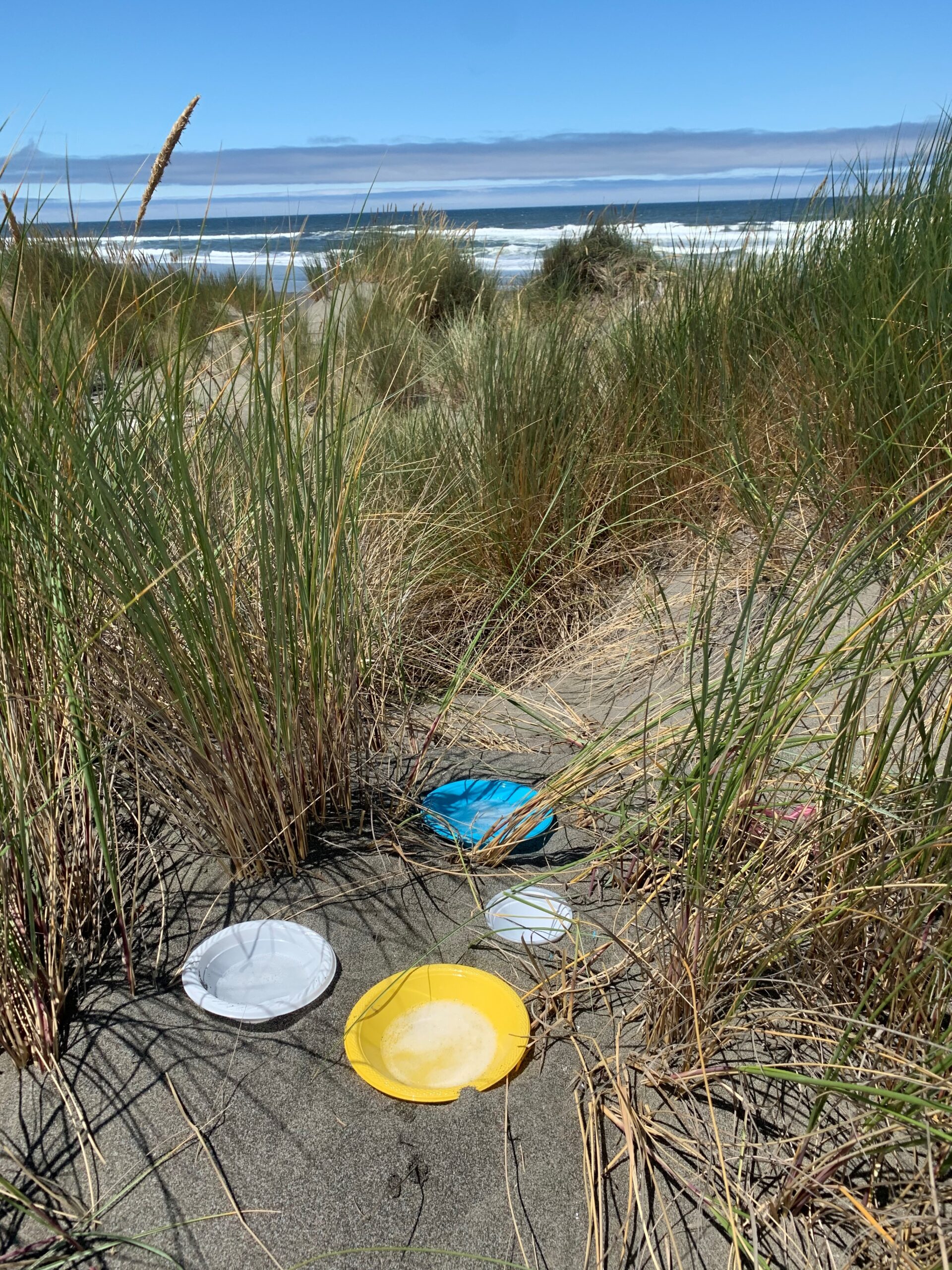
Over the years the Bureau of Land Management (BLM) made a decision to restore the dunes around Eureka, California. This required hundreds of volunteers removing millions of plants year after year in order to successfully return the dunes back to their naturally-diverse state. As the native plants have returned, so have the animals, including threatened and endangered species! As with many conservation projects, some members of the community have raised concerns about the impact of removing the grasses. Why would you get rid of the lush grass and replace it with scrubby native plants? The main answer: diversity! In order to make sure this restoration is truly having a positive impact on the environment, the BLM agreed to bring in a team of experts from Butterfly Pavilion to decide which was better: restored or unrestored dunes. The Butterfly Pavilion research team has made many trips to these dunes to collect and identify the number and diversity of invertebrates (like beetles, bees, spiders, and butterflies) living on the restored dunes. It is important to protect the diversity of invertebrates on the dunes so that many different species can perform their diverse roles, such as pollination and decomposition, which keep the ecosystem healthy. By comparing the populations of invertebrates between the restored and unrestored sites, we can inform BLM about the vegetation and management practices that will promote healthy invertebrate life on the dunes!
The Mystery of Colorado’s Butterfly Population
Sadly, I don’t know exactly what has happened to native populations through the years and it’s not a simple question to answer. Unlike the monarch butterfly, which for 20+ years has held the attention of a dozen or more researchers and nationwide volunteer groups, native populations of butterflies in Colorado have gone almost unattended.

In order to take a proactive approach to native butterflies, Butterfly Pavilion developed Colorado Butterfly Monitoring Network as a way for volunteers to learn about native butterflies while at the same time providing valuable data to scientists and landowners. Each spring, new volunteers are trained on butterfly identifications and monitoring protocols. Once training is complete, volunteers become ‘citizen scientists’ and pick their monitoring location, typically a favorite local walking/hiking trail.
Volunteering for CBMN involves walking a designated route, at a specific location, a least six times over the course a field season (Mary 15th – September 15th). We use “Pollard Walk” protocols where we focus monitoring on pre-existing trails that covers multiple habitat types. During their first year volunteers are trained to identify butterflies to their respective families, focusing on 25 species, and with additional yearly trainings are encouraged to expand their identification abilities.
Citizen science has been shown to be a powerful tool in raising awareness and collecting important data scientists can use to learn and evaluate the world in which we live. Through data collected by CBMN citizen scientists, who monitor the same locations from year to year, we will be able to observe the fluctuations of butterfly abundance and diversity. Over the long term, the information from these surveys will assist land managers in more effective conservation of Colorado’s butterflies and their habitats. Currently we work with: Boulder Open Space & Mountain Parks, City & County of Broomfield Parks & Open Space, Jefferson County Open Space, Colorado State Parks, Colorado Natural Heritage Program, City of Westminster Open Space, Denver Botanical Gardens at Chatfield, Plans Conservation Center and USF&W.
Colorado Butterfly Monitoring Network, also called CBMN, is part of the larger North American Butterfly Monitoring Network, which consists of 12 other states/regions around the country. The summer of 2013 was the pilot year for CBMN and started with 8 citizen scientists monitoring 9 sites. As of summer of 2017 CBMN had grown to include 163 citizen scientists monitoring 11 sites. Most sites are located within the Front Range, but our collaboration with Colorado Parks & Wildlife has extended our reach to Steamboat Springs and Ridgeway, CO. Our goal is to continue to grow the program so that one day we are monitoring butterflies across the entire state of Colorado!
Currently we have two trainings scheduled for 2018 at Butterfly Pavilion: Sunday April 29th and Wednesday May 16th. If you’re interested in attending a training, or would like more information on CBMN, please contact Butterfly Pavilion’s Lepdiopterist, Sarah Garret.
You’re more a scientist than you realize, and Butterfly Pavilion can help!
The overall impression one takes away from this is that science is something done by a highly trained person with specialized equipment in a sterile environment. And while this might be representative of some scientists and some areas of study, it’s hardly all-encompassing.

The truth is, most scientists look just like you or me!
For example, a butterfly scientist, or Lepidopterist, doesn’t usually spend time wearing protective goggles standing over a bubbling cylinder. Rather, their research may involve gather data on the existence and health of butterfly populations in their habitats. Further straying from the prevalent narrative found on my Google search, this work is far from a solitary project. If a Lepidopterist tried to take on the survey of butterfly populations single-handedly, it would only be possible to capture a very small snapshot of data from a handful of locations. Needless to say, an individual Lepidopterist would face many barriers including, but not limited to, geographical distance, time, and resources to accomplish such a feat alone.
The thought that may pop in your head is, “Well, you’re out of luck unless you get more financial resources to hire some more scientists.” But what if you had a pool of engaged citizens that cared enough about butterfly conservation that they were willing to volunteer their time to help you complete your data collection. Adults, families, neighborhood and community groups, Scout troops, and classrooms – folks from all walks of life observing and recording the appearance of butterflies in their areas and reporting back to you. Suddenly you have vastly more data than you could have collected on your own, a much better picture of butterfly population health, AND you’ve given these volunteers an opportunity to have direct, hands-on impact on the future of butterfly conservation. Too good to be true?
In fact, it’s not! This is citizen science, and it’s a powerful data collection tool that, in the case of Butterfly Pavilion’s Colorado Butterfly Monitoring Network (CBMN) and Urban Prairies Project (UPP), is providing essential insight on invertebrate species and habitats that land managers can use when making conservation decisions. But the benefits of citizen science don’t stop there. It also serves as a powerful learning tool for teachers and classrooms.
Traditional science curricula, like the common stereotype of scientists, are often limited to a single approach to the subject. Lessons commonly emphasize what is already known or agreed upon by scientific consensus, focusing on factual information and rote repetition of experimental processes (if experimentation is mentioned at all). The outcome of this strategy discourages curiosity and builds the view that there’s not much left to discover. However, recent estimates suggest that nearly 90% of all species that exist on earth are yet to be described. As the California Academy of Science puts it, “Citizen science gives participants insight and exposure to the idea that there remain mysteries to solve, that the internet does not hold all the answers, and that science is a dynamic and ever-changing process of pursuing curiosity.” This is a powerful message to instill in young learners, and a crucial one given that they will eventually be tasked with finding solutions to incredibly urgent and complex issues like climate change.
Along with encouraging inquiry, classroom participation in citizen science has been shown to improve performance, ownership of, and investment in scientific work. According to UC Davis, “Extensive research shows that a strong sense of ownership of the work is associated with more active engagement, increased sense of agency and self-efficacy, positive attitude toward science, and improved science learning outcomes.” And not only does this positively impact student motivation and confidence in the classroom, but also encourages them to feel empowered in other parts of their lives as well.
In sum, whether you’re a researcher interested in getting your community engaged in science, an individual wanting to make an impact on habitat and species conservation, or a teacher hoping to inspire your students the stay curious, consider citizen science! Butterfly Pavilion can help you get started:
- Volunteer for Butterfly Pavilion’s Colorado Butterfly Monitoring Network (CBMN) or the Urban Prairies Project (UPP) as a citizen scientist.
- Register your students or youth group for a field trip, outreach, or virtual program with Butterfly Pavilion that will explore conservation and citizen science topics.
- Contact Butterfly Pavilion experts with your citizen science questions.
Sources:
https://www.nature.com/news/2011/110823/full/news.2011.498.html
https://www.ncbi.nlm.nih.gov/pmc/articles/PMC4798802/
https://www.calacademy.org/sites/default/files/assets/docs/pdf/cascitizensciencetoolkit_forweb.pdf
Americans have resisted what the rest of the world has known for millenia
Protein is a vital part of the human diet, and one that Americans tend to consume in the form of meat, in larger and larger quantities every year. Producing livestock to meet the ever-growing demand for meat requires incredible amounts of water, feed, and land, and these resources are not unlimited.

Despite the common nature of this practice in many other countries, Americans have historically expressed a strong aversion to the idea. But that is beginning to change.
As advocates for habitat and species conservation and environmental stewardship here at Butterfly Pavilion, we’re acutely aware of the need to explore more sustainable alternatives. Shifting from cows, pigs, and chickens to insects would significantly reduce our resource use. For example, it takes 10,000 times more water to raise one pound of beef than one pound of crickets! Further, the rearing of livestock is responsible for about 18% of global greenhouse gas emissions, which is more than all forms of transportation combined.
But decreasing negative environmental impacts isn’t the only enticement entomophagy has to offer. Scientists have found that insects are a healthier alternative for humans to other forms of meat. Pound for pound, mealworms contain as much protein as beef in addition to having less fat and less calories. There are also more vitamins and essential amino acids found in most edible insects than other meat-based proteins. Further, crickets actually contain about five times the calcium and ten times the iron found in beef.
And we’re not the only ones interested in insect-eating’s potential, even locally. A 2018 article by Rachel Walker in 5280 Magazine features “Crickets as Protein” as a major health trend in Colorado. This is good news for local businesses like the Rocky Mountain Micro Ranch, an edible cricket farm located in Denver, not too far from a restaurant called Linger where you can enjoy cricket and cassava stuffed empanadas. Yum!
So why do most Americans cringe at the thought of eating a bug?
Western culture promotes the idea of insects as dirty and creepy pests, rather than something to consider eating for dinner. Have you ever seen a movie or TV show where cockroaches or a tarantula are used to scare people? Most likely, you’ve seen many. This is vastly different from many tropical areas around the world where insects are often represented positively in legends, myths, and dancing, and also used for decoration, entertainment, and medicine. Fried scorpions in China, spiders in Cambodia, and grasshoppers in Thailand are considered a delicacy, rather than something appropriate for a horror film. Where other cultures respect and even admire our arthropod friends, popular culture has conditioned many Americans to recoil and avoid them.
How do we change the way millions of Americans feel about eating insects?
In short, education. When people learn about the dynamic (and often essential) roles insects play in our world, they can begin to re-think their own assumptions about their value. Rather than the “gross” cockroach under our shoe, these animals can be appreciated as essential decomposers cleaning up the forest floor. No longer do we assume the bee’s purpose is to sting us. Instead, we recognize them as crucial pollinators providing honey and one out of every three bites of food we consume. Similarly, a mealworm on your plate sounds less like a reason to never go that restaurant again, and more like a sign of a business making a commitment to sustainability.
The mission here at Butterfly Pavilion is to foster an appreciation for all invertebrates, including insects. We do this partly by facilitating interactive educational experiences in our exhibits. Our ‘Bug Bites’ Spineless Spotlight program that you can see on Sundays and Fridays at 1:30 pm teaches guests about insect-eating, including the insects they unwittingly eat every day, followed by an opportunity to try some different insect treats! Through our efforts, and those of other individuals and organizations looking to encourage more sustainable food sources, we hope to make a big impact in conserving our world for future generations.
So maybe one day, sooner than you think, we’ll be grocery shopping and crickets may be on the grocery list! After all, lobster was once considered a poor man’s food in America, and look at it now…
Sources:
Bodenheimer, F. S. “History of Entomophagy.” Insects as Human Food. Springer, Dordrecht, 1951. 39-69.
DeFoliart, Gene R. “Insects as human food: Gene DeFoliart discusses some nutritional and economic aspects.” Crop protection 11.5 (1992): 395-399.
Hoddle, Mark. Entomophagy (Eating Insects). Center for Invasive Species Research. University of California, Riverside. http://cisr.ucr.edu/entomophagy.html. 2016.
Van Huis, Arnold, et al. Edible insects: future prospects for food and feed security. No. 171. Food and agriculture organization of the United Nations, 2013.
Walker, Rachel. “Eight Health Trends Growing in Colorado in 2018.” 5280 Health. January 2018.
At the trailhead, I saw what I thought was an explosion of paper litter in the distance and hurried over to clean it up. What a happy surprise to find that I was actually looking at a patch of crown-leaf primrose (Oenothera coronipifolia).

These frilly, ephemeral wildflowers stood out against the browns and pale greens of early spring like lace against sandpaper.
What I learned – nature is full of surprises. Think of the last time you were out in nature – what surprised you?
Urban and suburban open spaces facilitate transformative experiences for visitors, while providing healthy habitat for native plants and wildlife. Healthy open spaces can address many of the challenges of population growth by providing accessible opportunities for people to exercise, to pursue lifelong learning and to appreciate natural beauty. This engagement with the natural world has proven profoundly beneficial to human health. With this in mind, in 2013 the American Public Health Association officially recommended that land use decisions should prioritize the preservation and restoration of natural areas and green spaces for people of all ages, income levels and abilities. In addition, urban and suburban open spaces contribute millions of dollars in ecological services, including flood management, pollution abatement and access to crop pollination. Their importance should not be underestimated!
But not all open spaces are created equal. Suburban open spaces often struggle with a high degree of disturbance, pollution and invasive species. In comparison to wild lands, suburban natural areas also support a far lower number of plant and animal species. By restoring local open spaces to a greater degree of biodiversity, land managers and volunteers can include “planned complexity” in urban and suburban landscapes, which leads to better function and sustainability over time.
With over half of the human population now living in cities and towns, a habitat network of open spaces, parks and private gardens can add significant resources, especially for beneficial wildlife such as pollinators. These “habitat pockets” can grow over time to become linked corridors for wildlife. One successful example of this model is Seattle’s Pollinator Pathway, which revolutionized the idea of human and natural landscapes by educating the public to reconsider the priorities for public and private landscaping.
The growing communities of Westminster and Broomfield, Colorado currently have over 8000 acres of open space parks and trails. Since residents in Broomfield and Westminster report that they value the wildlife and native plants found on open spaces, effective habitat restoration plays a vital role in maintaining these sites for the community to enjoy. In order to increase impactful restoration activities on open space parks and to cultivate a stewardship ethic among local residents, Butterfly Pavilion, the City of Westminster and the City and County of Broomfield created the Urban Prairies Project in 2016.
With open space department staff stretched thin over so much acreage, the partners aimed to tap into local enthusiasm for open spaces. Beginning in March 2016, the partners launched a Restoration Master Volunteer program. These committed and passionate individuals complete 25 hours of intensive training which includes subjects from weed identification and management to how to share scientific information with the public. So far, 31 Restoration Master Volunteers are contributing their skills to everything from revegetation projects to pollinator monitoring. These volunteers have so far astounded us with their skills and expertise, as well as their enthusiasm for learning and even the hard physical labor of restoration.
The Urban Prairies Project partners have also worked closely with other groups, such as local schools, to involve more local residents in restoration work. A relationship with Legacy High School has resulted in four youth service learning projects, including planting native shrubs and collecting invertebrate diversity data. Kristina Schaad, the biology teacher at Legacy High School and the advisor for the Environmental Club, notes that, “Participating in restoration work has been invaluable for my students. It has provided them with the opportunity to learn while getting their hands dirty, giving back to their community, and working with others–all of which are extremely important for today’s adolescents. I know that working with Urban Prairies Project has positively impacted my students and increased their appreciation of natural spaces. We are excited to continue our work with this organization in the future!”
2018 is already shaping up to be an exciting and productive year. Our next set of Restoration Master Volunteer trainings will begin on March 11th. This year, Urban Prairies Project volunteers will be working in areas as diverse as Standley Lake, Skyestone and Metzger Farm open spaces this year, improving habitat and collecting data on everything from beavers to bees to birds. Volunteers are also helping to raise awareness among people of all ages about the importance of natural areas by creating educational materials and attending public fairs. The inspiring message that we can all make a difference for our communities and our planet has never been more timely.
If you are interested in learning more about how you can get involved, please contact me by clicking here.