Gardening in Dry Weather
This spring, most Front Range communities have responded to record low snowpack by encouraging/ requiring residents to cut water use by 20%. Water is a precious resource, and it’s our responsibility to use water wisely.
Drought (prolonged abnormally low precipitation resulting in significant water shortage) can last a few weeks to several years. The Front Range is semiarid, receiving approximately 13 inches of precipitation each year. In 2025, we received over 15”, but so far in 2026, most locations have received less than 2”. With climate change, we expect hotter, drier conditions, which means we should be changing our habits now.
What should you do in your garden when drought strikes? Here are some expert tips from Amy Yarger, Butterfly Pavilion’s Senior Director of Horticulture!
Irrigation and watering – Use only what you need!
- Keep automatic irrigation systems off until the second half of May
- Focus your watering on trees, shrubs, and perennials, especially if they are new – these plants provide shade and urban cooling, as well as habitat for wildlife, including pollinators. They are also much more expensive and difficult to replace.
- Soaker hoses and drip systems waste less water, delivering it directly to where the plants can use it. Consider spot watering the plants that need water instead of watering entire areas. Take time to observe how individual plants are doing.
- Water deeply (1-1.5 inches/ week) and infrequently (1x) to encourage root systems to grow deep instead of close to the surface. Early mornings (before 10 am) are the best time to minimize evaporation – target the root zone to minimize risk of fungal diseases such as powdery mildew.
- Don’t water when it’s windy.
- Look for and repair any leaks in your irrigation or hoses immediately. Adjust sprinkler heads so that they aren’t overspraying. Use hose nozzles with shut-off valves
Planning, design and plant selection – Adapt to Colorado conditions
- Phasing: This isn’t the year for huge landscaping projects. If you absolutely can’t wait to plant a new garden, break large projects into smaller segments and prioritize those that will reduce water use. Dreaming big isn’t forbidden – take this year to plan lawn conversions and large renovations that make your landscape more beautiful and biodiverse. Pollinator Gardening Bootcamp is a great resource to plan your new garden haven.
- If you are planning on removing your turf eventually, let it go dormant this year. A side benefit is seeing fewer Japanese beetles since they overwinter in grass roots.
- Native plants in our area are better adapted to our dry conditions – small leaves, deep roots- and also provide habitat for pollinators and other wildlife. Not all Colorado native plants perform the same in dry weather, however. Shortgrass prairie species will have a better chance of survival compared to alpine species, for example. Notice which plants stay “cool and collected” in your garden, and plant more of those to replace the thirstier varieties.
- Hydrozoning: Group plants with similar water needs together and pay attention to light/ exposure requirements.
Maintenance – Take it easy
- Establishment: Native plants still need to be watered in for establishment, especially for the first 1-3 years, but even at this stage, they will still use less water than your lawn.
- Signs of water stress include wilting, dull color, browning/ crisping of leaves and stems, short bloom times. Many plants wilt during the hottest time of day, so check to see if they’ve bounced back in the evening/ morning
- Consider using shade cloth to slow evaporation and protect your veggies from intense sun. Move container gardens into the shade, if possible.
- “Hands off”: During drought, it’s best to scale back some gardening activities, such as fertilizing, pruning, and planting. Anything that encourages thirsty new growth means more water consumption. Fertilizers also add salts to the soil over time, and drier conditions mean fewer chances to assist with uptake. The buildup of salt can burn plant roots.
- Instead, focus on weeding. Weeds compete with your desirable plants for water. Be careful how much you disturb the soil, however. If you stir up the soil, the moisture it’s holding on to will evaporate. You also don’t want to stress the roots of the desirable plants in your landscape.
- Deadheading also helps plants hold on to the water they have, instead of spending it on seed production.
- A 2-3” layer of mulch will keep the soil cooler and moister, as well as reduce weed pressure in your garden.
By adjusting how we plan and care for our landscapes, each of us can make a meaningful impact during this drought—and help protect the Front Range’s limited water supply for the future, while also creating havens for the plants, pollinators, and people we love. Small, intentional choices this season add up to healthier gardens, stronger plants, and more resilient communities into the future.
Spiders are among one of the most misunderstood animals on our planet. Whether they’re building intricate webs or silently hunting in the trees, these eight-legged little friends play vital roles in all ecosystems around the globe. Yet myths and misconceptions often cloud our perception of these tiny animals. So, let’s unravel the mysteries behind these vital creatures with five facts that just might change the way you think about spiders.
1. No… We don’t eat spiders in our sleep.
You’ve probably heard of the old rumor that people swallow several spiders per year while sleeping. However, there’s actually no scientific evidence supporting this claim. Spiders don’t really want anything to do with us while we are awake or asleep, so try not to lose any sleep over this myth. If that wasn’t enough to convince you, maybe this will. Spiders rely heavily on vibrations to sense the world around them, and the rumbling of our breathing and snoring would feel like an earthquake to them. This whole myth is believed to have originated from an internet hoax in the 1990’s to prove how easily misinformation could spread online, and it appears to have worked a little too well.
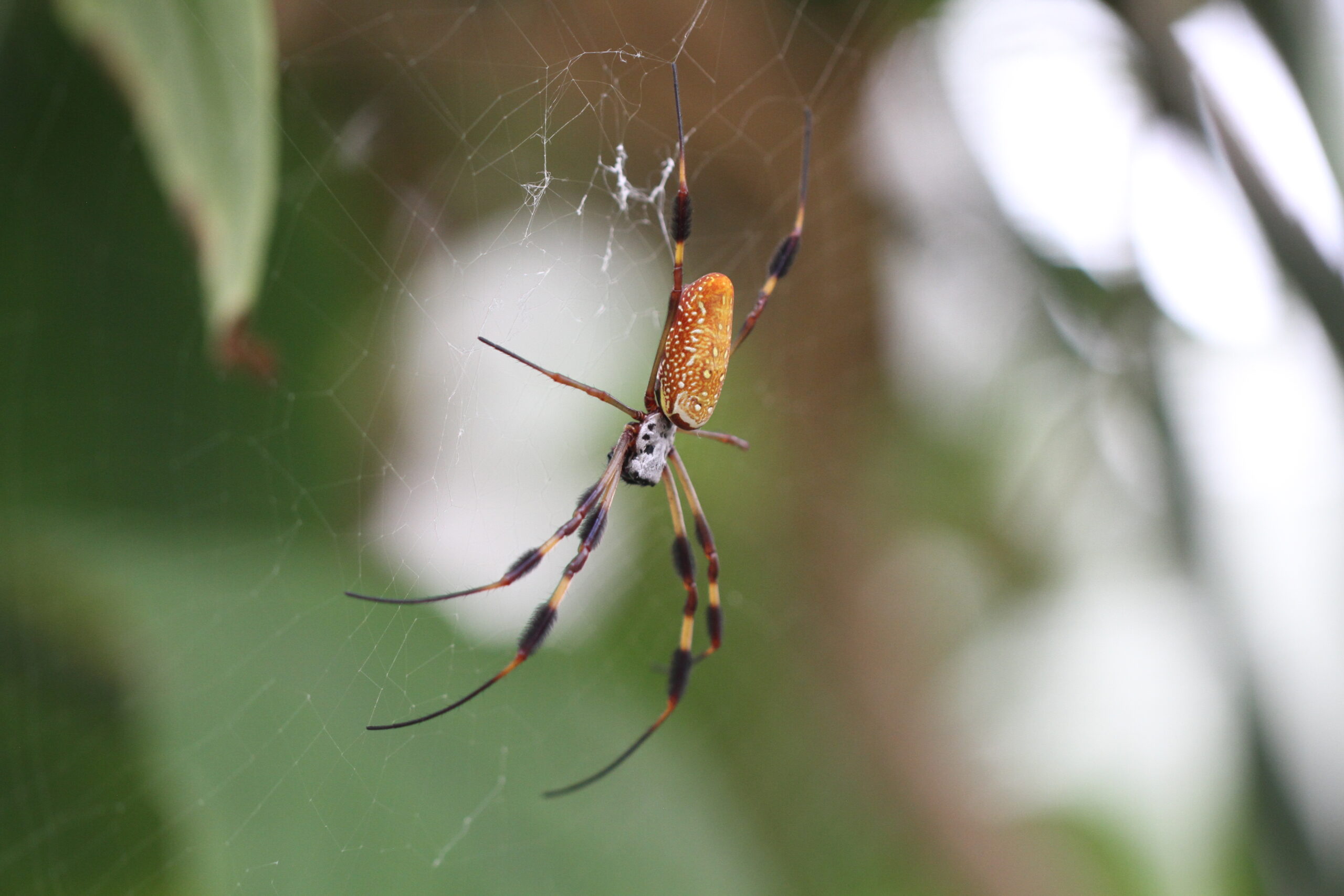
2. Spiders are not insects, they are arachnids!
Although spiders are often thought of as insects, they actually belong to a completely different class of animals: Arachnida.
Here’s a simple breakdown between the classes Insect and Arachnida
Insects
– They have three body segments (head, thorax, abdomen), six legs and often wings or antennae
Arachnids –
They have two body segments (a fused cephalothorax and abdomen), eight legs and no antennae (though some have legs modified and used for a sensory function) or wings.

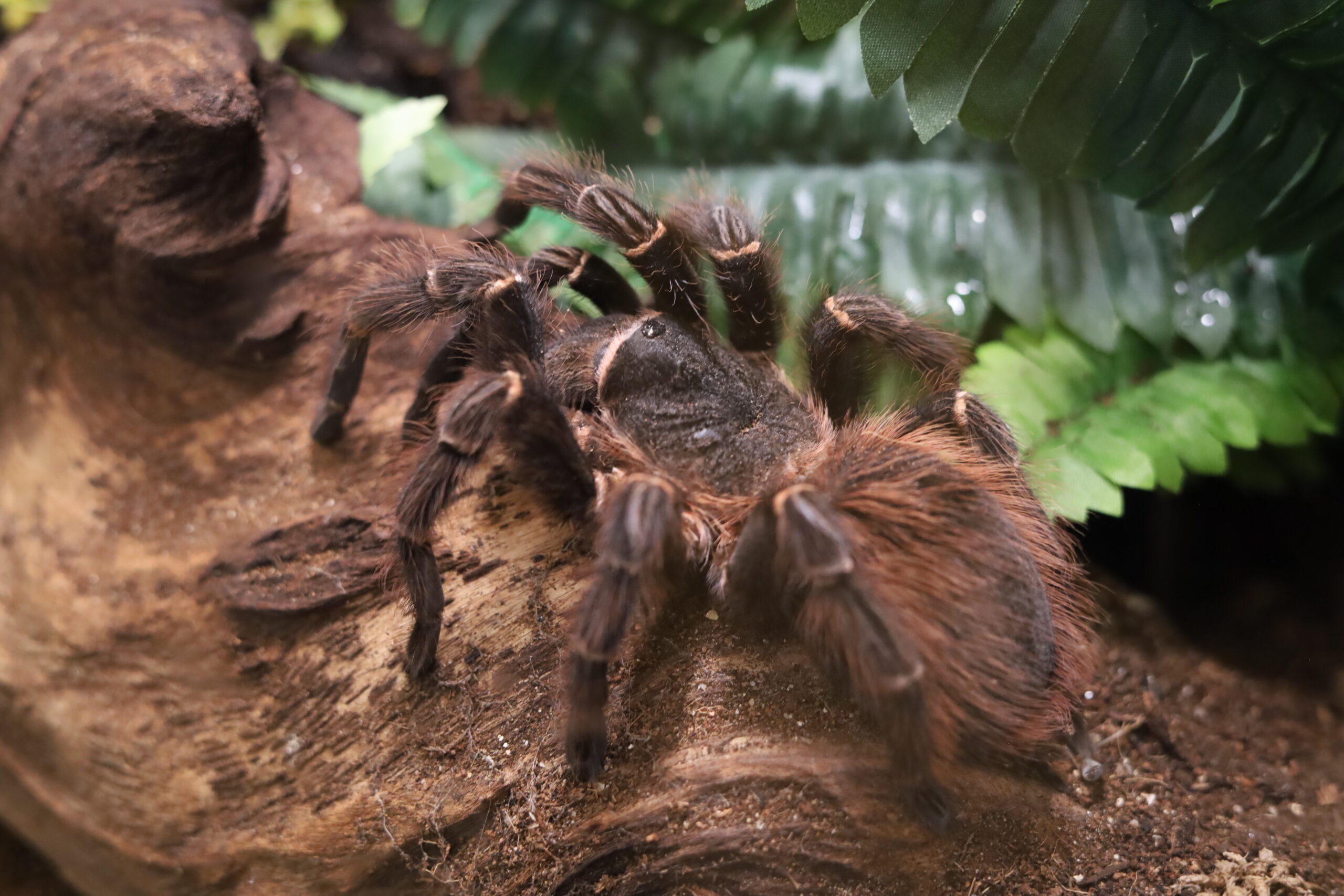
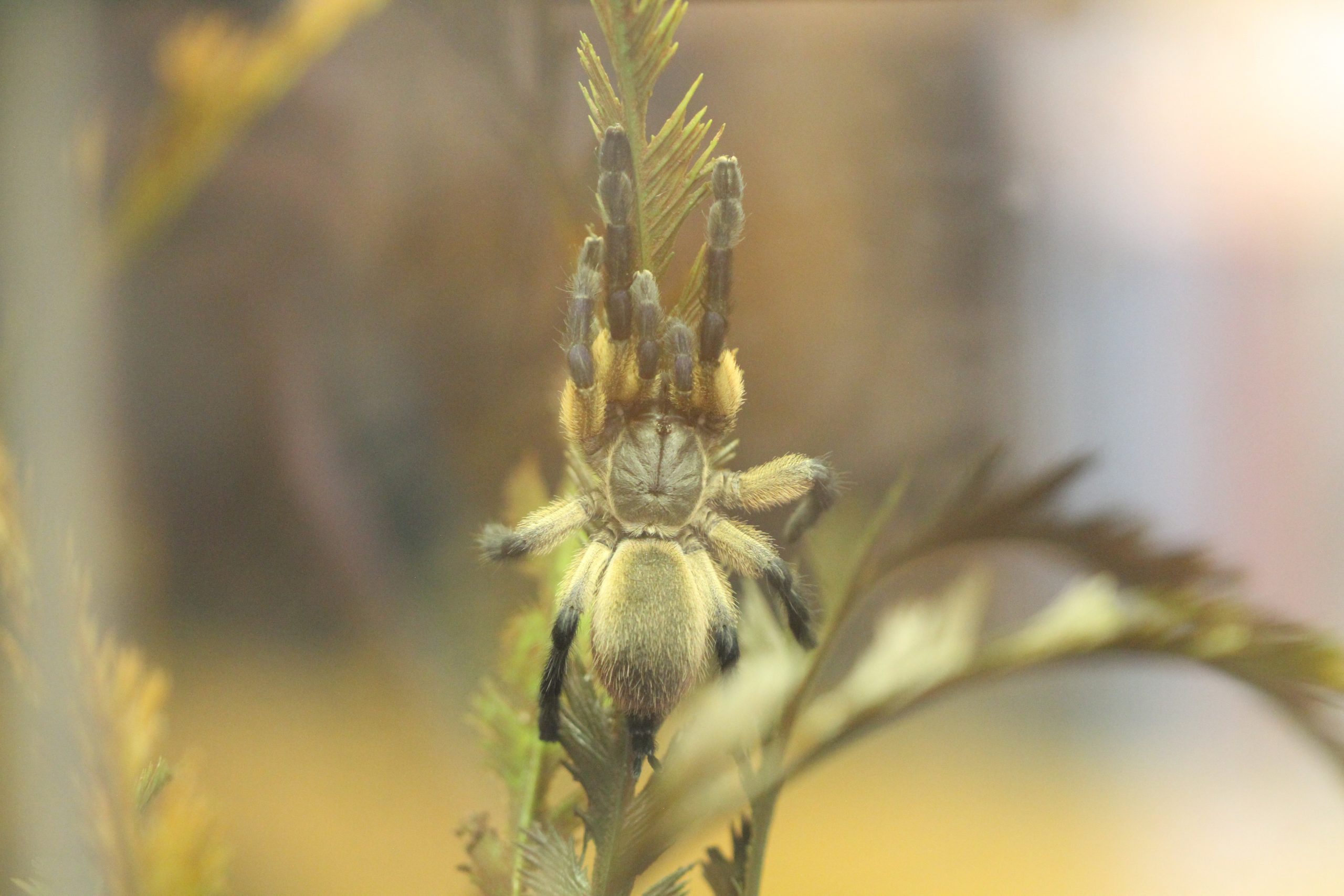
3. There isn’t just one kind of Tarantula. There are thousands (1,177 species of tarantula as of 11/3/2025)!
When people say tarantula, they are actually referring to a whole family of spiders known as Theraphosidae, which includes over 1,000 different species around the world. These species can be found in hundreds of different shapes, sizes, colors, and behaviors based on where they live. Despite their size and appearance, most tarantulas are slow and docile animals that rely on intimidation over aggression. Most tarantulas have alternative defense mechanisms before resorting to a bite. For example, some tarantulas will use urticating hairs which are little barbed hairs that they will flick at their predators to inflict an itchy rash on their predator as a defense mechanism.
4. Daddy Longlegs are not spiders or venomous.
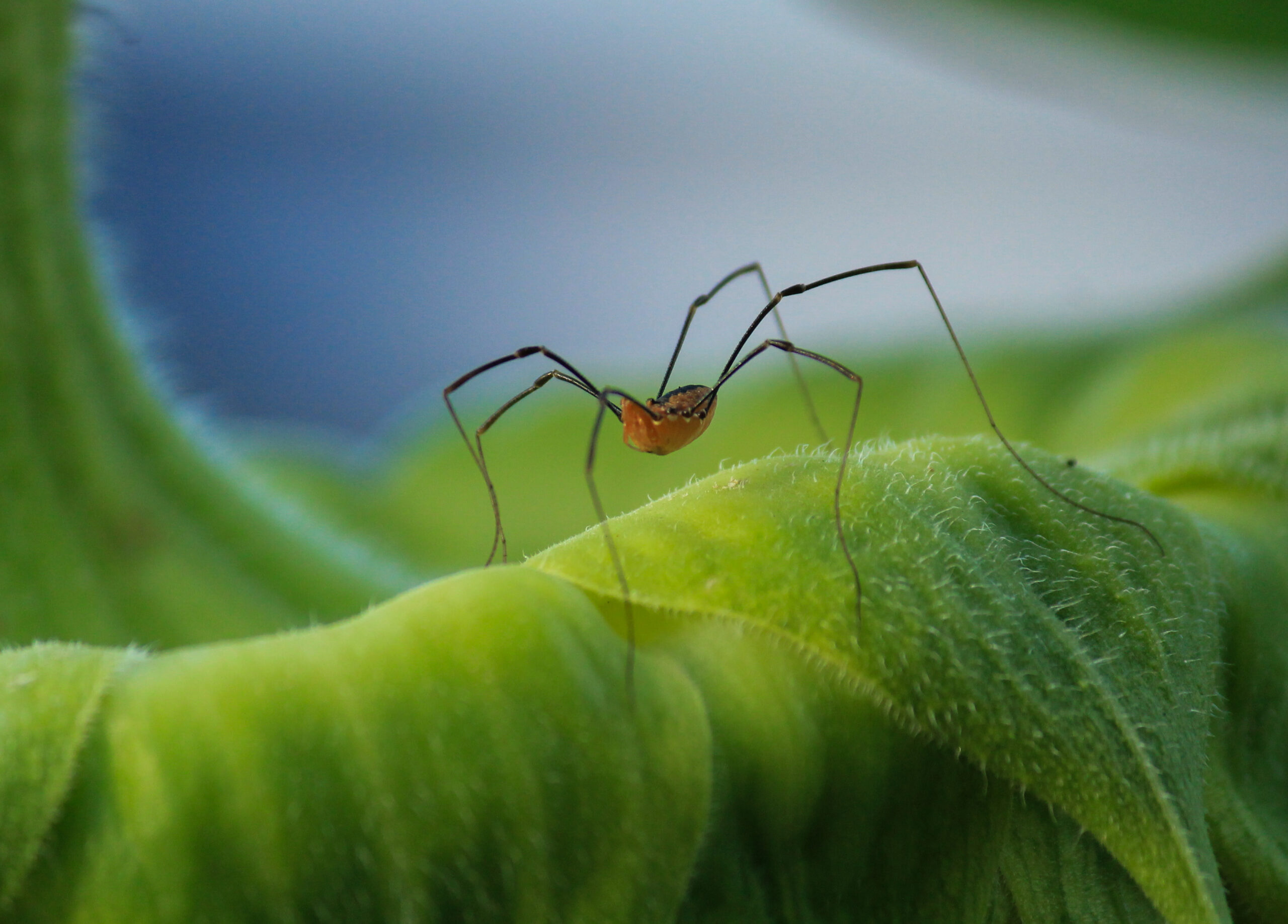
Daddy Longlegs is a name that is used for a few different animals, but most used to refer to the harvestmen. So to put it short, Daddy Longlegs are part of the harvestmen order, not the spider order. Under the class of arachnids, there are several different orders such as mites, scorpions, spiders, and harvestmen to name a few. The difference between spiders and harvestmen is that harvestmen have two body sections that are fused together to look like one, no silk or venom glands and two eyes opposed to spiders which have two body segments, silk and venom glands with six eyes. Unlike spiders, harvestmen feed mostly on decaying plants and organisms, but will also prey on smaller insects as well. They are peaceful and harmless omnivores that mostly scavenge, but also help control small insect populations.
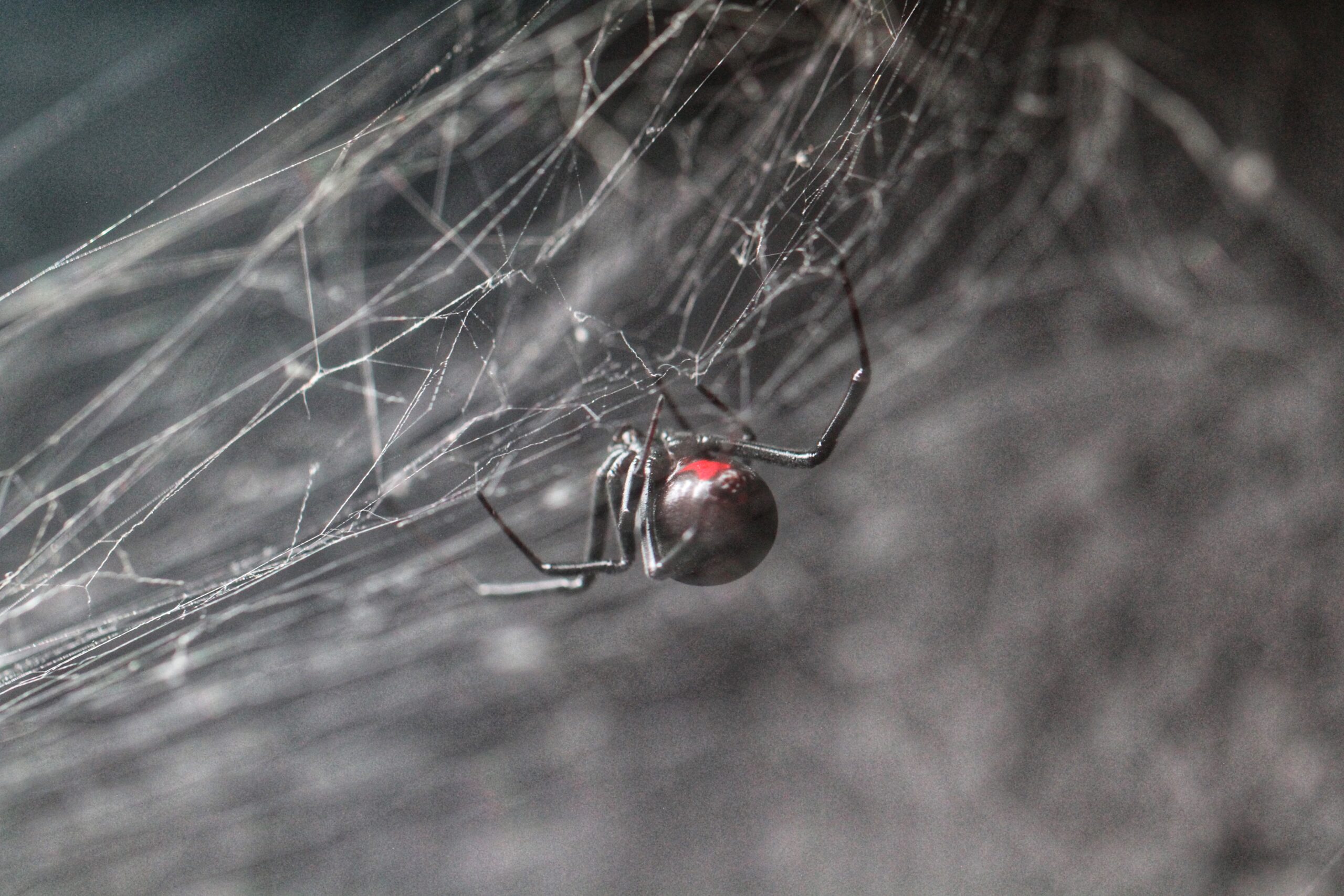
5. Approximately 0.05% of all spiders are harmful to humans.
With more than 50,000 species of spiders estimated worldwide, there are only about 30 spiders that have actually been known to possess venom potent enough to cause medically significant reactions in humans. Spiders understand that biting humans is a waste of venom rather than saving it for venom. Even spiders that are considered “dangerous” like the black widow, tend to avoid biting humans unless it is a last resort for self-defense. In the end, spiders are much more beneficial to humans as important pest controllers keeping insect populations in check both indoors and outdoors.
Written by: Carter Chen
Butterfly Pavilion isn’t just home to butterflies; it’s also full of amazing aquatic invertebrates! There is a whole underwater world to explore right here at Butterfly Pavilion. So, let’s dive in! Here are five fun facts you probably didn’t know about our aquatic residents.
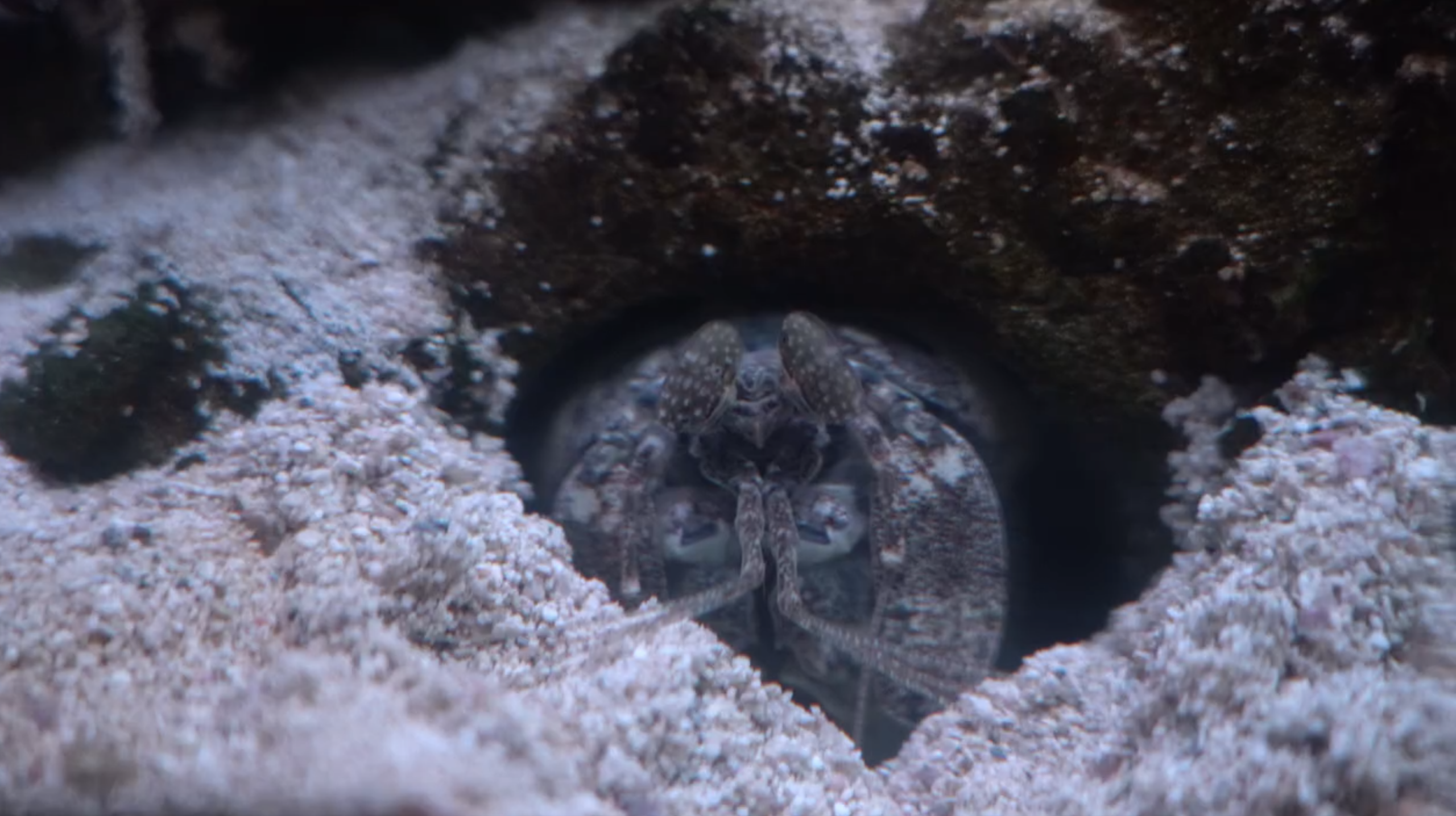
1. Mantis Shrimp can’t punch through our tanks!
If you’ve ever seen a mantis shrimp, you know they look small but mighty and that’s because they are. These powerful crustaceans are famous for their lightning-fast strikes. It’s easy to see how rumors started that a peacock mantis shrimp could break through aquarium glass. But don’t worry, our mantis shrimp isn’t breaking out anytime soon. At Butterfly Pavilion, they live in special acrylic tanks, which is actually a type of plastic, that can flex under impact instead of regular glass that can microfracture and eventually shatter. That means even the toughest shrimp punches are safely absorbed and if the tank is damaged, we have enough time to repair the tank before any serious damage is done. Mantis shrimps’ claws come in two forms, “smashers,” who deliver those powerful clublike hits, and “spearers,” who use sharp, spiny limbs to jab at prey with precision. A peacock mantis shrimp is said to have a punch as strong as a .22 caliber bullet! This just goes to show the technology behind their tanks that lets us witness some of nature’s most fascinating animals.
2. Coral are not plants or rocks… They’re animals!
One thing that our guests often get confused about is mistaking our corals for colorful underwater plants or even rocks. However, they’re actually invertebrates, playing one of the most important roles in our oceans! There are different kinds of corals, hard or stony corals, and soft corals. Each coral is called a colony, and each coral colony is made up of hundreds of tiny polyps. Hard corals are made of tiny polyps that build hard skeletons of calcium carbonate to form corals such as staghorn and brain corals. Whereas soft corals lack these rigid skeletons and are more flexible with variants being known as sea fans, sea whips and leather corals. Combined, these hard and soft coral colonies form the reefs we know and love, which support nearly 25% of all marine life on Earth. Corals also have an incredible partnership with microscopic algae called zooxanthellae (zoh-uh-zan-thel-ee). These algae live inside coral tissue and provide food through photosynthesis, while the coral offers protection and nutrients in return resulting in a mutualistic relationship. This relationship not only fuels coral growth but also gives reefs their brilliant colors.
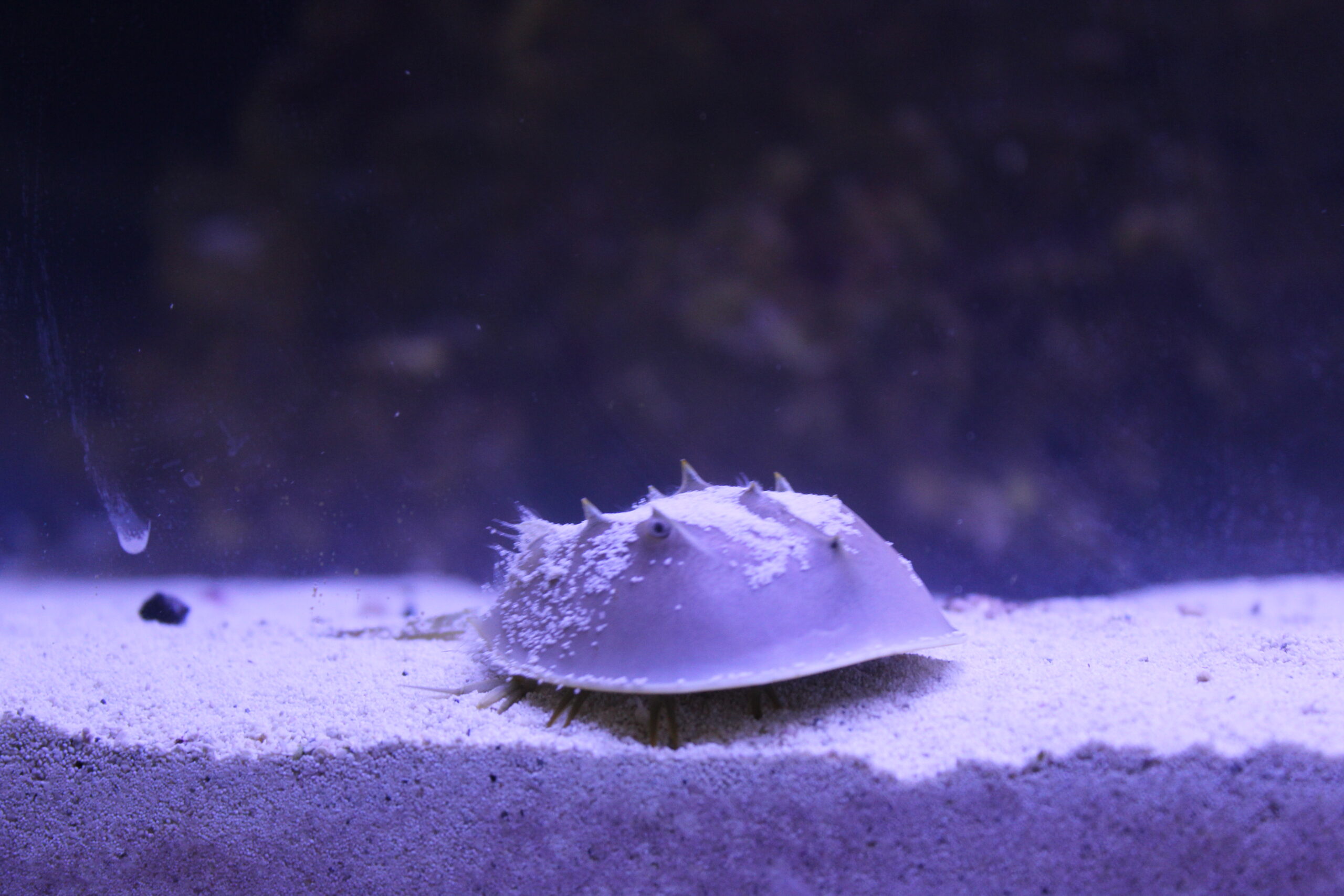
3. Horseshoe crabs aren’t stingrays, arachnids or crabs… So, what are they?
Horseshoe crabs are ancient animals that have existed for more than 450 million years, long before dinosaurs ever roamed the Earth. Though many people mistake them for stingrays, arachnids, or true crabs, horseshoe crabs are arachnids, making them distant cousins of spiders and scorpions. Their long, pointed tail, called a telson,isn’t for stinging. Instead, it’s a handy tool they use to flip themselves over if they get stuck upside down and steer themselves through the water. Their blue blood plays an essential role in modern medicine. It’s used to test vaccines and medical equipment for bacterial contamination, helping to keep people safe worldwide!
4. Our animals don’t like tapping or flash photography
While our aquatic animals are full of surprises, they don’t like surprise lights and vibrations. Tapping on the glass or using flash photography might seem harmless, but to our animals, it can feel like an earthquake or a flashing spotlight. Over time, these vibrations and bursts of light can stress them out, affecting their natural behavior. At Butterfly Pavilion, we like to think of our aquariums as underwater spas calm, quiet, and relaxing. So, when you visit, we ask that you enjoy the view without tapping or using flash. Your favorite aquatic friends will thank you for it.
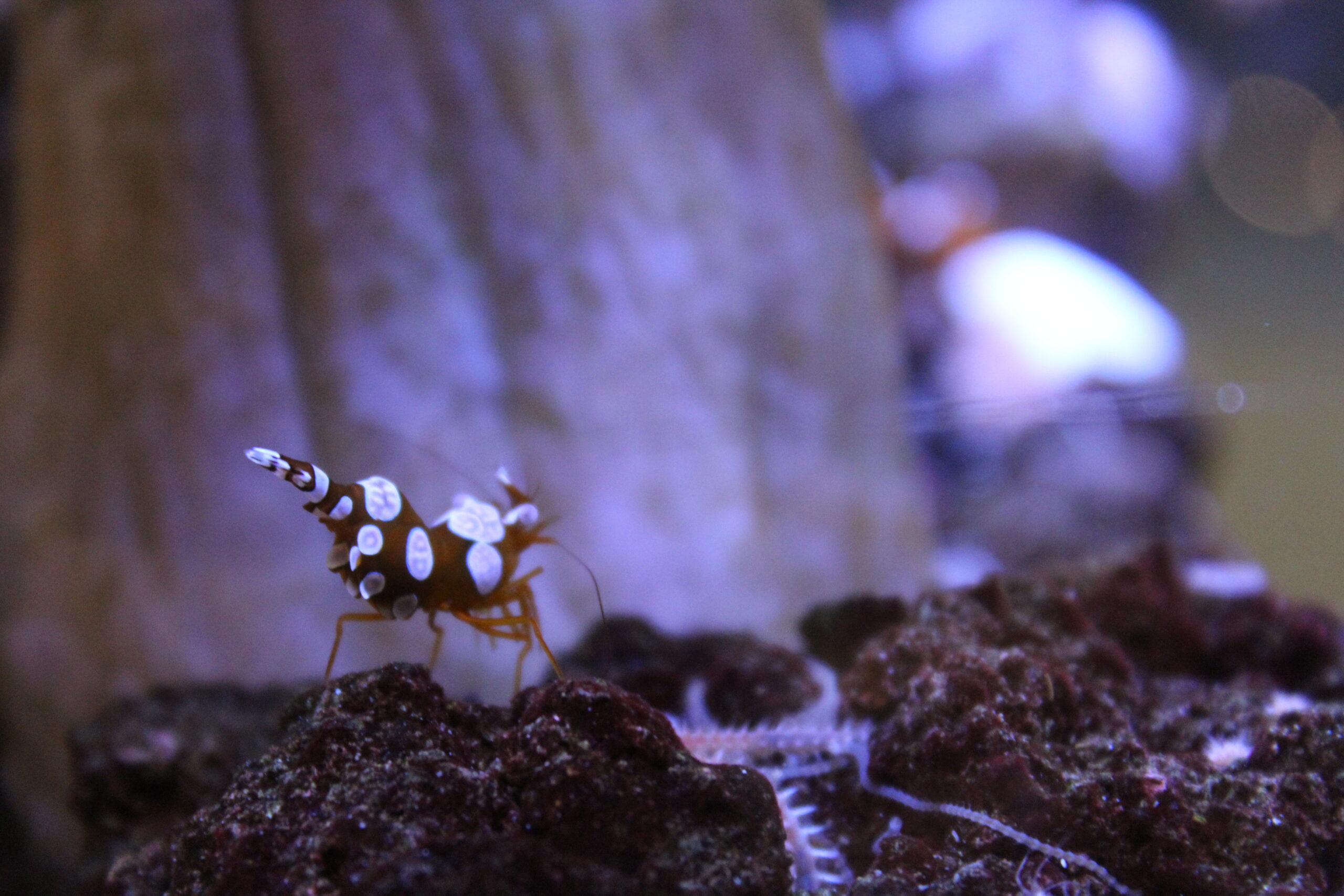
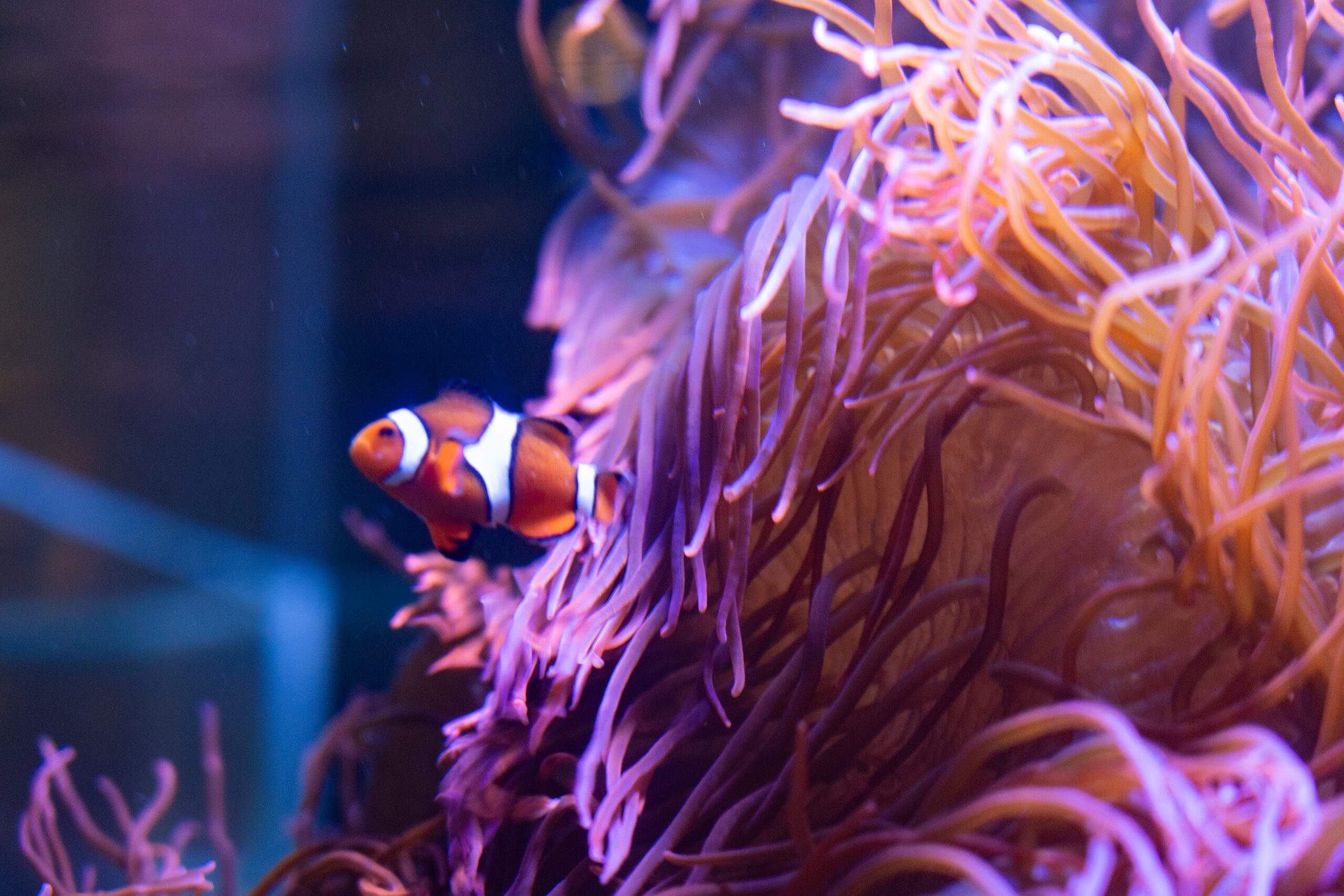
5. Touch tank tips: Use your knuckle, not your finger!
If you’ve ever stopped by our Water’s Edge touch tank, you know it’s a popular hands-on experience for guests of all ages. We encourage you to touch the animals gently using your knuckle like a pirate hook, not your fingertips. This is because using your fingertips can expose the animals to the oils on your skin. Additionally, using your knuckle applies less pressure on the animals and decreases the risk of scratching our animals.
Written by: Carter Chen
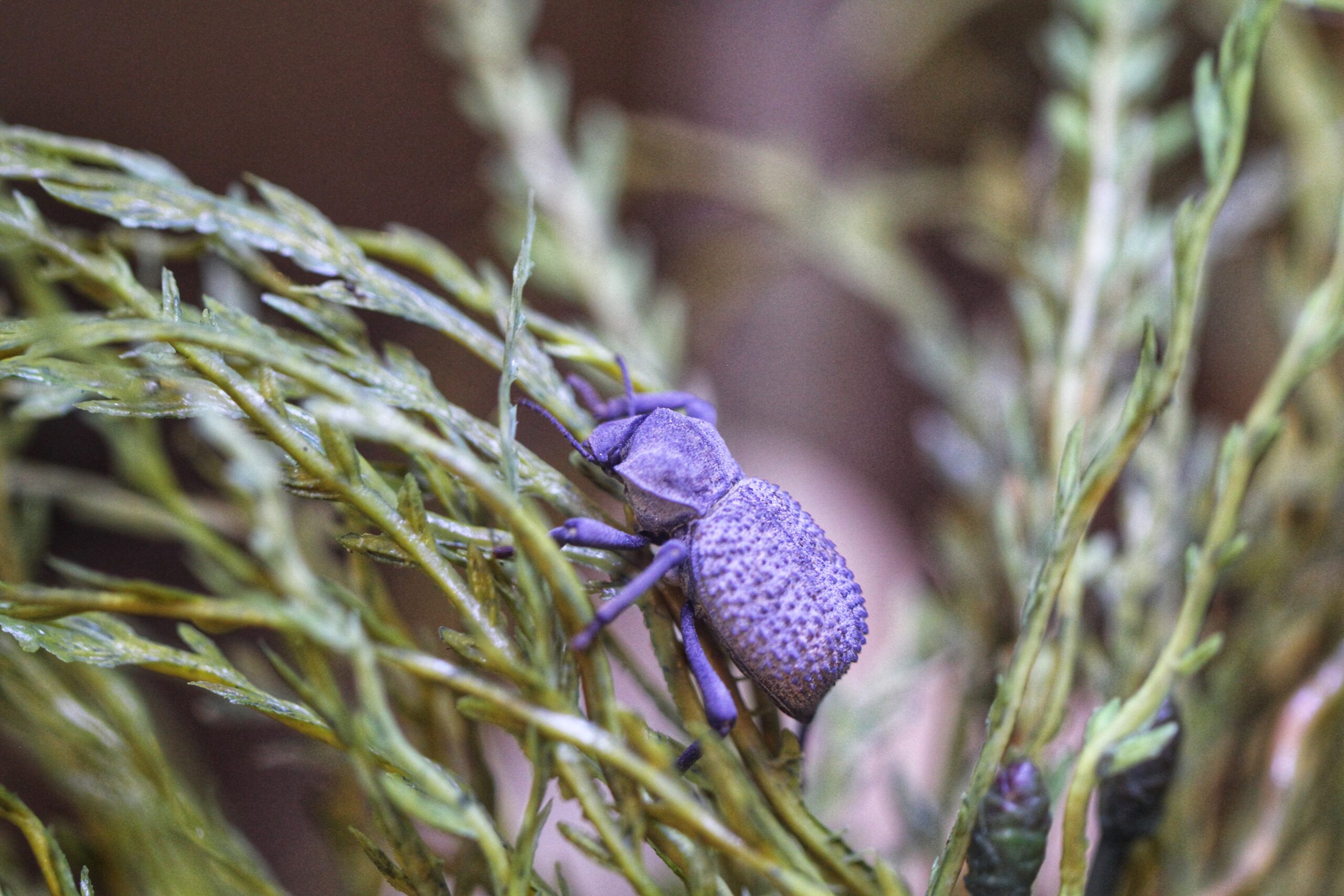
Have you ever wondered why you can hold a tarantula, but not a beetle? Or why Water’s Edge has a touch tank but the Legacies: Invertebrates of Mexico exhibit does not?
Roughly 360 species of invertebrates call Butterfly Pavilion home. But of the 15,000+ individual animals that live here, visitors only see the ones on display.
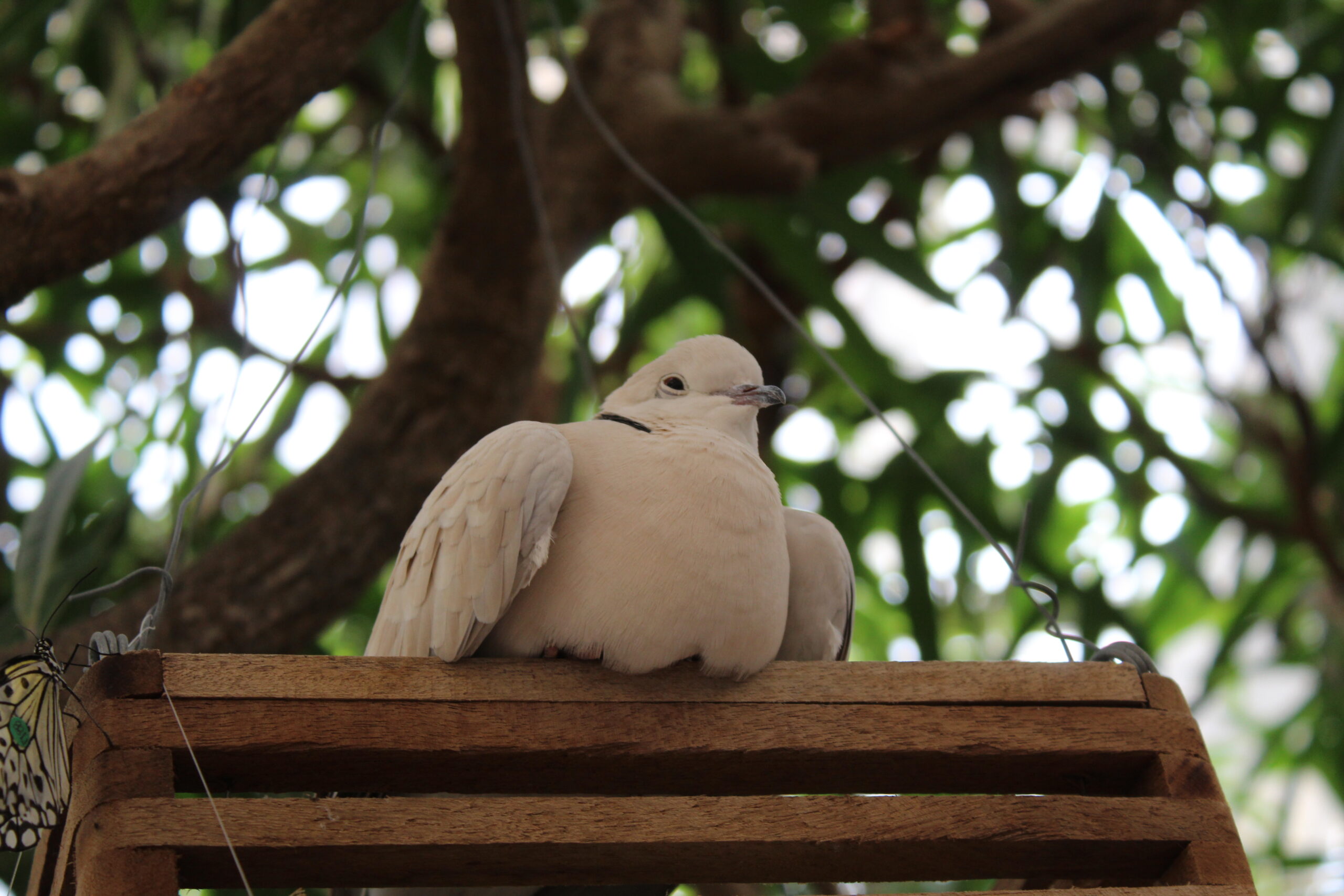
There are many factors that go into the exhibits’ usage of live animals. A species needs to be somewhat charismatic and interesting- but it can get even more specific than that. Once, a female Goliath Birdeater Tarantula was displayed for a short time, but she hid and was generally opposed to being an attraction for visitors. However, a male of the same species, nicknamed Boss, loved being on display; in fact, he would be visible for weeks at a time. The animal’s individual disposition can be equally as important as its overall appearance, which may be the only obvious element to visitors. Because invertebrates are often overlooked in scientific research and animal exhibits, many of the species in our care haven’t benefited from the same spotlight as more traditional zoo animals. That makes our work even more important—expanding knowledge, improving care, and helping the world discover just how fascinating a hermit crab or a stick bug can be. That said, Butterfly Pavilion is currently home to a few vertebrates, one of which comes with an interesting story: Larry Bird, a Eurasian collared dove who lives with the butterflies. He was donated in 2001, before Butterfly Pavilion was AZA-accredited as an invertebrate zoo. Larry, alongside two other doves, a handful of turtles, and an iguana, was able to live peacefully among the invertebrates. However, after Butterfly Pavilion became an Association of Zoos and Aquariums (AZA) accredited invertebrate zoo, most of the vertebrates were given away to other trusted caretakers. Larry, however, remains. He is nearly 25 years old and will live out the rest of his life in the treetops of Wings of the Tropics.
As a premier institution for invertebrate research, education, and conservation, Butterfly Pavilion carefully selects the species in its care. Each animal must support our mission—whether through display, education, or scientific study. In some cases, we continue to care for species that are threatened or endangered, even if they’re no longer part of active programs, in alignment with global conservation procedures. We also consider practical factors like specialized diets or permit requirements to ensure every species receives the highest standard of care. This doesn’t mean we don’t have dream invertebrates. Sara Stevens, Director of Animal Collections, provides an example of just how different realistic and idealistic goals can be: “If I could feasibly have any animal here, it would be a Giant Pacific Octopus. They’re very charismatic. If I could have any invertebrate regardless, I would want a Giant African Land Snail.” She adds, “Unfortunately, they are wildly invasive and detrimental to agriculture, and the USDA won’t give permits for it.”As an Association of Zoos and Aquariums – accredited institution, Butterfly Pavilion has an extra set of standards that must be upheld in all of its operations, especially in regard to the live collections. Elements of an animal’s life, such as physical environment, self-maintenance, diet, and life stages, must be accounted for in the total cost-benefit analysis. Providing the highest standard of care means ensuring our staff has the specialized knowledge needed to support each species. Institutional Collection Plans, which outline the entire acquisition and caretaking process, must be updated routinely.
Every area of the zoo has a different plan for its animals. For example, our Wings of the Tropics butterfly conservatory is considered a transient collection because of the everchanging rotation of available species shipped in from sustainable butterfly farms, whereas Water’s Edge, which was originally a pilot exhibit, was so well-received that its unique ecosystems were permanently added to Butterfly Pavilion’s collection.
Planning exhibits can take months, years, and sometimes even decades. Currently, Butterfly Pavilion is home to five juvenile Socotra Island Blue Baboon Tarantulas, who are not on display. In fact, they may not be public facing for fifteen more years. As a species, Blue Baboon Tarantulas are unique in their ability to live in large family groups without getting territorial, as long as their available space isn’t too large. These colonies can comfortably fill tanks and provide a fascinating look into the social dynamics of these spiders, which is the ultimate goal for Butterfly Pavilion. That means we’ve still got some waiting to do.
Invertebrates make up 97% of all animal species on earth, and each individual animal is a crucial part of its ecosystem. They provide the foundation for the rest of the world, so we are committed to protecting them. While there are many factors that make animal displays complex, Butterfly Pavilion excels at presenting invertebrates in ways that educate, engage, and leave a lasting impression.
Pollinator populations are declining.
Are Colorado’s bees in trouble?
The Colorado State Beekeepers Association (CSBA) represents over 3,000 beekeepers throughout the state; many of which report extreme colony losses in recent months. The CSBA sent a letter to state legislators, asking for awareness and potential solutions to this decline. There was a colony collapse in 2007-2008, which is still being studied for a more thorough understanding of the factors that contribute to high losses; it is predicted that 2024-2025 commercial losses are as high as 62%. Fewer honeybee colony numbers not only affect the honey industry, but it could have severe impacts on food security and crop pollination throughout the United States. This local issue is representative of a much larger ecological concern: pollinator populations are in decline due to habitat loss, pesticide use, climate change, and competition from non-native species.
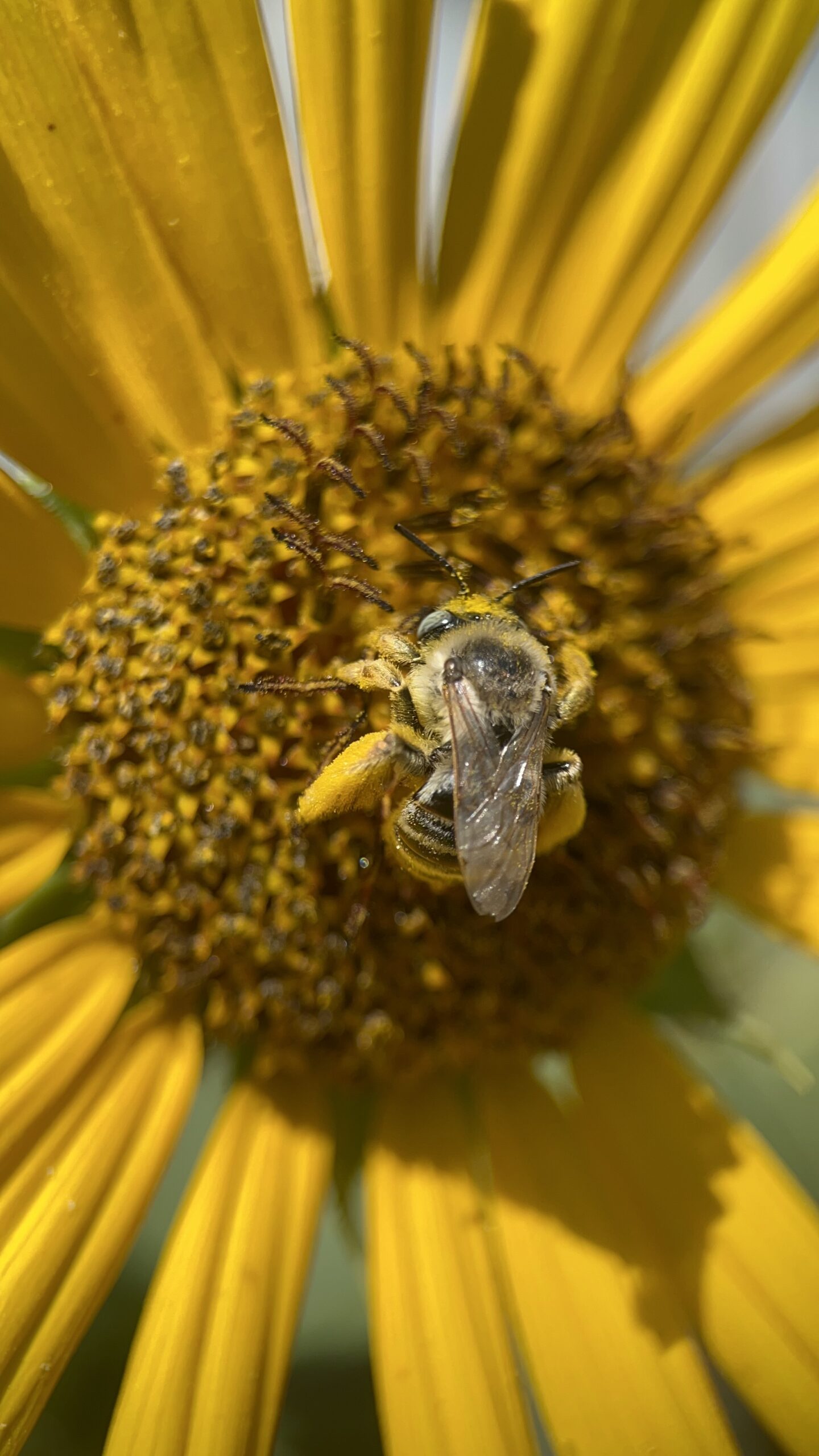
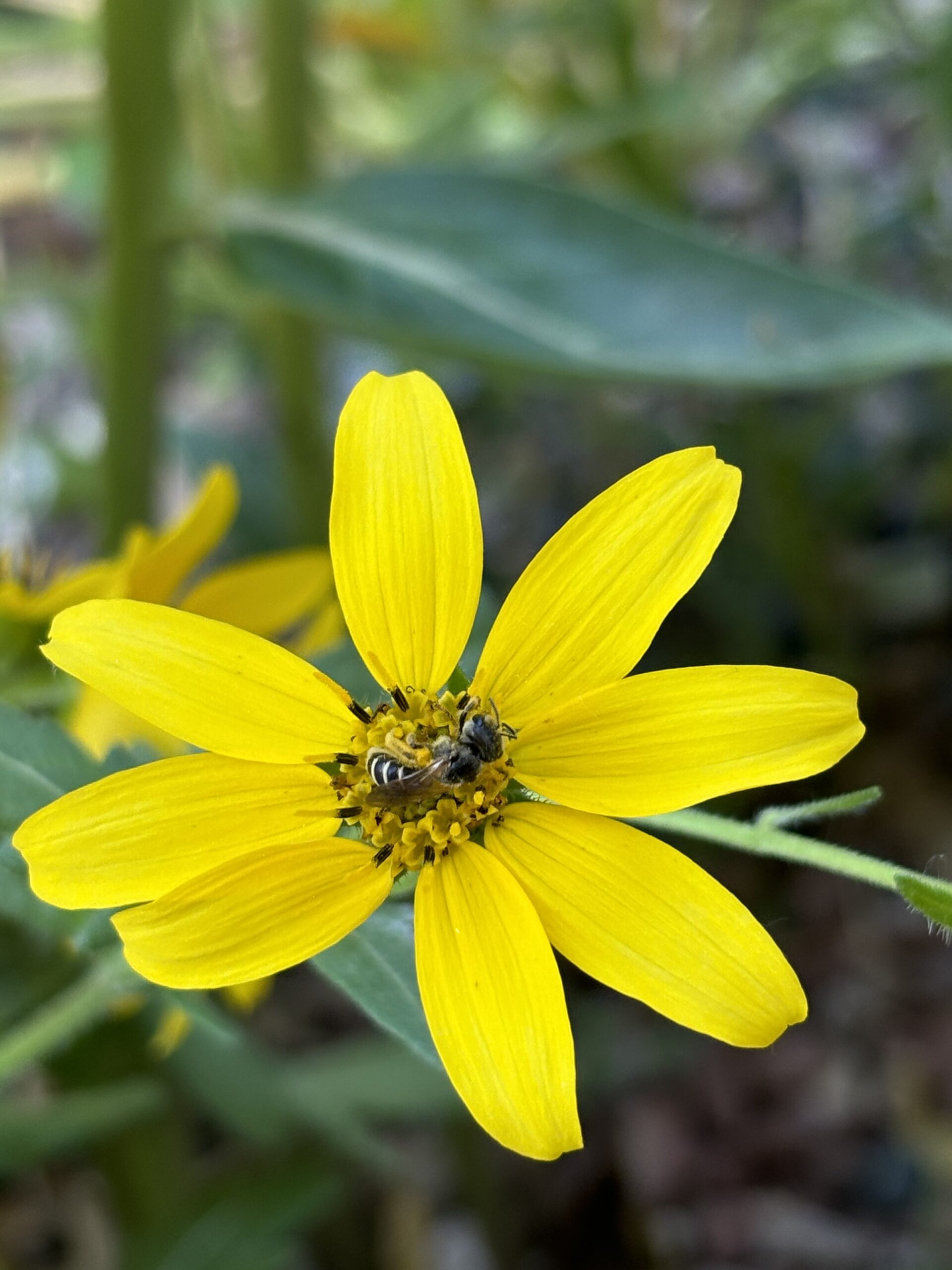
It is important to highlight here that honeybees are not native to North America. Colorado is home to over a thousand different species of native bees, which don’t have a social hive system or produce honey. Bumble bees are the only exception, as they create colonies and store honey in their hives; however, these colonies die every year in winter and the honey they produce is minimal and cannot be used for human consumption. The rest of native bees are relatively solitary and do not sting defensively. In fact, roughly 70% of them nest underground. Some native bees are also specialists, meaning that they rely on specific plant groups to survive. If the host plant disappears, so do they, and vice versa. Ecosystem disturbances have cascading effects as a result. As pollinators, native bees help pollinate flowers and agricultural crops, supporting in the production of tomatoes, peppers, berries, peaches, and many other crops. They play a crucial role in the food supply system throughout the United States and the world in general. The co-evolution of native bees and native plants means that when one is threatened, the other feels the impact just as sharply. There are still large gaps in scientific knowledge about native bee species, especially because they are still being discovered at a meteoric rate. It can be difficult to protect a species if we don’t know about its existence. Similarly, very few native pollinators – aside from bumblebees and butterflies – have been assessed for extinction risk.
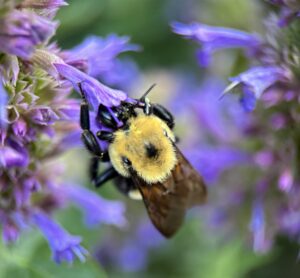
Many research organizations have recently highlighted that pesticides are one of the largest threats to native bees, due in part to the slow pace and limited scope of regulatory processes. The Environmental Protection Agency conducts all their testing on honey bees to ensure that approved chemicals do no harm to pollinators. However, these species are not native to North America and their social colony structure is far from representative of the thousands of native bee species, not to mention other pollinators like butterflies, moths, and beetles. Milkweed, which is an essential plant for monarch butterflies, is particularly susceptible to harmful chemicals. In the Central Valley of California, 100% of the milkweed that was tested was contaminated with some kind of pesticide, and not every found chemical had been researched. Honey bees are poor surrogates for the rest of the bee species, and even worse for other pollinators like butterflies and moths. The narrow focus on pesticide impacts represents a large-scale failure to consider the biodiversity that makes up the pollination process.
Native bees are essential pollinators and fascinating invertebrates, and Butterfly Pavilion maintains a strong commitment to teaching community members how to help keep their numbers as high as possible. One of the most helpful steps is to plant a garden full of native plants; not only does this sustain native pollinators, but it also contributes to local biodiversity. Managing local threats with small gardens and practices aimed at aiding the pollination process can help mitigate large-scale climate change. Beekeeping Bootcamp, pollinator workshops, and several community science programs are aimed at empowering individuals to take action in the fight to save our native pollinators for generations to come.
Written by: Rachel Zing; Photos by: Alex Han
Monarch Butterflies 101:
Explore the incredible life and journey of monarchs and their cultural significance as symbols of transformation and resilience.
It’s that time of year again… the great monarch migration!
Each fall, North American monarch butterflies embark on an incredible migration from their summer breeding grounds to their overwintering locations. The Rocky Mountains serve as a natural dividing line with both eastern and western monarchs passing through Colorado in September and early October.
Monarchs east of the Rockies travel upwards of 3,000 miles to central Mexico in search of oyamel fir trees, while western monarchs undertake a shorter journey to the California coast. Their thousands-of-miles migration not only showcases their resilience but also highlights their vital role in our ecosystem as pollinators.
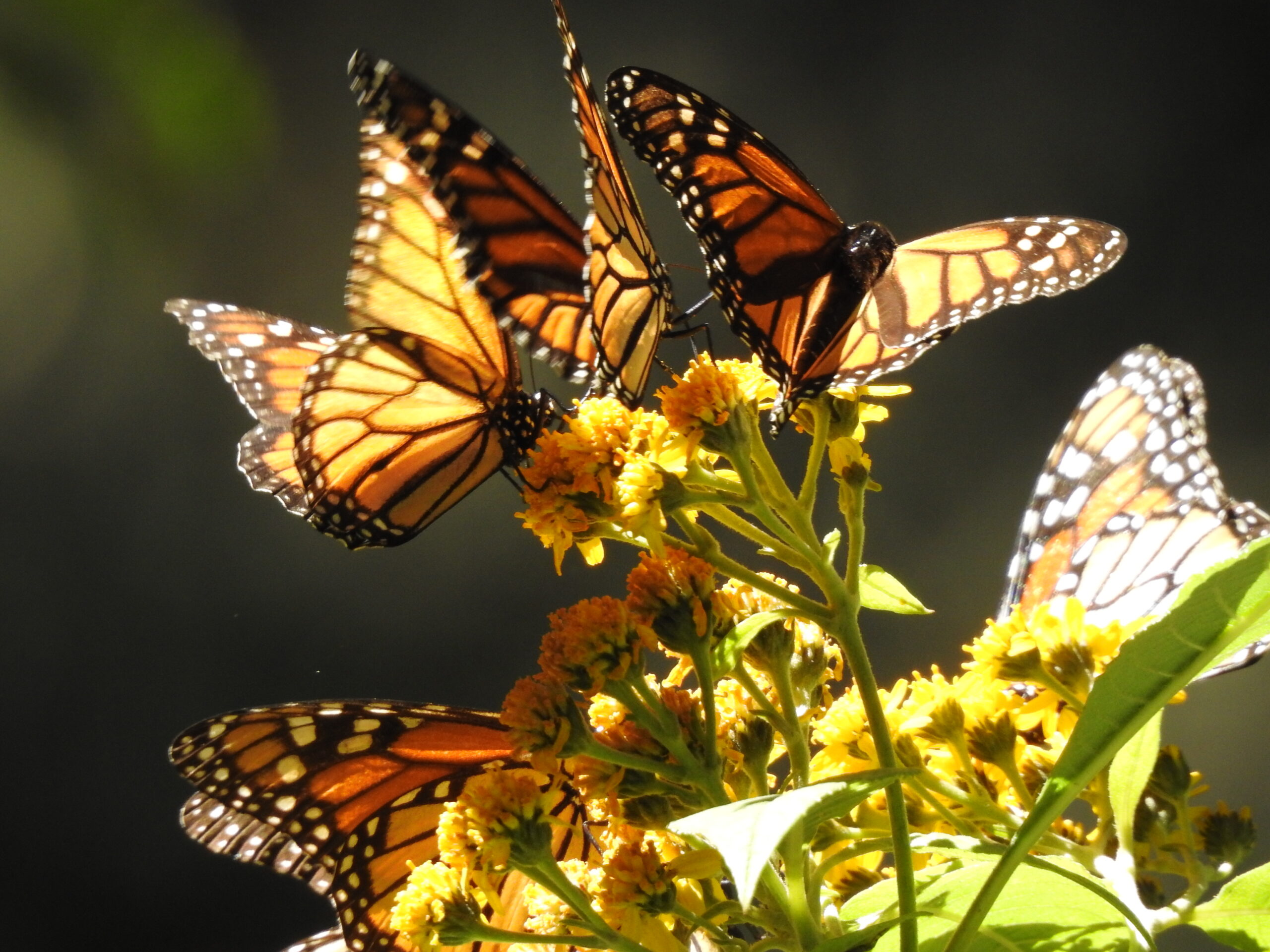
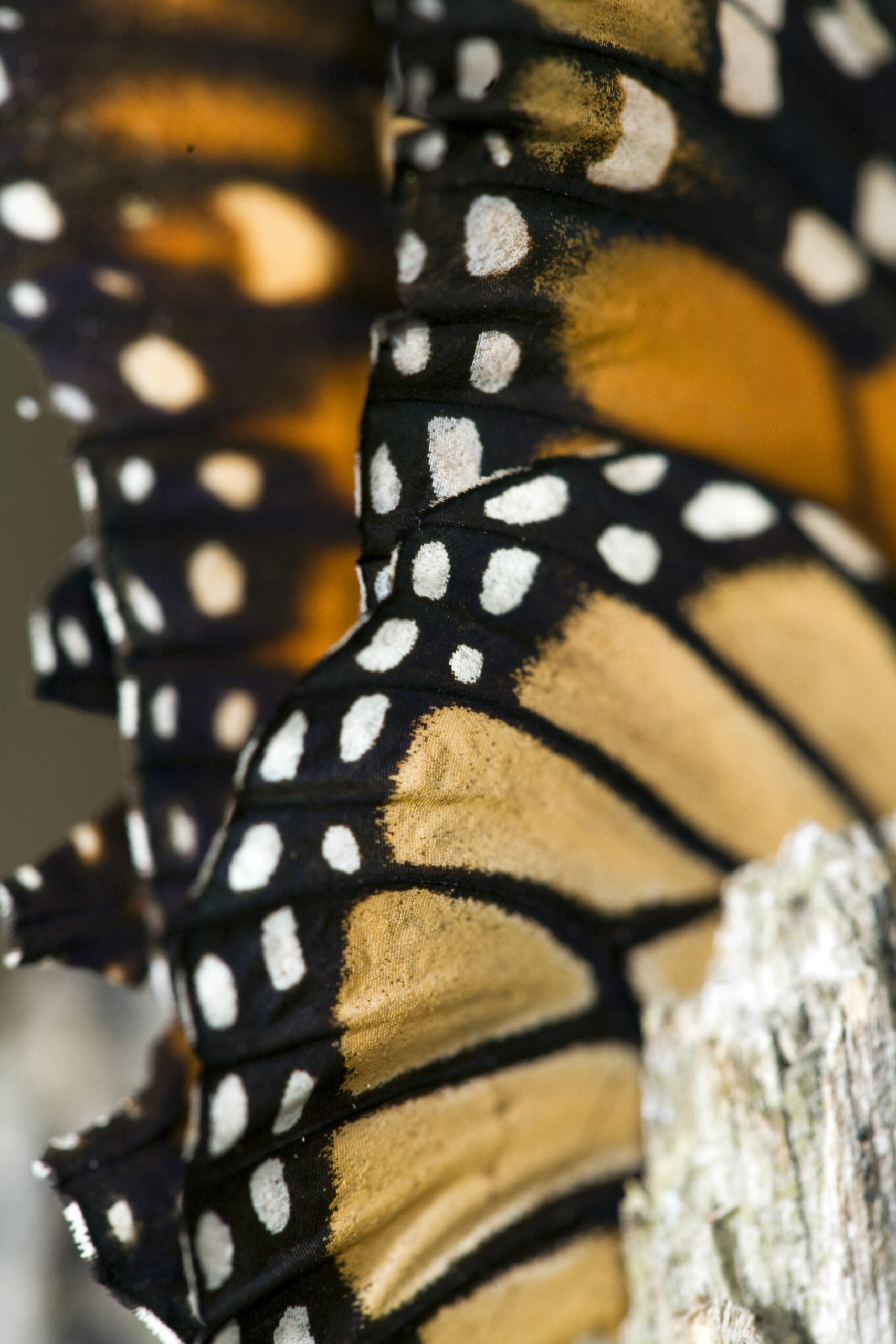
This remarkable migration has been observed for centuries, and researchers have found that these phenomenal creatures use the position of the sun to maintain their flight path. Additionally, these monarchs possess an innate magnetic compass that helps them readjust themselves if they become disoriented.
The monarch migration in the fall coincides with the celebration of Día de los Muertos, a cultural celebration where many communities in Mexico honor loved ones who have passed. Monarch butterflies represent the spirits believed to return on the night of November 2nd. Although this connection is well-known in modern Mexican culture, the link between monarchs and souls span centuries and various cultures. Evidence shows that the Mexica people, previously referred to as Aztecs, believed warriors lost in battle would return as butterflies or hummingbirds, while the Purépecha regarded butterflies as the souls of the departed and the spirit of the forest. In modern times, the established connection between monarchs and Día de los Muertos highlights the importance of conservation – not only for the monarchs and their habitats but the cultural traditions they represent.
Ecologically, monarch butterflies are key pollinators in the ecosystem, feeding on nectar from a wide variety of flowers as adults. The abundance of nectar sources is extremely important for optimal pollination and for the migrating monarchs to build fat reserves ahead of their travels. Since pollination occurs while collecting nectar, access to diverse foliage throughout their journey ensures this essential stage of plant reproduction is accomplished. Despite enjoying nectar from various sources, one particular plant is imperative for the survival and reproduction of the monarch butterfly: the milkweed plant.
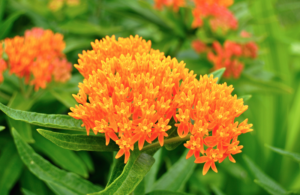
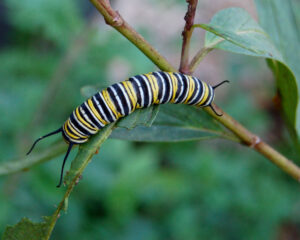
A vital component of their life cycle is the milkweed plant, which provides monarchs with both food and a breeding ground. Monarch butterflies exclusively lay their eggs on milkweed plants because, as caterpillars, they can only eat milkweed leaves. Monarch butterflies lay their eggs on the underside of milkweed leaves, ensuring that their young have immediate access to food and shelter. This relationship exemplifies coevolution, as the milky latex of milkweed contains cardiac glycosides, which are toxic to most animals, including humans. Their resistance to cardiac glycosides, alongside their vibrant coloration, serves as chemical and visual cues to warn predators of their toxicity.
Unfortunately, urban planning, agricultural expansion, and other environmental factors have significantly decreased the prevalence of native milkweeds and have impacted monarch butterfly populations. Recent data indicates that eastern monarch butterfly colonies in central Mexico inhabited 59% fewer acres than previously observed during the 2023-2024 winter season, underscoring the urgent need for conservation efforts.
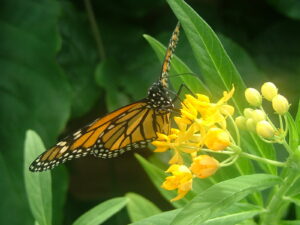
What you can do:
You can play a vital role in supporting monarch populations! Educating yourself and others about monarchs helps foster appreciation for their conservation. By planting native milkweed species or nectar plants that bloom around October in your garden or community spaces, you can create safe havens for monarchs to lay their eggs and re-fuel. Reducing pesticide use, joining local monarch conservation efforts, or advocating to protect natural landscapes also contributes to the survival of these magnificent butterflies.
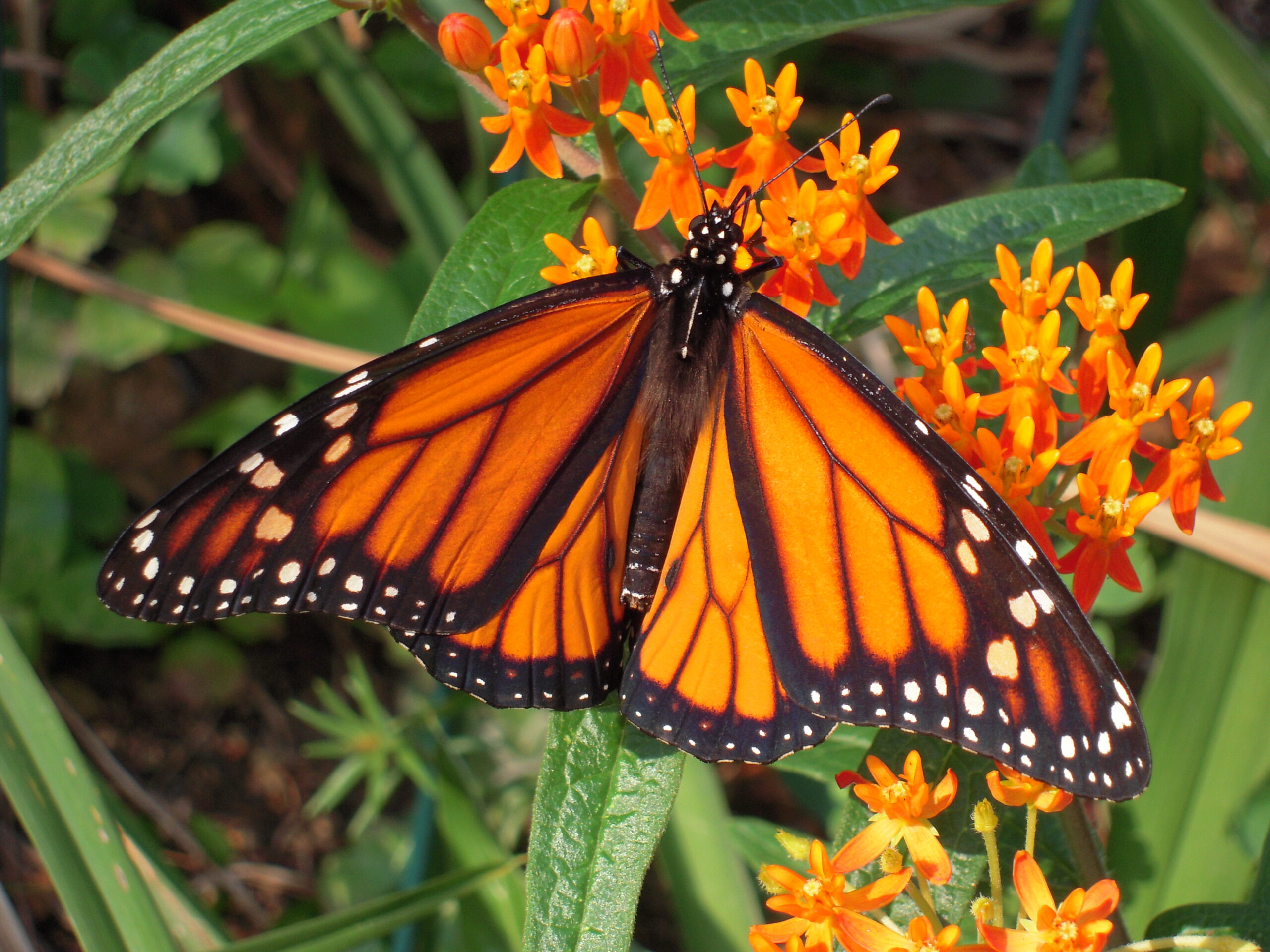
As we watch these iconic invertebrates take to the skies, let’s celebrate their journey and cultural contributions while protecting their future. Together, we can ensure that the magic of monarchs continues to grace our world for generations to come! Learn more about their inspiring journey at https://butterflies.org/monarch-magic.
Written by: Jenna Springberg
Researchers from around the world have found that moths have adopted different behaviors to survive, many of which sound strange and unusual.
Most Moths species are nocturnal, meaning that they are active during the nighttime. Unfortunately, this makes them perfect prey for insectivorous bats, who are also primarily nocturnal. In addition to using their eyes, bats use echolocation to navigate toward their prey.
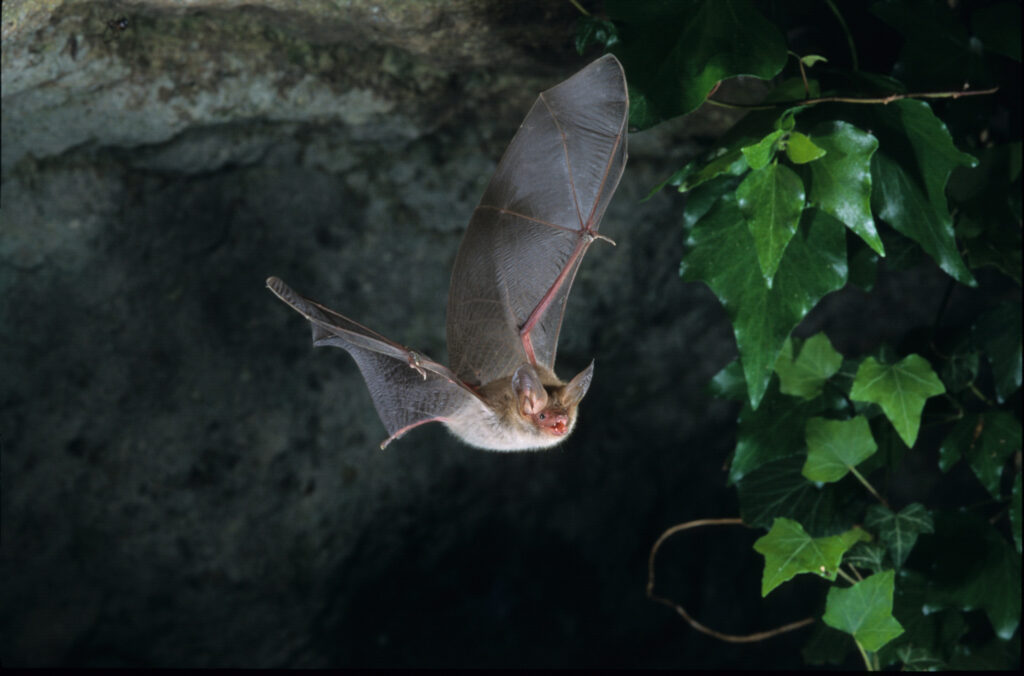
Bechstein’s bat (Myotis bechsteinii)
To evade capture, some moths have adapted to deflect this acoustic radar of bats. Luna Moths, large silk moths native to Eastern North America, spin the long tails of their wings to confuse their auditory signal. A relative of the Luna Moth, the African Moon Moth, employs the same technique in a different part of the world to avoid bats, as well. Researchers have found that, the longer the tails on a moth’s wings are, the more protected they are from bat attacks. This is because their tails create another target for the bats and lead them away from the moth’s vulnerable center.
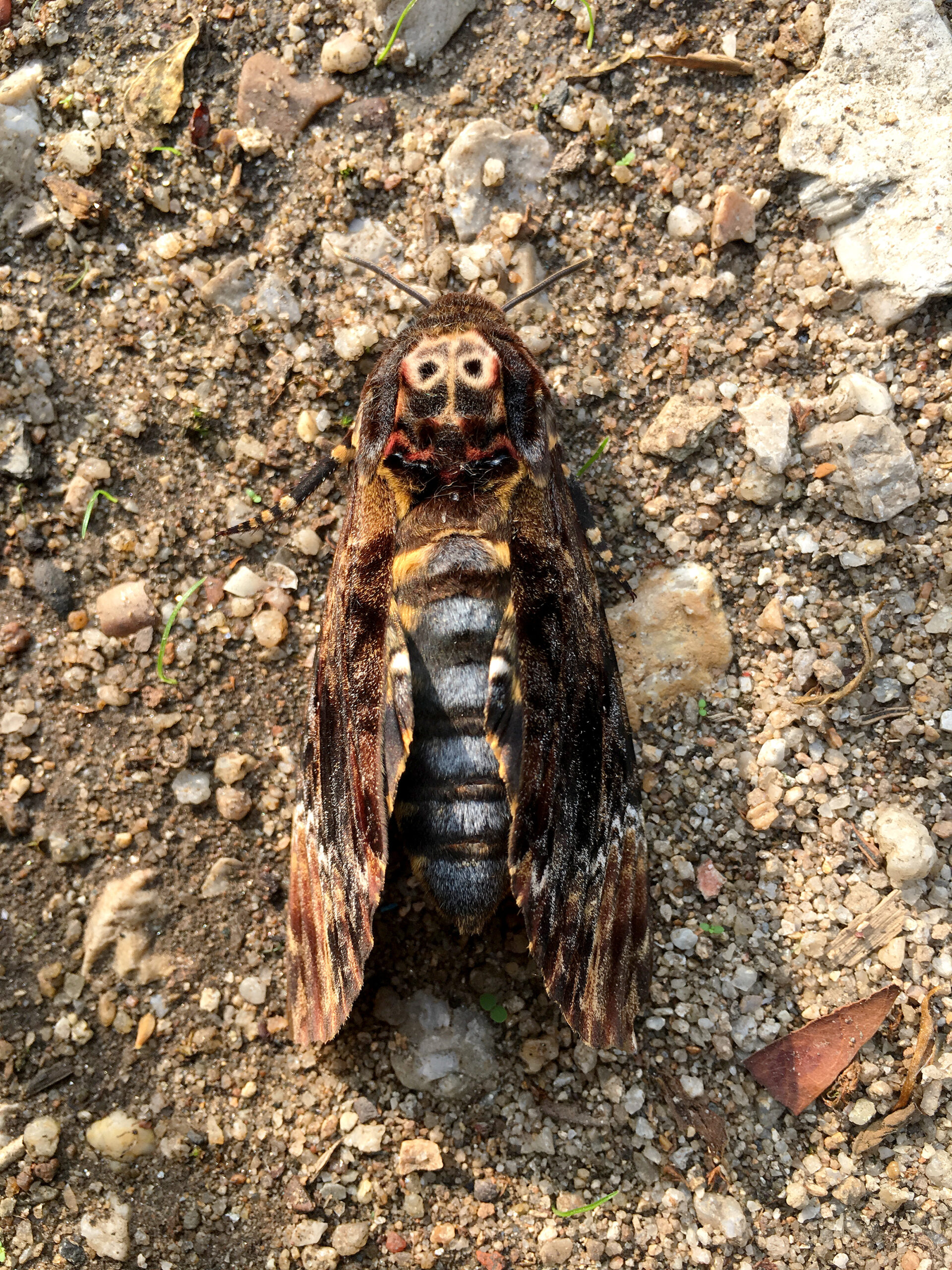
Greater death’s head hawkmoth (Acherontia lachesis)
Some moths like to keep up their neighbors. Despite their fearsome name and reputation, the Death’s-head Hawkmoth will squeak when they’re scared, using a flap in their throat as a defense mechanism. The Death’s-head Hawkmoth has a less cute habit of vibrating its genitals generating an ultrasonic frequency that wards off bats. Like Luna Moths, this strange technique acts as an echolocation disturbance in a bat’s radar.
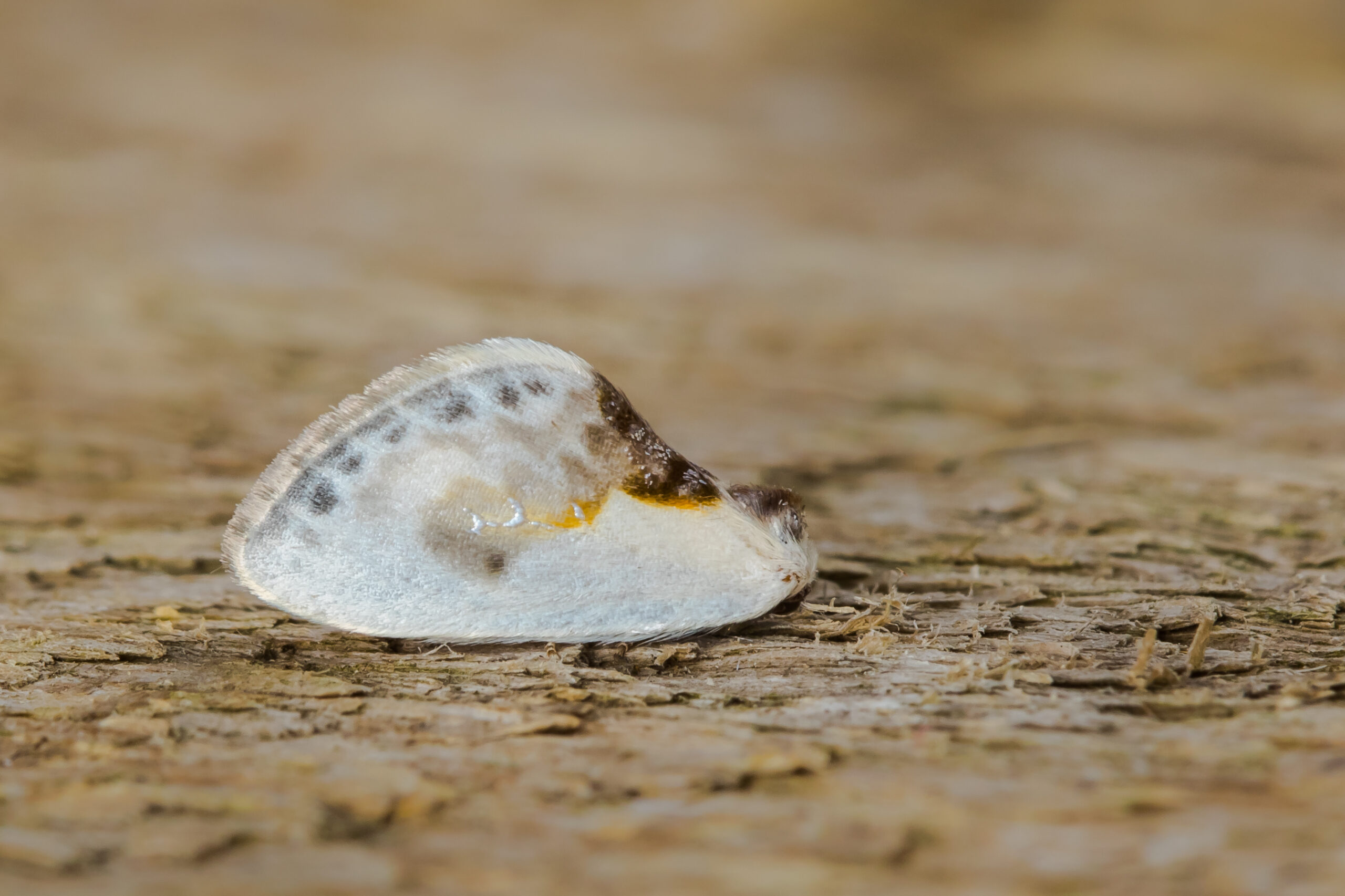
Chinese character moth (Cilix glaucata) disguised as a bird dropping
Moths can be vibrant as well as masters of camouflage, disguising themselves as bark, leaves, and broken twigs. Some moths, however, are a little more peculiar. The Chinese Character moth, for example, uses visual mimicry to disguise itself as bird poop. This repelling costume protects it from potential predators that don’t find avian feces appetizing.
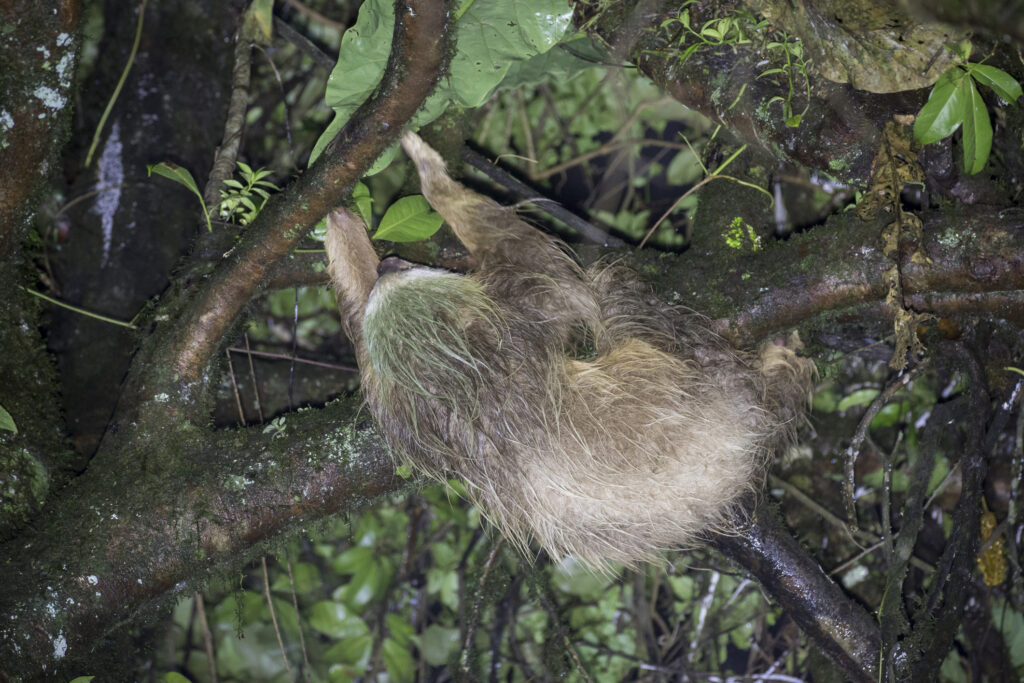
Hoffmann’s two-toed sloth
Some moths have forged unusual relationships with other animals. Cryptoses moths have developed a symbiotic relationship with both sloths and algae, meaning that they all mutually benefit from one other. Also known as the “sloth moth,” they live exclusively on the fur of sloths, feeding on the algae that also live there. There have been up to 120 of these moths found living on one sloth at a time! The eggs of sloth moths are laid in sloth dung, which a sloth will descend to the forest floor to deposit every week or so. When the eggs hatch into larvae, they will feed on the dung until they mature into adult moths and begin to live on sloth fur. This relationship is important because the moths provide essential nutrients for the algae to grow, which scientists believe that the sloth then eats and uses as a green camouflage.
Occasionally, moths have been spotted drinking the tears of sleeping animals, such as birds, turtles, or even crocodiles! Researchers believe that this behavior is due to the salt content of tears. Often, moths (as well as butterflies) will seek out salty substances in addition to their typical diet of nectar to supplement essential nutrients.
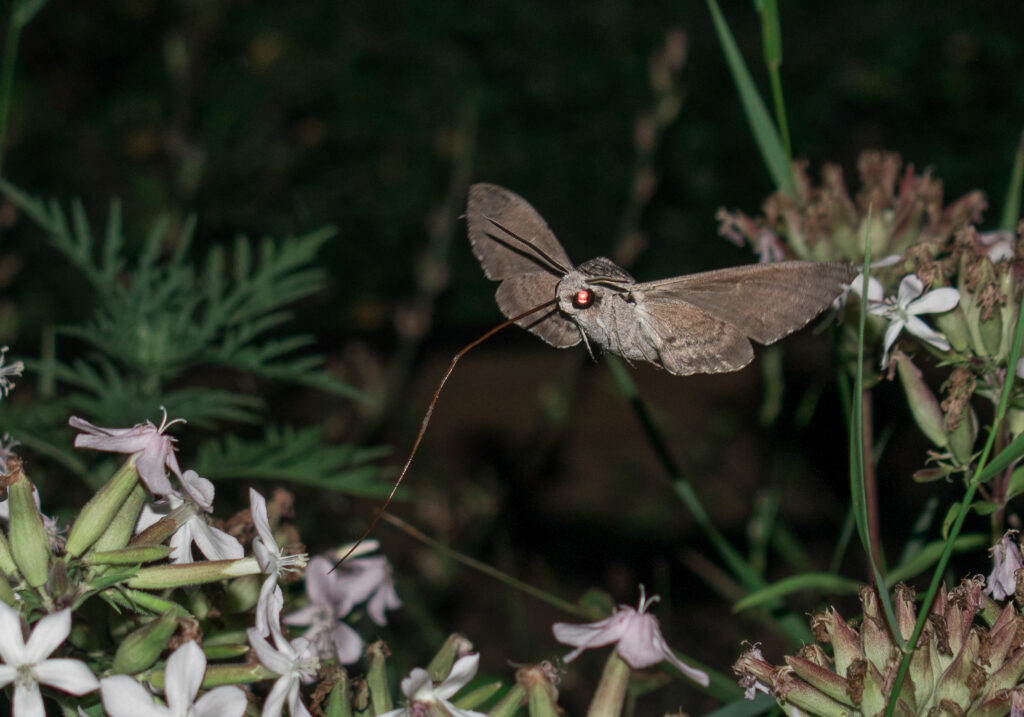
Sphinx moth feeds on flower nectar in the night
As nocturnal insects, moths love midnight snacks, flitting from flower to flower in search of nectar in the dark. This nighttime activity has made them expert pollinators, putting them up on the pollinator podium with bees. Researchers have found that moths are even more effective at pollinating at night when compared to bees in the daytime. Though they have less hours due to the shorter summer nights, they are diligent in their work. Thank moths for pulling the night shift on the world’s pollinating work!
Though peculiar, these nocturnal habits of moths are what allow them to thrive in the nighttime wilderness. Moths are incredibly important to our ecosystems, making it important for us to understand these strange behaviors so that we can better protect and conserve them.
Written by Kenzie Claflin
When you hear the word pollinator, you most likely envision a bee. Bees are the most well-known pollinator, and for good reason. More than 4,000 species of bees are in the U.S., and they all facilitate pollination.
Bees feed on nectar and pollen, and in the process of foraging for these food items, pollinate many of our favorite plants, such as orchids, blueberries, and almonds. Honey bees (Apis mellifera) are commonly seen in urban areas and are one the most known bee species. Honey bees are great for pollinating agricultural crops we depend on, like apples, squash, broccoli, and melons. However, they are not a substitute for native pollinators that pollinate plant life in our natural ecosystems. Most honey bee species live together in a colony of about 80,000 individuals. One honey bee colony can pollinate up to 300 million flowers in one day! How are honey bee colonies able to efficiently keep their hives alive and pollinate 30% of all crops grown around the world? You may say it’s because of their “hive mind,” but it’s actually through communication and organization. Honey bees are social insects, meaning they live in large colonies, communicate efficiently with one another, and have a well-organized family structure. Honey bees communicate through body movements and pheromones. They have an advanced social structure known as a eusocial society with three distinct features. The first is cooperative brood care; offspring are cared for by the hive, regardless of parentage. The second trait is overlapping generations; many bees will work and live in the hive while their parents are still alive. Finally, there is a division of labor based on reproduction. Many bees in the hive cannot reproduce, so they spend their energy completing daily tasks to keep the hive thriving instead. To divvy up labor, each bee is born into a specific role. Bee hives have three types of adults: queens, drones, and workers. Each colony has only one queen bee whose primary responsibility is to lay eggs. The queen bee can lay up to 1,500 eggs a day! She will lay unfertilized eggs that will become workers and fertilized eggs that become drones. Queen bees are large and have an elongated abdomen compared to their bee subjects. Queen bees are fed royal jelly, a thick secretion packed with protein and essential antioxidants. Other hive members are fed royal jelly as larvae for a short period, but queens exclusively eat royal jelly. Other colony members eat honey and ‘bee bread’, a mixture of pollen, nectar, and bee saliva packed tightly together. Queen bees usually live for about 2-4 years but can live up to 5. A hive will know when a queen dies because they will no longer sense her pheromones. To replace her, they encase eggs into queen cells. Queen cells are different from the usual cells that larvae are kept in; they are more protruding and surrounded by royal jelly. This overload of royal jelly ensures that the larvae have fully developed ovaries for egg-laying. Whichever larva emerges first is the new queen. This new queen will travel to mate with drones away from the colony for the afternoon, then return to the hive to begin laying eggs in cells. The second type of bee is a drone. Drone bees are the only males in the colony and have the sole job of mating with the queen. Drones are the largest bees in the colony and have eyes that meet at the top of their large head. They can leave the hive but have no stinger for protection or pollen basket to collect pollen. On average, drones live for 1-2 months because they die after mating with the queen. Drones eat three times as much food as worker bees, meaning that an excess number of drones in a colony can put stress on everyone else. Drones are kicked out of the hive when resources become scarce during the fall and winter months. The third type of bee is a worker bee. Worker bees are all female and the smallest bees in the colony. They have a stinger for protection since they travel outside the hive and pollen baskets on their hind legs for pollen collection. They complete every task needed to sustain the queen, her drones, and other worker bees. Worker bees have different tasks depending on how old they are. Workers that are 1-10 days old tend to the queen and her offspring at the center of the hive. When they reach 10-20 days of age, they work throughout the hive to groom and feed others. Between 20 and 30 days of age, they move further out, storing nectar and packing pollen. Finally, after one month of life, they begin to work outside the hive, foraging for food, defending the perimeter, and removing dead bees from the hive. The intricacy of honey bee society is astounding. They are highly organized, and every hive member has a role. It’s easy for us to assume that tiny invertebrates like bees lead simple lives, but in many cases, they have advanced adaptations that help them thrive on Earth.
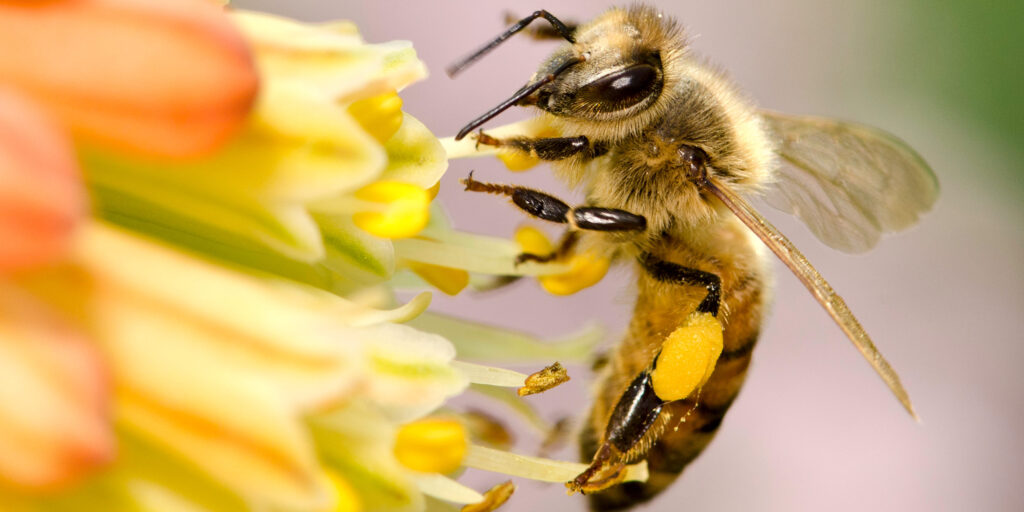
Can you tell what kind of honey bee this is?
Hint: the yellow globs on its hind legs are full pollen baskets!
Written by Celena Romero
As summer begins, you may be on the lookout for your least favorite outdoor picnic guest: the wasp. Wasps don’t have the best reputation, and much of it is due to a lack of understanding. However, wasps are important pollinators and pest control agents and even help produce food items we enjoy! Wasps and bees are both members of the order Hymenoptera. They often get confused for one another, which is no surprise considering that bees evolved from wasps 120 million years ago. Wasps began as carnivorous invertebrates that fed on other insects. Over time, some wasps began consuming pollen as a food source. Those that used pollen as a source of energy evolved into bees and diversified quickly. Melittosphex burmensis is one of the first transitionary forms between bees and wasps. Melitta is a form of the Greek word for “honey bee,” and Sphex translates to “wasp.” Although wasps and bees have a shared lineage, there are some key differences between the two. Bees are known for being round and fuzzy, while wasps are slender and, for the most part, hairless. There are three common types of wasp species: social, solitary, and parasitoid. You may be most familiar with yellowjackets, hornets, and paper wasps. These are all examples of social wasp species. Like bees and ants, they have a queen and many other workers that carry out the daily operations of the colony. Social wasps have an allegiance to their hive and often try to hide their homes for protection. For this reason, we often stumble upon wasp nests by accident, which can lead to an unpleasant experience for both us and the wasps. Hornet and paper wasps create hives by chewing up wood and plant fibers to make a paper-like material. Paper wasp nests are cone-like and hang from a singular stem. They typically build nests on roof overhangs to avoid rain and predators. Hornets build spherical and large paper nests high in trees to avoid predation, and yellow jackets build their colonies underground. Yellow jackets, in particular, are scavengers, meaning they eat almost anything. Regularly emptying your outdoor trash receptacles and using trash cans with closing lids can keep them away. Another way to deter wasps is to keep peppermint oil handy; they avoid this scent. If a nest was removed from your property, clean the area with peppermint oil to prevent another colony from moving in. Are wasps good for anything besides stinging? Yes, wasps are pollinators, just like their bee relatives! Wasp diets vary depending on the species, but most wasps eat other insects as larvae and feed on sugar as adults. Unlike bees, wasps do not have a proboscis to sip up nectar; they have mouthparts for chewing food for their young. For this reason, wasps typically visit flowers that make nectar easily accessible. In the process, they end up picking pollen and dispersing it. A good way to benefit from wasp pollination and avoid unwanted encounters is to have flowering plants at least 6 inches away from areas where people frequent. Other wasp species have a mutualistic relationship with the plants they use as food sources. About 1,000 species of fig trees depend on fig wasps for reproduction. Fig trees have no outer flowers for pollination; they have tiny flowers inside their fruit that carry pollen. A female fig wasp will burrow into a fig to lay her eggs, and after laying the eggs, she dies inside the fig. The wasp larvae grow inside of the fig fruit, collecting pollen in the process. Male fig wasps are small and wingless, while females are large with wings. Males mate with females inside the fig and then die. Then, the fertilized females move out to find a fig to lay their eggs in. Once they enter the fig, they disperse pollen, and the cycle repeats. But don’t worry, you aren’t eating wasps when you take a bite out of a fig. Figs have an enzyme that completely breaks down and digests wasps inside of them before ripening for eating. Wasps also help with pest control. Every tomato gardener’s worst nightmare is a tomato hornworm. Tomato hornworms are the caterpillar form of the Five-spot hawk moth (Manduca quinquemaculata), and their favorite food is your tomato crops. Wasps often hunt caterpillars for food and help keep their populations in check. Caterpillars are good to have in your garden because they will grow to become pollinators, but too many caterpillars could lead to garden destruction. The Mexican Honey Wasp (Brachygastra mellifica) is a triple threat—in a good way. It helps pollinate avocados, controls pest species, and is one of the few wasp species that produces honey! Understanding the diversity of wasp species and what they contribute to our planet can help us better appreciate these misunderstood invertebrates. Most wasp species pose no stinging threat, and easy ways to coexist with wasp species that do sting. Cultivating biodiversity in our gardens welcomes predator and parasitoid species like wasps that help keep the pest populations low and pollination rates high.
Written by Celena Romero
Butterfly Pavilion is partnering with the Bureau of Land Management Colorado (BLM CO) to estimate the diversity and relative abundance of daytime pollinators on BLM CO-managed land. This project will examine several habitats that represent the more than 8.3 million acres of public land in Colorado. Butterfly Pavilion and BLM CO scientists will provide baseline survey data on invertebrates across the western half of the state. These efforts will help inform conservation of these species, including those proposed for listing under the Endangered Species Act, such as monarch butterflies (Danaus plexippus) and western bumblebees (Bombus occidentalis).
These animals make up 97% of all species on earth. Invertebrates have no backbone, yet they are the backbone of all life on earth. They are the basis of most food webs, pollinate the vast majority of flowering plants, decompose waste, aerate the soil, and improve water quality. Life on our planet would collapse without them. Conserving these vital animals means conserving life as we know it.
Baseline data is needed for public land to properly implement management strategies that preserve biodiversity and protect invertebrate species. In the last four decades, conservation biologists have estimated a 45% decline in invertebrate populations worldwide.
Butterfly Pavilion entomologists and researchers have already surveyed over 60 locations across the west. Locations are co-selected with the BLM and represent major ecosystem types in Colorado including sagebrush regions, grasslands, arid deserts, forest, and alpine regions. Survey locations span across the four major watersheds in Colorado (Upper Colorado, Rio Grande, Arkansas-White-Red, and Missouri Rivers).
During these surveys, researchers record which species are present, how many of each species are present, and what flowers they are visiting. Each morning, traps are set at sample sites, and specimens are collected at the end of the day. During the wait, researchers use net to collect invertebrates on flowers. Peak hours for most invertebrates are mid-to-late mornings to early afternoons when it is warmest.
However, this is not always the case. Andrew Draper, the project coordinator for pollinator research, recalls a stormy day that prompted multiple velvet ants to emerge from the ground. ,“Flying invertebrates such as bees thrive in warmer weather, while velvet ants burrow to escape the heat. As soon as cloud cover appeared, so did the velvet ants..” Our researchers have seen many different invertebrates in the field, such as swallowtail butterflies, bumblebees, beetles, wolf spiders, and many more. Butterfly Pavilion researchers work diligently in the field, so much so that friendly sweat bees often land on them to collect their perspiration as they survey the areas!
The data and samples collected from this project will help inform future land management decisions, better describe pollinator species in the area, and understand their conservation needs. Scientists are examining species abundance and diversity between sites to best inform our scientific conservation and education recommendations. The data, including flower association, is also used to update our pollinator gardening and Environmental and Ecological Services recommendations. All findings will be submitted to the BLM to support the Endangered and Threatened Species Program working to protect sensitive populations in Colorado