Butterfly Pavilion and Bureau of Land Management Colorado Collaboration
Research and Conserve Invertebrates
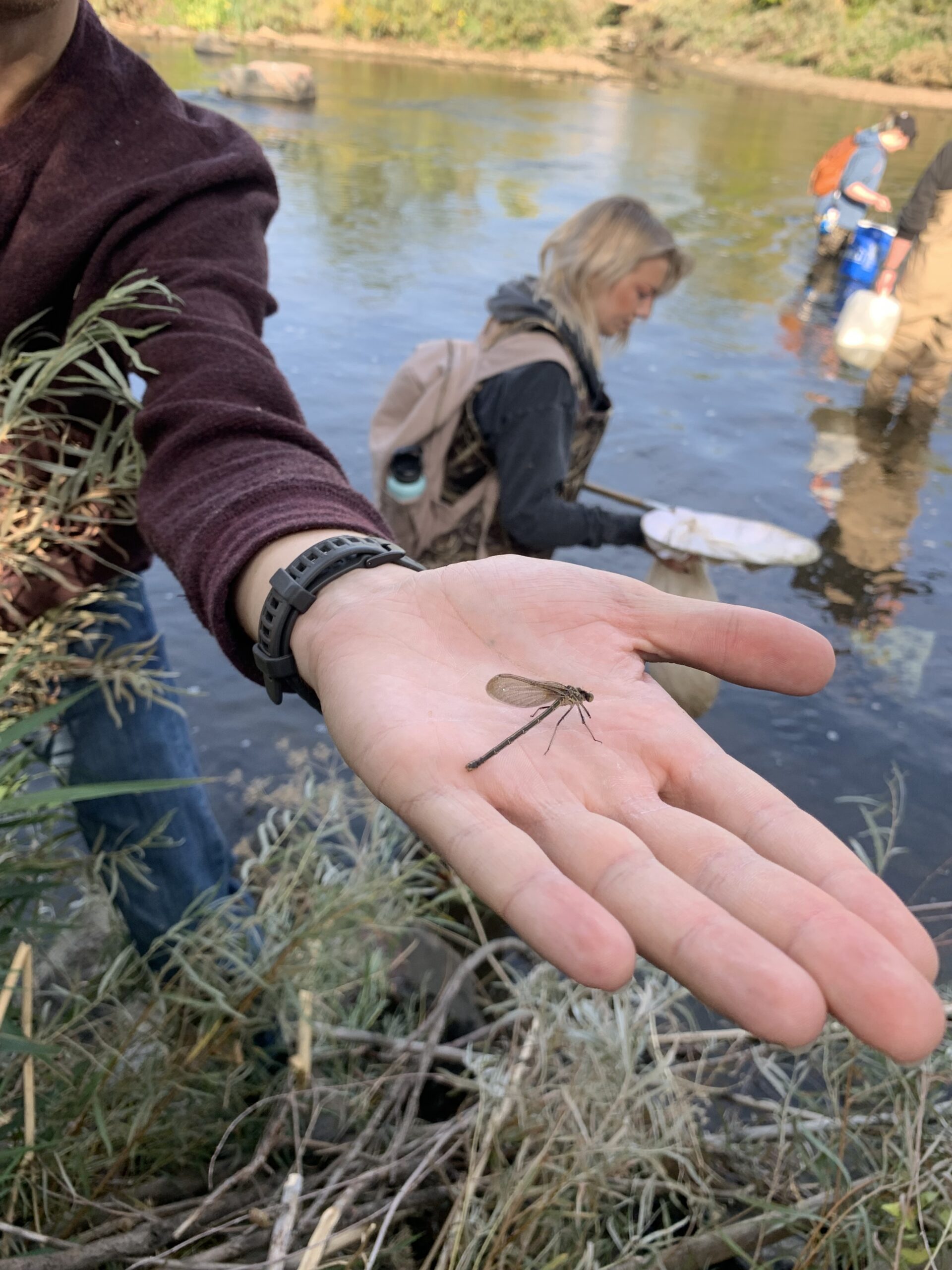
Butterfly Pavilion is partnering with the Bureau of Land Management Colorado (BLM CO), City of Longmont and City of Boulder to estimate the diversity and relative abundance of daytime pollinators on public land. This project examines several habitats that represent the more than 8.3 million acres of public land in Colorado.
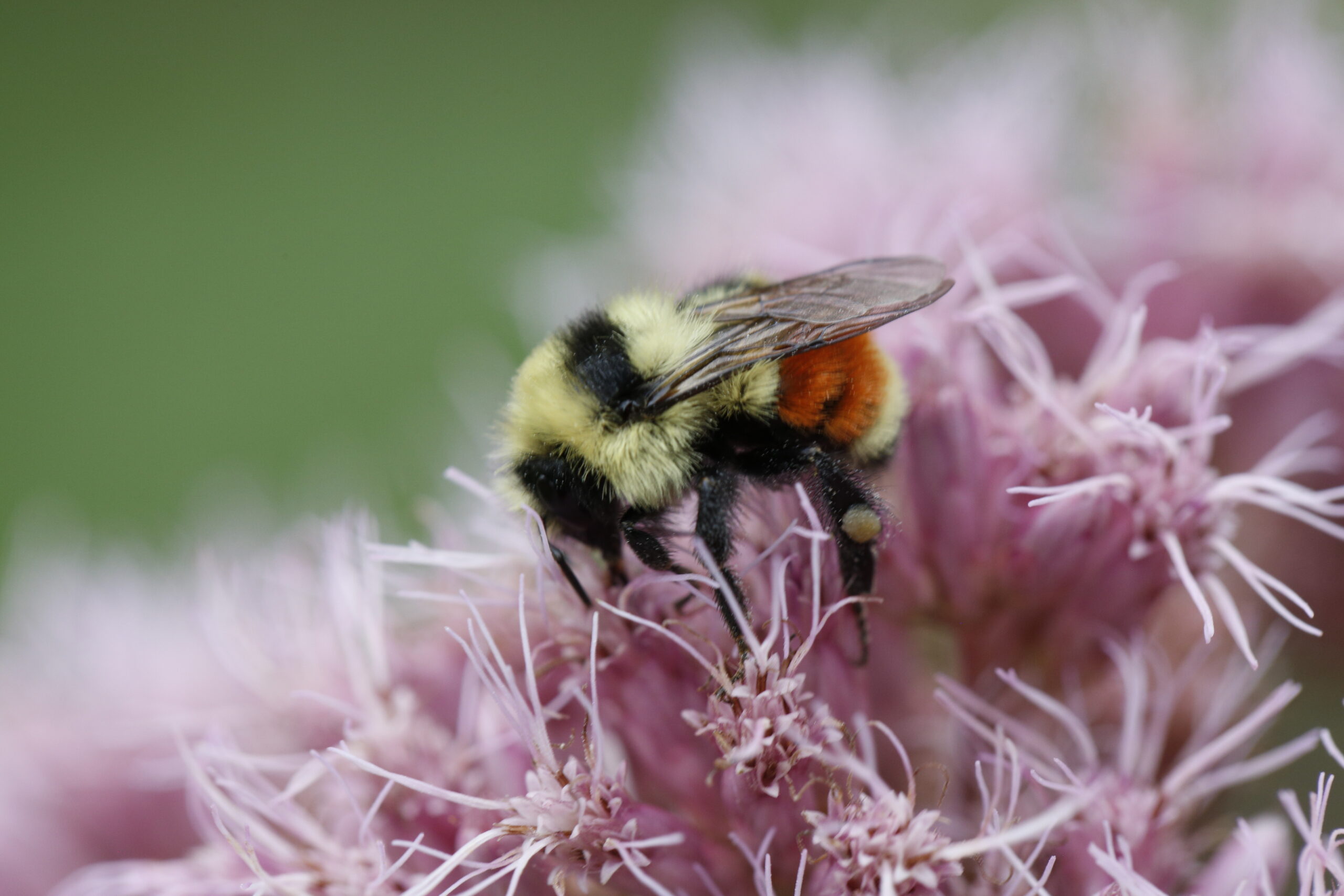
Butterfly Pavilion and BLM CO scientists have conducted a baseline survey data on invertebrates across the western half of the state. These efforts will help inform conservation of these species, including those proposed for listing under the Endangered Species Act, such as monarch butterflies (Danaus plexippus) and western bumblebees (Bombus occidentalis).
The Importance of Invertebrates
These animals make up 97% of all species on earth. Invertebrates have no backbone, yet they are the backbone of all life on earth. They are the basis of most food webs, pollinate the vast majority of flowering plants, decompose waste, aerate the soil, and improve water quality. Life on our planet would collapse without them. Conserving these vital animals means conserving life as we know it.
Baseline data is needed for public land to properly implement management strategies that preserve biodiversity and protect invertebrate species. In the last four decades, conservation biologists have estimated a 45% decline in invertebrate populations worldwide.
Field Surveys Across Colorado
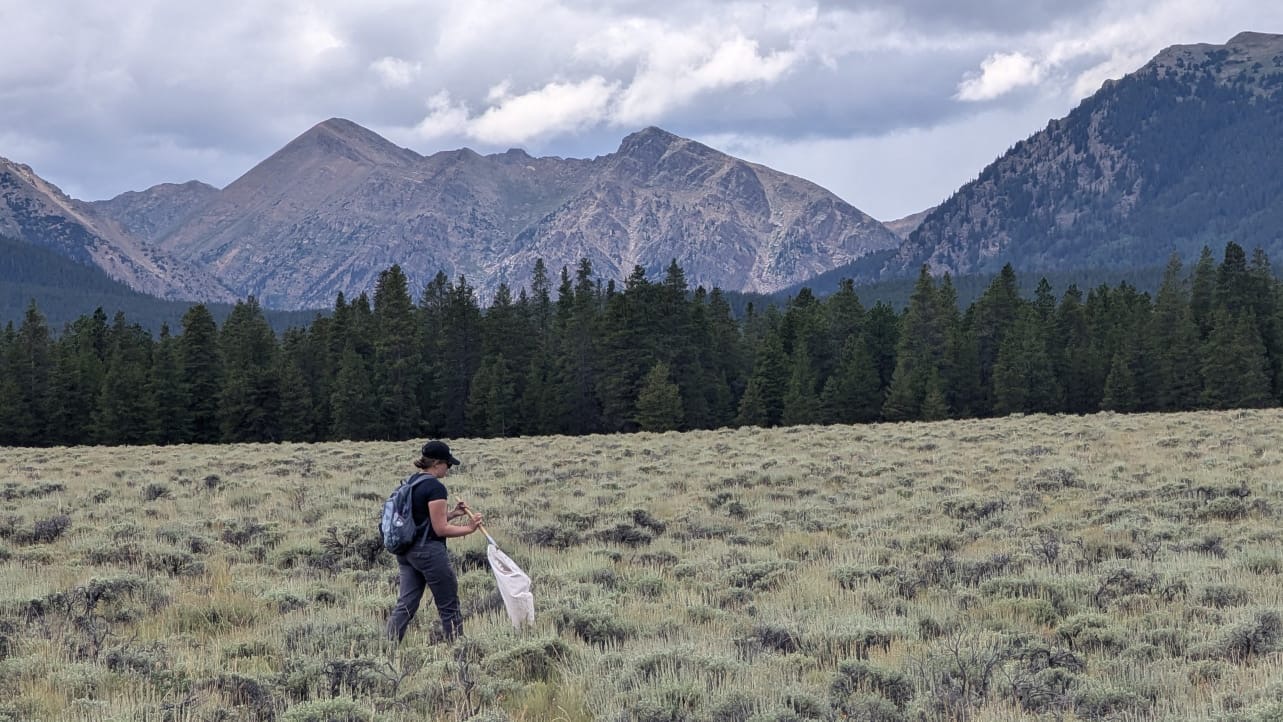
Butterfly Pavilion entomologists and researchers have already surveyed over 60 locations across the west. Locations are co-selected with local land management and represent major ecosystem types in Colorado including sagebrush regions, grasslands, arid deserts, forest, alpine regions, and urban development. Survey locations span across the four major watersheds in Colorado (Upper Colorado, Rio Grande, Arkansas-White-Red, and Missouri Rivers).
During these surveys, researchers record which species are present, how many of each species are present, and what flowers they are visiting. Each morning, traps are set at sample sites, and specimens are collected at the end of the day. During the wait, researchers use net to collect invertebrates on flowers. Peak hours for most invertebrates are mid-to-late mornings to early afternoons when it is warmest.
Observations in the Field
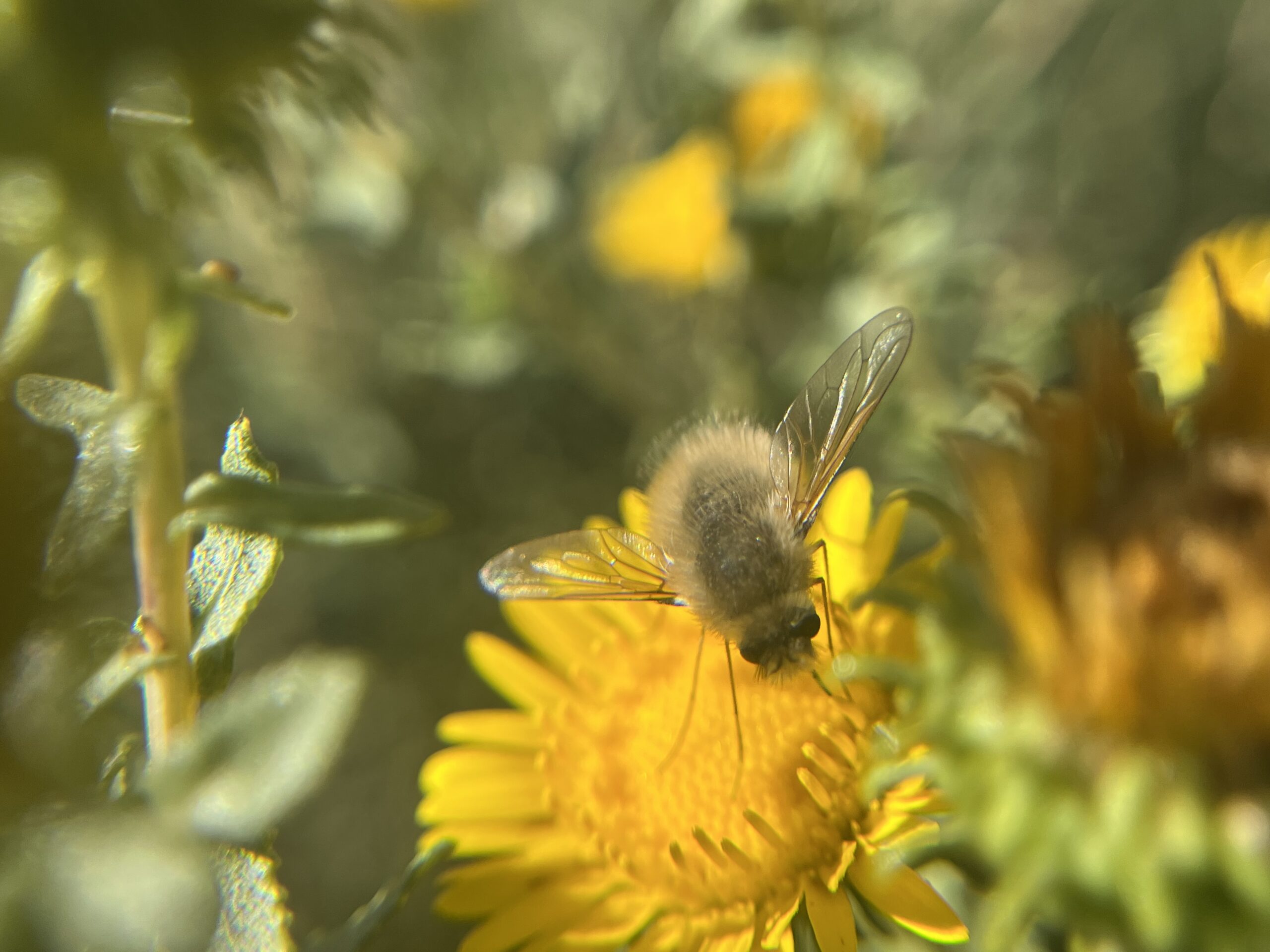
However, this is not always the case. Andrew Draper, the project coordinator for pollinator research, recalls a stormy day that prompted multiple velvet ants to emerge from the ground.
“Flying invertebrates such as bees thrive in warmer weather, while velvet ants burrow to escape the heat. As soon as cloud cover appeared, so did the velvet ants.”
Our researchers have seen many different invertebrates in the field, such as swallowtail butterflies, bumblebees, beetles, wolf spiders, and many more. Butterfly Pavilion researchers work diligently in the field, so much so that friendly sweat bees often land on them to collect their perspiration as they survey the areas!
Impact of the Research
The data and samples collected from this project will help inform future land management decisions, better describe pollinator species in the area, and understand their conservation needs. Scientists are examining species abundance and diversity between sites to best inform our scientific conservation and education recommendations.
The data, including flower association, is also used to update our pollinator gardening and Environmental and Ecological Services recommendations. Findings are submitted to the specific municipality to support the Endangered and Threatened Species Program working to protect sensitive populations in Colorado.
The Urban Prairies Project (UPP) improves the ecological health of urban and suburban open spaces along the Front Range and beyond by connecting community members with habitat conservation for pollinators and other wildlife.
UPP recognizes the strong connection between healthy green spaces and human well-being, and works with municipal and community partners to make nature close to home healthier for all.
Over the last century, the shortgrass prairie ecosystem that once dominated Colorado’s Front Range has declined to less than one-fifth of its original area. Alongside this loss, we’ve seen significant declines in native plant and animal species, key ecosystem processes, and access to nature that supports human health.
The Urban Prairies Project provides opportunities to directly counteract these losses—whether through one-time volunteer projects near home or through deeper engagement as a trained Restoration Master Volunteer.
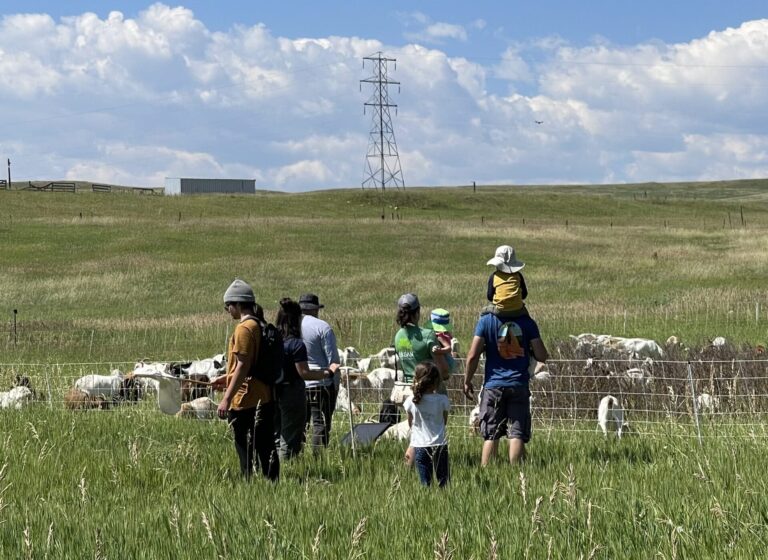
Restoration Master Volunteer Program
Restoration Master Volunteers (RMVs) complete a core training in restoration principles and techniques, native ecosystems, crew leadership, and community outreach.
After training, volunteers can choose how they want to get involved:
- Habitat Restoration: planting projects, invasive species removal, seed collection
- Monitoring & Data Collection: tracking pollinators, plants, soil health, wildlife, and more
- Community Outreach: leading nature walks, attending events, writing articles, and educating others
Volunteers are encouraged to participate in one—or all—of these opportunities based on their interests.
No experience is necessary. Everyone is welcome!
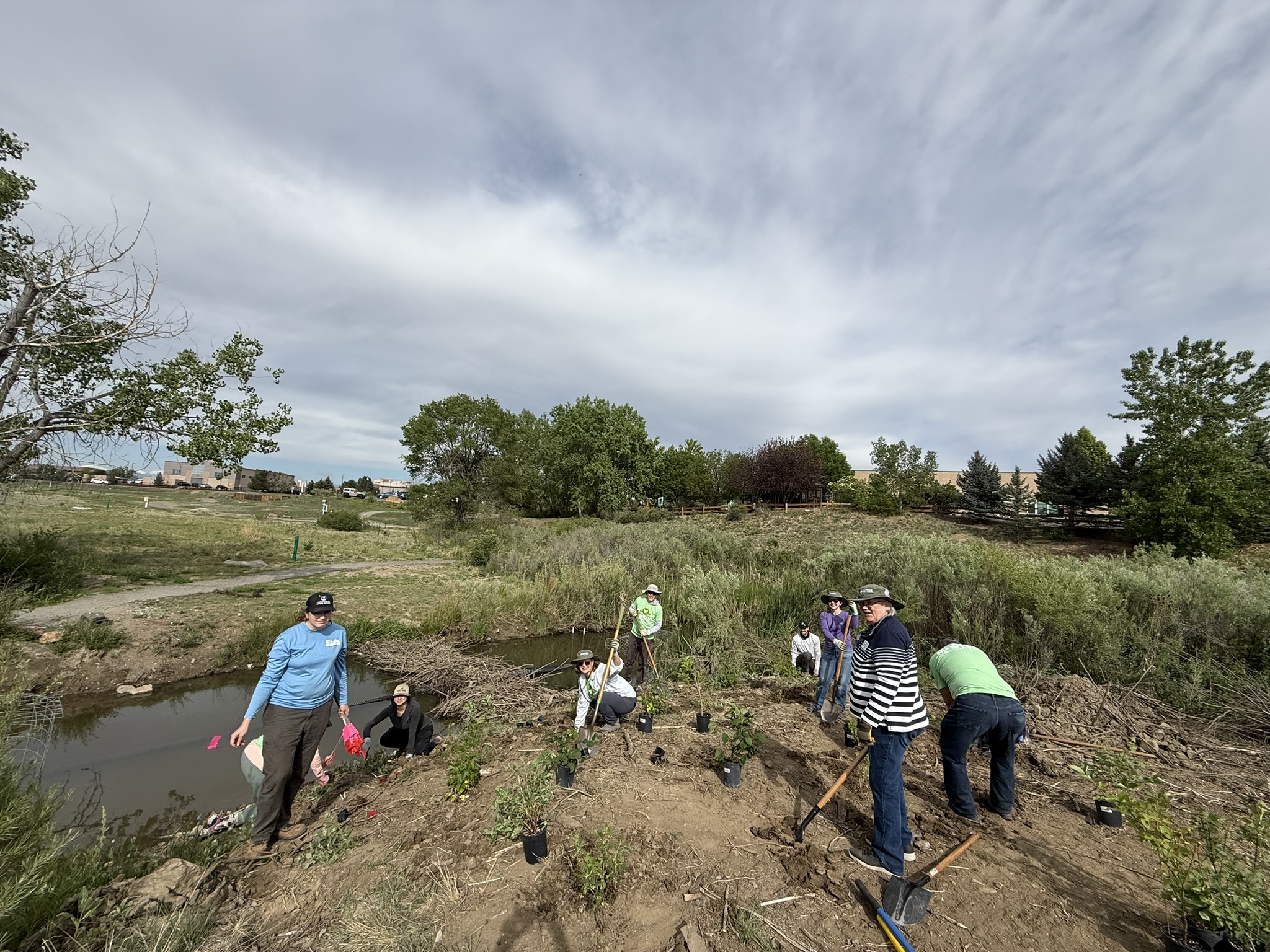
How to Get Involved
- Attend an Urban Prairies Project community event to get started.
- Become a Restoration Master Volunteer:
- Submit a volunteer interest form
- Attend a Restoration Master Volunteer training session
- Join the RMV community and receive updates on projects, monitoring programs, and additional training opportunities
- Participate in restoration projects, data collection, and community outreach
Training Information
Restoration Master Volunteer trainings are typically offered twice per year (Spring and Fall). Trainings include multiple sessions covering core restoration topics and hands-on learning.
For more information or to get involved, contact: awhite@butterflies.org
BioBlitz
A BioBlitz is a short, intense biological survey that aims to record as many species in a specific area as possible. Butterfly Pavilion researchers are experienced in surveying for invertebrates and we often work with partners to perform BioBlitzes around Colorado.
Invertebrate BioBlitzes usually consist of one day of intense fieldwork and weeks to months of specimen preservation and identification. Butterfly Pavilion experts lead these BioBlitzes then identify and analyze the invertebrates sampled so that we have an inventory of our native invertebrates and can monitor changes to these communities before and after restoration efforts.
Upcoming Bioblitz’s:
Community Bioblitz at Kneebone Open Space – Sunday, June 14, 2026