
Ketambe Butterfly Project in Sumatra
Butterfly Pavilion, Wildlife Protection Solutions (WPS) and the Forum Konservasi Leuser (FKL) have collaborated to create the Ketambe Butterfly Project – a visionary effort to sell butterflies to protect Sumatra’s biodiversity while empowering local communities.
The majestic and ancient Leuser Ecosystem on the Indonesian island of Sumatra is recognized as one of the world’s richest and most diverse expanses of tropical rainforest. Home to 201 mammal species and 580 bird species, it is the last place on earth where Sumatran orangutans, rhinos, elephants and tigers coexist in the wild. In the last 25 years, over half of it has been lost, threatening the animal species that live there.
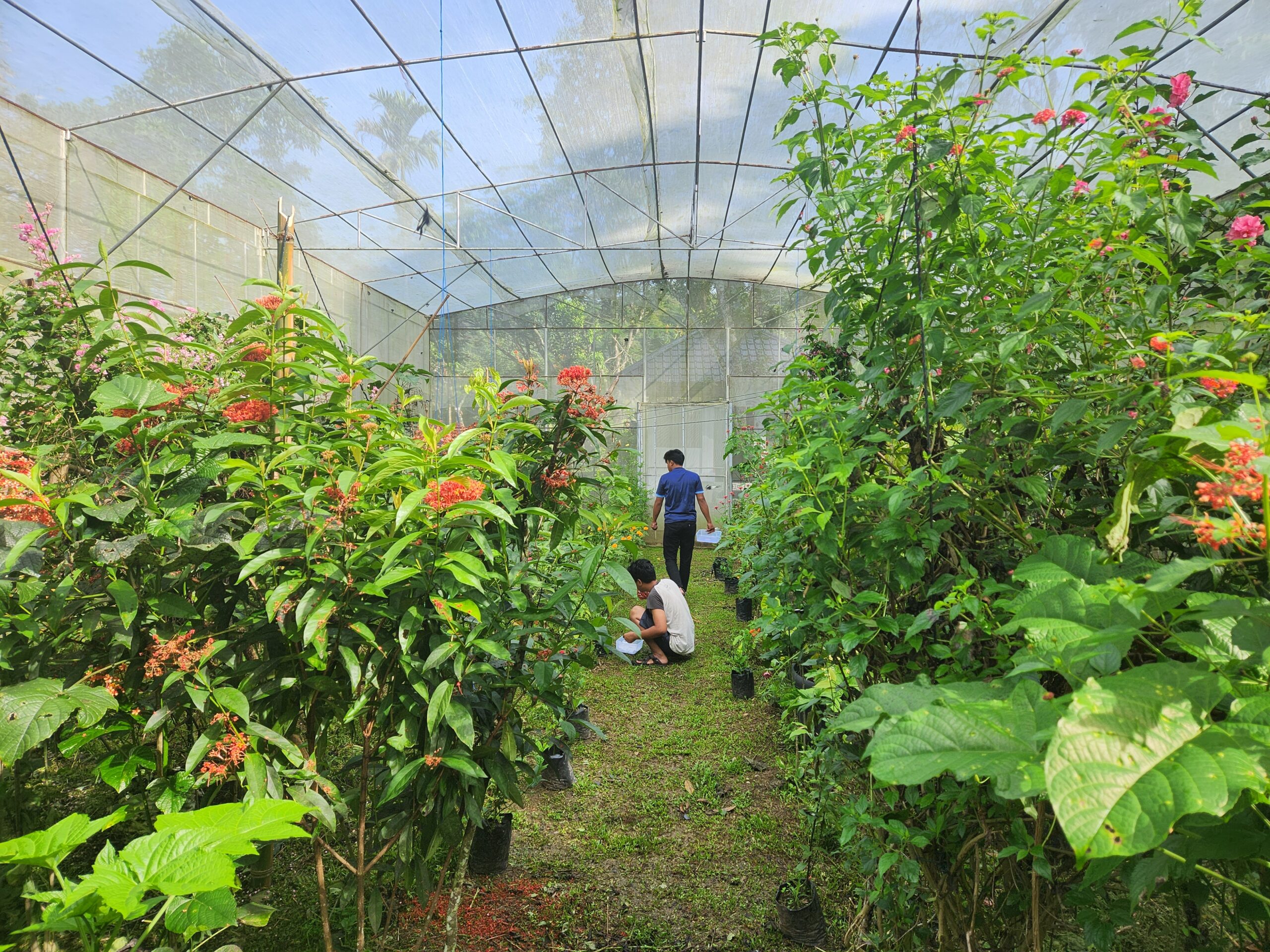
In 2019, Butterfly Pavilion launched the Ketambe Butterfly Project in the small city of Ketambe, Indonesia. More than ten years in the making, this project is moving to protect endangered species, protect Sumatra’s ecosystems, and support local culture. The Ketambe Butterfly Project is a local, sustainable butterfly farm creating jobs, providing butterflies for Association of Zoos & Aquariums-accredited zoos, conserving habitat in the Leuser Ecosystem, and protecting the endangered Sumatran Rhino. A portion of the proceeds from the sales of these butterflies goes directly to on-the-ground conservation, hiring FKL rangers to collect data on wildlife presence, assist wildlife surveys, dismantle snares, and protect the forest. Sales of the butterflies also provides zoos with the ability to create new exhibits by featuring native Sumatran butterfly species. These conservation ambassadors will spread their wings around the world while developing a new economic model of support.
With your support, we are on the front lines, protecting habitat and wildlife, while creating a sustainable local economy incentivizing conservation over exploitation. When you support the Ketambe Butterfly Project, you’re leading the fight against habitat degradation by putting more front-line protectors in the national forest and creating jobs and opportunities for the local communities.
In recent years, Butterfly Pavilion team members regularly visit the Ketambe Butterfly Farm to help maintain the farm and train employees, specifically in butterfly breeding and research. This ensures that the butterflies raised there are healthy and promotes overall welfare and sound science at the farm. Just this year, Shiran Hershcovich, Butterfly Pavilion’s Lepidopterist Manager was leaving the butterfly farm, and as she walked down the road saw one of the endangered orangutans. Orangutans spend most of their lives in trees to avoid predation, and their diet consists of invertebrates, fruit, and vegetation. Invertebrates pollinate most of the fruit and vegetation that orangutans use as shelter and sustenance. In turn, orangutans disperse the seeds of any vegetation they eat, which eventually grow to become food and shelter for invertebrates.
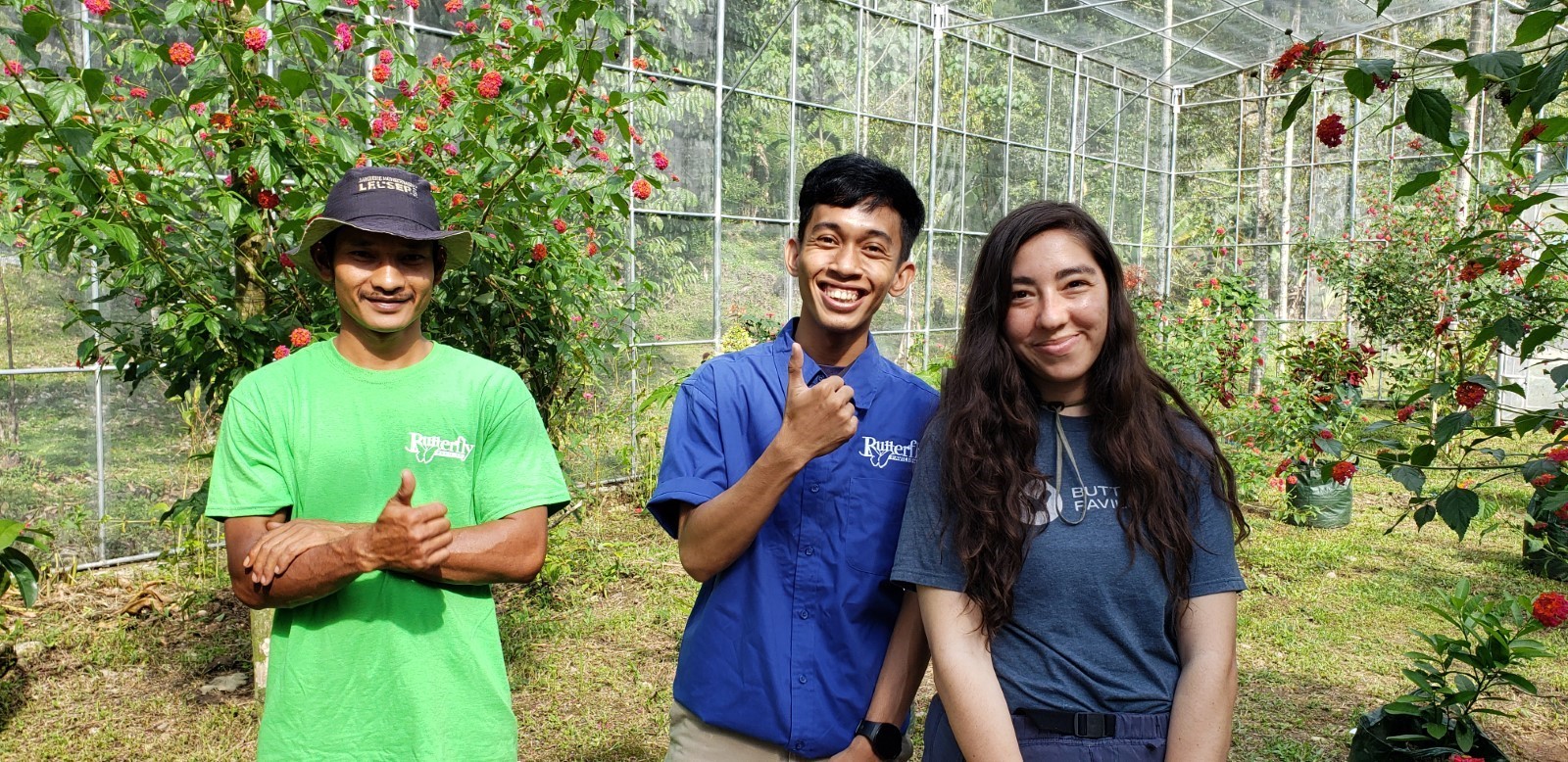
Butterflies from the farm in Ketambe are being reared for conservation so that endangered species can be restocked in the wild. Additionally, these butterflies are shipped to AZA–accredited zoos around the world, including right here at Wings of the Tropics! Butterfly Pavilion received the first shipment of chrysalises from the Ketambe butterfly farm in August of 2023. This continued collaboration will ensure the preservation of vibrant and essential invertebrate species.
The Ketambe Butterfly Project is using innovative methods to generate its own revenue, establishing a self-sustaining model for conservation. This fuels the triple bottom line of People, Planet, and Promise. Not only for the people and organizations supporting the project, but for the Sumatran communities experiencing the loss of biodiversity. Every butterfly we sell carries with it the hope of inspiring change in how we value the natural resources upon which we all depend. That hope rides on the wings spread around the world.
Protecting Pollinators, Forests, and Indigenous Knowledge in the Amazon
Butterfly Pavilion is partnering with Waorani and Kichwa First Nation communities in the Ecuadorian Amazon, alongside local collaborators to protect stingless bees.
Protecting Pollinators, Forests, and Indigenous Knowledge in the Amazon
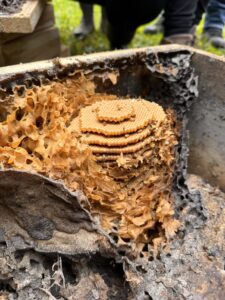
Butterfly Pavilion is partnering with Waorani and Kichwa First Nation communities in the Ecuadorian Amazon, alongside local collaborators to protect stingless bees through community-led conservation, sustainable meliponiculture (stingless beekeeping), environmental education, and long-term stewardship of rainforest ecosystems.
Stingless bees are among the most important pollinators in tropical ecosystems and play a critical role in supporting rainforest biodiversity, ecological connectivity, and forest regeneration. Ecuador lies within one of the world’s richest regions for stingless bee diversity (with hundreds of document species in the region), yet these native pollinators face growing threats from deforestation, habitat fragmentation, climate change, and pesticide exposure among others. Protecting stingless bees means protecting the forests, wildlife, and communities that depend on them.
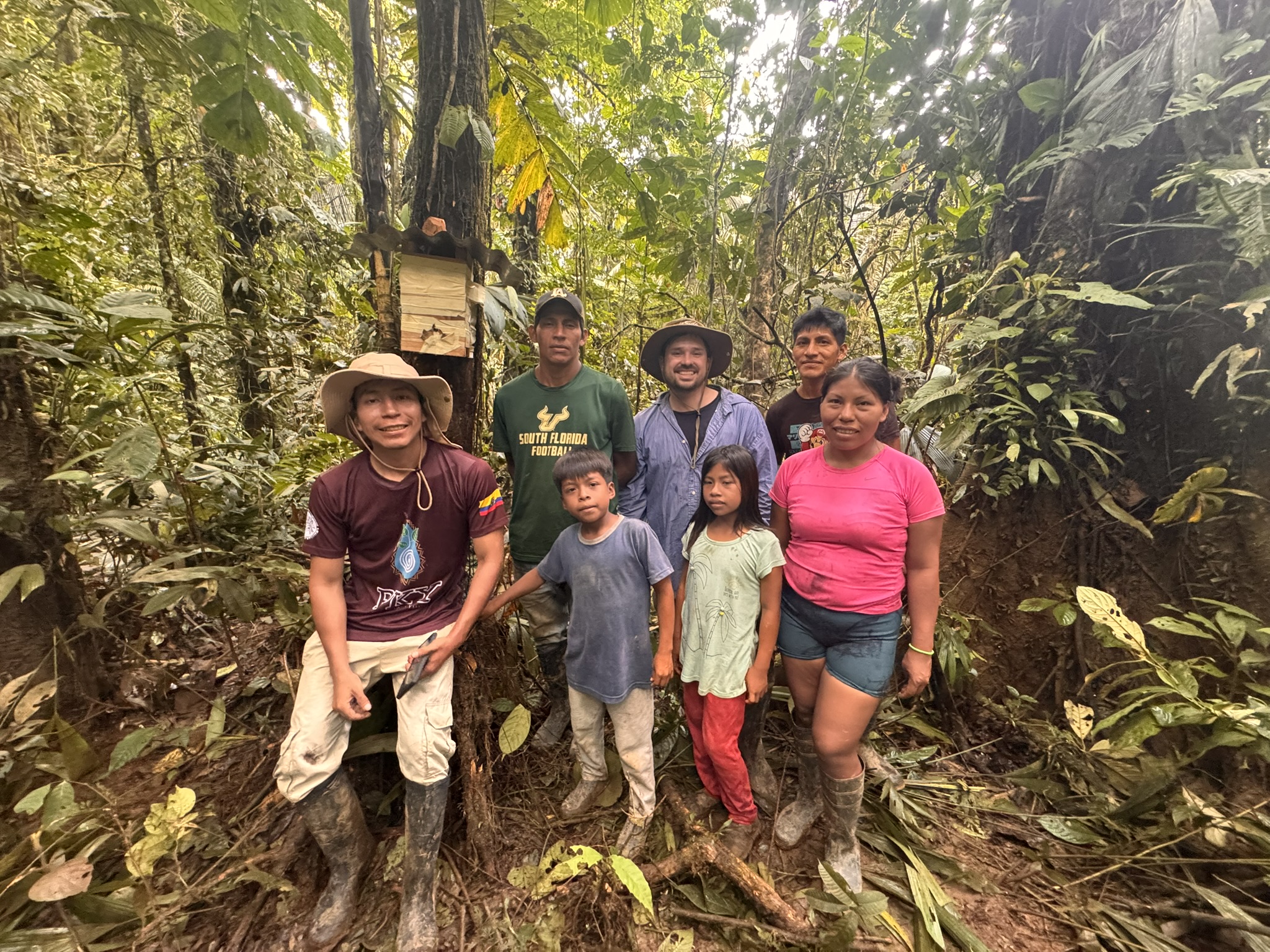
This initiative combines Indigenous ecological knowledge with scientific research and conservation action. Working directly with local communities in tropical forests of Ecuador, Butterfly Pavilion supports the rescue and transfer of stingless bee colonies threatened by logging, construction, or fallen trees into sustainable wooden hive systems that allow colonies to survive and reproduce long term. Traditionally, honey extraction often involved opening trees or ground nests and leaving colonies exposed to parasites and environmental stress. Through hands-on workshops, capacity building, and field training, communities are expanding into new approaches that allow honey collection while also protecting and managing colonies for the future.
The project also focuses heavily on environmental education and cultural exchange. Community members, youth, and students participate in workshops covering bee biology, pollination, biodiversity, sustainable hive management, and rainforest conservation. Educational activities include storytelling, participatory learning, art, fieldwork, and Indigenous knowledge sharing related to pollinators and forest ecosystems.
The ecological importance of this work extends beyond bees. In Ecuador’s cloud forests, the project also explores the relationship between stingless bees and the pollination of fruiting trees important to the endangered Andean bear, including aguacatillo trees that support bear populations and other wildlife throughout the region. Protecting pollinators ultimately strengthens entire ecosystems and helps conserve the biodiversity of both the Amazon and Andean cloud forests.
Timeline
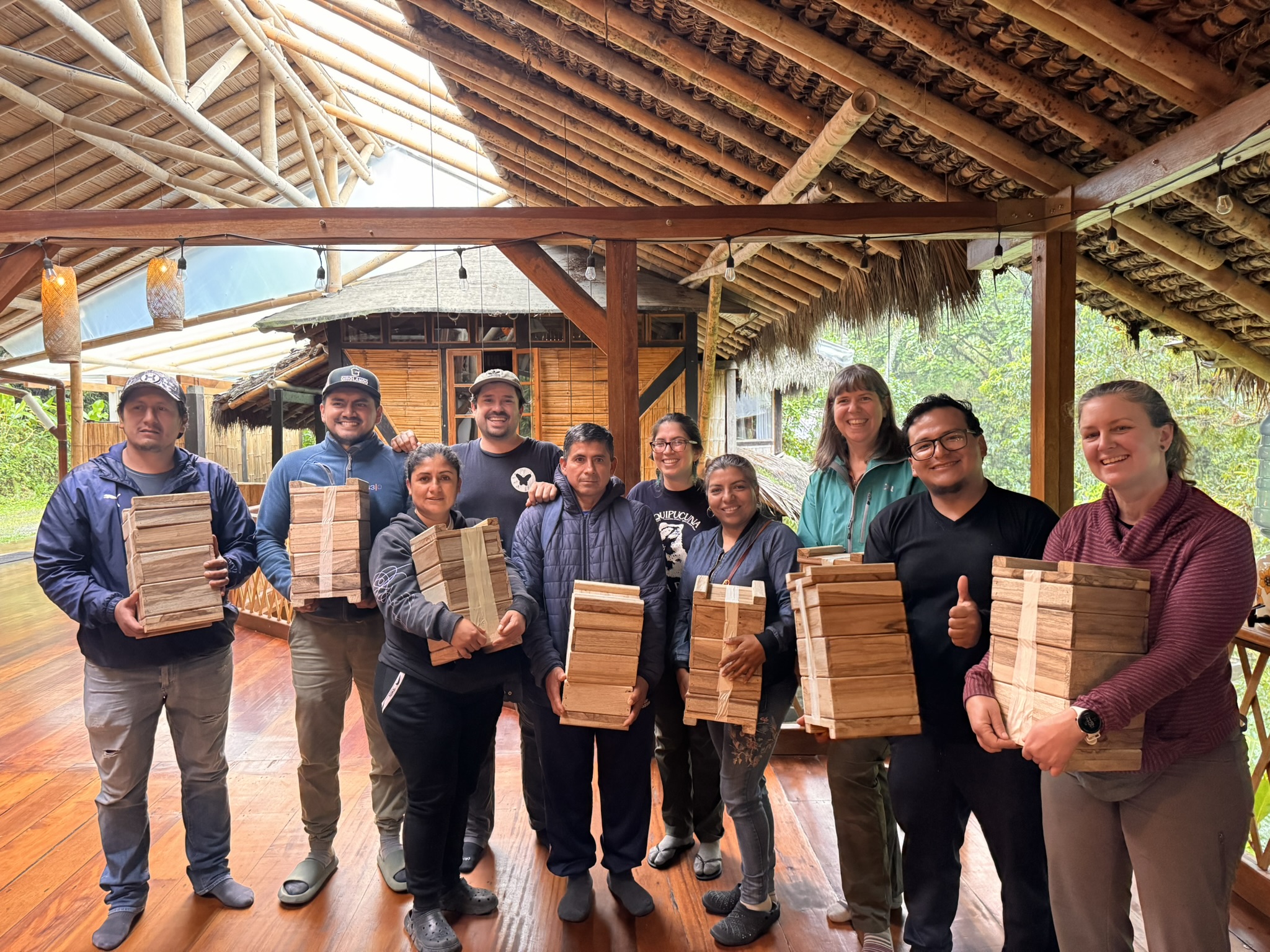
Since launching in 2024, the project has mapped 26 stingless bee colonies across the Amazon and cloud forests of Ecuador, identified 8 genera of stingless bees, documented more than 30 bee morphotypes, and trained community members in colony rescue, hive management, and pollinator conservation. During the first phase of the project, three wild colonies were successfully transferred into managed hive systems in the Amazon while two colony splits were completed in the cloud forest reserve. More than 100 children and adults participated in environmental education workshops and pollinator conservation activities across participating communities.
In 2025, Butterfly Pavilion expanded the program by delivering additional hive boxes, educational modules, science journals, and pollinator materials to participating communities. Multiple additional colony transfers involving 2 different stingless bees species were conducted, while community members increasingly took active leadership roles in locating nests, monitoring colonies, and supporting conservation activities.
Looking ahead, the long-term goal is to establish a scalable Indigenous-led conservation model that protects pollinators, strengthens ecological connectivity, supports sustainable livelihoods, and empowers communities as long-term stewards of Amazonian biodiversity. Future phases of the project aim to expand conservation and meliponiculture programs into additional communities throughout the Ecuadorian Amazon, increase the number of rescued and sustainably managed colonies, strengthen Indigenous leadership through advanced training and community exchanges, and continue developing sustainable honey production and forest-compatible enterprises that support local livelihoods while reinforcing long-term forest conservation.
With continued support, Butterfly Pavilion and its partners hope to expand this model throughout the Amazon basin while advancing research on stingless bee ecology, pollination biology, and biodiversity conservation. By combining science, education, and Indigenous stewardship, the project seeks to protect some of the world’s most important tropical ecosystems and the communities that have safeguarded them for generations.
Historic Milestone: 100,000 Native Trees Planted to Safeguard the Monarch Migration
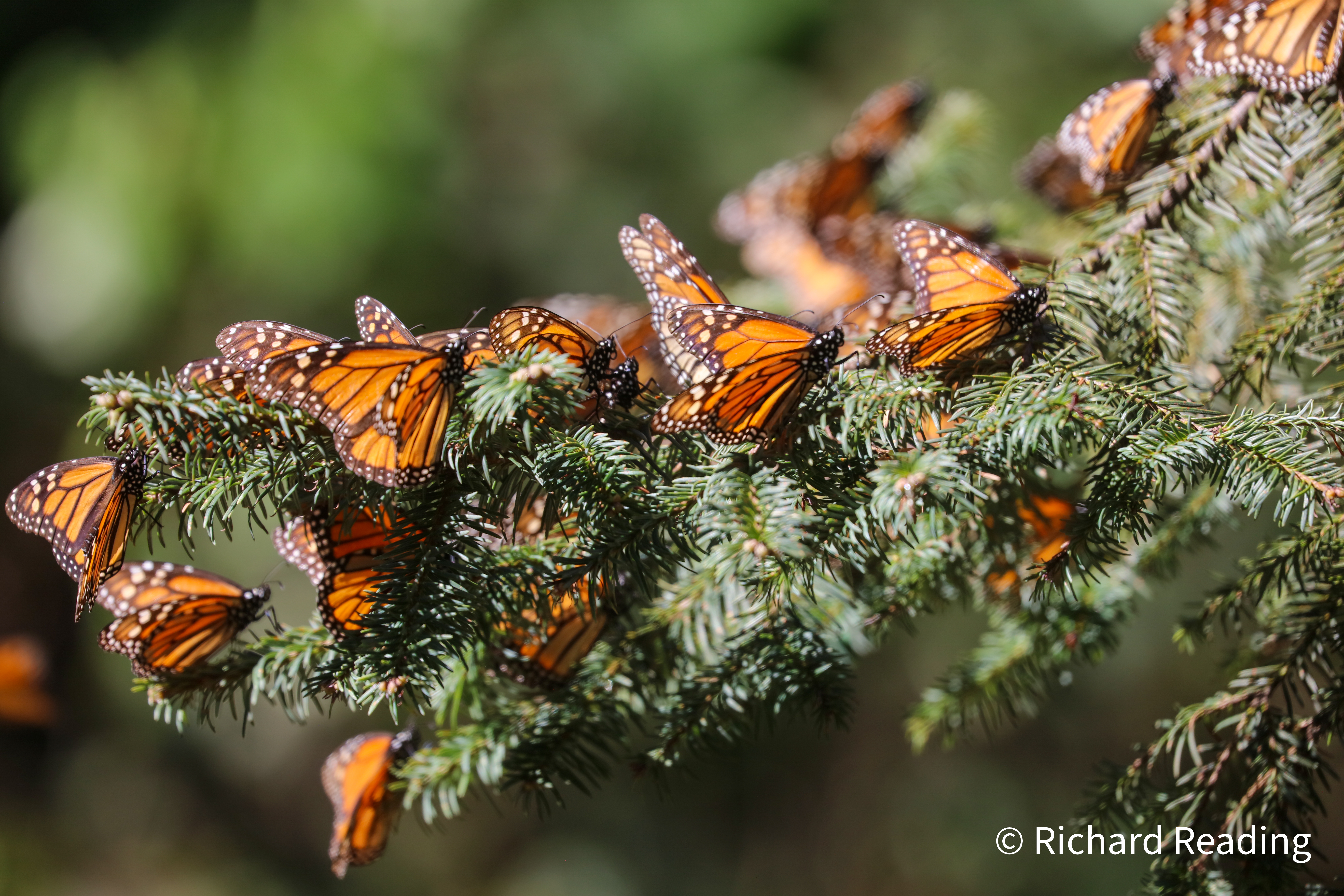
Butterfly Pavilion, in collaboration with the Government of Mexico and local community partners, has completed a historic reforestation project, Preservation of Critical Overwintering Habitat for the Migratory Monarch Butterfly in Central Mexico, to restore the wintering habitat of the migratory Monarch butterfly (Danaus plexippus).
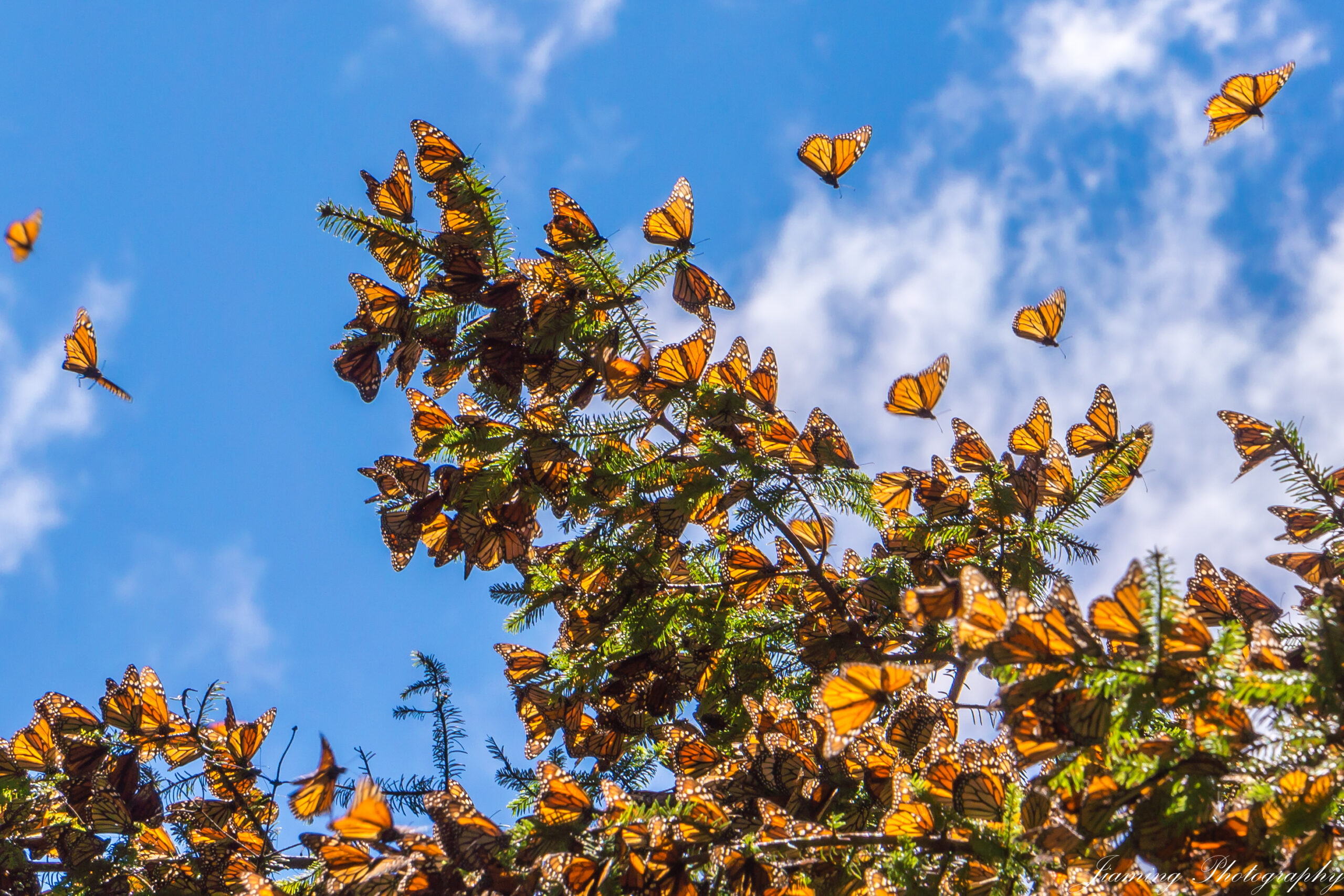
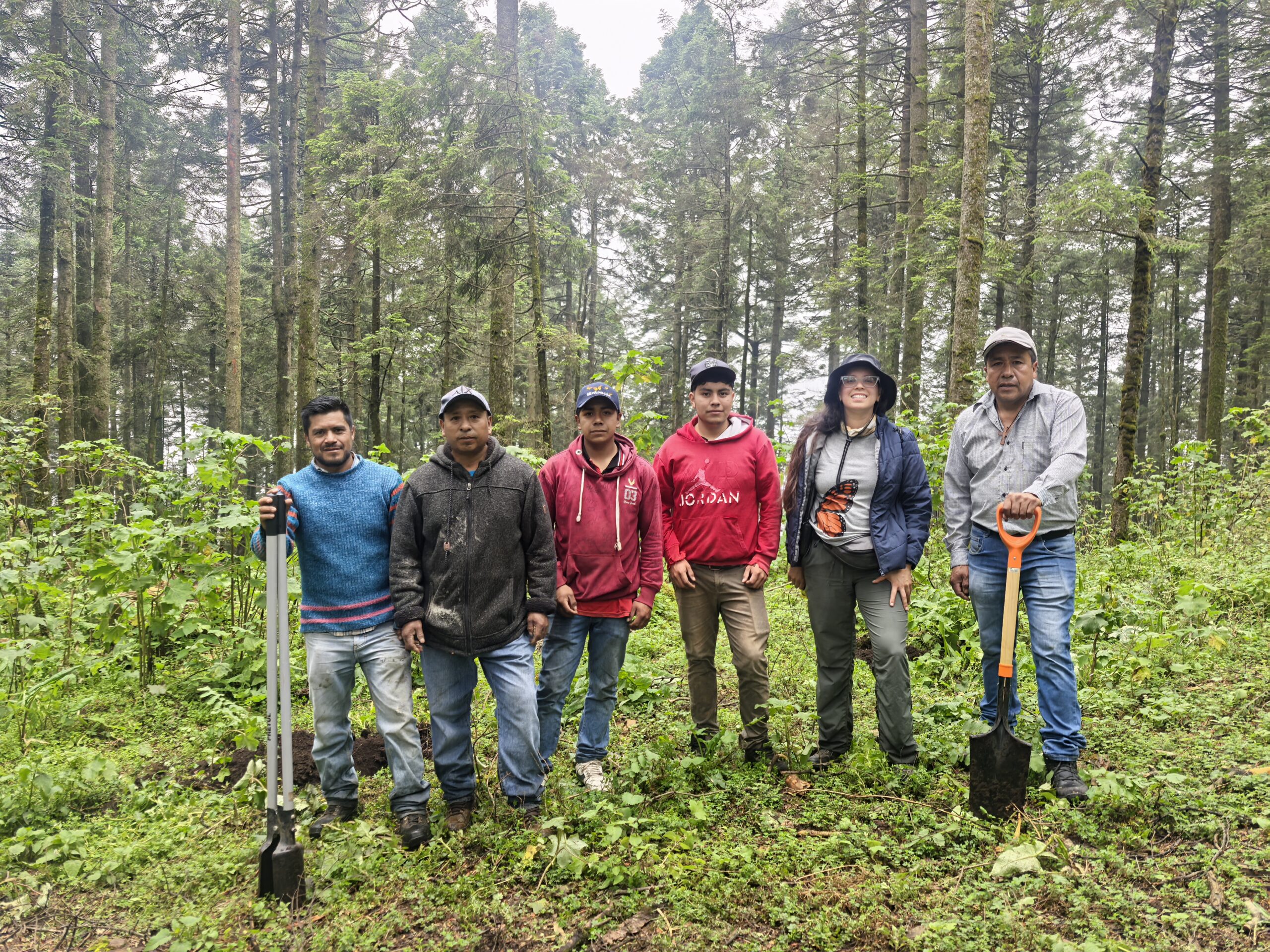
Between July and September 2025, 100,000 native Oyamel fir trees (Abies religiosa) were planted across 32 reforestation sites in Mexico’s Monarch Butterfly Biosphere Reserve, one of the most critical ecosystems in North America. These new forests will serve as safe winter sanctuaries for millions of Monarchs that migrate up to 3,000 miles each year from Canada and the northern United States to central Mexico.
“Completing this reforestation marks a historic milestone for Monarch conservation,” said Shiran Hershcovich, Lepidopterist Senior Manager at Butterfly Pavilion. “This large-scale restoration has united communities, scientists, and governments across borders to protect one of nature’s most extraordinary migrations. Every tree planted represents a promise to the Monarchs and to future generations.”
Why This Project Matters
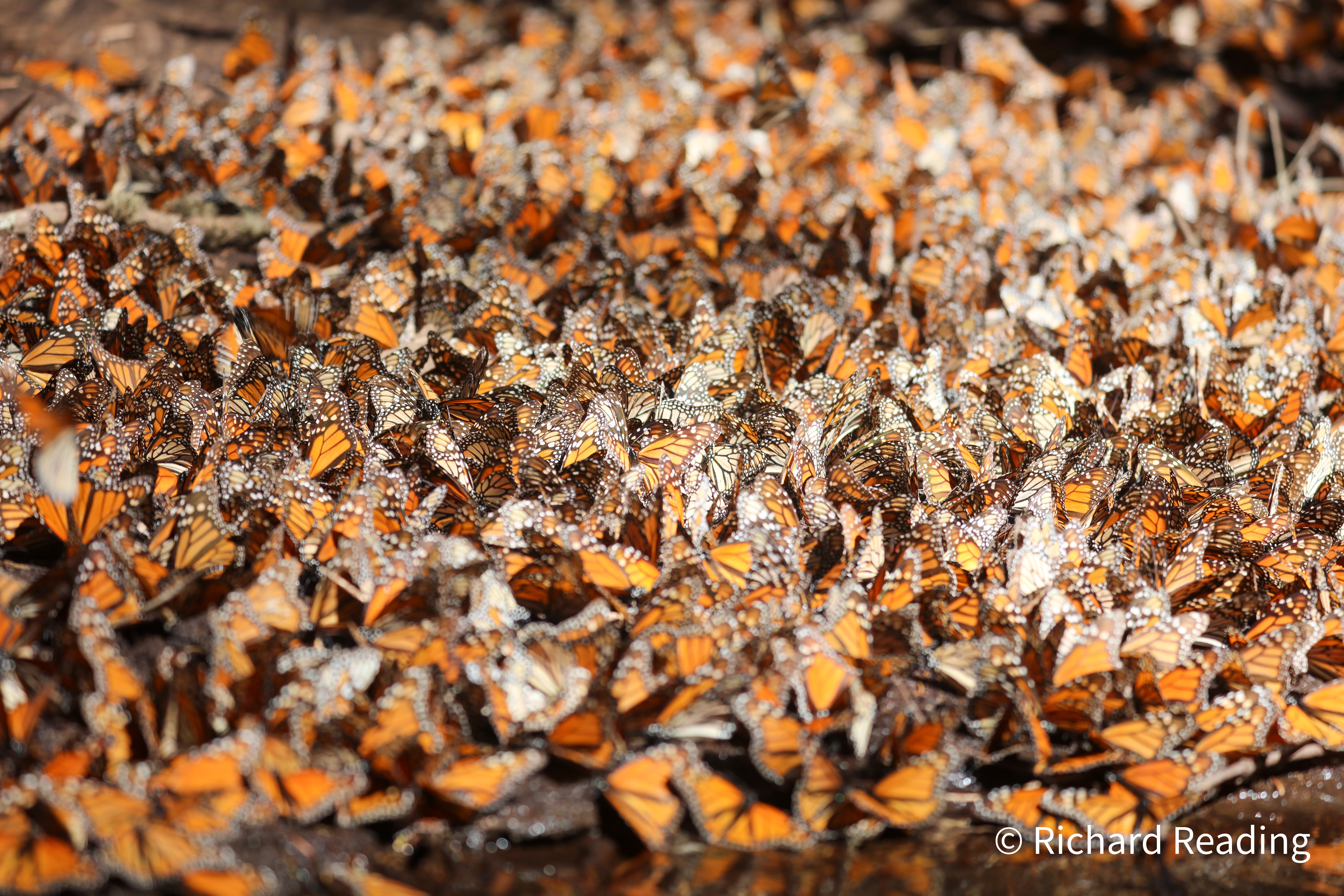
The Monarch migration is one of the world’s most remarkable natural phenomena and one of its most at risk. In the last three decades, Monarch populations have declined by nearly 80 percent due to habitat loss, deforestation, and climate change.
The Oyamel fir forests of central Mexico, which provide the cool, moist microclimate Monarchs need to survive the winter, have been reduced to less than five percent of their original range. In recent winters 2024–2025, Monarch colonies occupied only 0.9 hectares of forest, the second-lowest number ever recorded. Scientists estimate that at least six hectares of suitable habitat are required to sustain the species.
By planting 100,000 native trees in degraded areas, Butterfly Pavilion and its partners have begun rebuilding this essential forest canopy, strengthening local ecosystems, stabilizing the microclimate Monarchs depend on, and protecting biodiversity for generations to come.
The U.S. Fish & Wildlife Service’s Proposed Ruling: Why It Matters More Than Ever
In December 2024, the U.S. Fish & Wildlife Service announced a proposed rule to list the Monarch butterfly (Danaus plexippus) as “threatened” under the Endangered Species Act. This decision underscores the urgency of ongoing, coordinated conservation efforts across North America.
If Monarch butterflies are officially designated as threatened, it would activate critical federal protections to help safeguard their survival. Large landowners and developers would be required to work with the U.S. Fish & Wildlife Service before undertaking any activity that could significantly impact Monarch habitats. It would also become illegal to intentionally or negligently harm or kill Monarch butterflies or to import or export them without permits.
Certain allowances would remain, such as exceptions for agricultural practices like the removal of milkweed, the Monarch caterpillar’s primary food source, when necessary for farming operations. Even so, these proposed measures represent a vital step toward reversing population declines and ensuring that this iconic species has the chance to recover and thrive.
Butterfly Pavilion’s completion of its large-scale reforestation in Mexico’s Monarch Butterfly Biosphere Reserve could not be timelier. By planting 100,000 native Oyamel fir trees across 32 sites, this project directly supports the same conservation goals outlined in the proposed federal ruling: restoring habitat, protecting migration corridors, and safeguarding pollinators that sustain ecosystems across borders.
Project Achievements
- Restored 32 key reforestation sites within the Monarch Butterfly Biosphere Reserve
- Planted 100,000 native Oyamel fir trees to rebuild Monarch winter habitat
- Reforested degraded areas in the Sierra El Campanario and Sierra Chincua sanctuaries
- Created 20 native pollinator gardens at schools in the Reserve’s buffer zone to serve as living classrooms for students and families
- Supported sustainable local livelihoods by engaging ejidatarios (community landholders) in every phase of restoration
- Strengthened binational partnerships that bridge conservation science, education, and community action
“Standing in these restored forests today, it is clear that our collective efforts matter,” said Hershcovich. “Each Oyamel fir we planted strengthens the delicate chain that keeps the Monarch migration alive. This work gives hope that with continued collaboration, this remarkable journey will endure.”
Education and Community Impact
This project is not only restoring habitat but also cultivating stewardship. In Mexico, 20 school-based pollinator gardens now serve as hands-on learning environments where students learn about Monarch biology, pollinator conservation, and sustainable forest management.
In the United States, Butterfly Pavilion invites families, schools, and community scientists to take action through the Monarch Magic Pledge, planting native milkweed and pollinator-friendly plants, and by joining the Colorado Butterfly Monitoring Network, which collects vital data to protect local species.
Global Collaboration in Action
This achievement demonstrates what is possible when conservation transcends borders. The project, Preservation of Critical Overwintering Habitat for the Migratory Monarch Butterfly in Central Mexico, was made possible through a grant from the Association of Zoos and Aquariums Conservation Grant Fund and realized through collaboration among government agencies, nonprofits, and community partners.
Partners
- Government of Mexico
- Mexican Agency for International Development Cooperation (AMEXCID)
- Secretariat of Environment and Natural Resources (SEMARNAT)
- National Commission of Protected Natural Areas (CONANP)
- Butterfly Pavilion (project lead and implementing partner)
- Consulate General of Mexico in Denver
- Monarch Butterfly Biosphere Reserve Directorate
- Michoacán Forestry Commission (COFOM)
- Alternare (local conservation nonprofit)
- Community landholders (ejidatarios) from six ejidos
This collaboration embodies the mission of the Association of Zoos and Aquariums SAFE program, which unites accredited zoos and aquariums across North America to protect species through science, education, and community engagement.
The Importance of Monarchs
Monarch butterflies are far more than symbols of beauty. They are powerful pollinators that sustain ecosystems across North America. During their annual migration, they carry pollen between flowers, aiding plant reproduction and supporting countless other species that rely on those plants for food and shelter.
As sensitive indicators of environmental health, Monarchs reflect the broader challenges facing our planet, from climate change to habitat loss. Protecting their migration means protecting the balance of nature itself. Immediate and collaborative conservation action is essential to prevent the collapse of this extraordinary migration.
Cultural and Ecological Significance
The loss of the Monarch migration would not only be an ecological tragedy but a cultural one. For generations, the migration has symbolized endurance, renewal, and connection, values deeply rooted in the traditions of communities across North America, particularly in Mexico.
Each autumn, Monarch butterflies arrive in central Mexico around the beginning of November, coinciding with Día de los Muertos. In Mexican tradition, their arrival is seen as the return of the souls of departed loved ones, a reminder of the connection between life, memory, and the natural world.
Beyond their spiritual and symbolic importance, Monarchs also sustain local economies. Ecotourism centered around the Monarch Butterfly Biosphere Reserve brings meaningful income to communities in the region, reinforcing the idea that protecting Monarchs also protects people, livelihoods, and cultural heritage.
What Comes Next
Butterfly Pavilion and partners will continue monitoring the newly planted forests to ensure healthy growth, support additional habitat restoration, and expand education and engagement programs that inspire long-term community stewardship.
The restored forests will stand as a living legacy of international cooperation and a testament to what is possible when people work together to protect the natural wonders that sustain life on Earth.
Get Involved
- Plant for Monarchs: Add native milkweed and nectar plants to your garden.
- Join Community Science: Participate in the Colorado Butterfly Monitoring Network.
- Support Conservation: Your gift sustains habitat restoration and education efforts worldwide.
Join us in Mexico to see these amazing butterflies: Learn More