
Historic Milestone: 100,000 Native Trees Planted to Safeguard the Monarch Migration
Butterfly Pavilion, in collaboration with the Government of Mexico and local community partners, has completed a historic reforestation project, Preservation of Critical Overwintering Habitat for the Migratory Monarch Butterfly in Central Mexico, to restore the wintering habitat of the migratory Monarch butterfly (Danaus plexippus).
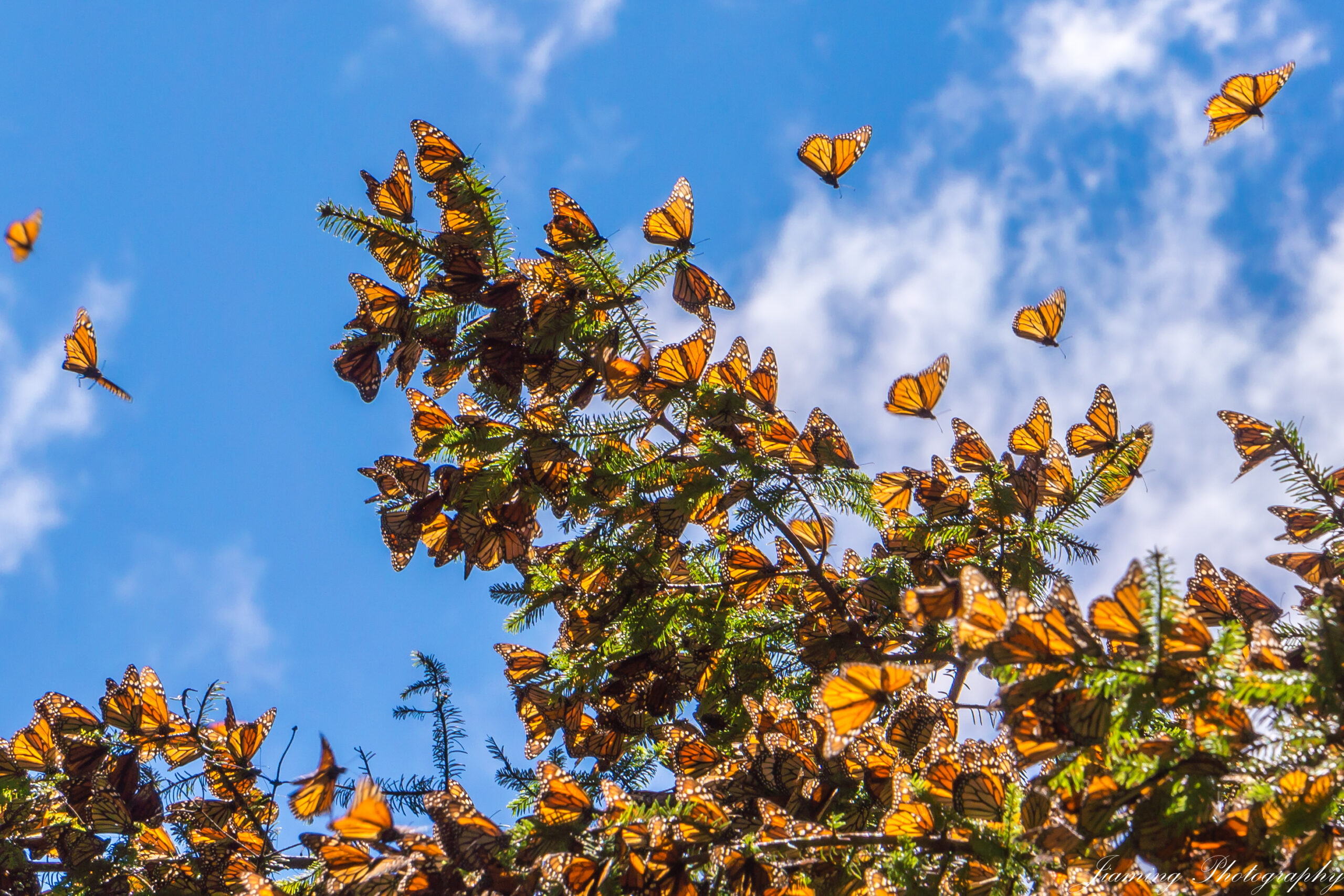
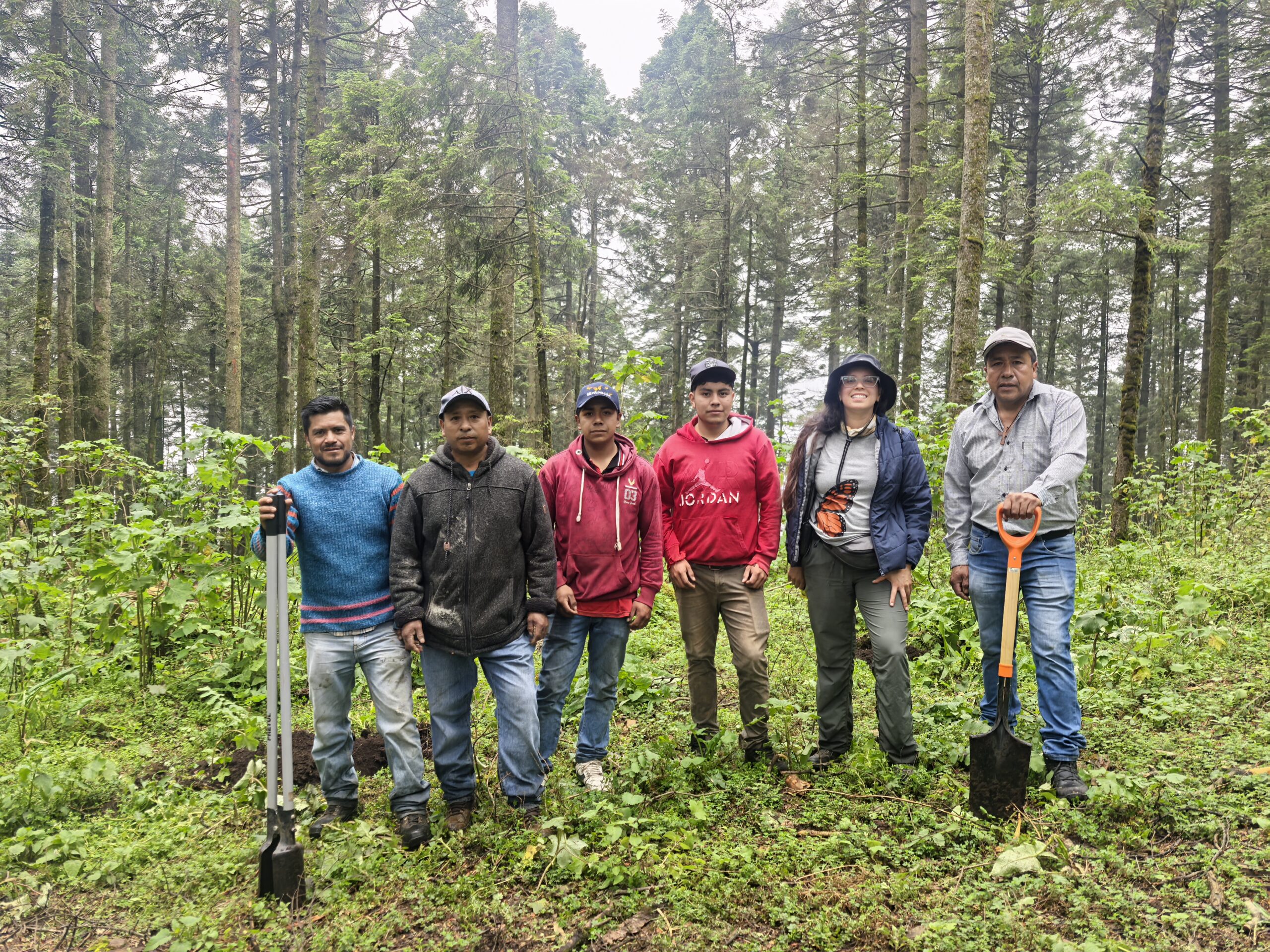
Between July and September 2025, 100,000 native Oyamel fir trees (Abies religiosa) were planted across 32 reforestation sites in Mexico’s Monarch Butterfly Biosphere Reserve, one of the most critical ecosystems in North America. These new forests will serve as safe winter sanctuaries for millions of Monarchs that migrate up to 3,000 miles each year from Canada and the northern United States to central Mexico.
“Completing this reforestation marks a historic milestone for Monarch conservation,” said Shiran Hershcovich, Lepidopterist Senior Manager at Butterfly Pavilion. “This large-scale restoration has united communities, scientists, and governments across borders to protect one of nature’s most extraordinary migrations. Every tree planted represents a promise to the Monarchs and to future generations.”
Why This Project Matters
The Monarch migration is one of the world’s most remarkable natural phenomena and one of its most at risk. In the last three decades, Monarch populations have declined by nearly 80 percent due to habitat loss, deforestation, and climate change.
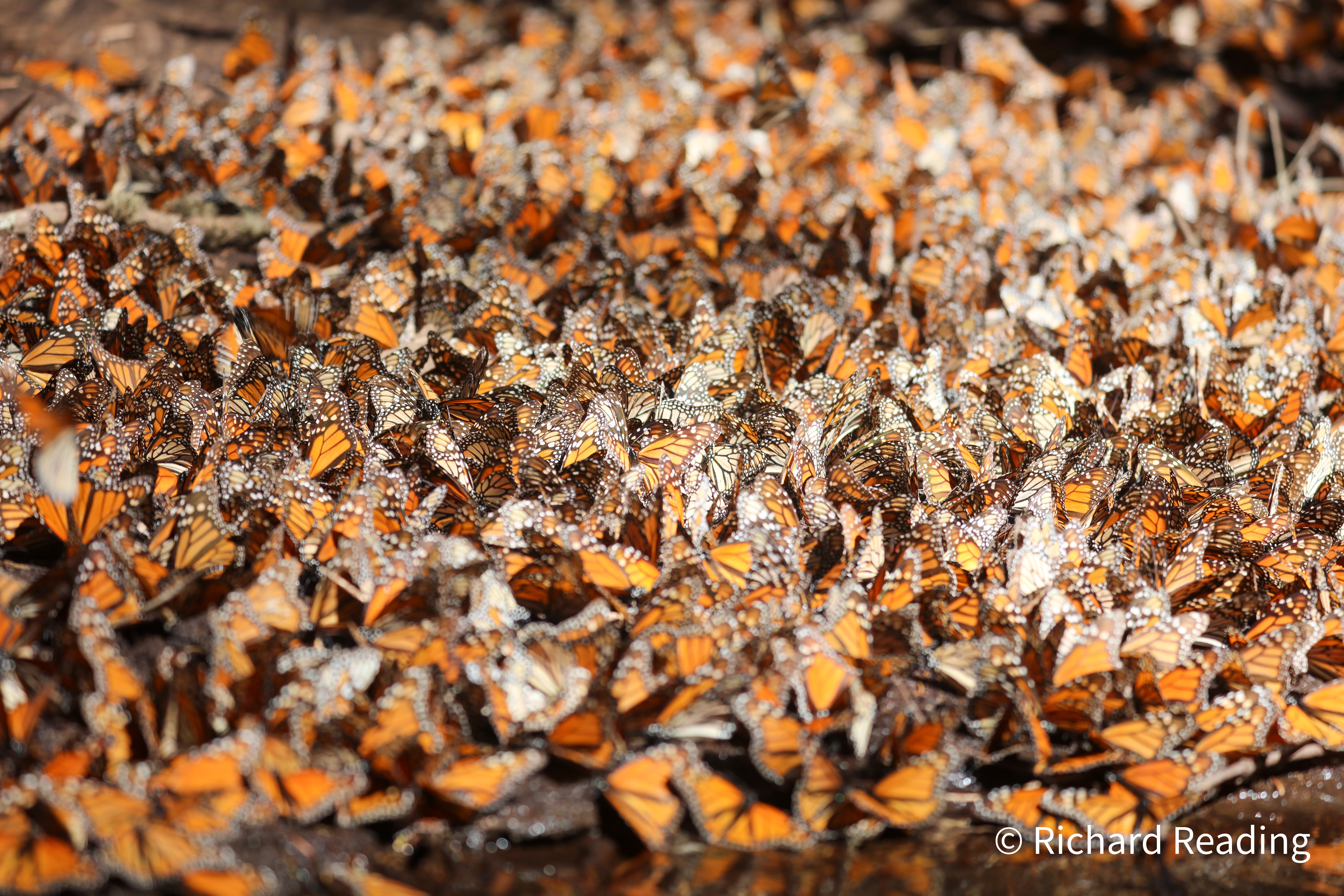
The Oyamel fir forests of central Mexico, which provide the cool, moist microclimate Monarchs need to survive the winter, have been reduced to less than five percent of their original range. In recent winters 2024–2025, Monarch colonies occupied only 0.9 hectares of forest, the second-lowest number ever recorded. Scientists estimate that at least six hectares of suitable habitat are required to sustain the species.
By planting 100,000 native trees in degraded areas, Butterfly Pavilion and its partners have begun rebuilding this essential forest canopy, strengthening local ecosystems, stabilizing the microclimate Monarchs depend on, and protecting biodiversity for generations to come.
The U.S. Fish & Wildlife Service’s Proposed Ruling: Why It Matters More Than Ever
In December 2024, the U.S. Fish & Wildlife Service announced a proposed rule to list the Monarch butterfly (Danaus plexippus) as “threatened” under the Endangered Species Act. This decision underscores the urgency of ongoing, coordinated conservation efforts across North America.
If Monarch butterflies are officially designated as threatened, it would activate critical federal protections to help safeguard their survival. Large landowners and developers would be required to work with the U.S. Fish & Wildlife Service before undertaking any activity that could significantly impact Monarch habitats. It would also become illegal to intentionally or negligently harm or kill Monarch butterflies or to import or export them without permits.
Certain allowances would remain, such as exceptions for agricultural practices like the removal of milkweed, the Monarch caterpillar’s primary food source, when necessary for farming operations. Even so, these proposed measures represent a vital step toward reversing population declines and ensuring that this iconic species has the chance to recover and thrive.
Butterfly Pavilion’s completion of its large-scale reforestation in Mexico’s Monarch Butterfly Biosphere Reserve could not be timelier. By planting 100,000 native Oyamel fir trees across 32 sites, this project directly supports the same conservation goals outlined in the proposed federal ruling: restoring habitat, protecting migration corridors, and safeguarding pollinators that sustain ecosystems across borders.
Project Achievements
- Restored 32 key reforestation sites within the Monarch Butterfly Biosphere Reserve
- Planted 100,000 native Oyamel fir trees to rebuild Monarch winter habitat
- Reforested degraded areas in the Sierra El Campanario and Sierra Chincua sanctuaries
- Created 20 native pollinator gardens at schools in the Reserve’s buffer zone to serve as living classrooms for students and families
- Supported sustainable local livelihoods by engaging ejidatarios (community landholders) in every phase of restoration
- Strengthened binational partnerships that bridge conservation science, education, and community action
“Standing in these restored forests today, it is clear that our collective efforts matter,” said Hershcovich. “Each Oyamel fir we planted strengthens the delicate chain that keeps the Monarch migration alive. This work gives hope that with continued collaboration, this remarkable journey will endure.”
Education and Community Impact
This project is not only restoring habitat but also cultivating stewardship. In Mexico, 20 school-based pollinator gardens now serve as hands-on learning environments where students learn about Monarch biology, pollinator conservation, and sustainable forest management.
In the United States, Butterfly Pavilion invites families, schools, and community scientists to take action through the Monarch Magic Pledge, planting native milkweed and pollinator-friendly plants, and by joining the Colorado Butterfly Monitoring Network, which collects vital data to protect local species.
Global Collaboration in Action
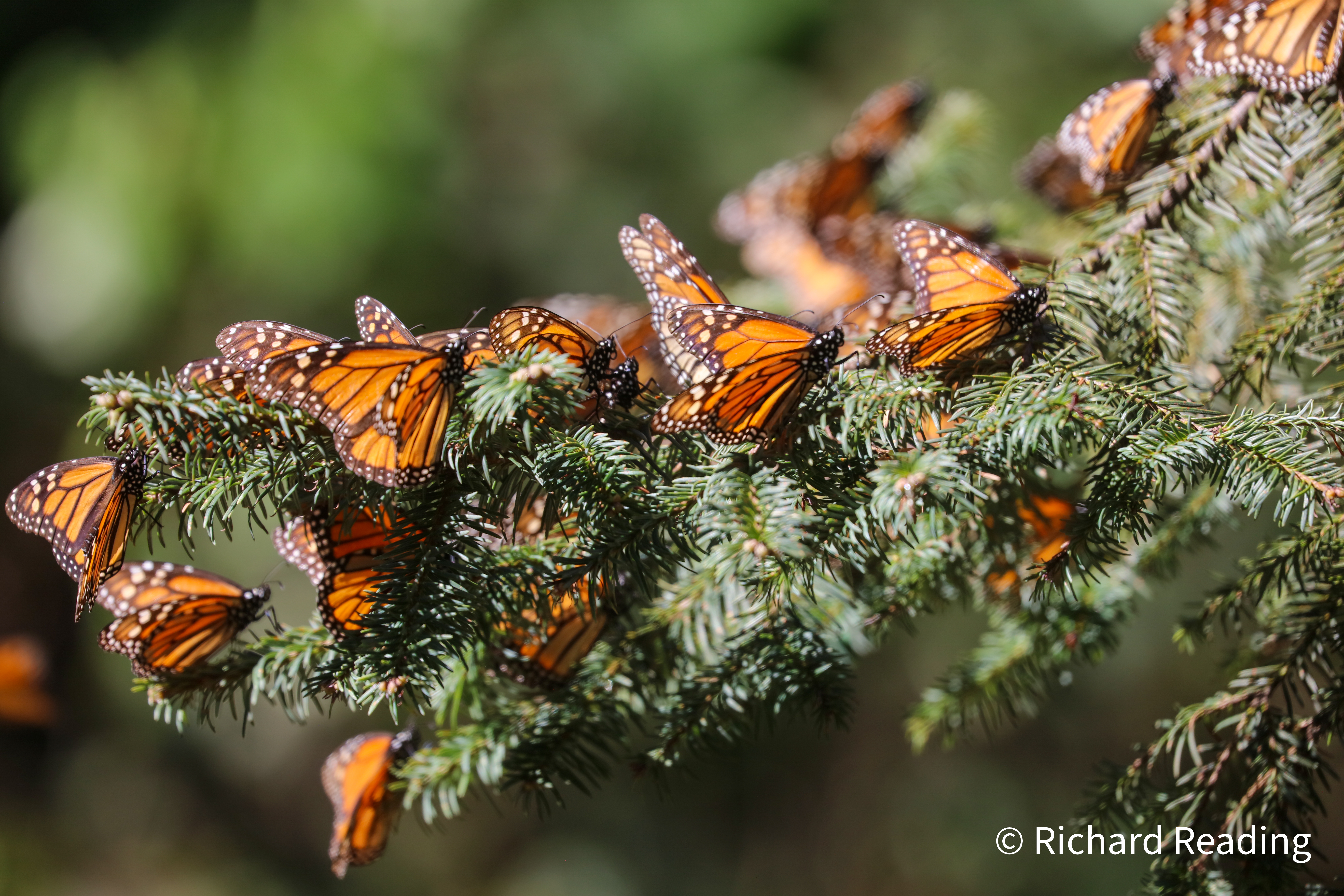
This achievement demonstrates what is possible when conservation transcends borders. The project, Preservation of Critical Overwintering Habitat for the Migratory Monarch Butterfly in Central Mexico, was made possible through a grant from the Association of Zoos and Aquariums Conservation Grant Fund and realized through collaboration among government agencies, nonprofits, and community partners.
Partners
- Government of Mexico
- Mexican Agency for International Development Cooperation (AMEXCID)
- Secretariat of Environment and Natural Resources (SEMARNAT)
- National Commission of Protected Natural Areas (CONANP)
- Butterfly Pavilion (project lead and implementing partner)
- Consulate General of Mexico in Denver
- Monarch Butterfly Biosphere Reserve Directorate
- Michoacán Forestry Commission (COFOM)
- Alternare (local conservation nonprofit)
- Community landholders (ejidatarios) from six ejidos
This collaboration embodies the mission of the Association of Zoos and Aquariums SAFE program, which unites accredited zoos and aquariums across North America to protect species through science, education, and community engagement.
The Importance of Monarchs
Monarch butterflies are far more than symbols of beauty. They are powerful pollinators that sustain ecosystems across North America. During their annual migration, they carry pollen between flowers, aiding plant reproduction and supporting countless other species that rely on those plants for food and shelter.
As sensitive indicators of environmental health, Monarchs reflect the broader challenges facing our planet, from climate change to habitat loss. Protecting their migration means protecting the balance of nature itself. Immediate and collaborative conservation action is essential to prevent the collapse of this extraordinary migration.
Cultural and Ecological Significance
The loss of the Monarch migration would not only be an ecological tragedy but a cultural one. For generations, the migration has symbolized endurance, renewal, and connection, values deeply rooted in the traditions of communities across North America, particularly in Mexico.
Each autumn, Monarch butterflies arrive in central Mexico around the beginning of November, coinciding with Día de los Muertos. In Mexican tradition, their arrival is seen as the return of the souls of departed loved ones, a reminder of the connection between life, memory, and the natural world.
Beyond their spiritual and symbolic importance, Monarchs also sustain local economies. Ecotourism centered around the Monarch Butterfly Biosphere Reserve brings meaningful income to communities in the region, reinforcing the idea that protecting Monarchs also protects people, livelihoods, and cultural heritage.
What Comes Next
Butterfly Pavilion and partners will continue monitoring the newly planted forests to ensure healthy growth, support additional habitat restoration, and expand education and engagement programs that inspire long-term community stewardship.
The restored forests will stand as a living legacy of international cooperation and a testament to what is possible when people work together to protect the natural wonders that sustain life on Earth.
Get Involved
- Plant for Monarchs: Add native milkweed and nectar plants to your garden.
- Join Community Science: Participate in the Colorado Butterfly Monitoring Network.
- Support Conservation: Your gift sustains habitat restoration and education efforts worldwide.
Join us in Mexico to see these amazing butterflies: Learn More
Tarantula Breeding and Rearing
Butterfly Pavilion leads the breeding program of Chilean rose hair tarantulas to maintain a sustainable population of vulnerable arthropods.
Butterfly Pavilion leads the Association of Zoos and Aquariums (AZA) Safety Web for Arthropod Reproduction and Management (SWARM) program in the maintenance of sustainable populations for the Chilean rose hair tarantulas, Grammostola rosea (Rosie). This strategy will ensure that species under human care will not disappear from North American zoo collections and reduce collection of wild tarantulas.
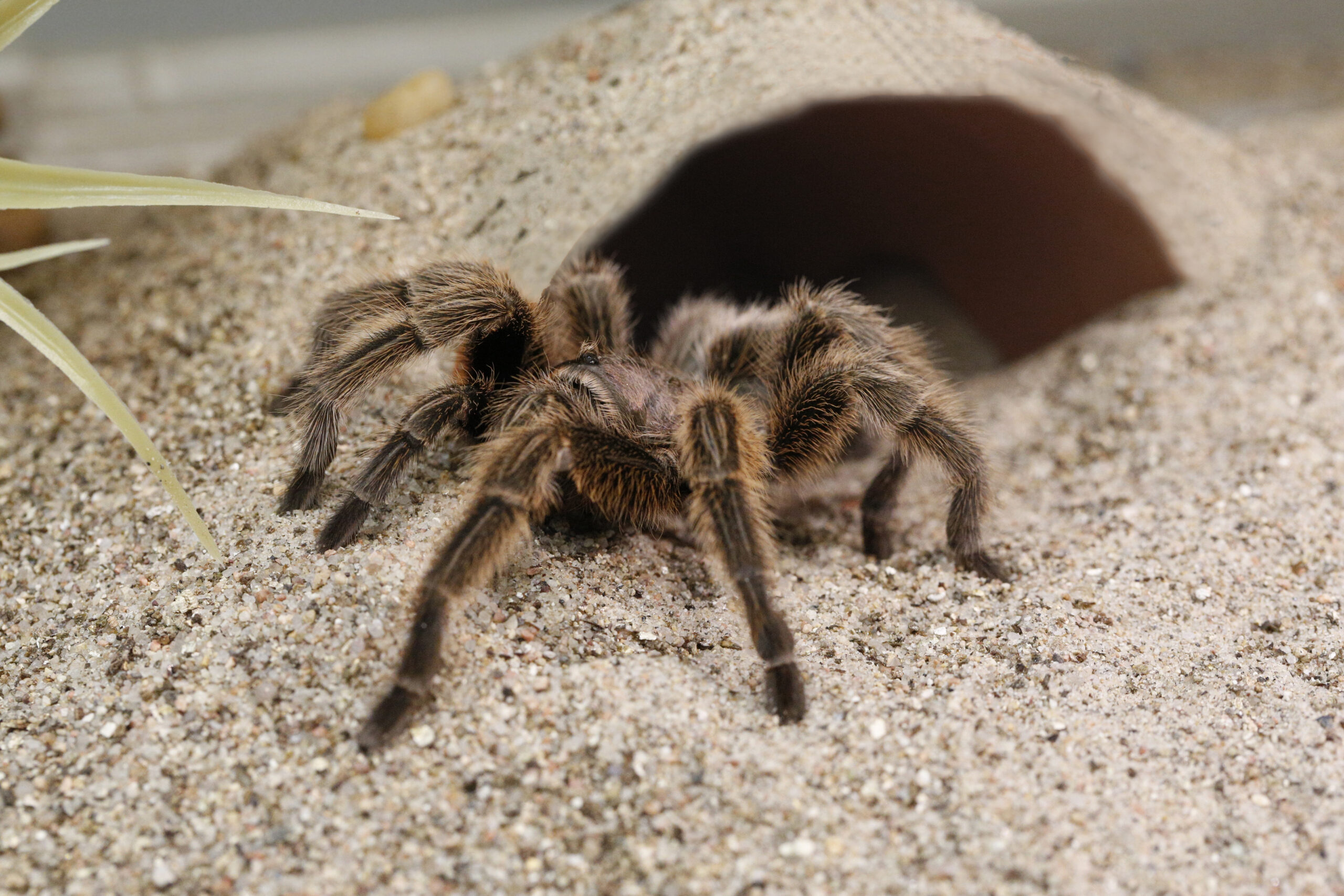
SWARM is a program sanctioned by the Association of Zoos and Aquariums (AZA) Terrestrial Invertebrate Taxon Advisory Group (TITAG). This program focuses on keeping vulnerable arthropods (invertebrates like insects, spiders and crustaceans) in zoo collections by breeding and refraining from wild collection.
If you have ever been to Butterfly Pavilion, you have probably had an up close experience with one of our most important ambassador animals: Rosie the tarantula and she is the focus of the SWARM that Butterfly Pavilion holds.
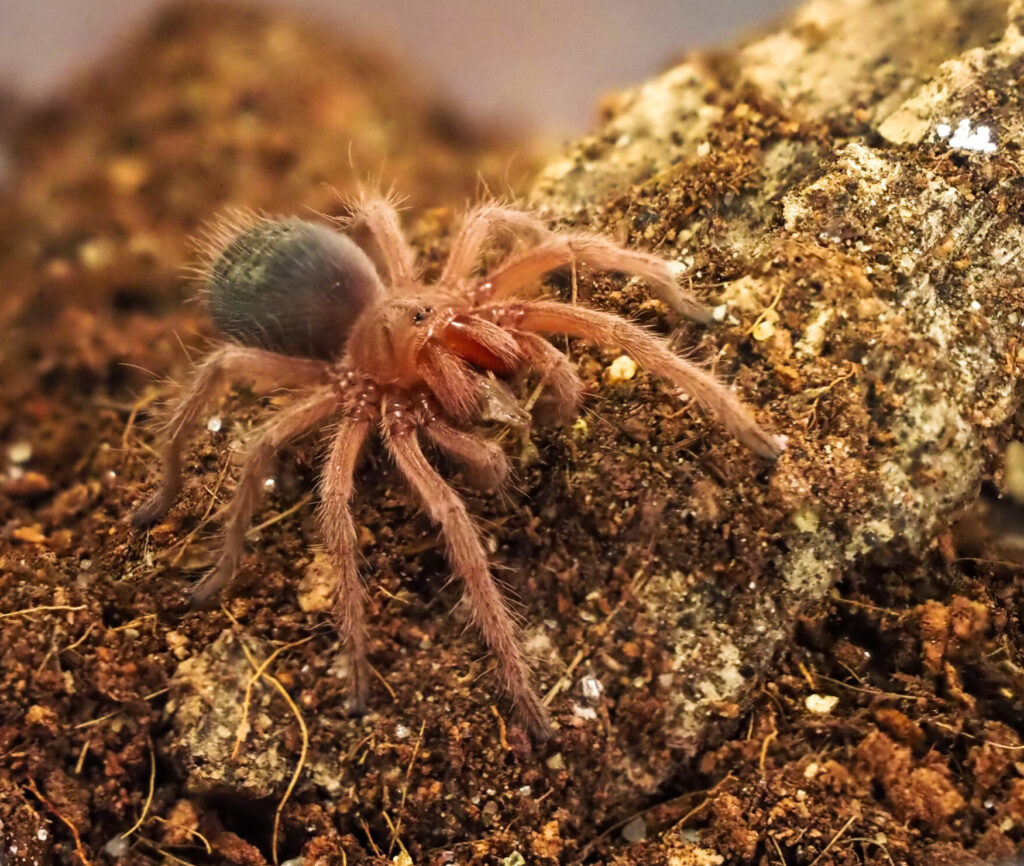
Our large collection of Rosie tarantulas (also called the Chilean rose hair, Grammostola rosea) allows us to communicate with other zoos about breeding, husbandry, welfare and conservation of this important species.
Butterfly Pavilion believes that an up close interaction with animals such as Rosie can provide an invaluable experience to all of our guests, which helps them understand more about the importance of invertebrates to humans and the world at large.
This is why we continue to work on keeping these magnificent animals in zoos and protect their habitats around the world.
Florida Reef Tract Rescue Project
Butterfly Pavilion houses corals for the Florida Reef Tract Rescue Project to maintain genetic diversity necessary for wild coral restoration efforts.
The Florida reef tract is a 360-mile stretch of coral reef ecosystems forming the third largest barrier reef in the world, and the only living barrier reef in North America. It is America’s barrier reef. Barrier reefs serve important ecological functions as nurseries for fish and storm barriers for coastal habitats.
Coral reefs are delicately balanced and when the corals themselves die the consequences are often huge. Like a rainforest without trees, the other animals are forced to move on now that they are unable to support themselves in the barren landscape of coral skeletons.

Stony Coral Tissue Loss Disease
In 2014, the northernmost tip of the Florida reef tract located off the coast of Port St. Lucie, FL, experienced a small outbreak of a new and unknown disease. This disease, now called Stony Coral Tissue Loss Disease (SCTLD), was quick to spread throughout the different coral species along the reef.
As it spread it was found that once a coral was infected it had almost a 100% chance of dying. Global issues like climate change, pollution, and other factors take a heavy toll, weakening habitats and making corals more susceptible to infection.
In four years the SCTLD disease has spread over a 100 miles southward, impacting over 20 different species of reef building corals and reducing their abundance by 50-90%.
The Coral Rescue Effort
In response to the disease crisis, multiple government agencies came together to form the Florida Coral Rescue Team. This team went on to develop a revolutionary Coral Rescue Plan.
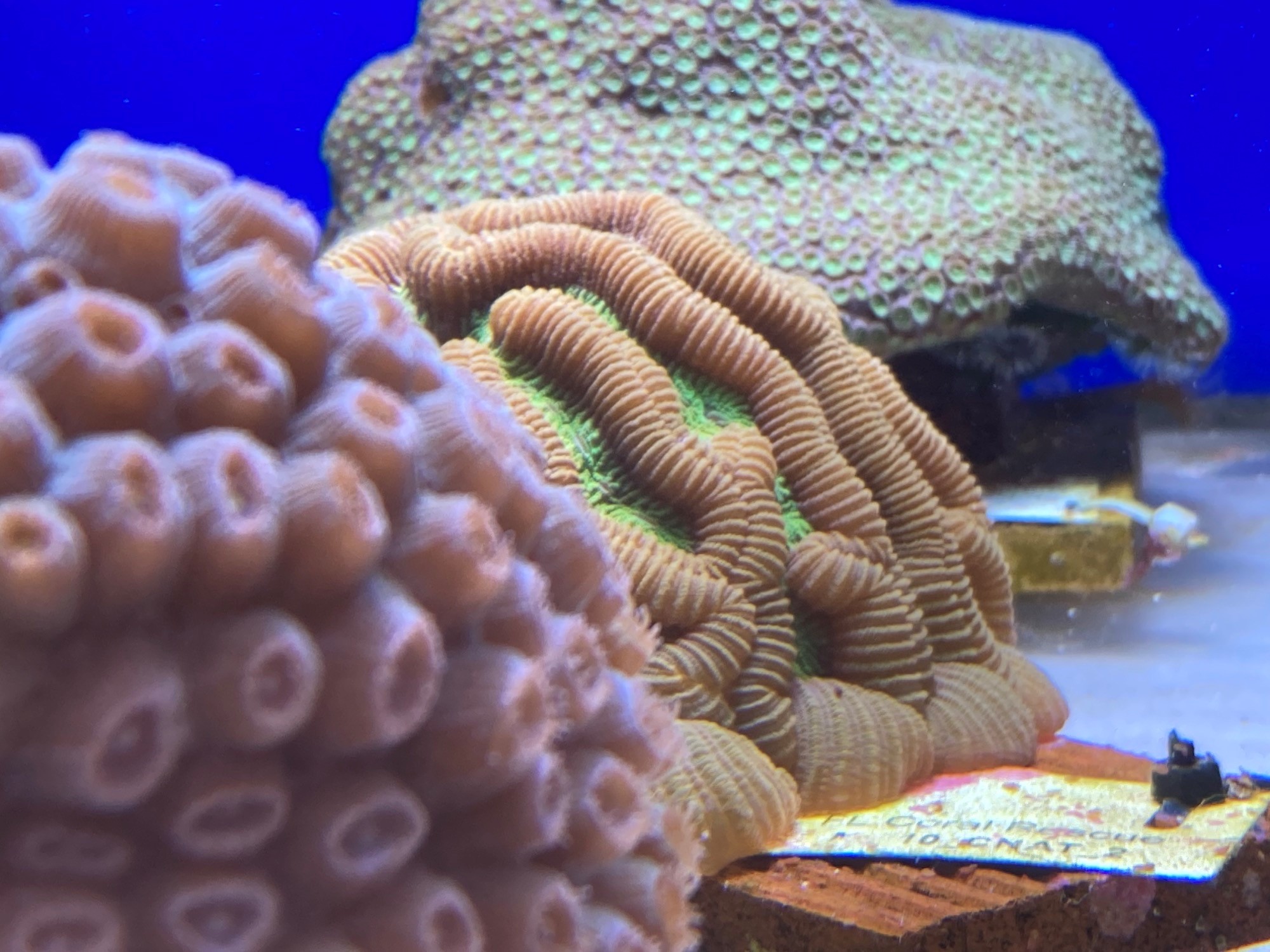
The plan required the removal of healthy coral specimen, lovingly dubbed ‘reef-ugees’, of the most susceptible species from places still untouched by the disease and placing them in land-based ‘arks’. The goal was to save as many ‘reef-ugees’ as possible to ensure these species wouldn’t be brought to the brink of extinction.
In 2018, the Association of Zoos and Aquariums (AZA) was invited to support this rescue operation. Of the 236 zoos and aquariums accredited by AZA, only 22 facilities have been accepted as coral holders. Butterfly Pavilion, having the necessary invertebrate expertise, is one of those facilities accepted as a holder for the project.
Butterfly Pavilion’s Role
In early 2019, Butterfly Pavilion committed to having a system ready to receive coral by early 2020. Since then, we have created an exhibit capable of supporting these essential animals.
As the only facility in Colorado currently committed to holding coral, we are excited to house these ‘reef-uges’ at our facility and tell their story to our guests and members!
Butterfly Lifespan Study
Butterfly Pavilion monitors some of the butterflies in our conservatories to study the lifespans of species in our care.
How long do butterflies live? That’s a common question asked at Butterfly Pavilion! The answer is that the lifespan of a butterfly depends on many factors, such as their diet, environment, and species.
At Butterfly Pavilion, we are studying the lifespan of butterflies in both our Wings of the Tropics exhibit in Westminster and at the butterfly house at the Gardens on Spring Creek in Fort Collins.
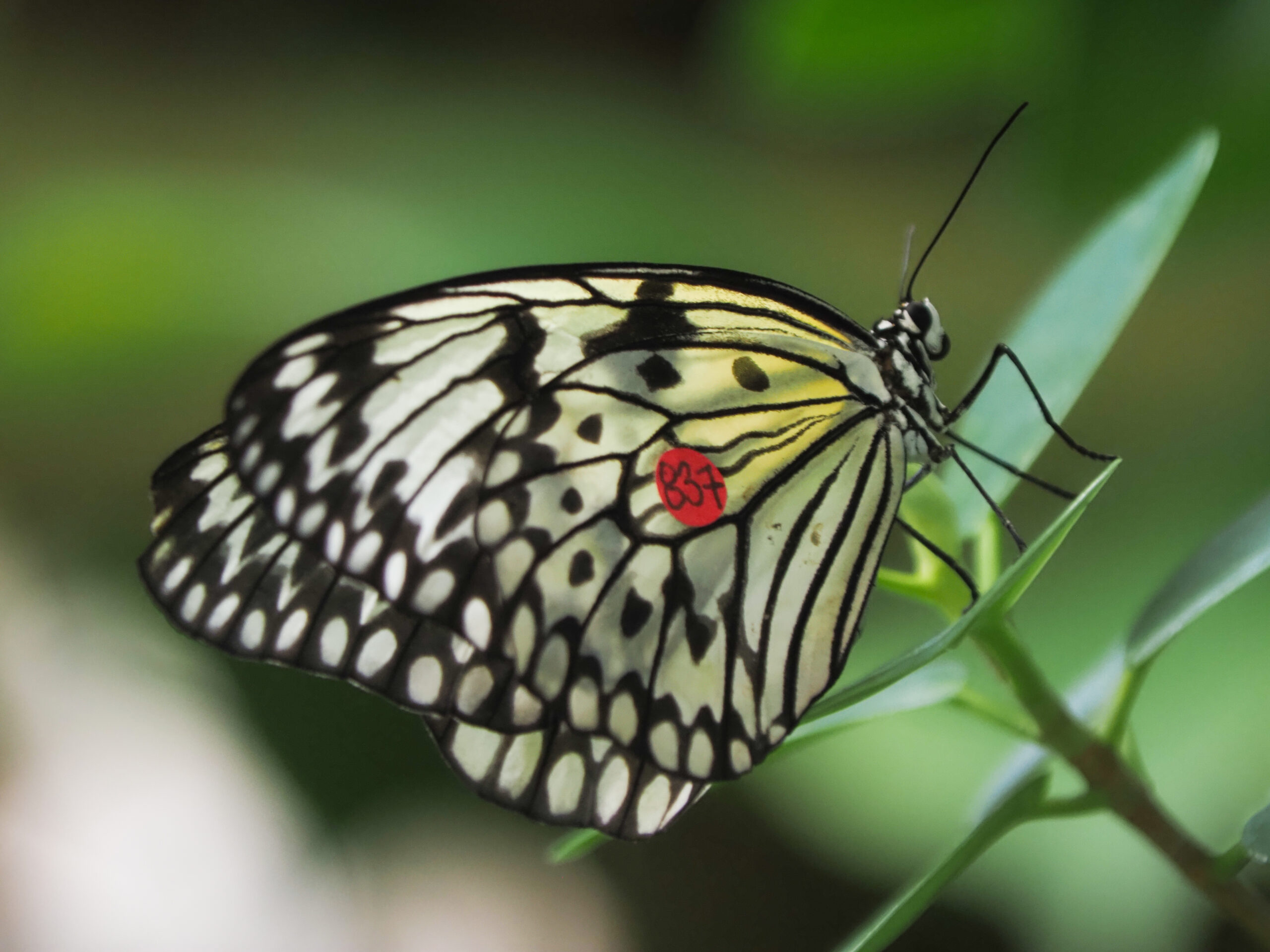
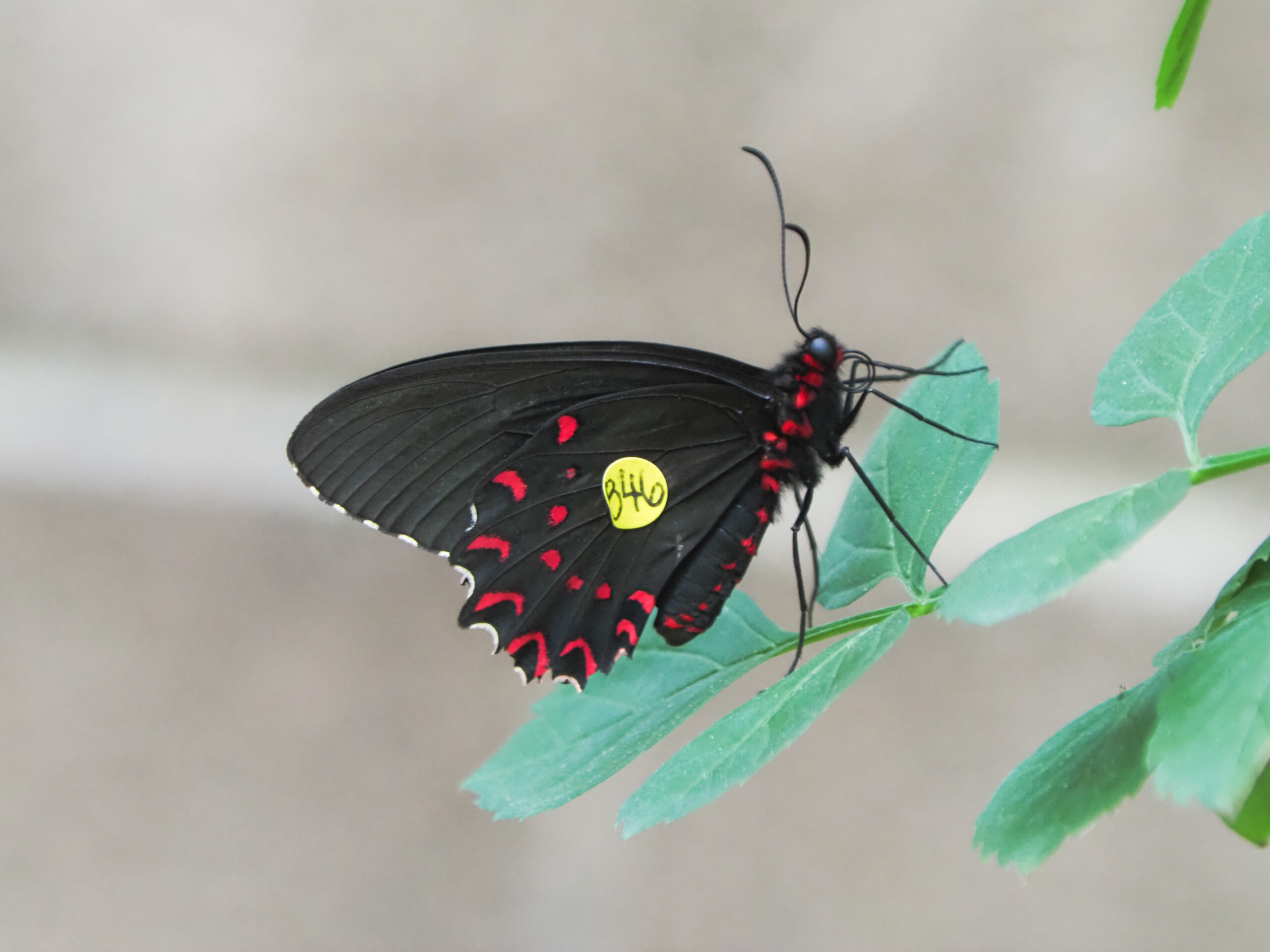
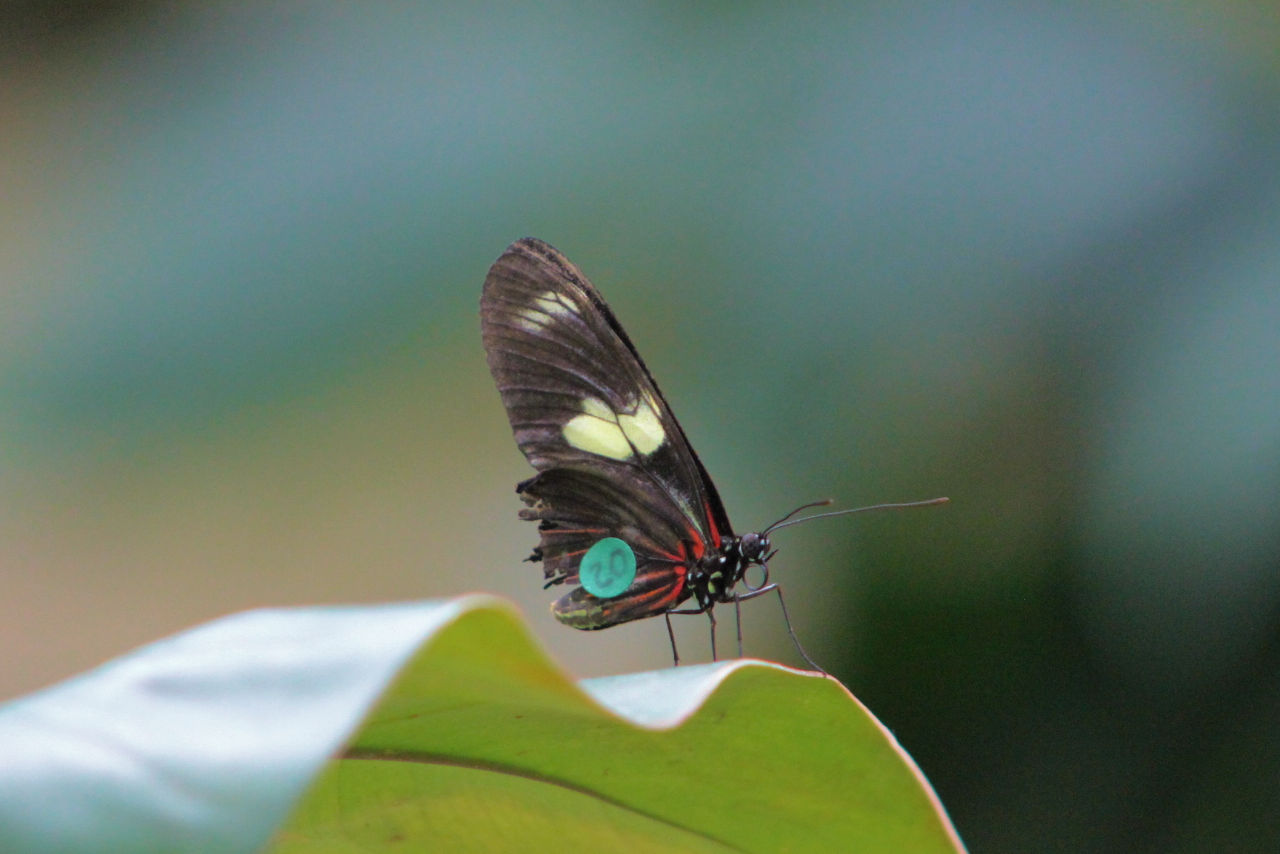
Our Lepidopterist Manager leads staff and volunteers in tagging butterflies with small colored stickers with identifying numbers, then releasing them into the exhibits. As staff work in the exhibits, they record when they observe tagged butterflies, allowing us to track the lifespan of individual butterflies and estimate the average longevity of the different butterfly species in our care.
We’ve found some butterflies living over six months in our exhibits!
The data collected on butterfly behavior and longevity helps us improve our care and welfare practices in the conservatory, and make sure our butterflies are as happy and healthy as possible.
Butterfly Quest
Butterfly Pavilion’s Butterfly Quest is a unique opportunity to assist with Butterfly Pavilion’s Butterfly lifespan research, while exploring the world of animal behavior. Help observe tagged butterflies, record meaningful data, and share your discoveries — all on your phone. By participating in Butterfly Quest, you are helping our scientists shape animal welfare here and in zoos around the world!
Butterfly houses, like our Wings of The Tropics, offer a unique opportunity to understand and observe the lifespan of different butterfly species. We are always looking for new ways to improve animal care. To do this with our butterflies, we need to know how long they live and how they behave while under our care.
To collect this data, we tag some butterflies upon emergence from their chrysalides. We can then track individuals and truly understand how our butterflies spend their time in their home.
This is where YOU come in! Your contributions to Butterfly Quest help us expand our knowledge of butterflies.
Receive 10% discount on items in Butterfly Pavilion’s gift shop by completing a quest, submitting a form, and taking a survey!
Fun facts about Butterfly Quest
- In 2022, guests submitted more than 2,000 observations
- The longest butterfly lifespan recorded in Butterfly Pavilion’s conservatory was 10 months and 23 days (almost 11 months!).
- The most tagged butterflies were common morphos, followed by common giant owls, and paper kites. In 2022, over 2,200 butterflies were tagged!
- Little is scientifically known about invertebrates, even for butterflies. Butterfly Quest helps inform the latest science on butterfly biology and expands our understanding of tropical insects.
- Butterfly Quest is a community science program, a people-driven way of collecting data and welcoming everyone into taking a hands-on approach to science.
Butterfly Pavilion and Bureau of Land Management Colorado Collaboration
Research and Conserve Invertebrates
Butterfly Pavilion is partnering with the Bureau of Land Management Colorado (BLM CO), City of Longmont and City of Boulder to estimate the diversity and relative abundance of daytime pollinators on public land. This project examines several habitats that represent the more than 8.3 million acres of public land in Colorado.
Butterfly Pavilion and BLM CO scientists have conducted a baseline survey data on invertebrates across the western half of the state. These efforts will help inform conservation of these species, including those proposed for listing under the Endangered Species Act, such as monarch butterflies (Danaus plexippus) and western bumblebees (Bombus occidentalis).
The Importance of Invertebrates
These animals make up 97% of all species on earth. Invertebrates have no backbone, yet they are the backbone of all life on earth. They are the basis of most food webs, pollinate the vast majority of flowering plants, decompose waste, aerate the soil, and improve water quality. Life on our planet would collapse without them. Conserving these vital animals means conserving life as we know it.
Baseline data is needed for public land to properly implement management strategies that preserve biodiversity and protect invertebrate species. In the last four decades, conservation biologists have estimated a 45% decline in invertebrate populations worldwide.
Field Surveys Across Colorado
Butterfly Pavilion entomologists and researchers have already surveyed over 60 locations across the west. Locations are co-selected with local land management and represent major ecosystem types in Colorado including sagebrush regions, grasslands, arid deserts, forest, alpine regions, and urban development. Survey locations span across the four major watersheds in Colorado (Upper Colorado, Rio Grande, Arkansas-White-Red, and Missouri Rivers).
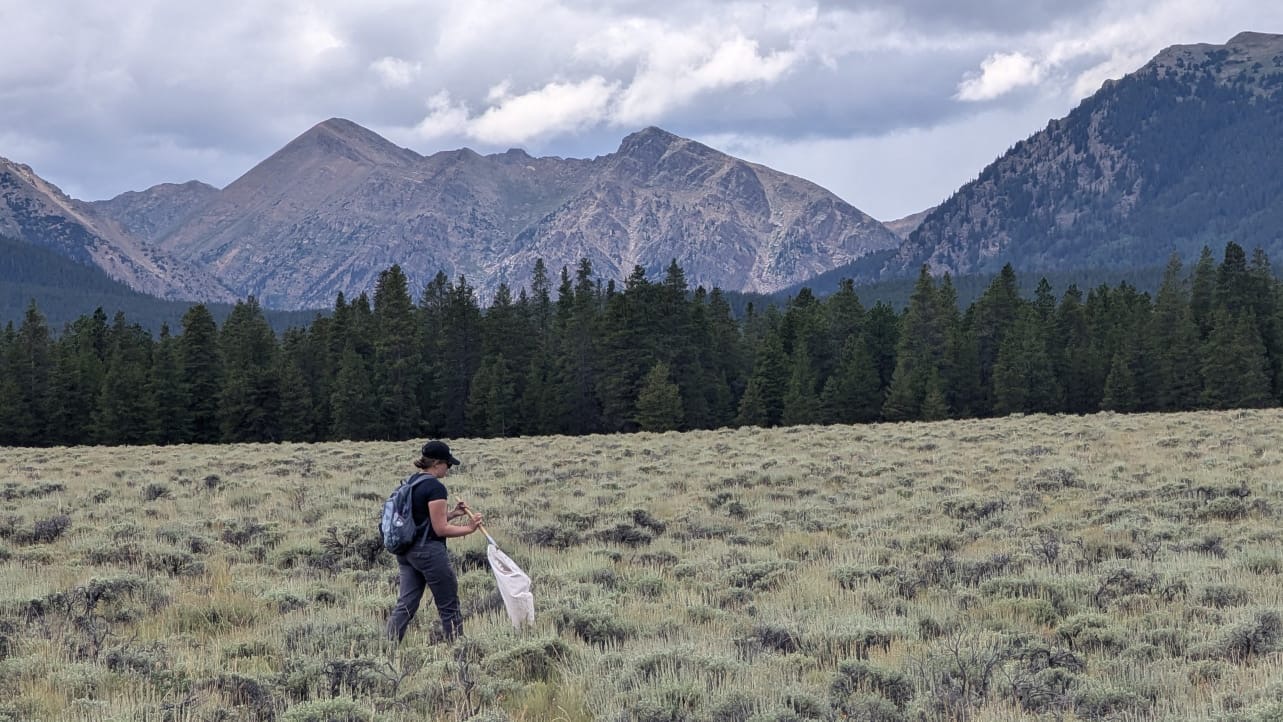
During these surveys, researchers record which species are present, how many of each species are present, and what flowers they are visiting. Each morning, traps are set at sample sites, and specimens are collected at the end of the day. During the wait, researchers use net to collect invertebrates on flowers. Peak hours for most invertebrates are mid-to-late mornings to early afternoons when it is warmest.
Observations in the Field
However, this is not always the case. Andrew Draper, the project coordinator for pollinator research, recalls a stormy day that prompted multiple velvet ants to emerge from the ground.
“Flying invertebrates such as bees thrive in warmer weather, while velvet ants burrow to escape the heat. As soon as cloud cover appeared, so did the velvet ants.”
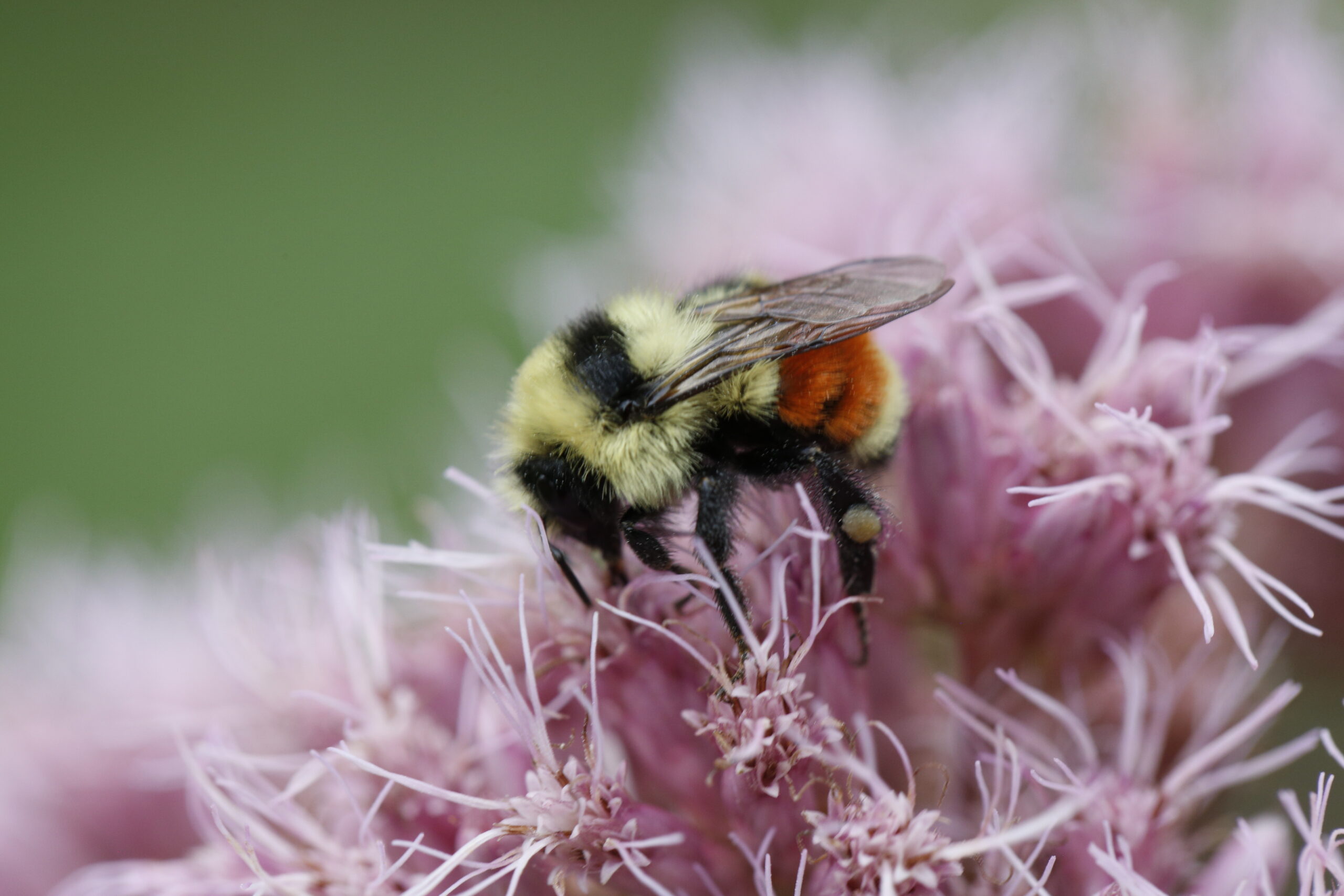
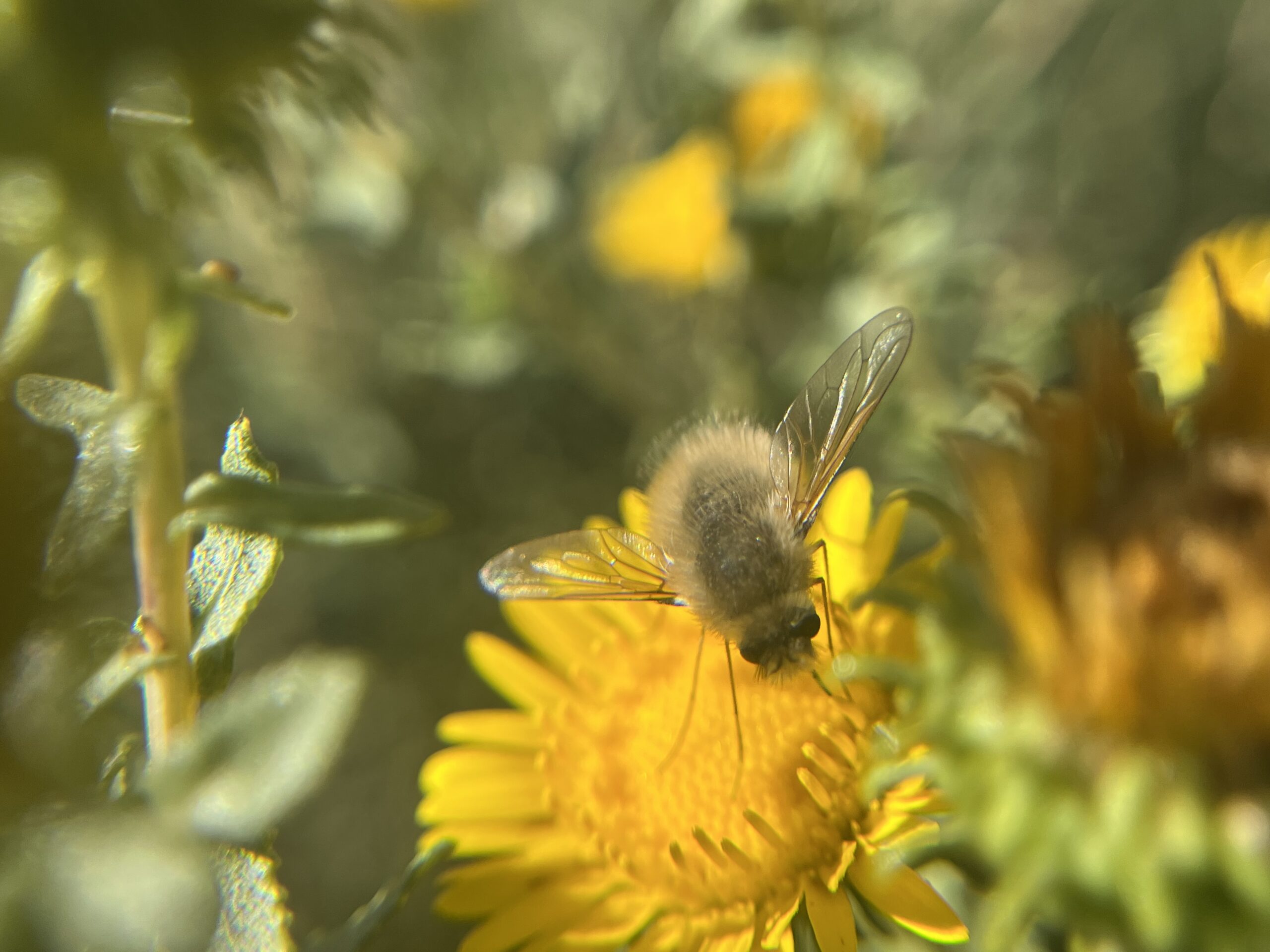
Our researchers have seen many different invertebrates in the field, such as swallowtail butterflies, bumblebees, beetles, wolf spiders, and many more. Butterfly Pavilion researchers work diligently in the field, so much so that friendly sweat bees often land on them to collect their perspiration as they survey the areas!
Impact of the Research
The data and samples collected from this project will help inform future land management decisions, better describe pollinator species in the area, and understand their conservation needs. Scientists are examining species abundance and diversity between sites to best inform our scientific conservation and education recommendations.
The data, including flower association, is also used to update our pollinator gardening and Environmental and Ecological Services recommendations. Findings are submitted to the specific municipality to support the Endangered and Threatened Species Program working to protect sensitive populations in Colorado.
Guardians of the Steppe: Saving Mongolia’s Endangered Butterflies
Imagine a land where rolling hills meet sky, where ancient traditions blend with modern conservation efforts. This is Mongolia, home to some of the world’s most beautiful and endangered butterflies. Among them are the Parnassius butterflies, delicate creatures that have graced these steppes for millennia. But their future hangs in the balance.
The Challenge
Five species of Parnassius butterflies in Mongolia are now threatened and at risk of disappearing forever. The culprits? Overzealous hay harvesting, excessive grazing, climate change, and even the passionate but misguided efforts of collectors from across the globe. But there’s hope. And it starts with you.
Our Mission: Empowering the Next Generation
At Butterfly Pavilion, we believe the key to saving these incredible butterflies lies in the hearts and minds of Mongolia’s youth. That’s why we’ve launched an ambitious program turning students into community scientists, armed with cutting-edge technology and a burning passion for conservation.
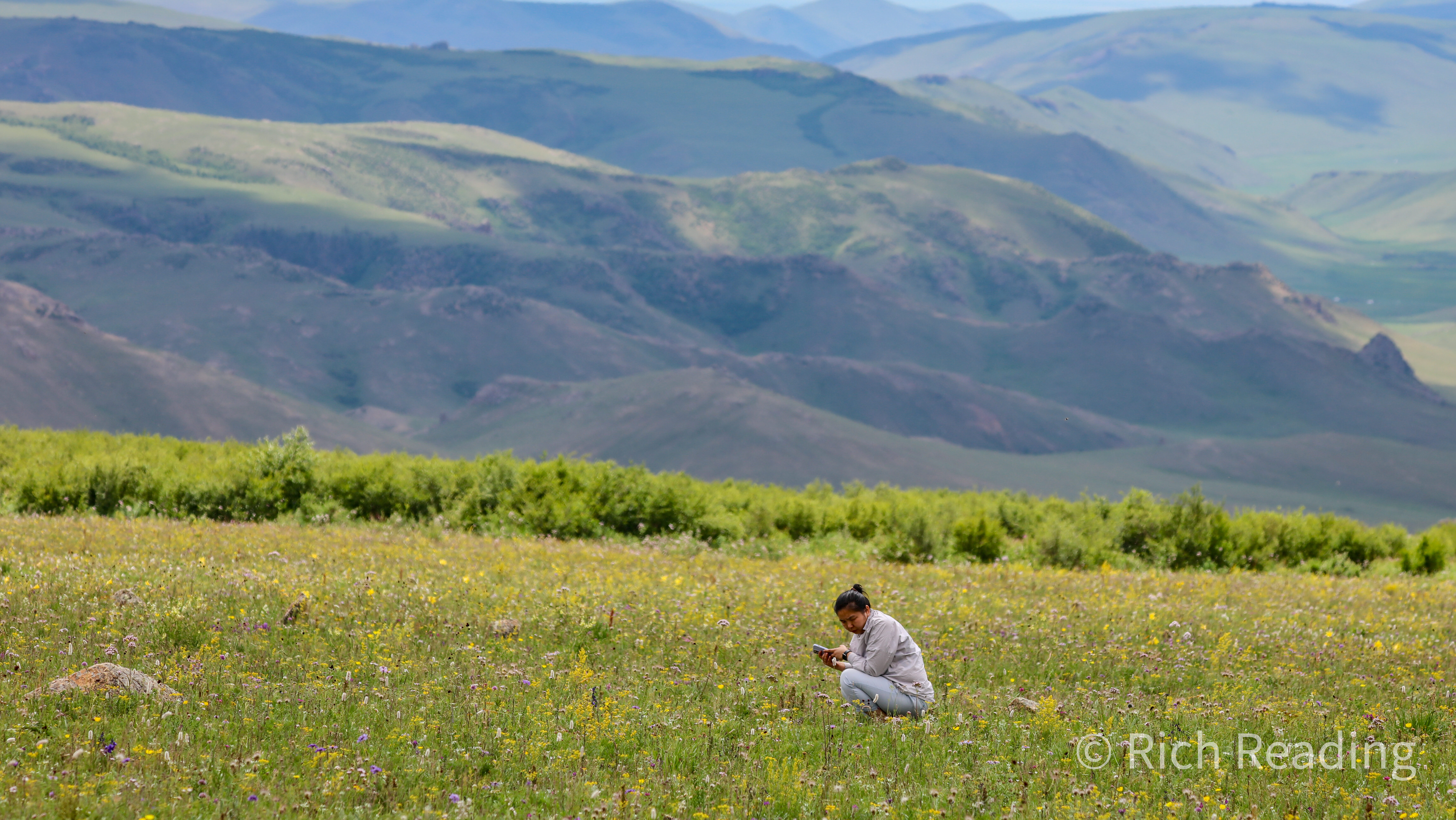
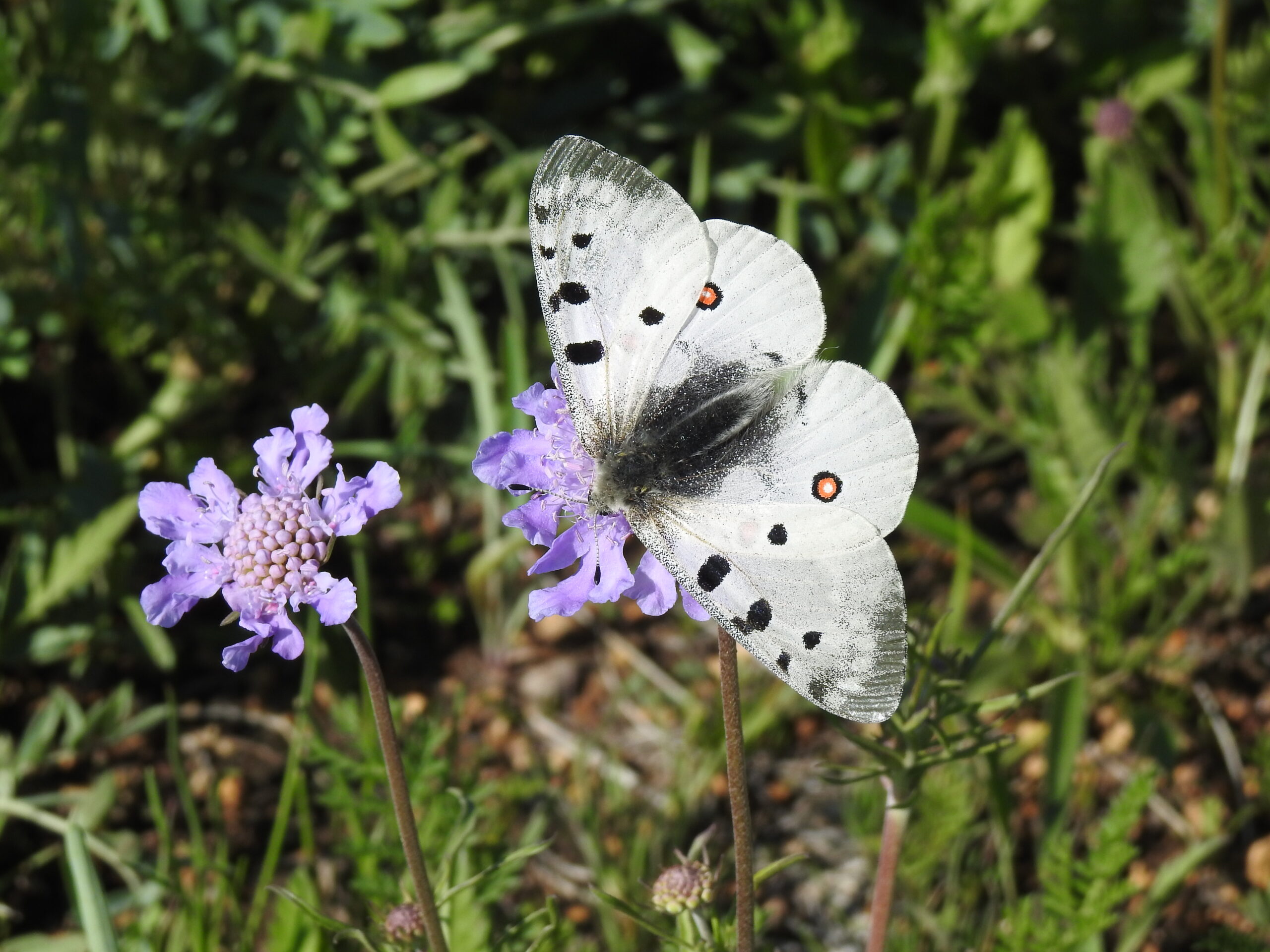
Picture this: A young Mongolian girl, eyes wide with wonder, as she spots a rare Apollo butterfly fluttering nearby. With trembling fingers, she reaches for her smartphone, not to capture a fleeting Instagram moment, but to record vital data that could help save an entire species. This isn’t just a dream. It’s happening right now, thanks to supporters like you.
The Impact of Your Donation
Your generosity doesn’t just buy equipment or fund research trips. It ignites a spark in the next generation of environmental stewards. Here’s what your donation can achieve:
- Empower Students: Equip young Mongolians with the tools and knowledge to become guardians of their natural heritage or support a Mongolian undergraduate or graduate student.
- Train Teachers: Provide local educators with the skills to inspire a lifelong love of conservation in their students.
- Protect Endangered Species: Support crucial research on three threatened Parnassius butterfly species: Apollo, Eversmann’s, and Stubbendorf’s.
- Influence Policy: Help inform government decisions and improve conservation strategies based on our findings.
- Create a Lasting Legacy: Build a sustainable future for Mongolia’s unique ecosystem and the communities that depend on it.
A Journey of Discovery
From the windswept plains of Uliastai to the pristine forests of Khentey, our team has traversed 11 sites across six provinces. We’ve braved harsh conditions, forged partnerships with local scientists, and witnessed moments of breathtaking beauty.
But the most inspiring sight of all? The faces of young Mongolians as they realize the power they hold to change the future.
Recent Triumphs
In 2024, we launched the Invertebrate Trunks program in Dadal, Mongolia, bringing hands-on conservation education to eager young minds.
From 2019 to 2024 our research has led to groundbreaking publications, shedding new light on Parnassian butterfly habitats.
We’ve built lasting partnerships with the Mongolian Academy of Sciences, universities, and local conservation groups, ensuring our work will have a lasting impact.
Timeline
In 2020, we published our second paper on the Parnassian butterfly habitat and partnered with the University of Colorado-Denver and Digital Global to analyze data critical to the conservation of these species.
In 2022, Butterfly Pavilion continued to support monitoring of Mongolia’s Parnassian butterflies and training of Mongolian conservationists to develop long-term sustainable research, conservation, and management policies for Mongolia. Our work ensures the long-term conservation of Mongolia’s Parnassius butterflies by training Mongolian conservationists and scientists in state-of-the-art research, conservation, and management techniques. Given their understanding of their nation’s resources, culture, and history, Mongolian specialists are the most qualified individuals for developing and implementing these long-term policies for their nation. Our work encompassed 11 sites in six provinces (Uliastai, Khovsgol, Tov, Ulaanbaatar, Khentey, and Dornod Provinces) across northern Mongolia. Our goal is to provide them with added improvement and success through our knowledge and expertise.
In the Summer of 2023, our team eagerly traveled to Mongolia to collaborate with local schools and communities on vital research and conservation efforts aimed at protecting the threatened Parnassius butterfly. Through educational outreach programs and hands-on fieldwork, we aimed to raise awareness about the importance of these beautiful species and their fragile habitat.
In 2024, the Invertebrate Trunks program was piloted in Dadal, Mongolia, aimed at protecting Mongolia’s endangered Parnassius butterflies through education in partnership with Nomadic Nature Conservation, the Mongolian Academy of Science, and local Mongolian educators and community members. The program was delivered through two core activities: Classification and Pollination.
The pilot involved 10 students ranging from 6th to 10th grade, along with two teachers. The Pollination Activity was highly successful in terms of student engagement and learning outcomes. Teachers found the activity rewarding, noting benefits in both personal growth and student impact.
Through this program, we aim to continue educating others on the importance of invertebrates and our ecosystems, the threats facing Parnassius butterflies, and the actions we can take to ensure their survival. It’s inspiring to see the next generation of environmental stewards in action, working to preserve Mongolia’s unique ecosystem and document local biodiversity. Their enthusiasm and dedication give hope for a sustainable future for Mongolia’s natural heritage.
Butterfly Pavilion continues to elevate our efforts with the Mongolian Academy of Sciences, Mongolian National University, Mongolian Conservation Coalition, Round River Conservation Studies, Nomadic Nature Conservation, local Mongolian educators and other potential partners to explore opportunities for expanding future work to include education, outreach, and conservation.
Join the Movement
The story of Mongolia’s butterflies is still being written. And you have the power to shape its ending. Will you stand with us as a guardian of the steppe? Will you help us ensure future generations can witness the delicate dance of Parnassius butterflies across Mongolia’s vast horizons?
Your donation, no matter the size, is a testament to hope. It’s a declaration that beauty matters, that being has value, and that together, we can create a world where nature thrives.
Donate now and become part of this incredible journey. Let’s write a future where the skies of Mongolia are filled with the flutter of countless butterfly wings, and where the children can grow up knowing the power of conservation. Together, we can turn the page on extinction and open a new chapter of hope for Mongolia’s butterflies.
Colorado Butterfly Monitoring Network (CBMN) is a community science project led by Butterfly Pavilion that harnesses the power of volunteers to conserve Colorado butterflies.
Established in 2013, the Colorado Butterfly Monitoring Network (CBMN) is a long-term community science project led by Butterfly Pavilion that harnesses the power of volunteers to conserve Colorado butterflies.
Butterflies are not only beautiful, but they also play a vital role in the ecosystem, serving as both pollinators and as food for other animals. Knowing which butterflies are active in our state gives us important information about the health of our local ecosystems.
CBMN volunteers observe and record butterflies in open spaces and parks multiple times per season, gathering essential data that land managers can use when making conservation decisions. It’s a fantastic chance to get outdoors and learn about butterflies while having a positive impact on conservation in Colorado.
No experience is necessary to participate and all are welcome!
Click here to sign up and get started
Click here for current volunteer resources
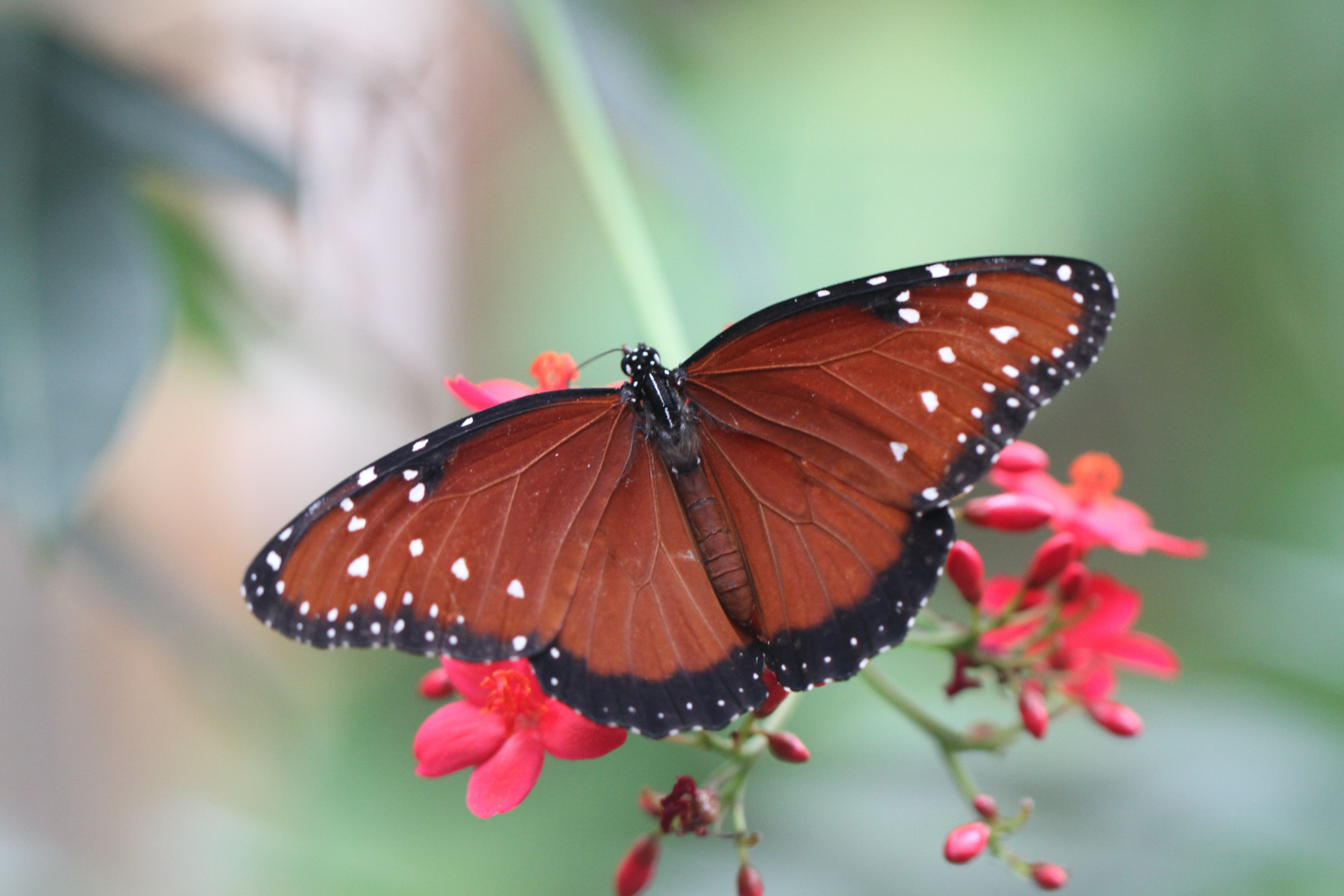
Interested in Participating? Here’s How!
- Submit a Monitor Sign-Up Form and attend a training session before the start of the monitoring season (~2 hours).
- Receive a site assignment from CBMN or establish a new monitoring route near you (pending approval).
- Visit your site 3+ times between May and September, conducting a survey on each field day.
- Submit your field data online on PollardBase after concluding your monitoring sessions.
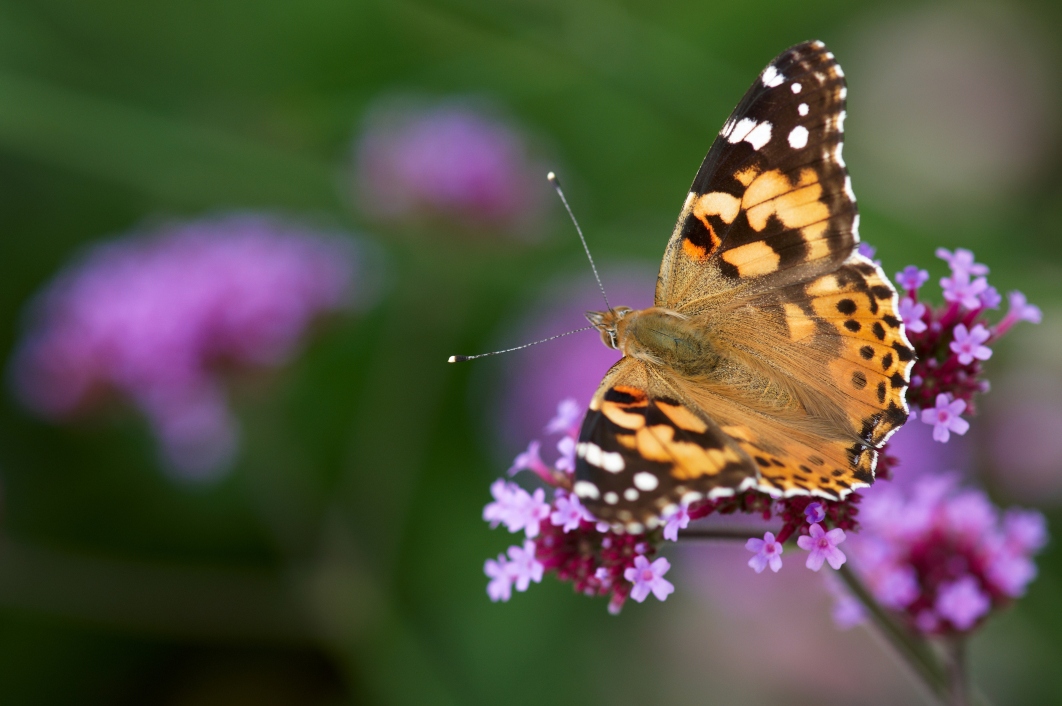
Click Here For Volunteer Resources
Training Locations
- Sunday, April 26 (9am – 4pm): Eldorado Canyon State Park
CBMN and MLMP training - Sunday, May 3 (9am – 4pm): Chatfield State Park
CBMN and MLMP training - Saturday, May 9 (9am – 4pm): Cheyenne Mountain State Park
CBMN and MLMP training - Saturday, May 30 (9am – 4pm): Jackson Lake State Park
CBMN and MLMP training - Tuesday, June 9 (10am – 12pm): Ridgway State Park
CBMN training only
Butterfly Pavilion is studying how tarantulas interact with their environment to better understand the conservation needs of our native species.
Did you know that tarantulas live right here in Colorado? In the southern prairies and western steppes, species like the Texas brown (Aphonopelma hentzi) and Grand Canyon black (Aphonopelma marxi) build underground burrows and wait for unsuspecting insects to pass by.
These fascinating spiders play an important role in local ecosystems—both as predators that help control insect populations and as prey for other wildlife. Understanding where and why tarantulas live in certain areas is essential for protecting their habitats.
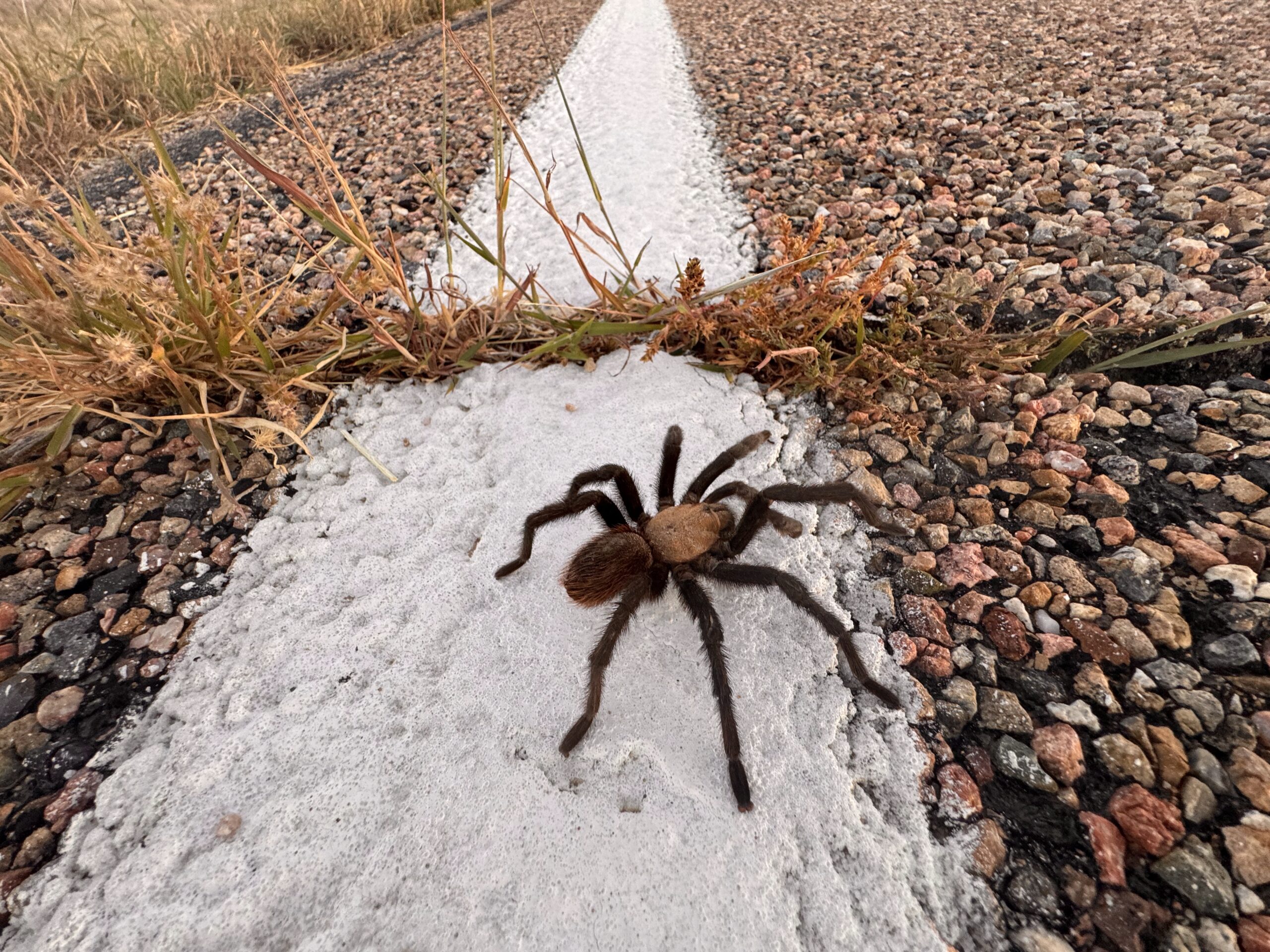
Current Research
Under the supervision of Butterfly Pavilion’s research and conservation team, a PhD candidate from Colorado State University is studying tarantula ecology in southeastern Colorado. Researchers are surveying tarantula burrows to better understand what factors influence where these spiders live.
Key questions include:
- Does surrounding vegetation impact where tarantulas build burrows?
- How does cattle grazing affect their habitat?
- What role do predators like tarantula hawk wasps play?
This research will help scientists determine how to conserve habitats that support healthy tarantula populations and broader prairie ecosystems.
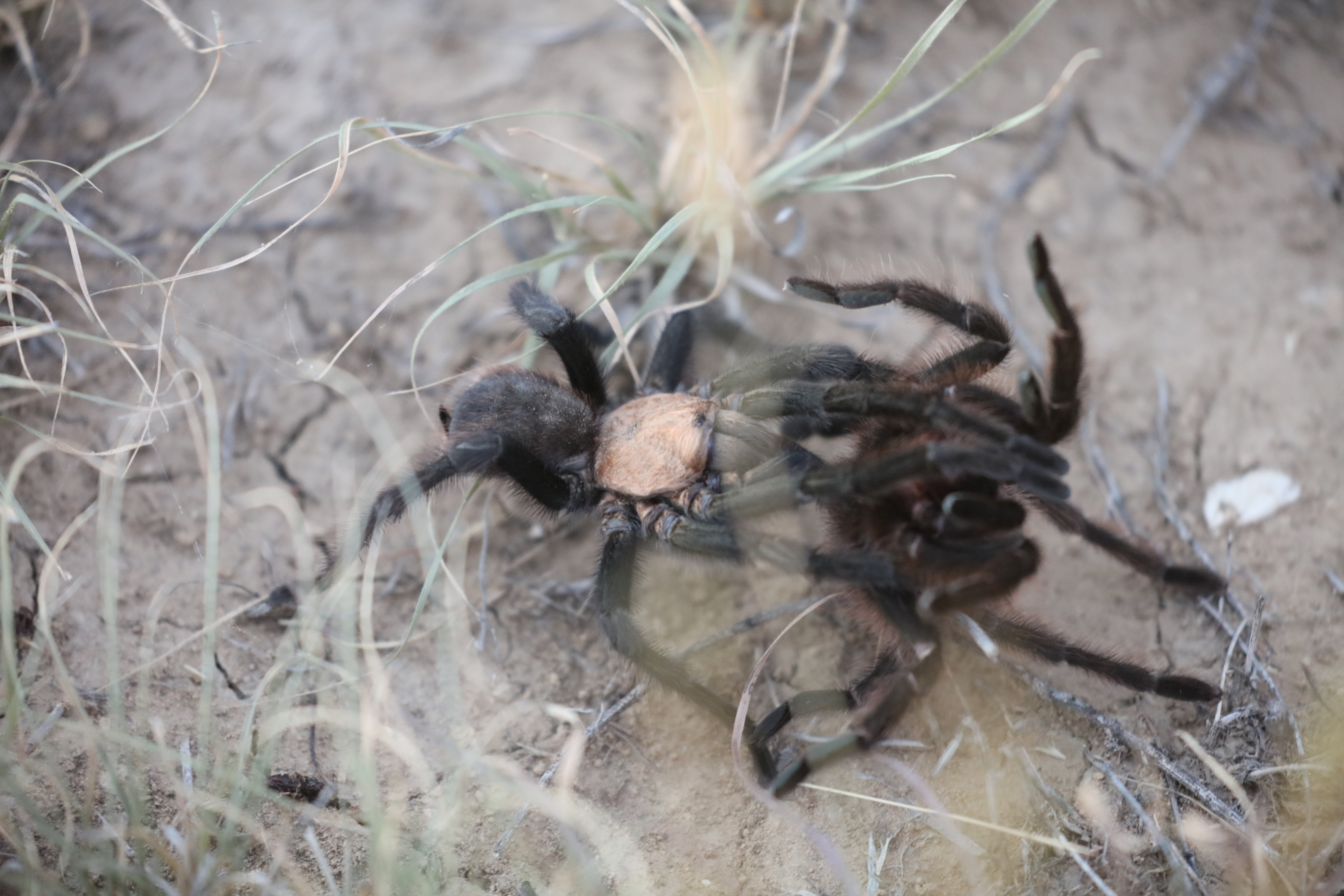
Why It Matters
Studying tarantulas gives us insight into the health of prairie ecosystems and helps guide conservation strategies for native species. These often-misunderstood animals are a vital part of Colorado’s biodiversity and deserve protection.
In addition to field research, Butterfly Pavilion is also exploring how education and interaction can shift public perception and increase appreciation for invertebrates.
Colorado Fireflies
Did you know that Colorado has native fireflies? Most people are unaware of this due to light pollution and development destroying their habitat. Learn about Butterfly Pavilion’s initiative to conserve these small yet mighty animals and how you can do your part!
As firefly populations decline at alarming rates, Butterfly Pavilion is working to understand how to rear and conserve native fireflies through its Firefly Lifecycle Project.
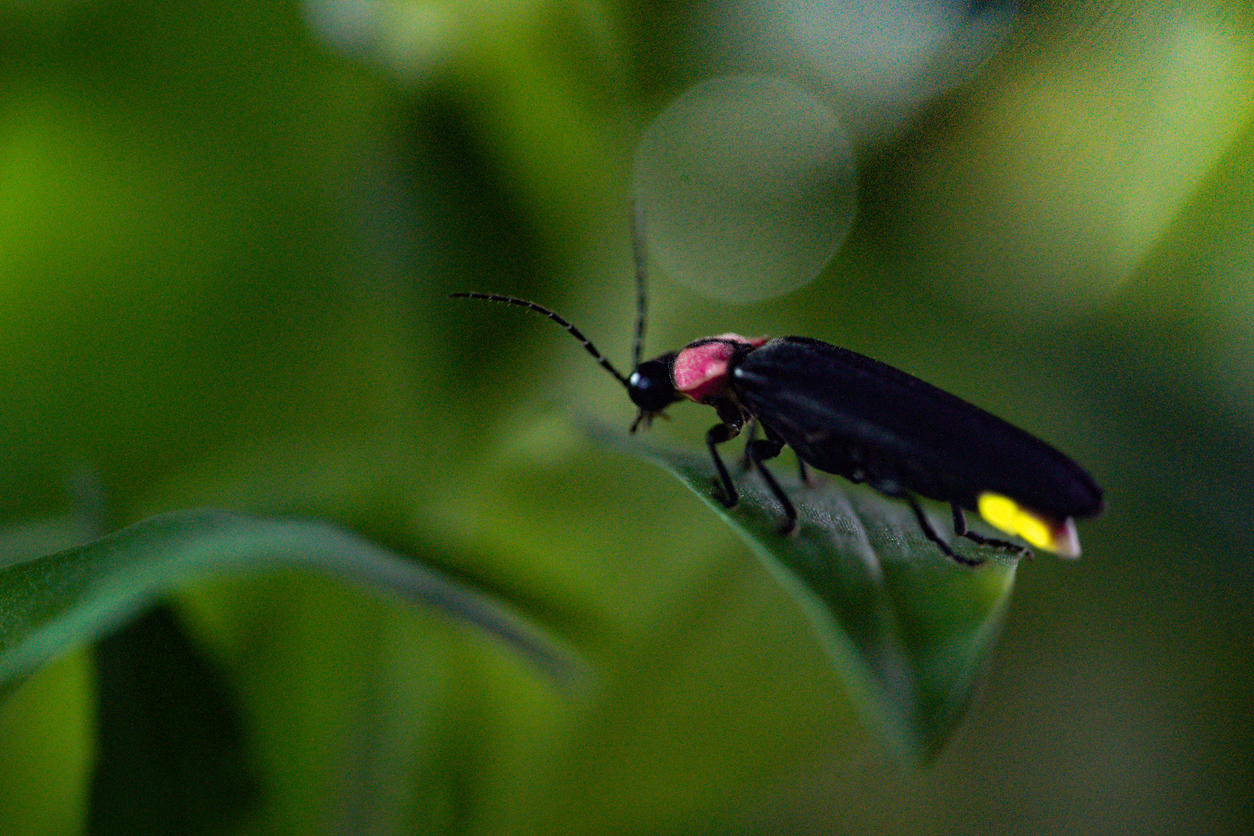
Fireflies—bioluminescent beetles found in small, localized wetland habitats across Colorado—play an important role in their ecosystems. They act as predators of invertebrates like snails and earthworms and serve as prey for birds, reptiles, and amphibians. Their presence is also an important indicator of healthy wetland environments.
However, firefly populations are under threat due to habitat loss, water pollution, and increasing light pollution. To better protect these species, Butterfly Pavilion researchers have been studying their lifecycle and environmental needs since 2017.
Research & Rearing Efforts
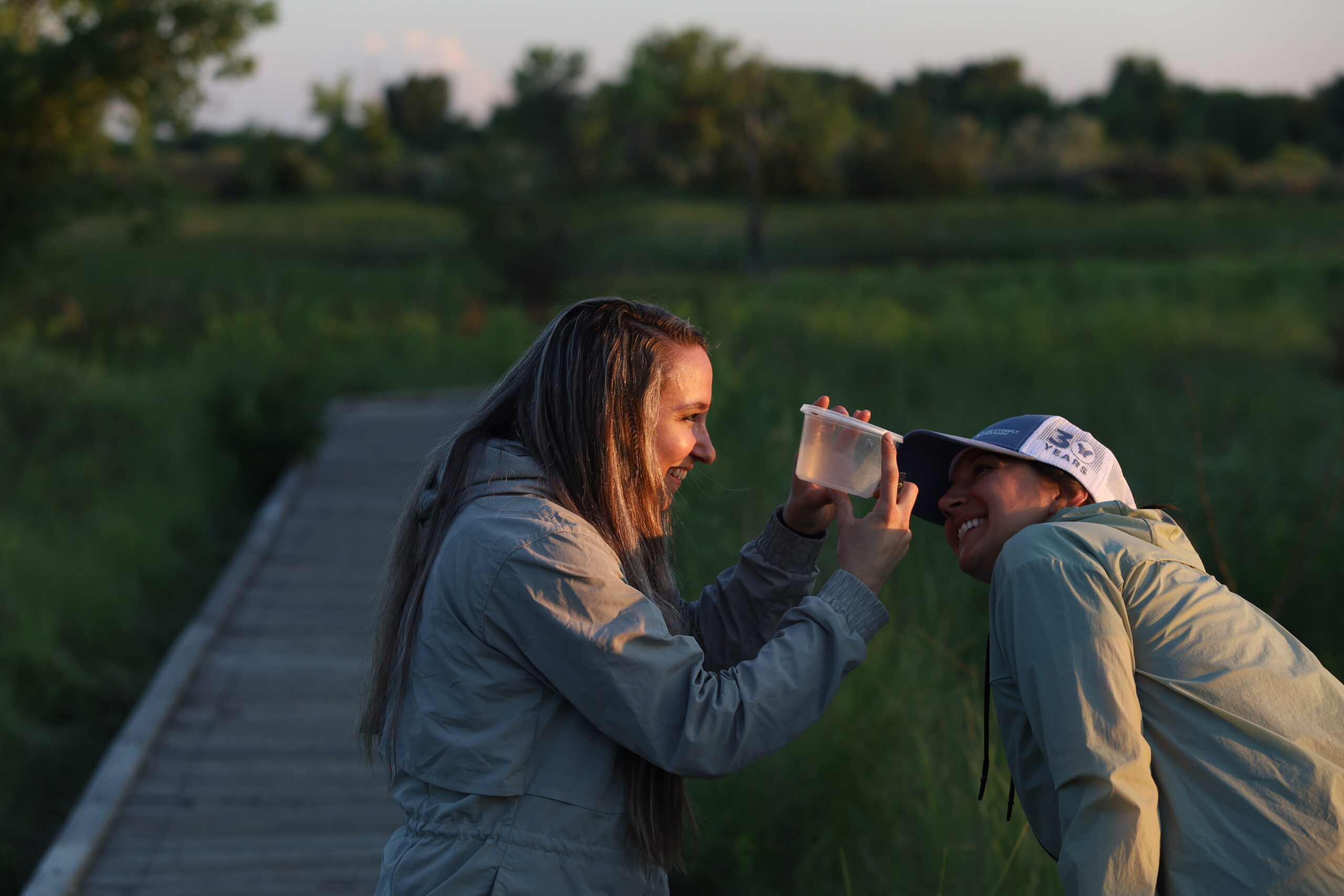
Each summer, researchers collect a small number of adult fireflies under permit from wild populations in Colorado. These adults are brought back to Butterfly Pavilion, where they are carefully bred and monitored in controlled conditions.
Their eggs develop into larvae, which are raised in specialized lab environments. Researchers closely manage factors like moisture, food, and habitat conditions to better understand what triggers development from larva to pupa and ultimately to adult fireflies.
This process is incredibly complex—breeding fireflies under human care has only rarely been accomplished in the United States and remains a major scientific challenge.
Key Milestones
- Fireflies can take 2–3 years to develop from egg to adult.
- Butterfly Pavilion successfully raised multiple adult fireflies from lab-reared larvae.
- Researchers achieved a major breakthrough by completing the full lifecycle—egg, larva, pupa, and adult—under human care.
- Lab-reared adults have successfully mated and produced viable offspring.
These milestones represent a critical step forward in understanding and conserving native firefly species in Colorado and beyond.
Why It Matters
Fireflies are more than just a magical part of summer nights—they are a key indicator species for wetland health. Their survival reflects the overall condition of ecosystems, including water quality and biodiversity.
By studying and successfully rearing fireflies, researchers can better understand their full life history and develop science-based conservation strategies. This work may eventually support restoring populations and protecting critical wetland habitats.
Butterfly Pavilion’s long-term goal is to establish sustainable, genetically diverse populations and contribute to large-scale restoration efforts, while also educating communities on how to protect firefly habitats—such as reducing light pollution and limiting pesticide use near wetlands.
Become a Community Scientist!
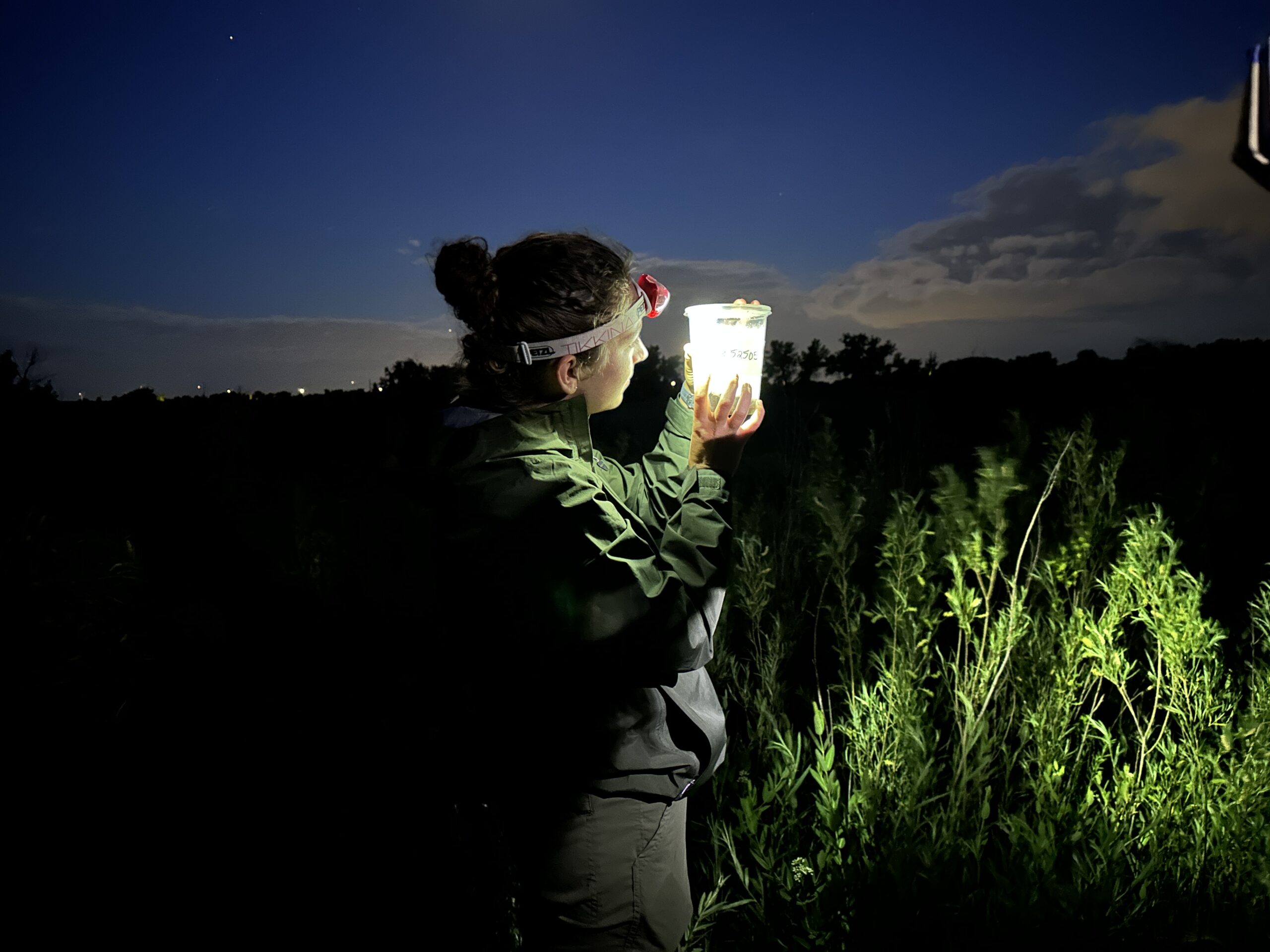
There is a lack of scientific research about fireflies, so we need your help! Become a community scientist and help Butterfly Pavilion track firefly populations around Colorado. Download and print out this datasheet and take it out into the field with you to collect sighting information.
Have you seen fireflies in Colorado? We want to know where! Submit your sighting below!
Public Locations for Firefly Viewing
Some parks are not open late enough for visitors to see fireflies during public hours, however, they may host guided walks to view fireflies after hours. Please respect the posted hours of all parks and check with them in advance.
- Riverbend Ponds Natural Area in Fort Collins, CO
Open until 11 pm
Fireflies flash along the boardwalk in the northeastern side of the natural area
Fort Collins Natural Area volunteers lead guided firefly walks in June and July - Morey Wildlife Reserve in Loveland, CO
Open from dawn to dusk
The City of Loveland hosts Fireflies in the Meadows walks in June and July
Bicycles and dogs are prohibited - Sawhill Ponds Open Space, Boulder, CO
Open until 11 pm
Fireflies have been spotted on the south side of the open space near the railroad tracks - Fountain Creek Regional Park in Fountain, CO
Open until 9 pm
The Fountain Creek Nature Center offers firefly hikes in June and July - Filoha Meadows Nature Preserve in Redstone, CO
No access in the evenings
Roaring Fork Conservancy leads guided firefly walks in July
Frequently Asked Questions
Firefly Facts
What are fireflies and why do they flash?
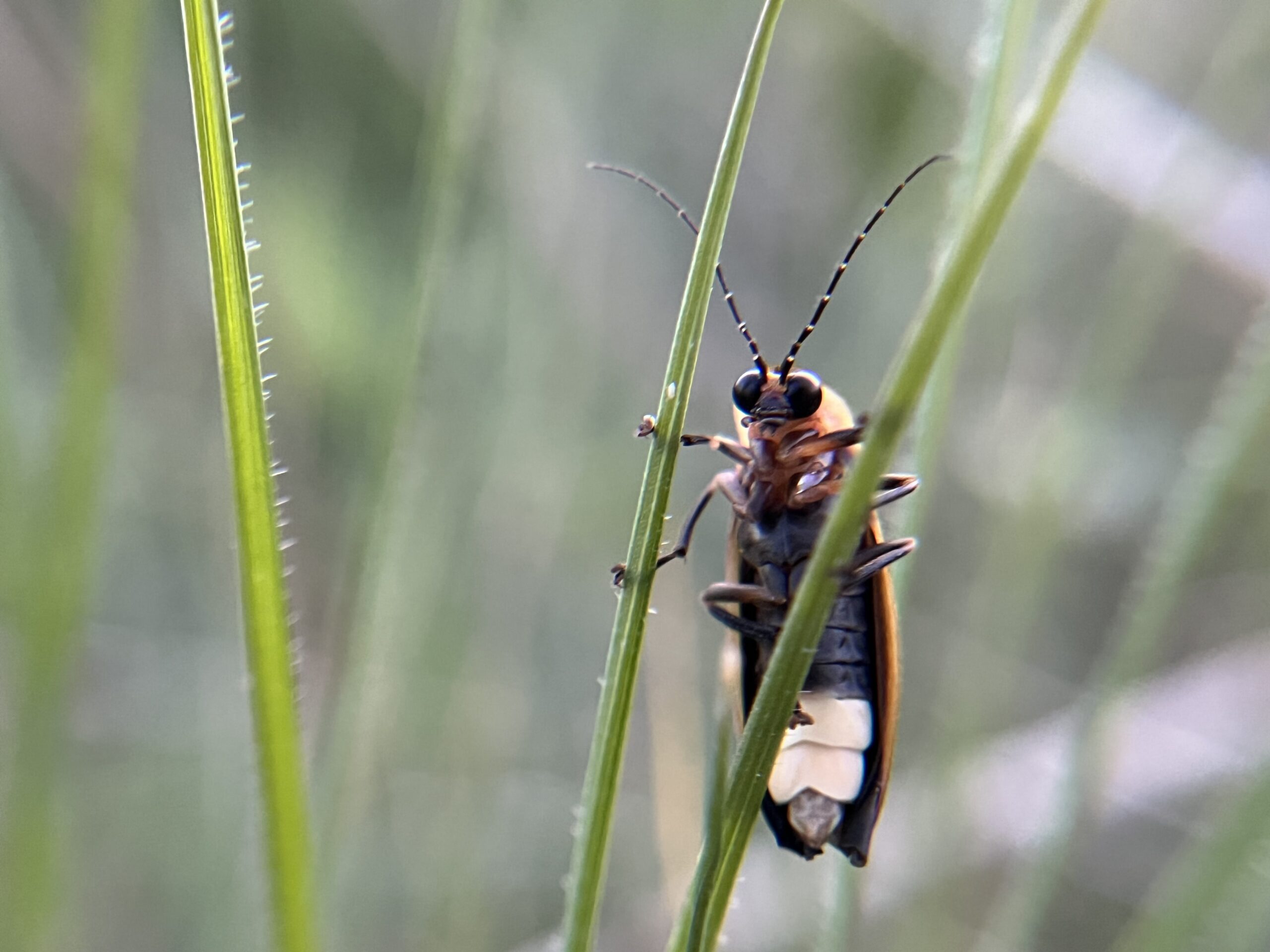
Fireflies are beetles in the family Lampyridae. Like other beetles, fireflies have six legs, two eyes, two antennae, a pair of wings, and a hard exoskeleton to protect their body. There are over 2,000 species of fireflies across the world. However, in Colorado fireflies exist in small populations dispersed throughout the state. Fireflies flash to find mates. Flashes are like a language for fireflies. Species have their own unique flashing patterns to recognize each other.
How do they flash?
Fireflies flash using bioluminescence. A chemical reaction takes place inside their light-producing organs. When oxygen is exposed to certain chemical compounds inside the organs, the reaction produces light. Not all fireflies flash as adults. There are three types of fireflies: flashing fireflies, diurnal fireflies, and glowworms. The diurnal (active during the day) fireflies do not flash as adults, though they may emit some light. Glowworms may flash or emit a constant glow. The fireflies that we refer to as “lightning bugs” are the nocturnal flashing fireflies.
What is their habitat?
Fireflies live near fresh water. They are often found near creeks, ponds, rivers, lakes, marshes, and even hot springs. They are commonly seen in forests, fields, and meadows near these sources of water. During the mating season, flashing females tend to wait on vegetation while the males fly, so wetland areas with low vegetation are popular.
What do they eat?
Larvae eat a variety of prey items, though some specifically eat soft bodied invertebrates such as earthworms, slugs, and snails. Some species don’t eat at all as adults, while others are predaceous. Females in the Photuris genus even mimic the flashing patterns of females in the Photinus genus to draw in males to eat them. Some adults consume nectar from plants and may act as pollinators.
How do they survive in winter?
Fireflies hatch from eggs in July through August then develop into larvae. The larvae are voracious predators and develop through multiple instars (stages of development). They protect themselves from freezing winter temperatures by sheltering in the ground or under tree bark.
Fireflies in Colorado
Which species are in Colorado?
We truly aren’t sure! A handful of species have been positively identified in Colorado; however, we lack scientific research about the exact species for many of the population. More research is needed to identify the firefly species in Colorado and their ranges.
Where can you see fireflies in Colorado?
Firefly sightings have been reported across the Front Range and in Western and Southeastern Colorado. Look for open spaces with wetlands. The flashing fireflies can be seen around late June through July when the nights in Colorado begin to warm up. They typically start flashing after 9:00pm.
Support
Why are fireflies important?
Fireflies are beloved for their unique light shows, but they also serve important ecological roles. They act as pest control for their prey species such as snails and slugs. They act as food for wildlife such as toads, frogs, newts, birds, and spiders. Some species which eat nectar and pollen may even act as pollinators.
How can we protect fireflies?
Fireflies are threatened by habitat loss, pesticide use and light pollution. You can protect firefly habitat by:
- Supporting land conservation and habitat restoration.
- Staying on designated paths when visiting natural areas to avoid damaging their habitat.
- Enjoying fireflies in the wild and not catching them.
- Turning off unnecessary lights near their habitats in June through August.
How can I get involved?
Become a community scientist and help Butterfly Pavilion track firefly populations around Colorado.