From Foliage to Fungus: See Butterfly Pavilion’s Leafcutter Ant Habitat
July 31, 2024 · Uncategorized
Leafcutter ants are iconic invertebrates, but what do they actually do with all of those leaves? Behind the leafcutter ant lies a fascinating symbiotic relationship that many may not realize! Experience these impressive invertebrates in person! Visit Butterfly Pavilion as we showcase our immersuve Leafcutter Ant Habitat. This exhibit will offer a unique opportunity to observe these remarkable insects in action. Leafcutter ants span from South America, through Central America and Mexico, and all the way up to the Southern United States, like Northern Texas. The name “leafcutter ant” encompasses more than 40 different species of ant that all make a living by cutting and collecting leaves. Leafcutter ant colonies go deep underground and have many rooms. These chambers can be up to 16-feet deep and 50 feet wide. Like honey bees, leafcutter ant colonies are ruled by a single queen. Her daughters — wingless, sterile females — are the worker ants that travel outside of the colony to forage for leaves.
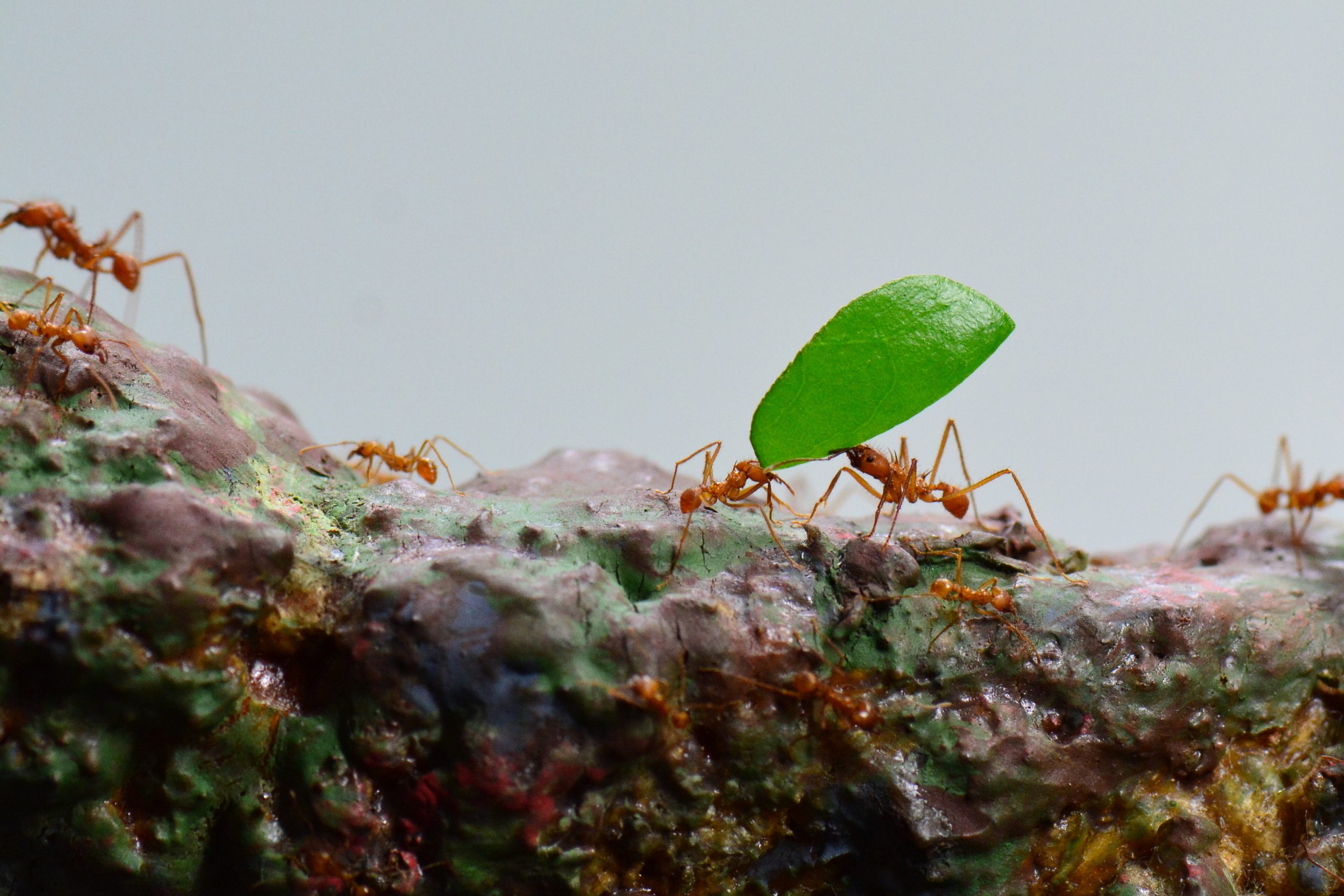
As a colony, leafcutter ants can clear entire trees in just a day! When an ant finds a good foraging location, she will move her abdomen up and down to create a vibration that can be felt by others nearby. This rhythmic signal alerts the rest of the colony to follow her lead. Many may assume they use these leaf pieces to build nests; however, they are used as fertilizer for their fungus gardens! Yes – leafcutter ants are not just foragers, but also farmers. This fungus feeds the little larvae raised in the ant colony, and the ants feed it with their leaf cuttings. Leafcutter ants even cultivate bacteria that can secrete antibiotics, which protect the fungus from parasites and keep it healthy.
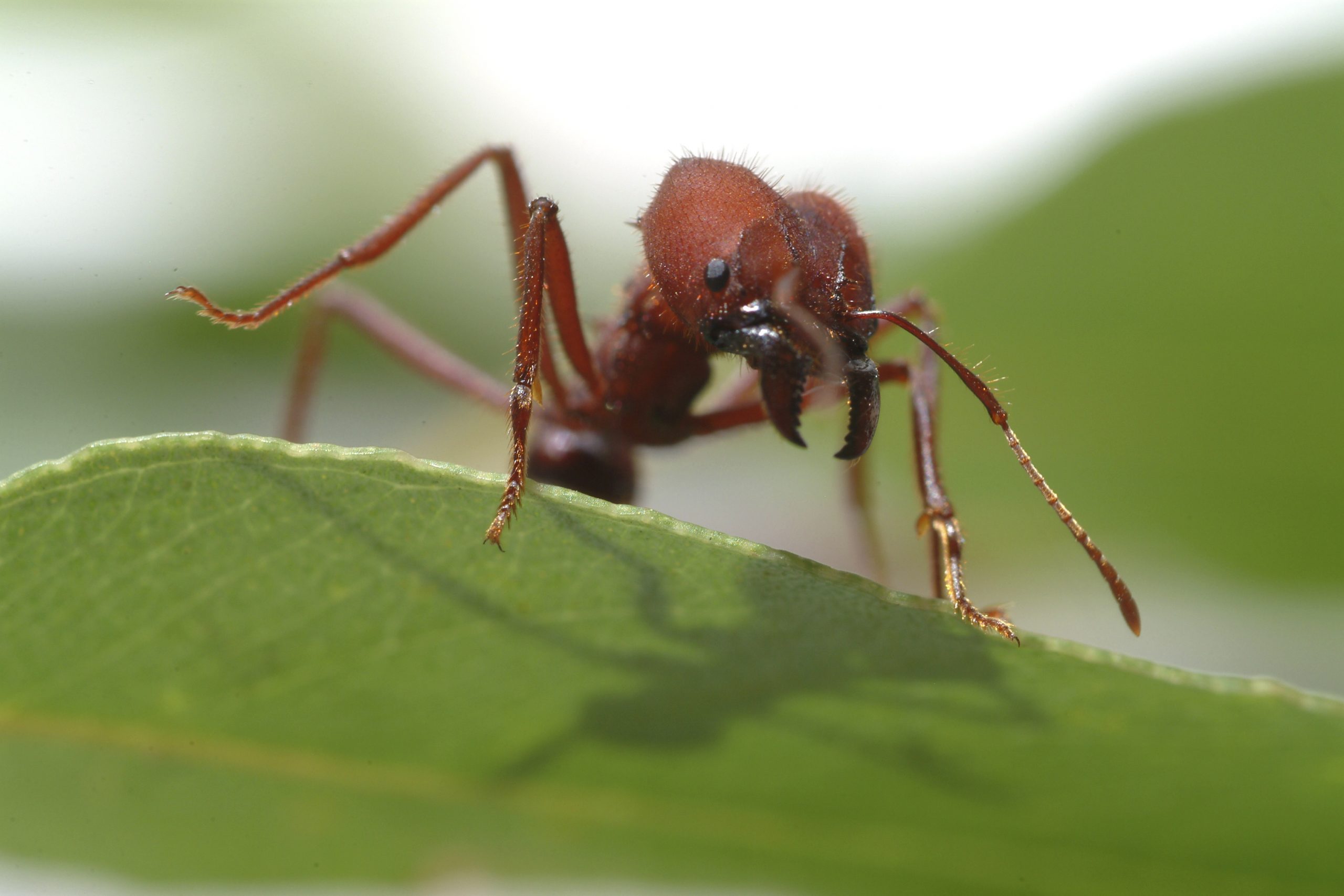
After collecting a leaf cutting, the ants will carry it back to the colony and deposit the clipping at the top layer of their fungus garden. Ants will eat clusters of fungus that live deeper in the garden, also known as gongylidia, in order to ingest necessary enzymes for the digestion of the leaves. Then, they transport these enzymes to the top layers of fungus and deposit them in droplets of feces onto the leaves. Adult leafcutter ants actually do not eat fungus to sustain themselves. Rather, they feed on tree sap, sometimes even hitching a ride back to the colony on the leaves that other ants are carrying, meanwhile snacking on any sap that might be on the leaf. This isn’t a free meal, though – they’re also making sure that the leaf isn’t carrying flies or foreign fungi. Research shows that fungus species have evolved in tandem with leafcutter ants so that their enzymes can be transported in an ant’s body without being digested. This makes it easier for the ants to cultivate the fungus and has created a long and lasting symbiosis – the ants and fungus rely on each other to survive.
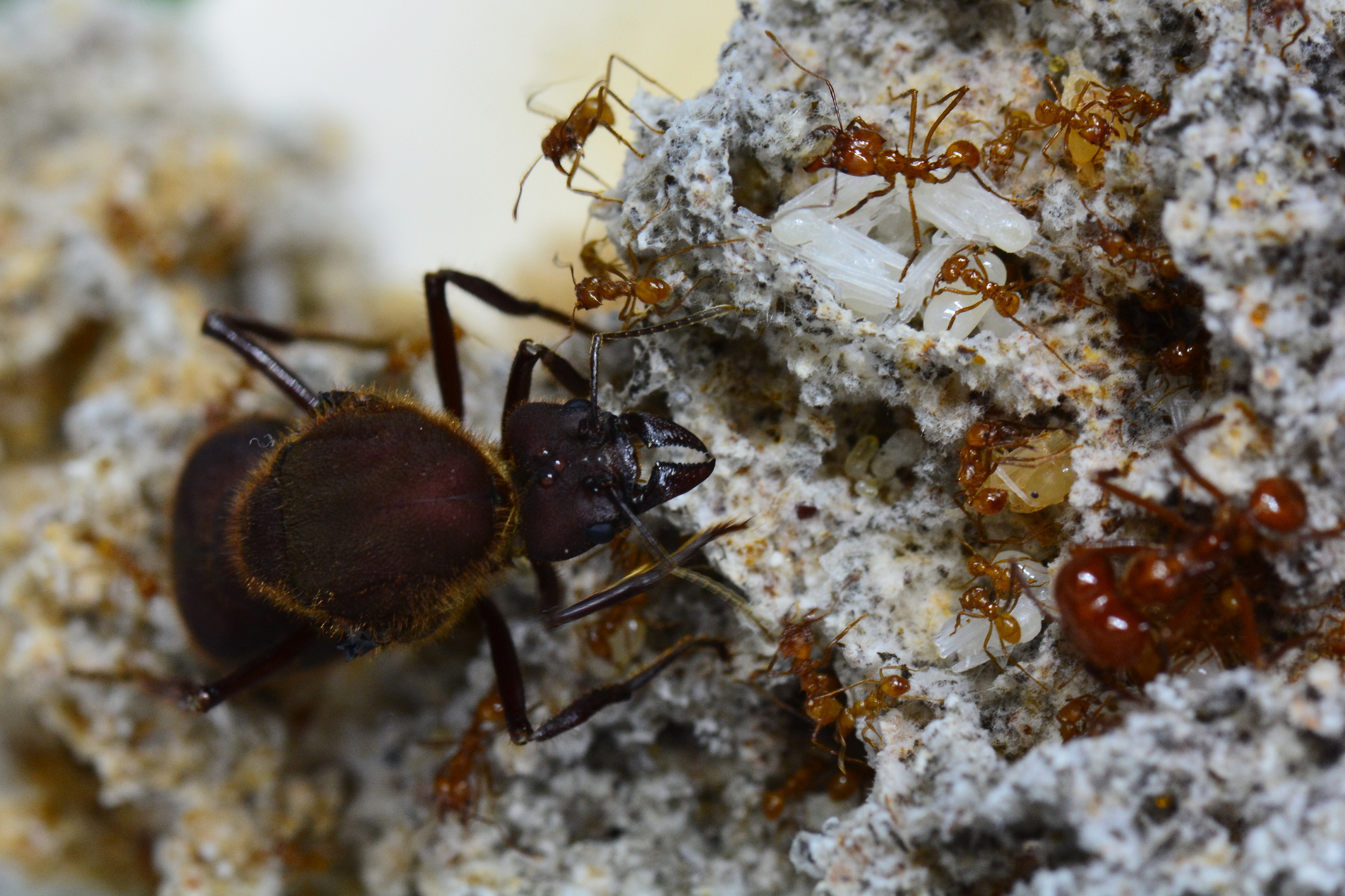
Queen leaf cutter ant and her soldiers on fungus
Leafcutter ant activity is extremely beneficial for the forest and is reciprocal. Their foraging helps to stimulate plant growth in the plant species that feed their fungus. Leafcutter ant society is separated by castes; different ants have different roles to play in the colony, largely based on their size. Leafcutter ants can be as small as 0.7 millimeters wide and as large as 5 millimeters wide. There are large ants that guard and protect the nest, called Majors. The next biggest, Mediae, are the iconic, leaf-carrying ants. Following them are the Minors, who guard the path that the Mediae travel, and, lastly, the miniscule Minims, who remain behind in the colony to raise the larvae and farm the fungus. The Minims also have the very important job of disposing of decaying leaves. They carry the matter to a specific garbage chamber in the colony and then they will isolate themselves from the queen and fungus for the rest of their lives to prevent the spread of disease. Similar to honey bees, all of these worker ants are female! The males in a leafcutter ant colony are called drones and are the only other ant beside the queen that has wings. Their role is to mate with the queen and produce offspring to supply the colony population. Both drones and queens are winged so that they can fly away from their original colony to mate, increasing genetic diversity.
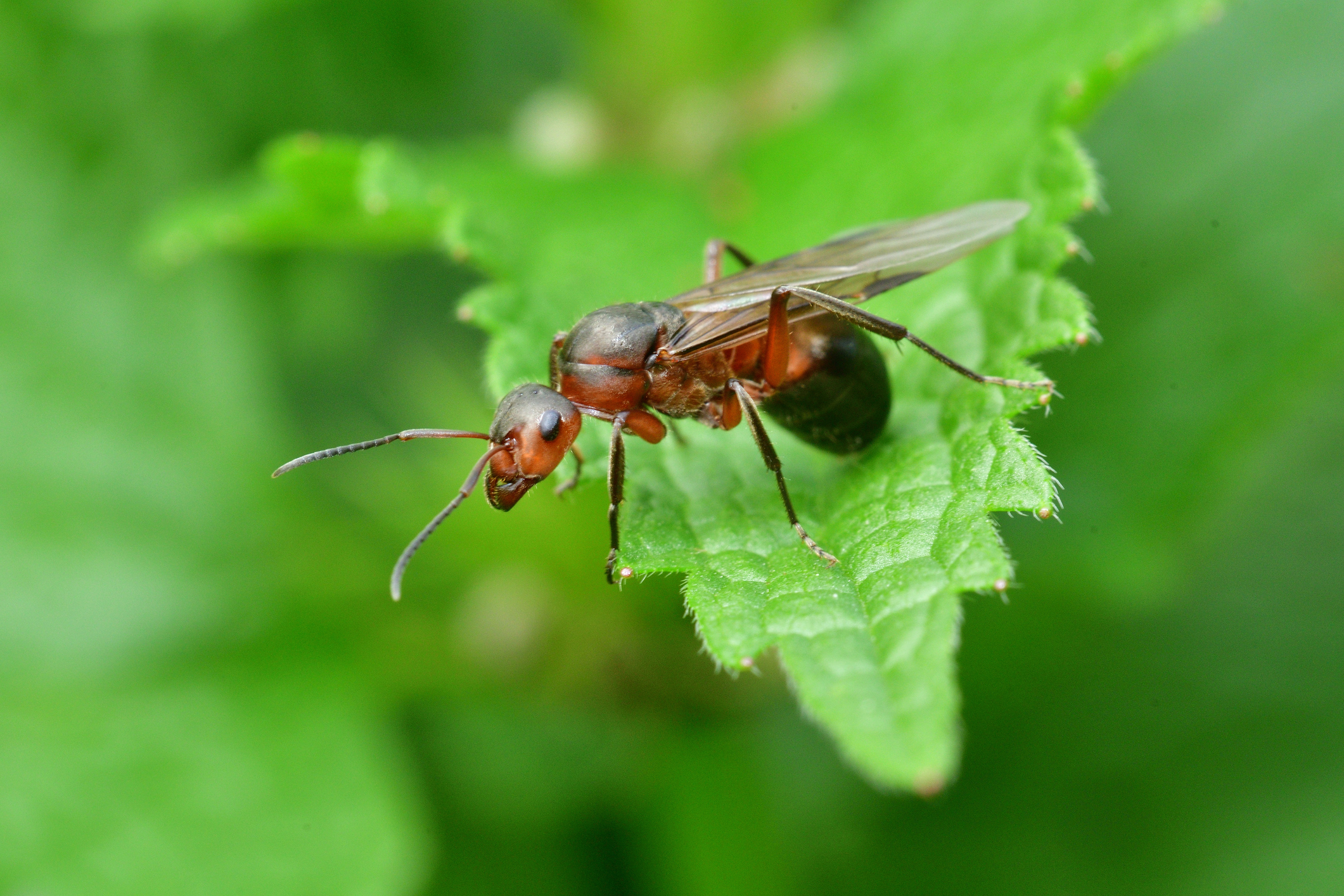
Queen leafcutter ant
One leafcutter ant species is even more spectacular! In addition to its exoskeleton, Acromyrmex echinatior, it wears a biomineral armor of calcite, similar to the make-up of sea urchin teeth. This armor protects them from infection and injury when competing with neighboring ant colonies. Scientists are studying this unique biomineral to determine its applications to modern manufacturing. Leafcutter ants are intelligent creatures with an incredibly complex colony structure. Though they are one of the most studied invertebrates on Earth, scientists are continuing to make miraculous discoveries that have exciting implications in the human world. From their fungus to their bacteria, to their armor, leafcutter ants continue to astound us! Written by Kenzie Claflin