Presenting Invertebrates
May 2, 2025 · Blog
Have you ever wondered why you can hold a tarantula, but not a beetle? Or why Water’s Edge has a touch tank but the Legacies: Invertebrates of Mexico exhibit does not?
Roughly 360 species of invertebrates call Butterfly Pavilion home. But of the 15,000+ individual animals that live here, visitors only see the ones on display.
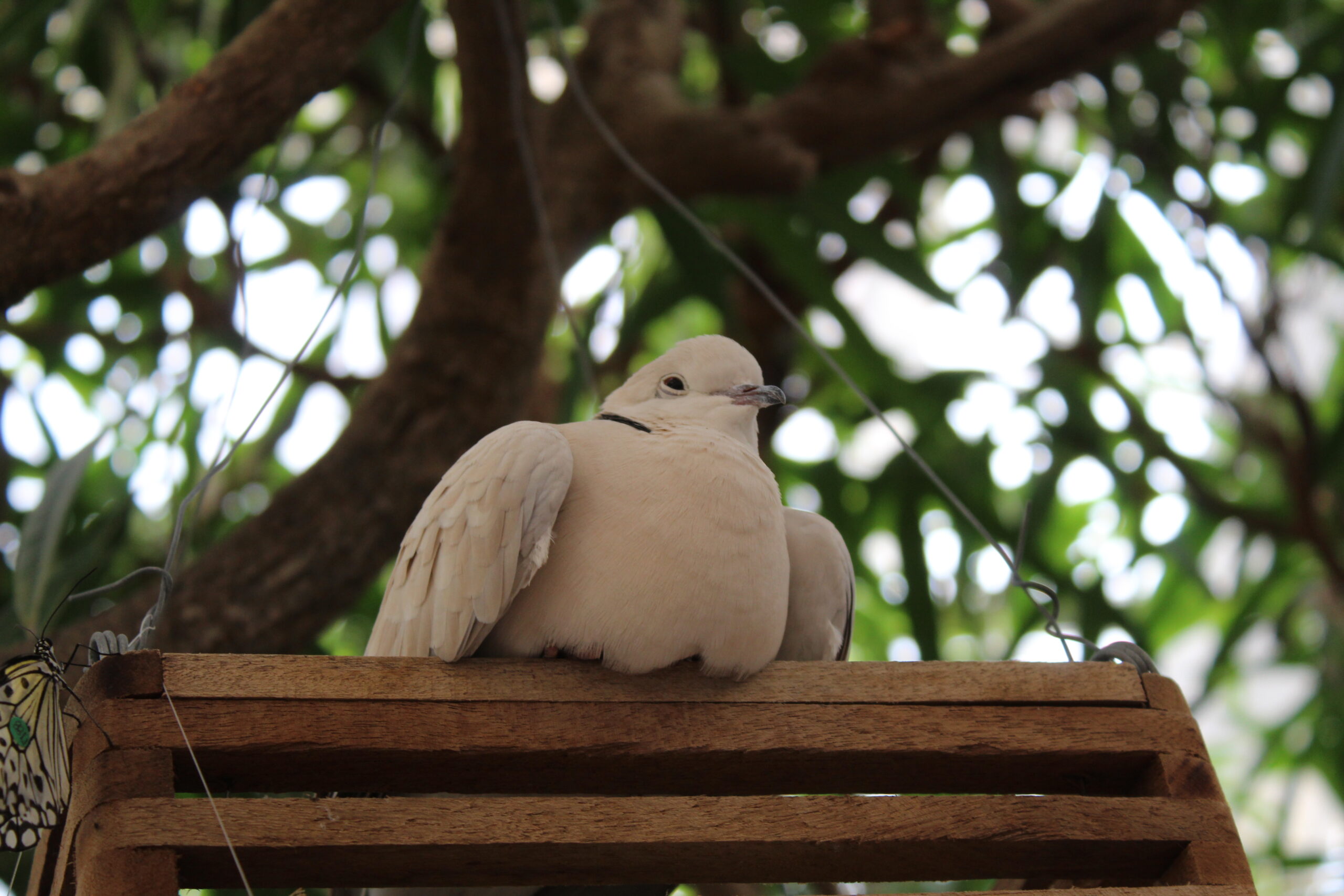
There are many factors that go into the exhibits’ usage of live animals. A species needs to be somewhat charismatic and interesting- but it can get even more specific than that. Once, a female Goliath Birdeater Tarantula was displayed for a short time, but she hid and was generally opposed to being an attraction for visitors. However, a male of the same species, nicknamed Boss, loved being on display; in fact, he would be visible for weeks at a time. The animal’s individual disposition can be equally as important as its overall appearance, which may be the only obvious element to visitors. Because invertebrates are often overlooked in scientific research and animal exhibits, many of the species in our care haven’t benefited from the same spotlight as more traditional zoo animals. That makes our work even more important—expanding knowledge, improving care, and helping the world discover just how fascinating a hermit crab or a stick bug can be. That said, Butterfly Pavilion is currently home to a few vertebrates, one of which comes with an interesting story: Larry Bird, a Eurasian collared dove who lives with the butterflies. He was donated in 2001, before Butterfly Pavilion was AZA-accredited as an invertebrate zoo. Larry, alongside two other doves, a handful of turtles, and an iguana, was able to live peacefully among the invertebrates. However, after Butterfly Pavilion became an Association of Zoos and Aquariums (AZA) accredited invertebrate zoo, most of the vertebrates were given away to other trusted caretakers. Larry, however, remains. He is nearly 25 years old and will live out the rest of his life in the treetops of Wings of the Tropics.
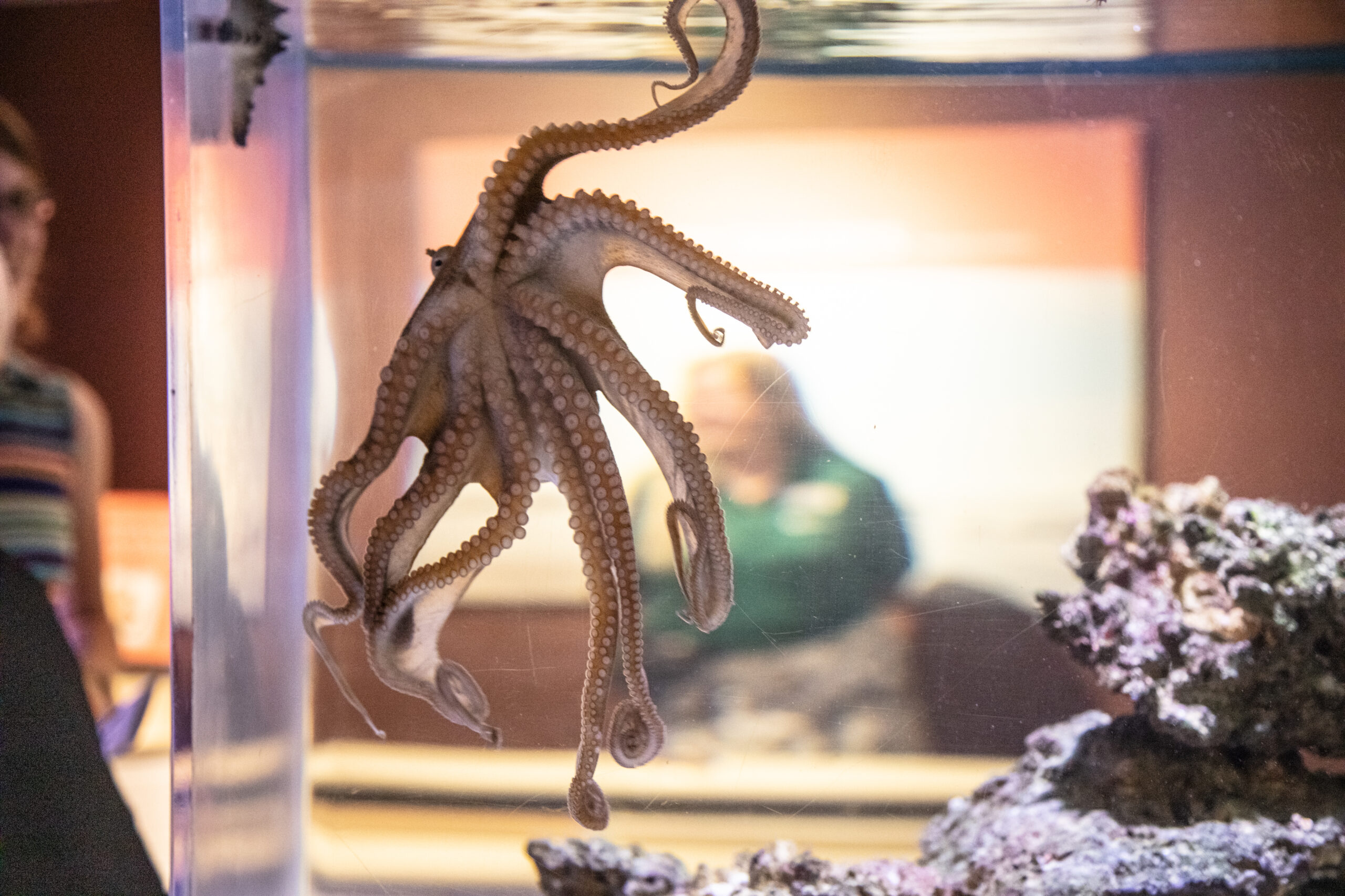
As a premier institution for invertebrate research, education, and conservation, Butterfly Pavilion carefully selects the species in its care. Each animal must support our mission—whether through display, education, or scientific study. In some cases, we continue to care for species that are threatened or endangered, even if they’re no longer part of active programs, in alignment with global conservation procedures. We also consider practical factors like specialized diets or permit requirements to ensure every species receives the highest standard of care. This doesn’t mean we don’t have dream invertebrates. Sara Stevens, Director of Animal Collections, provides an example of just how different realistic and idealistic goals can be: “If I could feasibly have any animal here, it would be a Giant Pacific Octopus. They’re very charismatic. If I could have any invertebrate regardless, I would want a Giant African Land Snail.” She adds, “Unfortunately, they are wildly invasive and detrimental to agriculture, and the USDA won’t give permits for it.”As an Association of Zoos and Aquariums – accredited institution, Butterfly Pavilion has an extra set of standards that must be upheld in all of its operations, especially in regard to the live collections. Elements of an animal’s life, such as physical environment, self-maintenance, diet, and life stages, must be accounted for in the total cost-benefit analysis. Providing the highest standard of care means ensuring our staff has the specialized knowledge needed to support each species. Institutional Collection Plans, which outline the entire acquisition and caretaking process, must be updated routinely.
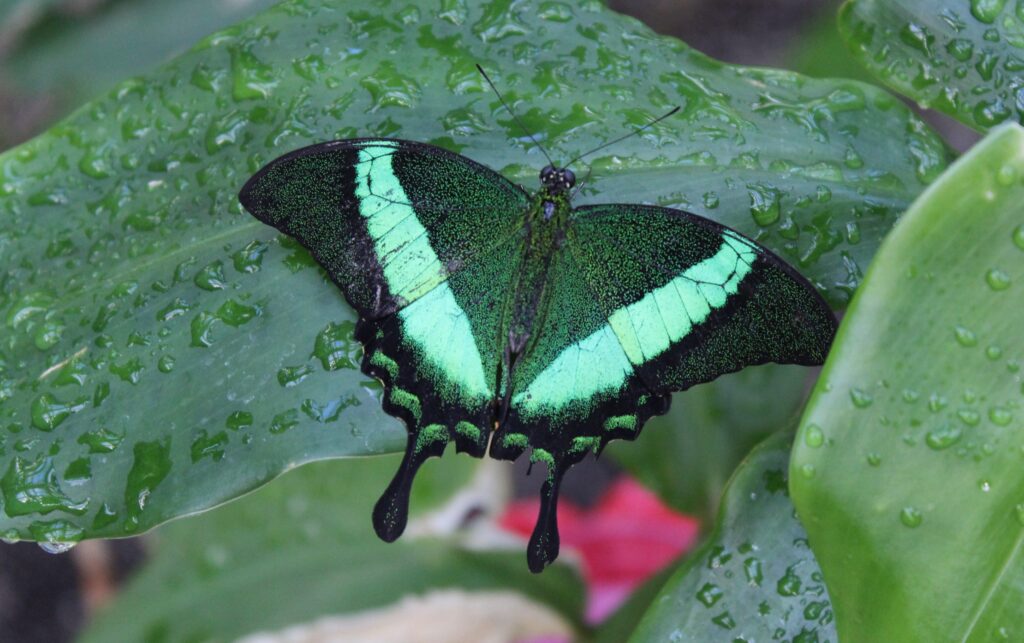
Every area of the zoo has a different plan for its animals. For example, our Wings of the Tropics butterfly conservatory is considered a transient collection because of the everchanging rotation of available species shipped in from sustainable butterfly farms, whereas Water’s Edge, which was originally a pilot exhibit, was so well-received that its unique ecosystems were permanently added to Butterfly Pavilion’s collection.
Planning exhibits can take months, years, and sometimes even decades. Currently, Butterfly Pavilion is home to five juvenile Socotra Island Blue Baboon Tarantulas, who are not on display. In fact, they may not be public facing for fifteen more years. As a species, Blue Baboon Tarantulas are unique in their ability to live in large family groups without getting territorial, as long as their available space isn’t too large. These colonies can comfortably fill tanks and provide a fascinating look into the social dynamics of these spiders, which is the ultimate goal for Butterfly Pavilion. That means we’ve still got some waiting to do.
Invertebrates make up 97% of all animal species on earth, and each individual animal is a crucial part of its ecosystem. They provide the foundation for the rest of the world, so we are committed to protecting them. While there are many factors that make animal displays complex, Butterfly Pavilion excels at presenting invertebrates in ways that educate, engage, and leave a lasting impression.