
By Kathryn Hokamp, Lepidopterist at Butterfly Pavilion
Wings of the Tropics is an immersive experience where visitors to Butterfly Pavilion can surround themselves with around 1,600 free-flying butterflies that you can watch emerge before your very eyes in our chrysalis chamber. However, the lives of these butterflies actually begin about a month before they reach our facility, at butterfly farms throughout the tropics where caterpillars are raised until they make their pupae and are sent thousands of miles away to Colorado.
Butterfly Pavilion’s butterflies come from eight different countries: Malaysia, the Philippines, Kenya, El Salvador, Costa Rica, Suriname, Ecuador, and the United States. These butterflies are raised on sustainable butterfly farms that work to conserve butterfly habitat as well as to raise butterflies for places like Butterfly Pavilion. Butterfly farming is an extremely sustainable industry because a female butterfly can lay between 200 and 400 eggs in her lifetime, and in the wild only about two of these eggs are expected to reach adulthood. Caterpillars encounter a host of difficulties in the wild from predators to diseases to parasitism. When a butterfly farmer raises these caterpillars in a protected environment, one batch of eggs can produce hundreds of adults rather than the two to three that would survive in the wild. The farmer can then send some of these butterflies to butterfly centers around the world like Butterfly Pavilion, keep some of these butterflies for breeding purposes, and re-release some of these butterflies into their natural environment to help supplement the local population. This is the model used by many of the farmers that work with Butterfly Pavilion. Butterfly farming also provides an economic incentive to protect vulnerable habitats. Butterflies need a robust habitat in order to thrive, so butterfly farmers are a huge part of protecting that habitat. Butterfly Pavilion works with butterfly suppliers in the tropics to support the conservation of threatened habitats for butterflies and other invertebrates.
El Bosque Nuevo is a butterfly farm and conservation project run by Ernesto Rodriguez. In addition to supplying butterflies to Butterfly Pavilion, this Costa Rican butterfly farm sends butterflies around the world, including to butterfly centers in Europe and Asia. El Bosque Nuevo raises caterpillars in protected structures designed to keep out wasps and other predators, and so is able to produce a large amount of butterflies, some of which are sold to butterfly centers and others which are released back into the forest. The money earned from these butterfly sales goes back into purchasing large swathes of rainforest that are then protected. El Bosque Nuevo has also become a center for butterfly research, with researchers and students coming from around the world to work with their butterflies.
El Bosque Nuevo is not alone in its conservation efforts; Heliconius Works, Butterfly Pavilion’s supplier in Ecuador, also works to conserve habitat. Jacob Olander of Heliconius Works maintains several conservation projects including working with indigenous communities in Ecuador to conserve the rainforest. In the Philippines, butterfly farmers coordinated in lobbying the government to ban neonicotinoid use on the island of Marinduque. Marinduque has a large concentration of butterfly farms and the excessive use of these pesticides was significantly affecting the number of butterflies in the area. Butterfly farmers on the island worked together to create educational resources and arrange meetings with government officials with an eventual result of the total banning of neonicotinoid-based pesticides on the island. This work by butterfly farmers allows butterflies in one of the most diverse areas in the world to continue to thrive.
By working with butterfly farmers around the world, Butterfly Pavilion is able to expand its international reach, and the butterfly farmers we work with are able to continue their conservation efforts at home. We are also able to bring a little bit of the tropics to Colorado, inspiring people to work to conserve these incredibly biodiverse areas of the world no matter where they live.
By Taylor Bennet, Exhibit Interpreter at Butterfly Pavilion
When asked “why visit Wings of the Tropics?” many people will tell you they come for the thrill of being chosen as a butterfly’s perch or for the simple joy of exploring the tropics.
But what may be less apparent at first glance is how simply having fun exploring our conservatory and interacting with butterflies that call it home, you and your kids are making valuable connections to local and global conservation.
Butterfly Pavilion exists to foster an appreciation of invertebrates, and one of the best ways we can do that is by getting you up close and personal with our butterflies, moths, chrysalides and plants. While wandering our rainforest you might see for the first time the small tree that provides the coffee that fuels your busy day. And if you stick around for our Rainforest Walking Tour, you will discover the environmental benefits of naturally shade-grown coffee. You could find yourself learning about the sustainability of butterfly farming, or how we can protect butterflies by creating pollinator districts. Whatever your take-away, it can sometimes be difficult to communicate these important messages to young kids. Fear not, though, because your child is gaining just as much conservation knowledge as you are, only in different ways.
Guiding safe interactions with our butterflies by encouraging no harm and mindful exploration begins instilling respect for these and other insects from a young age. When children discover for themselves that being kind to a butterfly means they get to watch it dance through the sky or walk along the trails with them, they are learning the fundamentals of conservation. When children see butterflies feeding on nectar from the flowers they chose not to pick, they are beginning to understand the importance of habitat preservation. These lessons may seem intangible in the moment, but over time this exploration of a living, breathing rainforest and its inhabitants can grow into a desire to protect and care for these forms of life.
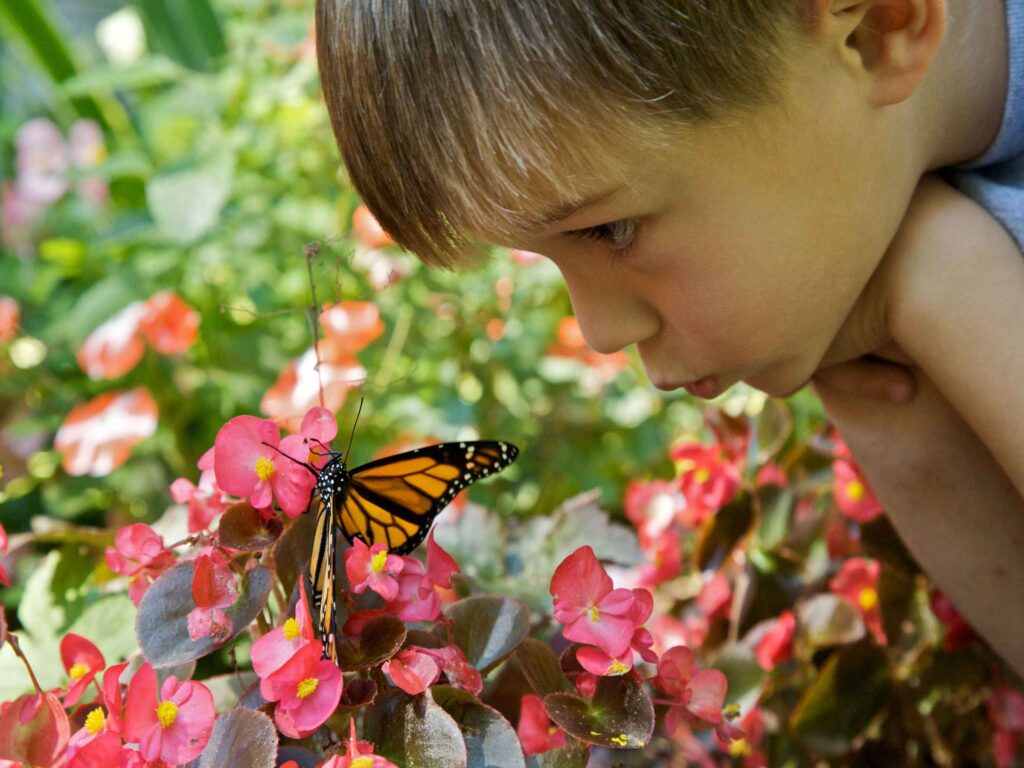
As adults, it’s easy to attribute our environmentally-friendly attitudes to the education we may have received on recycling, ecology, deforestation, etc. While these are all great topics to learn about, research has shown that conservation-minded adults actually gain their tendencies as children by exploring nature first-hand. However, living in an increasingly urban area can make it difficult to provide today’s children with enough of this type of nature play. Butterfly Pavilion’s forested conservatory fills this important niche by creating space for this type of inquiry. In this space, different age groups will go about investigation and learning in unique ways that most benefit their needs.
For children up to three years old, it is important to begin building a conservation-based outlook by simply helping them discover that animals are fascinating. They can begin to learn this through sensory exploration; taking in the sights, smells and feel of a tropical rainforest. Come spring, children in this age group may even start to recognize butterflies that they saw in our conservatory, like Painted Ladies or Tiger Swallowtails, flying around their own backyard! As they get a little older, they will start to draw connections between these butterflies and the habitats they live in. Children as young as four to seven years old will be able to observe areas like our chrysalis chamber and begin to understand butterfly lifecycles. It is also at this age that children can start to grasp ideas like recycling and conserving energy. As they continue to grow older, children’s’ capacity to learn and appreciate more complex conservation messages increases as well, but the foundation for this caring and understanding starts before they may even be able to walk.
Our butterfly conservatory always has something new to see and explore no matter your age and our passionate exhibit interpreters will be there every step of the way to guide you to your next “Aha!” moment. Whether you are learning about butterfly farming on the other side of the world or the Monarch migration right here in Colorado, studying the intricate design of a butterfly’s wings or sitting back and watching them glide from flower to flower, you and your children are building connections to conservation that will last a lifetime.
Follow us on Facebook, Instagram and Twitter to receive updates on our animals and learn about what goes on behind the scenes at Butterfly Pavilion!
Since 2016, Butterfly Pavilion has served approximately 38,250,000 pollinators.
Westminster, Colo. – December 27, 2019 – Pollinators such as honey bees, native bees and butterflies are vital to the human production of food and the reproduction of native plants. So much so, that bees were recently named the most important living beings on the planet by the Earthwatch Institute. Over the past few decades habitat destruction, pesticide use, parasites and pathogens have significantly decreased their numbers. In response to these challenges, Colorado’s Butterfly Pavilion created the Pollinator Awareness through Conservation and Education (PACE) initiative in 2016, with the goal of serving 20 million pollinators by 2020. Today, due in large part to a partnership with Local Hive™ Honey, a Greeley, Colo.-based manufacturer of local, raw and unfiltered honey, as well as other individual donors, Butterfly Pavilion announced it has smashed that goal, serving over 38 million pollinators as 2019 comes to a close.
From the backyards and open spaces of Westminster and Broomfield, Colo., to the villages of Nepal and Tanzania, PACE is a global initiative aiming to introduce new pollinators to areas, as well as creating new habitat for the pollinators that are already in an area. Since 2016, Butterfly Pavilion has served approximately 38,250,000 pollinators through the following programs:
- In partnership with the Katie Adamson Conservation Fund, Butterfly Pavilion is solving the human-elephant conflict in Nepal and Tanzania by installing bee fences around villagers’ farms which scare elephants away: 2M
- Butterfly Pavilion installs and maintains hives in conjunction with local businesses like hotels and restaurants, including the Westminster Marriott: 3.7M
- Butterfly Pavilion’s Beekeeping Bootcamps, which teach community members how to keep bees in their own yards: 4.65M
- The Urban Prairies Project, a partnership between Butterfly Pavilion, the City and County of Broomfield, the City of Westminster, Denver Botanic Gardens and the Broomfield Open Space Foundation, aimed at improving ecological health of urban and suburban open spaces for pollinators: 27.9M
- Butterfly Pavilion recently announced that it is creating Pollinator Districts, communities designed to conserve and improve habitat for pollinators in all aspects of real estate development and operation. Pollinator Districts engage all of the people that live, work and play in these spaces, encouraging them to experience nature and build a greater appreciation for these critical species and their habitats.
“Protecting pollinators helps achieve multiple conservation goals: encouraging the protection of public green spaces, highlighting urban and rural interdependence, promoting the use of native plants in residential landscaping, and advancing environmental education at schools, communities and with the general public,” said Patrick Tennyson, president and CEO of Butterfly Pavilion. “Butterfly Pavilion is uniquely positioned to leverage our expertise in pollinators to change the way people think about our communities and how we can protect these incredibly important creatures. And thanks to the generosity and partnership from Local Hive™, we’re able to advance these programs quicker and further than we’d originally hoped.”
Since 2018, Local Hive™ has donated a portion of proceeds from every bottle sold around the world to the PACE initiative to promote and protect the prosperity of pollinators worldwide. Local Hive™ implemented a 360-degree campaign featuring PACE on all initiatives including a new label design, launch of a new website, digital advertising and social media.
“Since 1924, Local Hive™ has been committed to the health and prosperity of bees,” said Tony Landretti, Chief Executive Officer. “Bees are obviously critical to providing natural, delicious, local honey to our customers, but more than that, they’re critical to health of our communities and planet. Our partnership with Butterfly Pavilion and the PACE initiative is just the right thing to do on a number of levels.”
PACE is a key initiative on Butterfly Pavilion’s journey to becoming the global center for invertebrate conservation, research and education. In 2017, Butterfly Pavilion announced its plans for a new $40 million state-of-the-art facility located in Broomfield, Colorado. This new 81,000-square-foot facility will be home to world-class research lab with an accredited zoological facility to serve as the preeminent local, national and global hub for invertebrate knowledge, conservation, inspiration and connection.
Learn more about Butterfly Pavilion’s permanent exhibits, important education, research and conservation work at www.butterflies.local or by calling 303-469-5441. Butterfly Pavilion is open 9 a.m. to 5 p.m. daily at 6252 West 104th Avenue in Westminster, Colo.
About Butterfly Pavilion:
Butterfly Pavilion is the world’s only stand-alone, Association of Zoos and Aquariums-accredited invertebrate zoo dedicated to transforming the way people think about the small but mighty animals that are the hidden heroes of the animal kingdom. As the leader in invertebrate knowledge, inspiration and connection, and as a member institution of the Scientific and Cultural Facilities District, Butterfly Pavilion works to foster an appreciation of these critical animals by educating the public about the need to protect and care for threatened habitats globally, while conducting research for solutions in invertebrate conservation. Whether it is providing unique, hands-on learning experiences in our exhibits and educational programs, conducting new research that sets the standard for zoos across the country or building innovative solutions for species and habitat conservation in countries around the world, Butterfly Pavilion is leading the way in ensuring invertebrates are protected for the future. Learn more at butterflies.local.
About Local Hive™ Honey™:
Since 1924, Local Hive™ has been passionate about making honey one way; locally. We only partner with American beekeepers to provide authentic, local, U.S.A. Grade A raw and unfiltered honey. Every drop is straight from the hive, made by hardworking bees – nothing added, nothing removed – preserving the natural nutrients in every bottle. Visit www.localhivehoney.com to learn more about our 17 different local raw honey varietals, which are an artisan blend of floral types by region and state. Local Hive™ has partnerships with over 200 local beekeepers across the U.S. to provide its unique local raw and unfiltered honey varietals.
Butterfly Pavilion Media Contact(s):
Kristen Petitt Stewart, kstewart@butterflies.org or 970-389-1561
Russ Pecoraro, Vice President of Marketing and Communications, rpecoraro@butterflies.org or 720.375.9984
We had so much fun on World Honey Bee Day at Butterfly Pavilion, Saturday, August 17, in celebration of the industrious honey bee! We received some awesome questions. If you are interested in becoming a beekeeper check out our Beekeeping Bootcamp.
How do bees make honey?
Honey, or liquid gold, is created by bees and is the only food made by insects that we eat! Worker bees visit flowers and gather nectar using their long, tube-shaped tongue. Nectar is stored in its crop (extra stomach). The nectar mixes with enzymes and undergoes a transformation, preserving it for long-term use. Honey bees then work together to deposit nectar in the honeycomb by passing it through another bee’s mouth! The honey is almost ready – the last step is to remove water from the now thick sugary liquid. Honey bees fan the honeycomb with their wings to speed up the process of evaporation. Honey bees seal the comb with beeswax – honey can be stored forever providing bees, and us, the perfect sugary food source.
Why do honey bees sting and how can I avoid being stung?
Honey bees sting when they feel threatened; they will only sting you if they have to! Usually, honey bees will die after they sting, so it is a very costly defense. You can avoid being stung by respecting honey bees and not disturbing their hive.
I recently saw a swarm of honey bees gathered away from the hive. Why does that happen?
Swarming occurs when a queen leaves the hive to start a new colony and the worker bees follow. Swarming bees are very docile and will most likely not sting, unless they feel their life is at risk. It is a natural means of colony reproduction.
I heard that honey bees are in trouble. What’s going on?
Pollinator populations, from bees to butterflies, are in decline because of habitat destruction, chemical pollution, parasites, and pathogens. Humans can help with many of these issues! Try not to use pesticides on your lawn or in your garden, and plant a habitat garden with native flowering plants that help feed the bees.
I want to do my part to conserve honey bees. What are things I can do at home, other than beekeeping?
If beekeeping isn’t for you there are a lot of things you can do to help out honey bees and other pollinators! Take it from our Horticulture Director Amy, “The good news is that everyone, no matter where they live, can improve this situation for pollinators…If you want to create your own pollinator sanctuary, all you need is some close observation, a little planning and the right plants.” Learn how to Grow a Pollinator Sanctuary.
You can also get involved at Butterfly Pavilion through our Pollinator Awareness through Conservation and Education (PACE) program. PACE programs include habitat restoration projects, education programs for adults and children, citizen science opportunities, and more. Get involved in one of our citizen science projects today and help gather important data scientists can use to help save pollinators, like the honey bee.
How many species of honey bees are there in Colorado? Which species do you suggest keeping for a beginner beekeeper? Any helpful tips for first-time bee keepers?
There are 946 species of native bee in Colorado and one species of honey bee (Apis mellifera)! Honey bees are actually native to Africa and Europe. Beekeeping is not easy, but the best thing you can do when you are just getting started is to get out there! You’ll need a few things to get started:
- Nucleus or package colony to start
- Food (Natural nectar and pollen sources)
- Quality materials for your hive
- Take a class and join a beekeeping club
Honey bees need three things to survive, water, pollen and nectar. The flowers the honey bee visits will determine the taste of the honey. Honey bees love dandelion, lavender, fennel, ox-eye daisy, snapdragon, teasel, rosemary, sunflower, yarrow, nasturtium and more! You can check out our What’s Blooming page for updates on what is blooming in our gardens that attract honey bees and native pollinators.
Timing is crucial – the best time to begin a hive is in the spring.
By Mario Padilla, Entomologist and Beekeeper
By Leanne Marguerite Deschenes, Registration Coordinator at Butterfly Pavilion
Fall is in the air. The sun is retreating earlier, casting that tell-tale pink haze over the mountainous horizon. In our own backyard, among the crinkling cottonwoods, we hear a cricket’s song slowing down. No longer a jazz riff, but a steady waltz. Monarchs hear the beat and begin their incredible journey to an Oyamel fir grove in central Mexico. Painted ladies drag their paintbrushes across the American southwest, finding their winter shelter in California. Could this be why some of what is found in-between is called the Painted Desert?
For many, these changes mean bringing the sweaters out of storage, jumping in giant piles of leaves, and apple cider. Here at Butterfly Pavilion, our educators have one big thing on their minds: back to school! This means more learners at Butterfly Pavilion. It also means more educators visiting students at their schools to turn classrooms and assembly halls into safaris, story times, and even ballet recitals through outreach programs! When we partner with terrific teachers, passionate paraprofessionals, and astute students in their own environments, the possibilities for learning become endless.
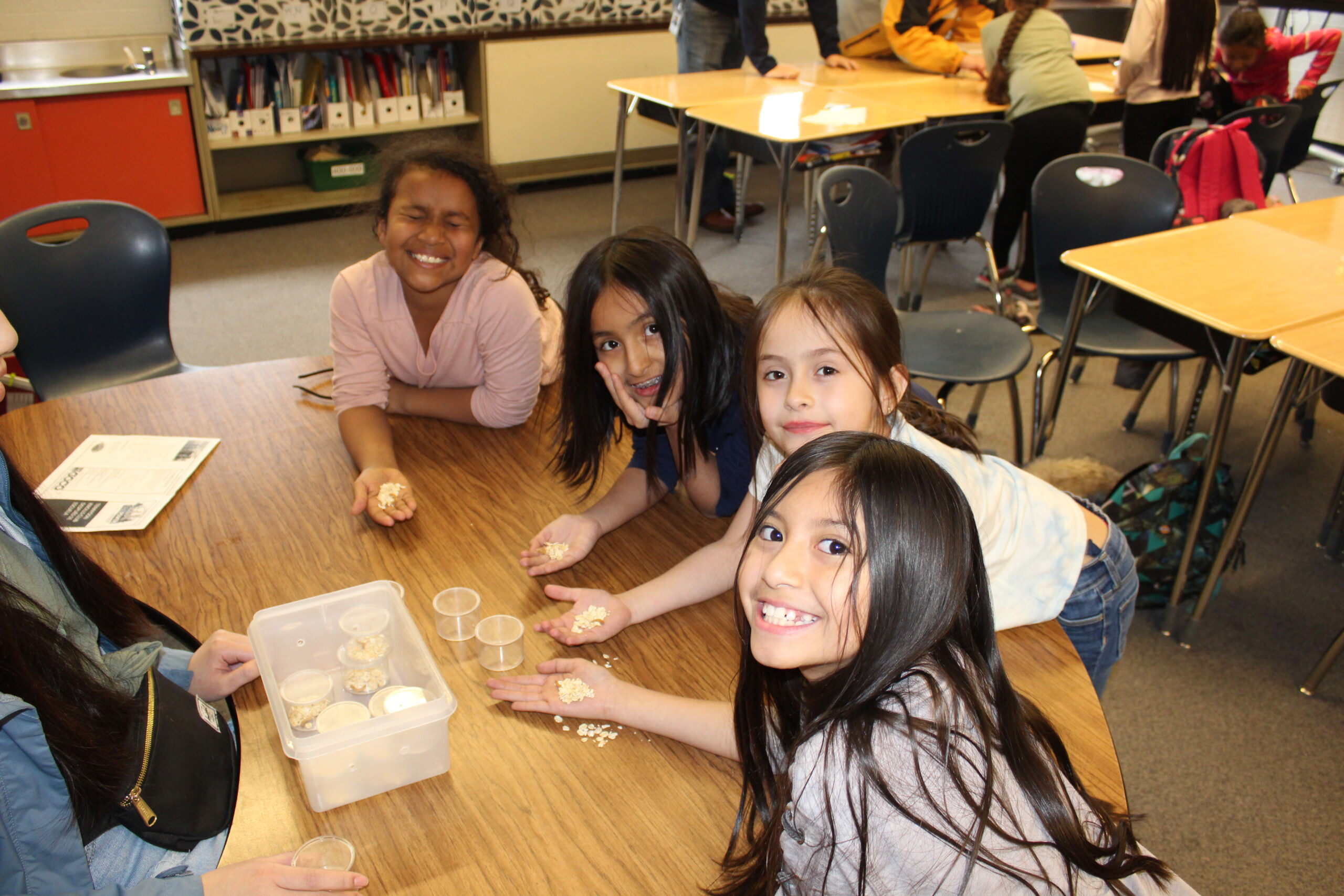
Our outreach programs are curriculum-aligned, so you can find a theme that suits your academic framework. We also have multiple options for each age group, from pre-K to adult. Do you have a crowd representing many ages? No problem! Bug Safari, which suits up to 60 participants from age three to adult, is a popular choice because it includes a variety of live animals. For even larger groups, I recommend either Radical Rainforests or booking back-to-back sessions. After booking one, each identical session is 15% off!
If you’re looking to get your students out of their seats, I recommend Metamorphosis Moves, a unique program in which Butterfly Pavilion partners with the Colorado Ballet to make metamorphosis come alive through dance. If you’re not leaping for the idea, Flutterby and Pollination Pals explore related themes but with different approaches.
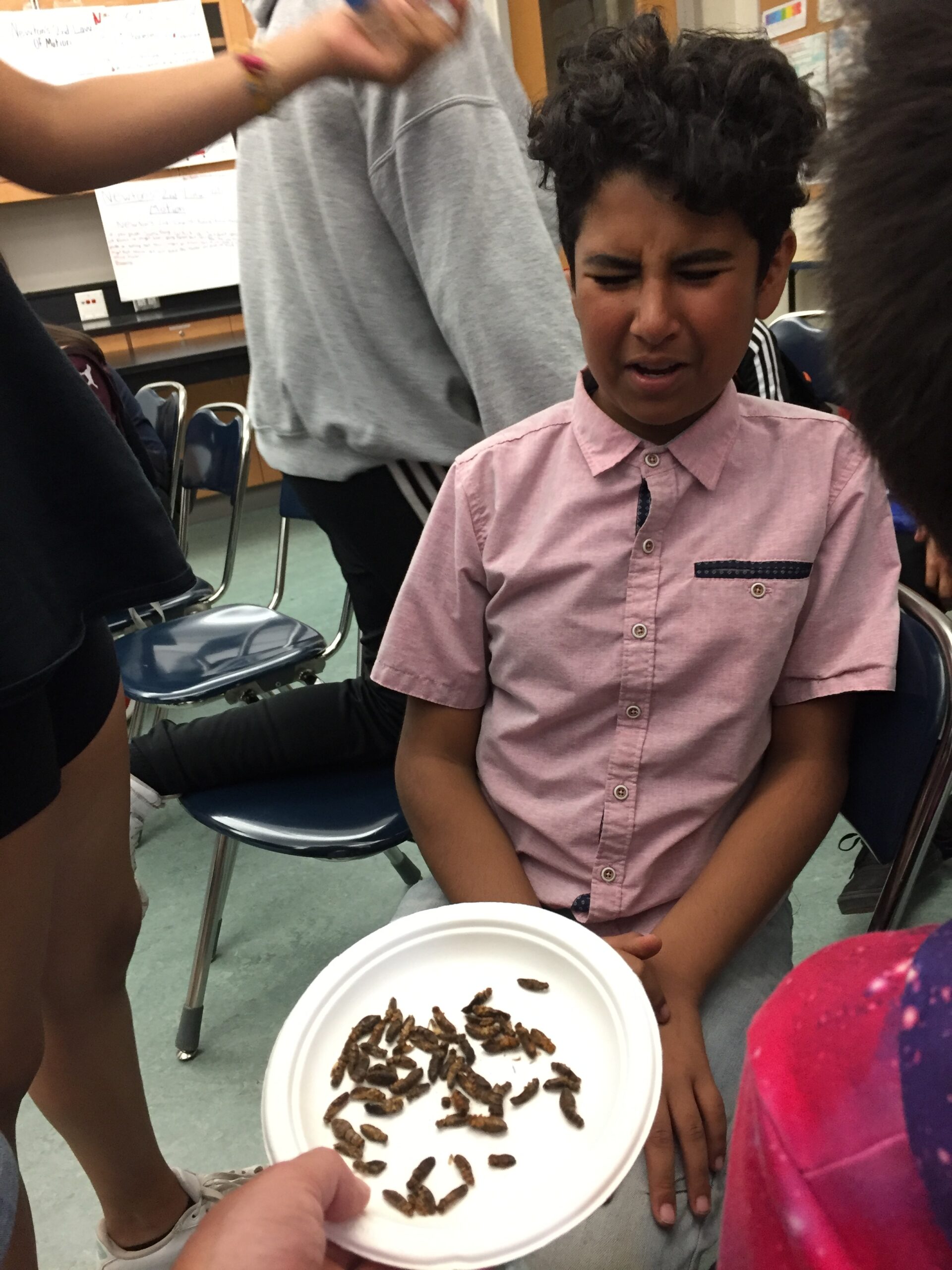
Bug Bites, a highly interactive program, allows students to learn about different cultures and even taste insects that star in global cuisine. One teacher who recently reserved Bug Bites testified, “(The students) had so much fun eating and learning about bugs! It was so cool to see them step out of their comfort zones and eat bugs! It is thanks to partnerships like yours that our program is able to offer students engaging, educational, and exciting field trips and presentations. Thank you for helping enrich our program!”
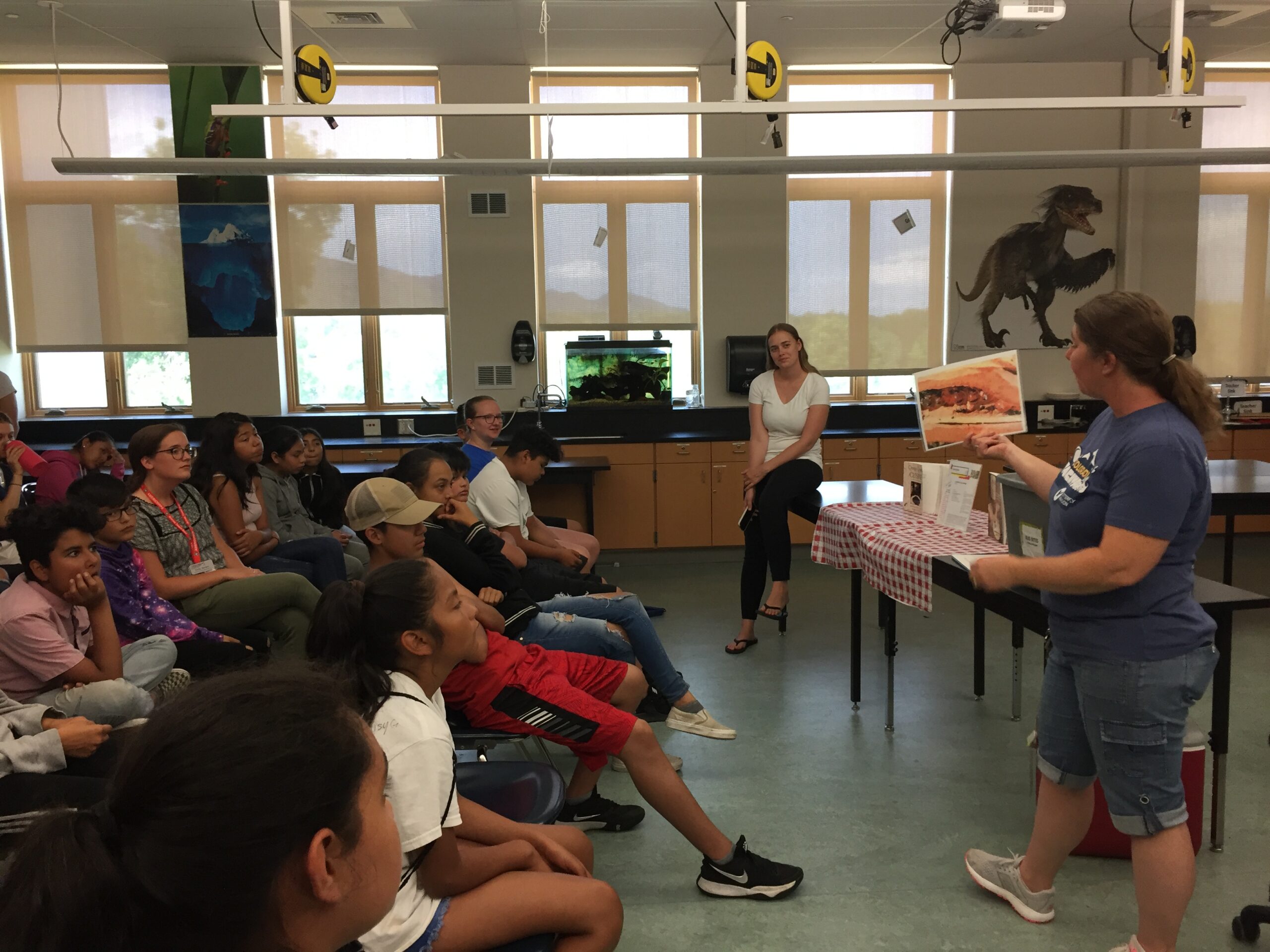
Our talented educators bring their rich backgrounds in formal and experiential education, field biology, creative arts and travel, while also adding their own unique touch to each class. They are well-qualified to serve participants from preschool to adult, and are trained in equitable and inclusive education to reach each diverse audience. According to our Education Coordinator, Claire Buckley, “Our educators are exceptional at creating fun, engaging, and impactful learning experiences. They bring their joy for teaching, vast invertebrate knowledge, and commitment to connecting with all learners to each program they deliver.” Don’t just take our word for it – book an outreach program today and see for yourself.
This fall, whether you are hunkering down with hot cocoa or hiking the high peaks, connect with us at Butterfly Pavilion – there are so many reasons to book an outreach session.
For more information you can call the Registration Coordinator, Leanne Deschenes (that’s me!) at 720-974-1861, or view our offerings and make your request online at butterflies.local/learn. We look forward to hearing from you, and wish you the best for back to school!
By Amy Yarger, Butterfly Pavilion Horticulture Director
If you live in Colorado, I can almost guarantee that you won’t see a polar bear or humpback whale moseying across your backyard. But I can guarantee that you will come in contact with another important and imperiled group of animals – Pollinators.
Pollinators are animals that play cupid for flowering plants, carrying pollen from one plant to another. We rely on pollinators, such as bees and flies, for many of our favorite foods, but we also have pollinators to thank for some of our favorite Colorado landscapes, from mountain meadows to prairies and wetlands. Recent reports, such as the National Research Council’s Status of Pollinators in North America, have documented declines in some pollinator populations due to many factors, including loss of healthy habitats.
The good news is that everyone, no matter where they live, can improve this situation for pollinators. Pollinators are diverse, and found in every terrestrial ecosystem. Even if you live in a city, you’ll see bees, butterflies and other insects visiting park flower beds or hanging baskets. If you want to create your own pollinator sanctuary, all you need is some close observation, a little planning and the right plants.
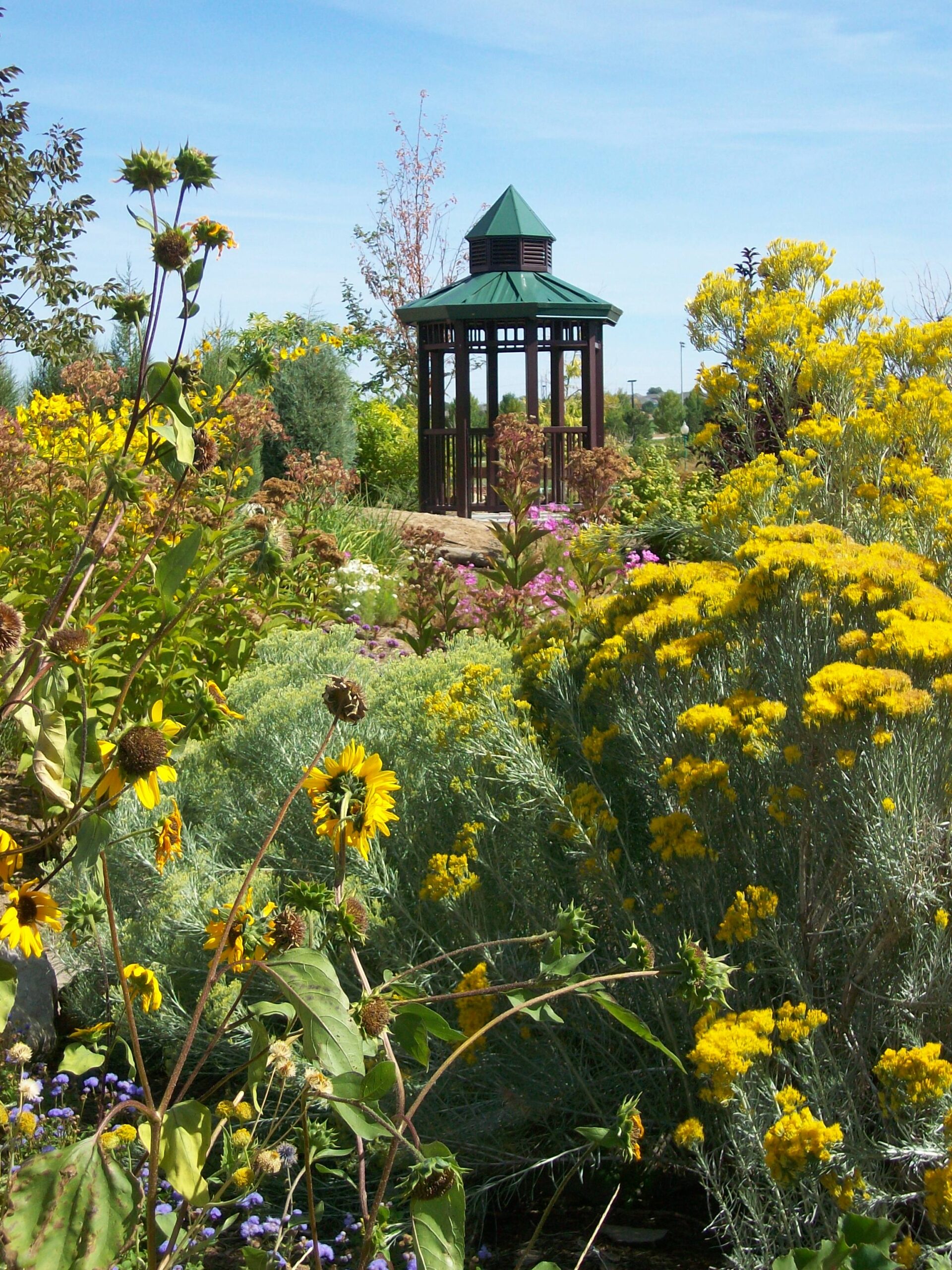
Assess What You Have
The first step is to understand what pollinators are already in your area and what kinds of resources your personal habitat can provide for them. Walk around your neighborhood: are there many flowering plants in your neighborhood? If there is not very much outdoor space, do you have the opportunity to plant window boxes or pots with blooming plants? Are there community gardens in your neighborhood? Even if you aren’t an avid gardener, you can get some inspiration about easy changes you can make to your space. Look closely to identify what sorts of insects frequent your area. If a particular planting seems to have a lot of activity from bees and butterflies, ask around to find out where the plants are from. Finally, just as with any planting, get information about your local conditions: sunlight, access to water and soil, and base your plant selections upon what will do well in that situation.
Add Resources
When you begin to look at your surroundings through the eyes of a pollinator, you might notice that food and shelter can be hard to find in many urban and suburban landscapes. Although not the only part, blooming plants for pollen and nectar are a big part of any pollinator sanctuary. The overall goal is to add complexity and diversity to the landscape, instead of a monoculture (a single crop) of lawn surrounded by pavement. Ideally, your pollinator sanctuary would feature native plants: shrubs, perennials, grasses and annuals, to provide a buffet of flowers from early spring to late fall. If these blooms vary in height, shape, size and color, you will be able to serve up nourishment to everything from the tiniest sweat bee to the biggest swallowtail butterfly.
Beyond food for adult pollinators, though, there are many other resources pollinators need to thrive. A few well-placed trees, shrubs and vines can provide shelter from weather and hungry predators. The occasional boulder provides a warm-up spot on cool mornings for these flying creatures. For longer pollinator visits, encourage them to provide for the next generation of insects by installing nest boxes, planting larval food plants for caterpillars or even just leaving some bare earth for ground-nesting bees. If you are in a small space, don’t fear; even a few planters or window boxes will provide a “pit stop” for pollinators, connecting them from habitat to habitat.
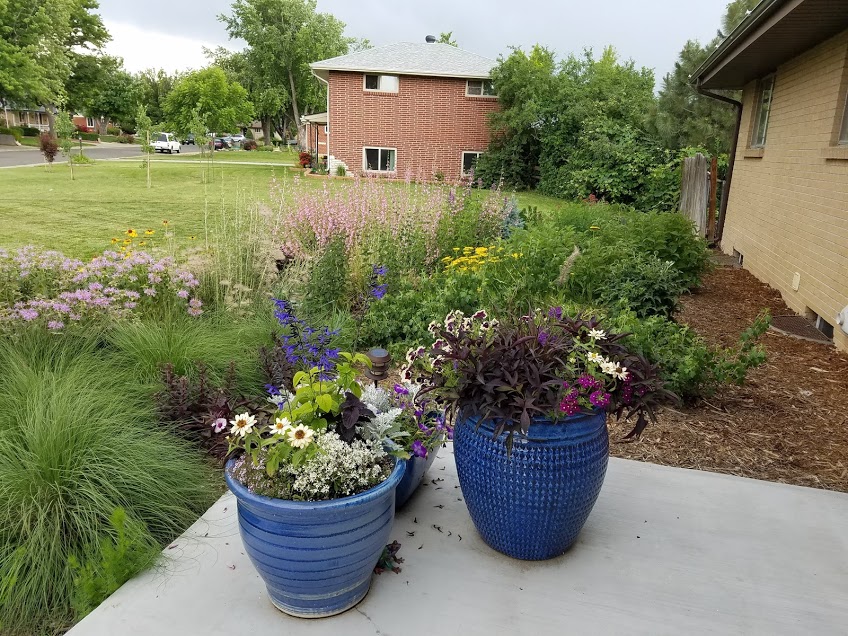
Avoid Pesticides
A drive for absolute perfection isn’t healthy for anyone, and that includes pollinators. A pollinator sanctuary has different maintenance expectations than a putting green. Instead of focusing on the total eradication of every dandelion or slug, pollinator protectors choose an approach that maximizes the health of the plants in their habitats. By choosing tough, resilient plants that are well-suited to the environment, and then making sure they have the moisture, nutrients and light they need, less effort is needed to manage pests and weeds. When pests and weeds do threaten the health of your pollinator sanctuary, you still have effective tools in your toolbox, from physical barriers to beneficial predators.
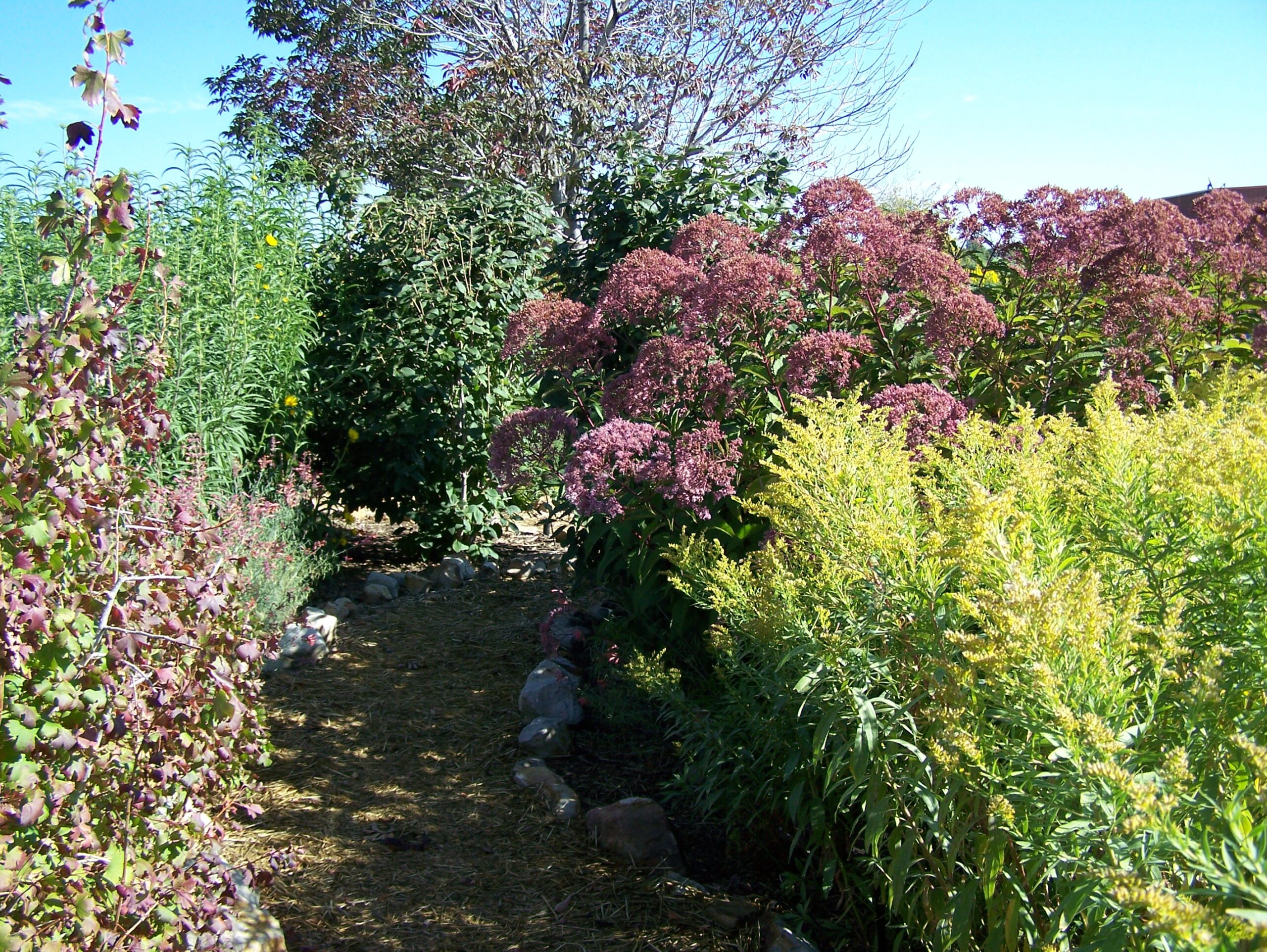
A few flowerpots on the stoop or acres of restored prairie can each make a difference for pollinators. All together, these sanctuaries create a habitat network transforming sterile landscaping to productive, lively and appealing places where we can connect with nature. Not only is this vital for butterflies and bees, it is beneficial for humans as well. The researcher Stephen Kaplan has noted that spending time outdoors, among plants and animals, measurably improves physical, mental and social well-being. For this reason, Butterfly Pavilion is working with MCWHINNEY to create the first-ever Pollinator District in Broomfield. A Pollinator District is a development, including businesses, schools, public facilities and parks, designed, constructed and maintained in such a way that pollinator habitat demonstrates a net gain over the footprint of development. This is an exciting opportunity to engage all of the people who live, work and play in the Pollinator District in this vital conservation work. In doing this work together, we can all think of ourselves as vital resources who become citizen scientists, beekeepers, gardeners and stewards of the land.
By Amy Yarger, Horticulture Director at Butterfly Pavilion
One of the best feelings is to venture out in the morning after rain and breathe in the fresh, moist air. In Butterfly Pavilion’s outdoor gardens, there’s not only the fragrance of moist leaves and soil this time of year, but a multitude of blooming plants competing for attention. Late spring and early summer feature some of our most perfumed plants in our outdoor gardens, so this is a great time to enjoy them.
The sweet honey smell of alyssum or the sophisticated aroma of an heirloom rose is actually a complex chemical signal plants send their pollinators, promising rewards and enticing them to carry pollen from one flower to another. As pleasant as some of these messages are to our noses, we must remember that plants adapt to their specific pollinating “cupids”. Fly-pollinated plants may come off as rather funky (or at least that’s the nice way to put it), while moth-pollinated plants put forth their fragrance during the evening. There’s something for everyone in the flower fragrance world!
Our blooms at Butterfly Pavilion are about two to three weeks later than usual, so we still are enjoying some of the late spring fragrances, as well those of early summer. Here are some to keep your eye (or your nose) on right now:
Showy milkweed (Asclepias speciosa) – Many people don’t realize that this native monarch host plant has a delicious, almost vanilla-like scent. Large stands of this plant will perfume the air all around them.

Chocolate flower (Berlandiera lyrata) – If you close your eyes and sniff, you may get notes of cocoa powder, nuts, vanilla and/or honey from this southwestern wildflower. I find that people always say it smells like chocolate… when you tell them the name ahead of time.

Silver fountain butterfly bush (Buddleia alternifolia) – Unlike Buddleia davidii, B. alternifolia is a “one and done” bloomer, but it goes gangbusters when it does, filling the air with a sugary fragrance. Swallowtail butterflies invariably find it and make it part of their daily route.

‘Ruby Voodoo’ Rose (Rosa ‘Ruby Voodoo’) – Many popular roses have been bred for specific colors or longer-lasting blooms, reducing that intoxicating rose fragrance. This PlantSelect selection has vivid dark pink petals, but the true magic is the aroma, which combines sweetness with almost a wine-y tang.

Mock orange (Philadephus lewisii) – This native shrub can thrive in Colorado’s unpredictable climate and still be as sweet and fresh as a bridal bouquet every May-June.

By Calais Thomas, Programs and Evaluation Lead at Butterfly Pavilion
When you hear the phrase “Toxic Terrors,” what is the first thing that comes to mind? Spiders? Cockroaches? In the United States, many of us have been taught to fear these animals from a very young age. However, here at Butterfly Pavilion, our goal as educators is to help people discover just how fantastic – and not terrifying – these animals actually are and inspire a respect and admiration for their contributions to our world. It’s incredibly important that we do so to ensure a healthy planet for future generations. Here’s an inside look at how the magic happens at our zoo.
When interacting with learners of all ages, we work to be approachable and patient. We never pressure anyone into an experience that will make them uncomfortable – gentle nudges only! The goal is for people to leave their invertebrate encounters with positive feelings, even if they didn’t directly interact with the animal. By creating comfortable and encouraging experiences, we can show invertebrates in the best light possible and begin to build more positive associations with these animals.
Through one-on-one conversations with guests, we address the preconceived notions people have about invertebrates and ask them to see the world through eyes of the animal. For example, when working with our well-known ambassador, Rosie the tarantula, the communication goes something like this: “No, Rosie is not out to harm any one of us; at most she wants to feel safe and well-fed. Isn’t that something we all want?” It turns out we have much more in common with invertebrates than we may initially realize. Highlighting this fact builds empathy and appreciation for these critical animals.
If you’re familiar with Butterfly Pavilion’s work, you may recognize the theme “Toxic Terrors” from last year’s Bugtober, our month long Halloween-themed celebration. Every year, during the month of October, our exhibits transform to celebrate the fascinating and mysterious world of invertebrates that we may traditionally see as “creepy” or “crawly.”
When we selected the “Toxic Terrors” theme, it wasn’t to incite fear. Like our other programming, the goal of Bugtober is to develop an appreciation for these animals, beyond what one may assume from their appearance. We highlight common misconceptions about animals that pose no threat to humans, as well as just how awesome their abilities really are. For example, we are often afraid of poison and venom, however, these toxins produced by some invertebrate animals not only allow them to expertly survive in their environment, but also have benefits to humans. Chilean Rose Hair tarantulas, like Rosie, have venom that has been used in medical research seeking to prevent irregular heartbeats. Though she has venom, Rosie is one of the most docile species of tarantula out there and safe to hold. But even if she did bite, her venom would affect a human about a third as much as a bee sting. Not so scary after all!
But you don’t have to take my word for it. Guests gave their feedback during Bugtober, which revealed how their view of “Toxic Terrors” changed after visiting our exhibits. Before they explored this themed experience, we asked guests what words or phrases they associated with the phrase “Toxic Terrors.” Then, we asked them again after they explored our exhibits. Both sets of responses are shown in the word clouds below.
Left: Responses to “Before coming today, what is one word you would have associated with the phrase ‘Toxic Terrors’?”
Right: Responses to “After coming today, what is one word you will associate with the phrase ‘Toxic Terror’?”

As you can see, the most popular answer for both was spiders, but the words surrounding them changed. Before interacting with our exhibits and educators, guests may have thought that spiders were truly dangerous and associated them with words like “death” and “scary”. Afterwards, they are still recognized for being toxic at times, but were instead associated with words like “amazing” and “interesting”.
At Butterfly Pavilion this is our mission in action. We transform the way people think about invertebrates and facilitate conversations with our invertebrate experts that help our guests better understand and appreciate these tiny giants. Every staff member at Butterfly Pavilion loves and respects these animals, and every day we are incredibly excited to help our guests to feel the same way. Visit our exhibits to explore, discover and appreciate these animals with us!
-
Pollinator District is a first-of-its-kind initiative, linking natural resources, city and county government agencies, real estate development and non-profit conservation organizations
-
Baseline, a new community in Broomfield, Colo., will be the world’s first Pollinator District
Westminster, Colo. – June 20, 2019 – Pollinators such as honey bees, native bees and butterflies are vital to the human production of food and the reproduction of native plants. Over the past few decades habitat destruction, chemical pollution, parasites and pathogens have significantly decreased their numbers. In response to these challenges, Colorado’s Butterfly Pavilion announced today that it is creating Pollinator Districts, communities designed to conserve and improve habitat for pollinators in all aspects of development and operation. Pollinator Districts engage all the people that live, work and play in these spaces, encouraging them to experience nature and build a greater appreciation for these critical species and their habitats.
“Protecting pollinators helps achieve multiple conservation goals: encouraging the protection of public green spaces, highlighting urban and rural interdependence, promoting the use of native plants in residential landscaping, and advancing environmental education at schools, communities and with the general public,” said Patrick Tennyson, president and CEO of Butterfly Pavilion. “Butterfly Pavilion is uniquely positioned to leverage our expertise on pollinators to change the way people think about our communities and how we can protect these incredibly important creatures!”
The first community set to become a Pollinator District is Baseline, a new mixed-use community at the junction of I-25, 470 and Baseline Road in Broomfield, Colo. McWHINNEY, a Colorado-based development and investment firm is designing Baseline to also include a dining district, a center for businesses, a science campus, and a new standard for residential living.
“We see the Pollinator District creating a healthy, vibrant community where residents want to spend their free time, are deeply invested and therefore more willing to contribute to it,” said Kyle Harris, general manager of the Baseline development for McWHINNEY. “This is a completely new approach to real estate development in Colorado.”
In the Pollinator District, enhancements are integrated into engineered green spaces such as rain gardens, bio-swales, green roofs, public common areas and residential development. Elements of Pollinator District include:
- Research – Establishing a baseline of pollinator diversity and understanding challenges in the area of interest.
- Habitat restoration – Restoring open spaces with native shrubs and wildflowers to provide nutrition for pollinators.
- Habitat gardening – Building gardens that more closely resemble natural habitat, including a variety of native flowering plants and shrubs, open ground and a passive water source.
- Beekeeping – Providing aspiring beekeepers in the community with training on how to keep bees through sustainable techniques.
- Public education and engagement – Educating diverse audiences on pollinator conservation topics through volunteer opportunities, workshops, classes, public events and more.
- Sustainability – Prioritizing sustainable design, construction and maintenance practices that conserve water and soil and preserve native plant communities whenever possible.
Flower-rich pollinator landscapes support greater biodiversity, supporting not only pollinators, but other beneficial insects, birds and small mammals. “After development we’ll actually see more biodiversity,” Tennyson said. “It usually doesn’t work that way!”
Establishing the Pollinator District is a key step on Butterfly Pavilion’s journey to creating the Center for Invertebrate Research and Conservation (CIRC). In 2017, Butterfly Pavilion announced its plans for a new $45 million state-of-the-art facility located in Broomfield, Colorado for this new research center. CIRC will be an 81,000-square-foot, world-class research lab with an accredited zoological facility to serve as the preeminent local, national and global hub for invertebrate knowledge, conservation, inspiration and connection.
Pollinator Districts are part of Butterfly Pavilion’s PACE initiative, a global effort to increase awareness of pollinators and promote habitat and species conservation and restoration. PACE is made possible through a partnership with Local Hive by Rice’s Honey, a leading producer of high quality, U.S. only raw and unfiltered honey, headquartered in Greeley, Colorado. A portion of proceeds from every bottle of Local Hive by Rice’s Honey sold is donated to PACE to protect pollinators worldwide.
Learn more about Butterfly Pavilion’s permanent exhibits, important education, research and conservation work at www.butterflies.local or by calling 303-469-5441. Butterfly Pavilion is open 9 a.m. to 5 p.m. daily at 6252 West 104th Avenue in Westminster, Colo.
About Butterfly Pavilion:
Butterfly Pavilion is the world’s only stand-alone, Association of Zoos and Aquariums-accredited invertebrate zoo dedicated to transforming the way people think about the small but mighty animals that are the hidden heroes of the animal kingdom. As the leader in invertebrate knowledge, inspiration and connection, and as a member institution of the Scientific and Cultural Facilities District, Butterfly Pavilion works to foster an appreciation of these critical animals by educating the public about the need to protect and care for threatened habitats globally, while conducting research for solutions in invertebrate conservation. Whether it is providing unique, hands-on learning experiences in our exhibits and educational programs, conducting new research that sets the standard for zoos across the country or building innovative solutions for species and habitat conservation in countries around the world, Butterfly Pavilion is leading the way in ensuring invertebrates are protected for the future. Learn more at butterflies.local.
Butterfly Pavilion Media Contacts:
Kristen Petitt Stewart, kstewart@butterflies.org or 970-389-1561
Russ Pecoraro, Vice President of Marketing and Communications, rpecoraro@butterflies.org or 720-375-9984
There’s no need to worry. Butterfly Pavilion is here to tell you all you need to know to stay in harmony with these invertebrates!
It’s summer! Time for camping, hiking, rafting, climbing and all the other incredible outdoor activities us Coloradans know and love. However, we’re not the only ones that enjoy the delightful conditions of this season. As we all know, mosquitos and ticks also share our spaces with us in the great outdoors. But there’s no need to worry. Butterfly Pavilion is here to tell you all you need to know to stay in harmony with these invertebrates!
There are several reasons why mosquitos and ticks enjoy this time of year. They get their heat from the outside in, so it’s easier for them to be active and function in warm conditions. Also, most of their food sources – both plant and animal – die during the winter, so summer months provide more opportunities to get a good meal. In addition, mosquitos have a resting stage in the winter, emerging as adults in spring. They then breed and leave behind newly-produced offspring that live for the rest of the summer.
Though it may be tempting to write them off as only a nuisance, mosquitos do serve many purposes. They are food for other animals like bats, insects, birds and lizards. Without mosquito larvae, for example, hundreds of species of fish would have to adapt to another food source. Also, mosquito larvae feed on decaying organic material and other microorganisms, producing detritus, or organic material that adds nutrients to the soil. Many adult mosquitos also depend on plant nectar for energy, serving as pollinators for thousands of plant species.
Ticks also contribute to ecosystems. They serve as food for many reptiles, birds and amphibians. Ticks are also known for spreading disease, which has contributed to their negative reputation. However, disease spread by ticks in the wild can actually help control wildlife populations. Ticks also help us track the health of ecosystems. If a surge in tick numbers occurs, it may indicate a problem with animal populations higher up the food chain.
But even with all this in mind, the main question on our minds is still “how do we avoid being bitten?” Here are a few tips and tricks for a happy summer!
- Avoid standing water. It’s mosquito breeding ground! Remove any receptacles from your backyard that may gather water and keep an eye on your surroundings while enjoying the outdoors.
- Use insect repellant. As a natural option, the Center for Disease Control (CDC) recommends the oil of lemon eucalyptus. Studies have shown it to be just as effective and long-lasting as chemical products. Check out this video to make your own spray at home.
- Wear protective clothing. In areas with more mosquitos or ticks, it’s a good idea to wear long pants, long-sleeved shirts and closed-toed, sturdy shoes with socks. Many outdoor clothing companies offer breathable options for hotter days.
- Check for ticks after you’ve been outside. It’s important to check yourself and your pets, just in case. WebMD provides step-by-step instructions for safe removal.
Visit Butterfly Pavilion to learn more about invertebrate animals living right in our backyard and around the world. There’s so much to discover!