
Gardening in Dry Weather
This spring, most Front Range communities have responded to record low snowpack by encouraging/ requiring residents to cut water use by 20%. Water is a precious resource, and it’s our responsibility to use water wisely.
Drought (prolonged abnormally low precipitation resulting in significant water shortage) can last a few weeks to several years. The Front Range is semiarid, receiving approximately 13 inches of precipitation each year. In 2025, we received over 15”, but so far in 2026, most locations have received less than 2”. With climate change, we expect hotter, drier conditions, which means we should be changing our habits now.
What should you do in your garden when drought strikes? Here are some expert tips from Amy Yarger, Butterfly Pavilion’s Senior Director of Horticulture!
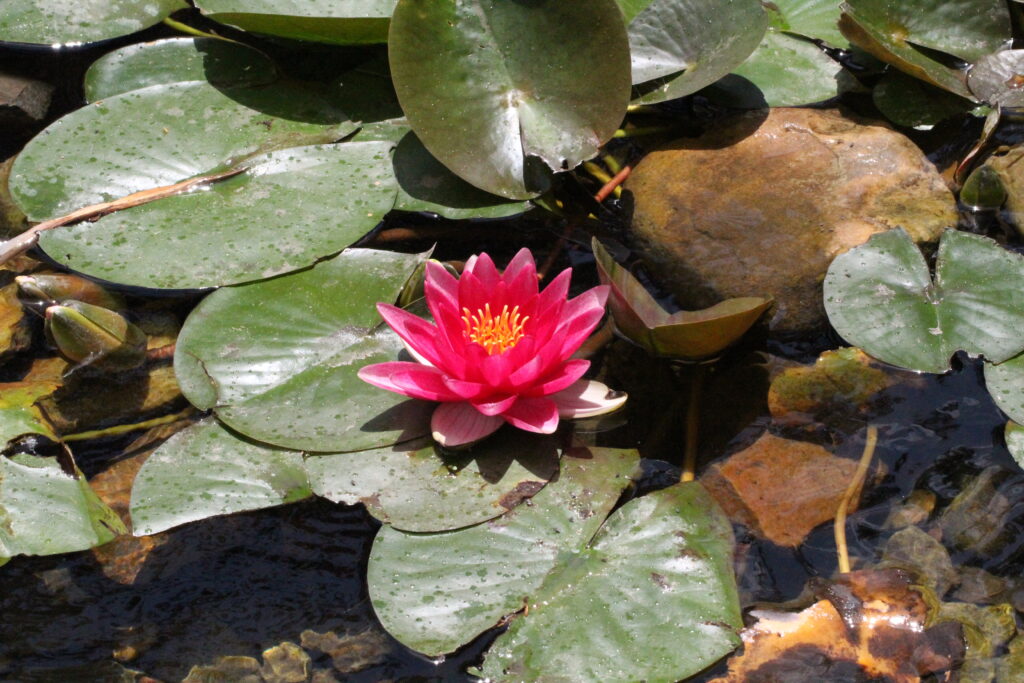
Irrigation and watering – Use only what you need!
- Keep automatic irrigation systems off until the second half of May
- Focus your watering on trees, shrubs, and perennials, especially if they are new – these plants provide shade and urban cooling, as well as habitat for wildlife, including pollinators. They are also much more expensive and difficult to replace.
- Soaker hoses and drip systems waste less water, delivering it directly to where the plants can use it. Consider spot watering the plants that need water instead of watering entire areas. Take time to observe how individual plants are doing.
- Water deeply (1-1.5 inches/ week) and infrequently (1x) to encourage root systems to grow deep instead of close to the surface. Early mornings (before 10 am) are the best time to minimize evaporation – target the root zone to minimize risk of fungal diseases such as powdery mildew.
- Don’t water when it’s windy.
- Look for and repair any leaks in your irrigation or hoses immediately. Adjust sprinkler heads so that they aren’t overspraying. Use hose nozzles with shut-off valves
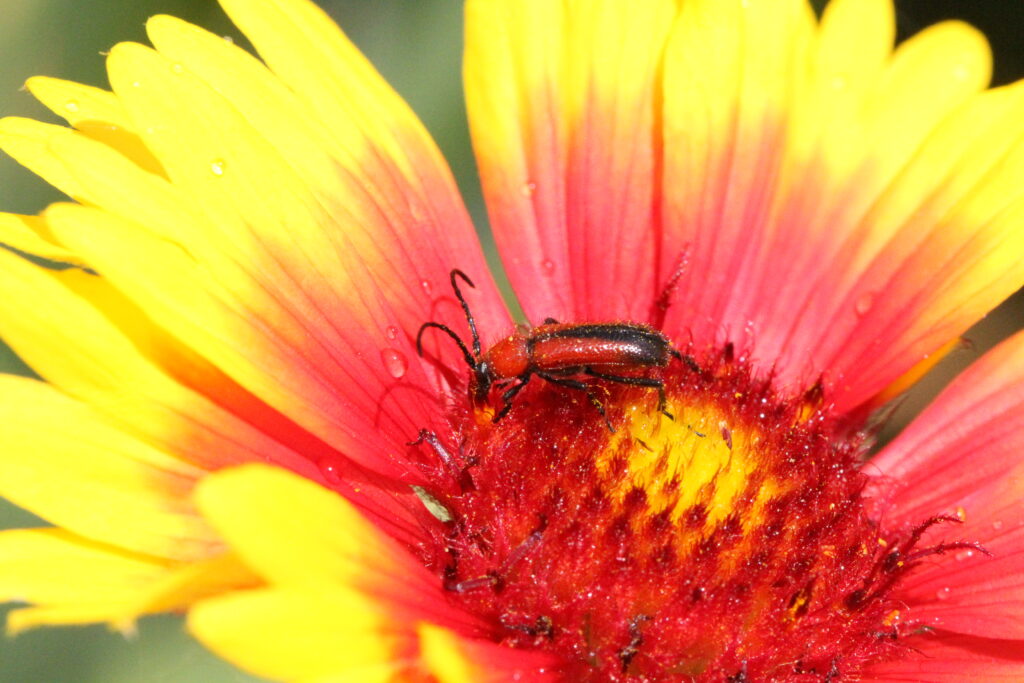
Planning, design and plant selection – Adapt to Colorado conditions
- Phasing: This isn’t the year for huge landscaping projects. If you absolutely can’t wait to plant a new garden, break large projects into smaller segments and prioritize those that will reduce water use. Dreaming big isn’t forbidden – take this year to plan lawn conversions and large renovations that make your landscape more beautiful and biodiverse. Pollinator Gardening Bootcamp is a great resource to plan your new garden haven.
- If you are planning on removing your turf eventually, let it go dormant this year. A side benefit is seeing fewer Japanese beetles since they overwinter in grass roots.
- Native plants in our area are better adapted to our dry conditions – small leaves, deep roots- and also provide habitat for pollinators and other wildlife. Not all Colorado native plants perform the same in dry weather, however. Shortgrass prairie species will have a better chance of survival compared to alpine species, for example. Notice which plants stay “cool and collected” in your garden, and plant more of those to replace the thirstier varieties.
- Hydrozoning: Group plants with similar water needs together and pay attention to light/ exposure requirements.
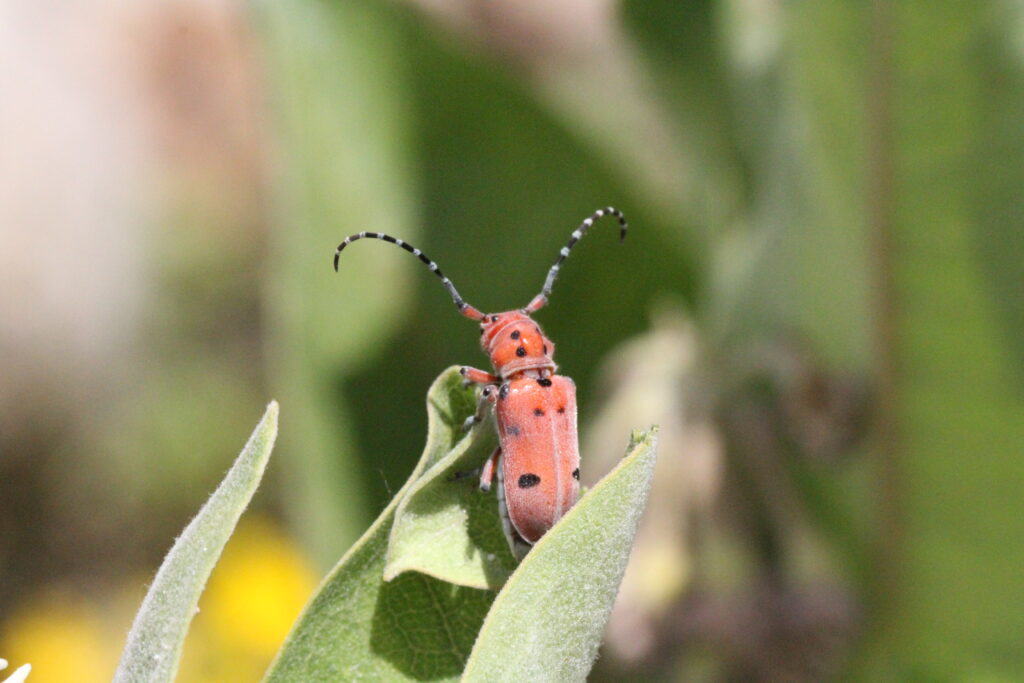
Maintenance – Take it easy
- Establishment: Native plants still need to be watered in for establishment, especially for the first 1-3 years, but even at this stage, they will still use less water than your lawn.
- Signs of water stress include wilting, dull color, browning/ crisping of leaves and stems, short bloom times. Many plants wilt during the hottest time of day, so check to see if they’ve bounced back in the evening/ morning
- Consider using shade cloth to slow evaporation and protect your veggies from intense sun. Move container gardens into the shade, if possible.
- “Hands off”: During drought, it’s best to scale back some gardening activities, such as fertilizing, pruning, and planting. Anything that encourages thirsty new growth means more water consumption. Fertilizers also add salts to the soil over time, and drier conditions mean fewer chances to assist with uptake. The buildup of salt can burn plant roots.
- Instead, focus on weeding. Weeds compete with your desirable plants for water. Be careful how much you disturb the soil, however. If you stir up the soil, the moisture it’s holding on to will evaporate. You also don’t want to stress the roots of the desirable plants in your landscape.
- Deadheading also helps plants hold on to the water they have, instead of spending it on seed production.
- A 2-3” layer of mulch will keep the soil cooler and moister, as well as reduce weed pressure in your garden.
By adjusting how we plan and care for our landscapes, each of us can make a meaningful impact during this drought—and help protect the Front Range’s limited water supply for the future, while also creating havens for the plants, pollinators, and people we love. Small, intentional choices this season add up to healthier gardens, stronger plants, and more resilient communities into the future.
Most people know orchids as a popular house plant, recognizable for their bright colors and unique shapes. What many don’t realize, however, is that there are currently between 20,000 and 30,000 known types of orchids across the world, each having their own unique look, color, and life cycle. As the second most diverse plant family on the planet behind asters (or daisies), they can be found in all different climates and terrains. They’re even able to grow in the Arctic!
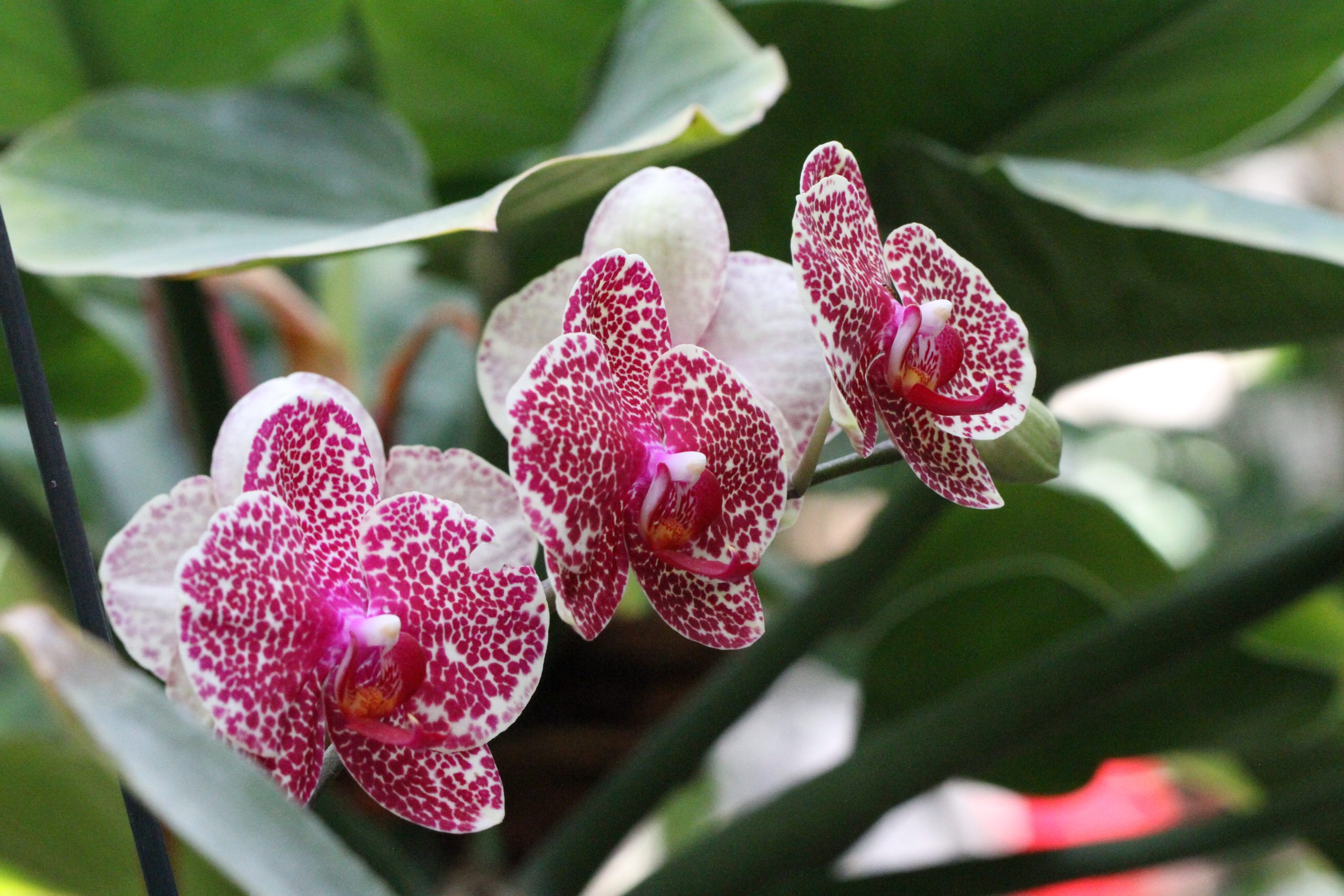
Despite finding strength in numbers, most orchids are unable to pollinate or germinate themselves. Instead, they rely on insects, birds, and fungi for key reproductive processes. Because of this, many orchid species have evolved to attract pollinators and to coexist with fungi, ensuring they reproduce. Some orchids use clever disguises to attract hoverflies or ants. The Epipactis consimilis, for example, mimics the look of aphids on its surface to attract hoverflies in the hope they’ll lay eggs on the flower. This process will pollinate the flower while the hoverfly drinks nectar from the orchid in return. The hoverfly also has the opportunity to eat any actual aphids on the orchid, providing free pest control for the flower, a win-win! Other types of orchids produce perfumes or aromatic droplets to attract pollinators. Male bees come searching for the orchid’s scent in hopes of the scent rubbing off on them. These fragrance droplets help bees attract their own mates. As the bees coat themselves in the aroma, pollen from their legs rubs off onto the flower. The scent produced by the orchids is also known to have an intoxicating effect on the bees, making it so they clumsily bump against the flower multiple times. This helps to increase the chance of pollination.
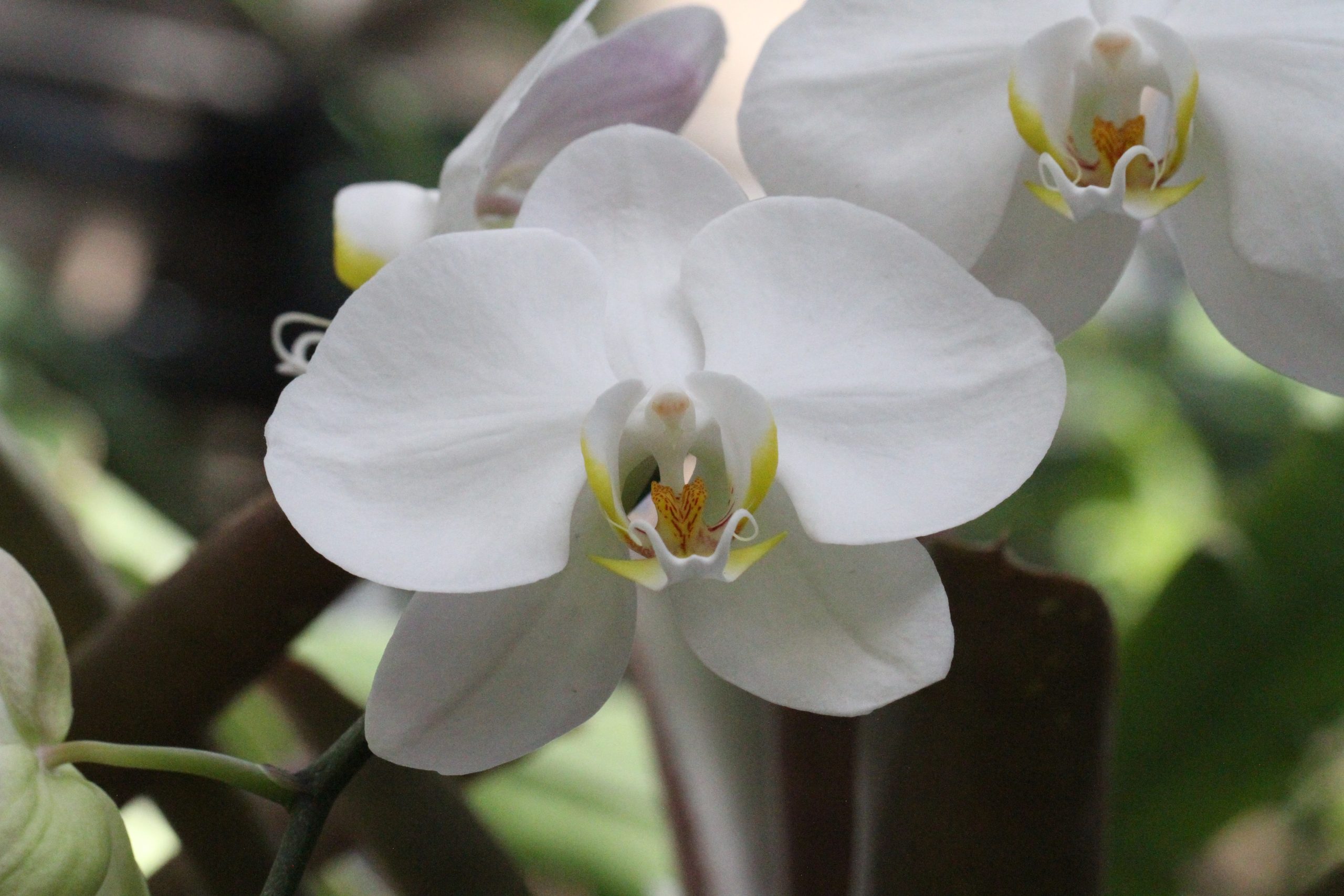
Orchids also rely on fungi to help them conserve water, fertilize roots, and germinate seeds. This is done through a symbiotic relationship with a fungus called mycorrhizae fungi which grows partially within the orchid’s roots. They help the plant to absorb water, carbon, and other minerals from the soil in exchange for sugars gained from photosynthesis. When the orchid is ready to germinate its seeds, it begins to feed on the fungi for nutrients. In this stage, the relationship becomes almost parasitic as the orchid takes much more from the fungus than the fungus does from it. While it may sound a little creepy, mycorrhizae fungi is not completely eradicated or “eaten” every time. It still receives sugars from the orchid and is never consumed enough to warrant retreat. Butterfly Pavilion has installed a temporary orchid display in our butterfly conservatory to celebrate these fascinating flowers. Here you can see six different types of orchids, each unique in their size, shape, color, and scent. Visitors can observe them in bloom and see them pollinated in real time by our vast array of butterflies. Experience these incredibly beautiful and diverse flowers before it’s too late!
Written by Emma Saint
National Learn About Butterflies Day
Each year on March 14, Butterfly Pavilion celebrates National Learn About Butterflies Day by recognizing the vital role butterflies play and honoring these incredible insects. While many of us admire their beauty, these animals, yes, butterflies are animals, are often misunderstood, and their essential role in our ecosystems is frequently overlooked. There’s a lot more behind a butterfly’s wings than just their color; their wings are actually covered with hundreds of thousands of tiny scales. Each scale contributes its own hue, coming together to create the breathtaking patterns we admire from afar. Beyond their beauty, these scales may also provide essential protection for butterflies against the elements.
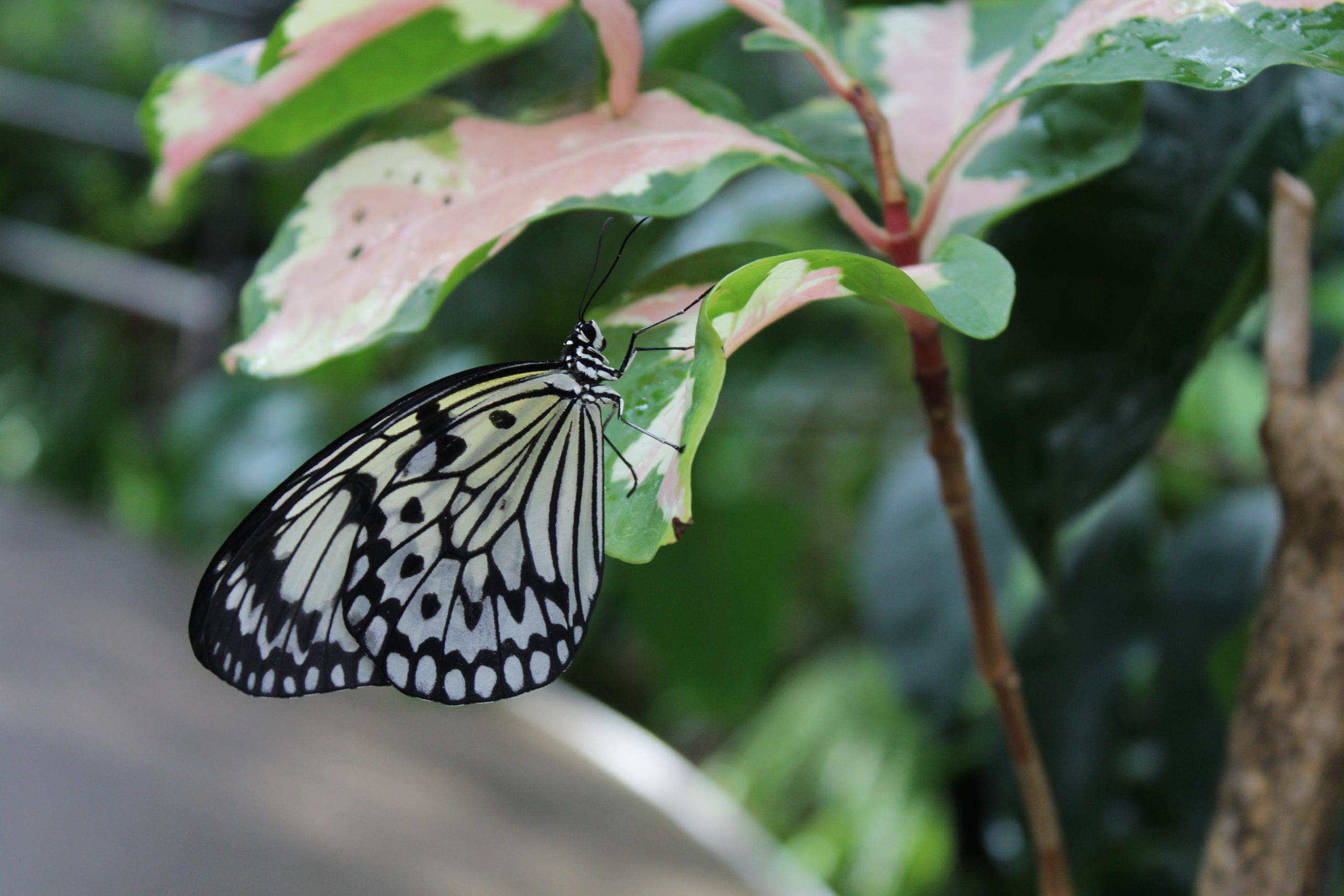
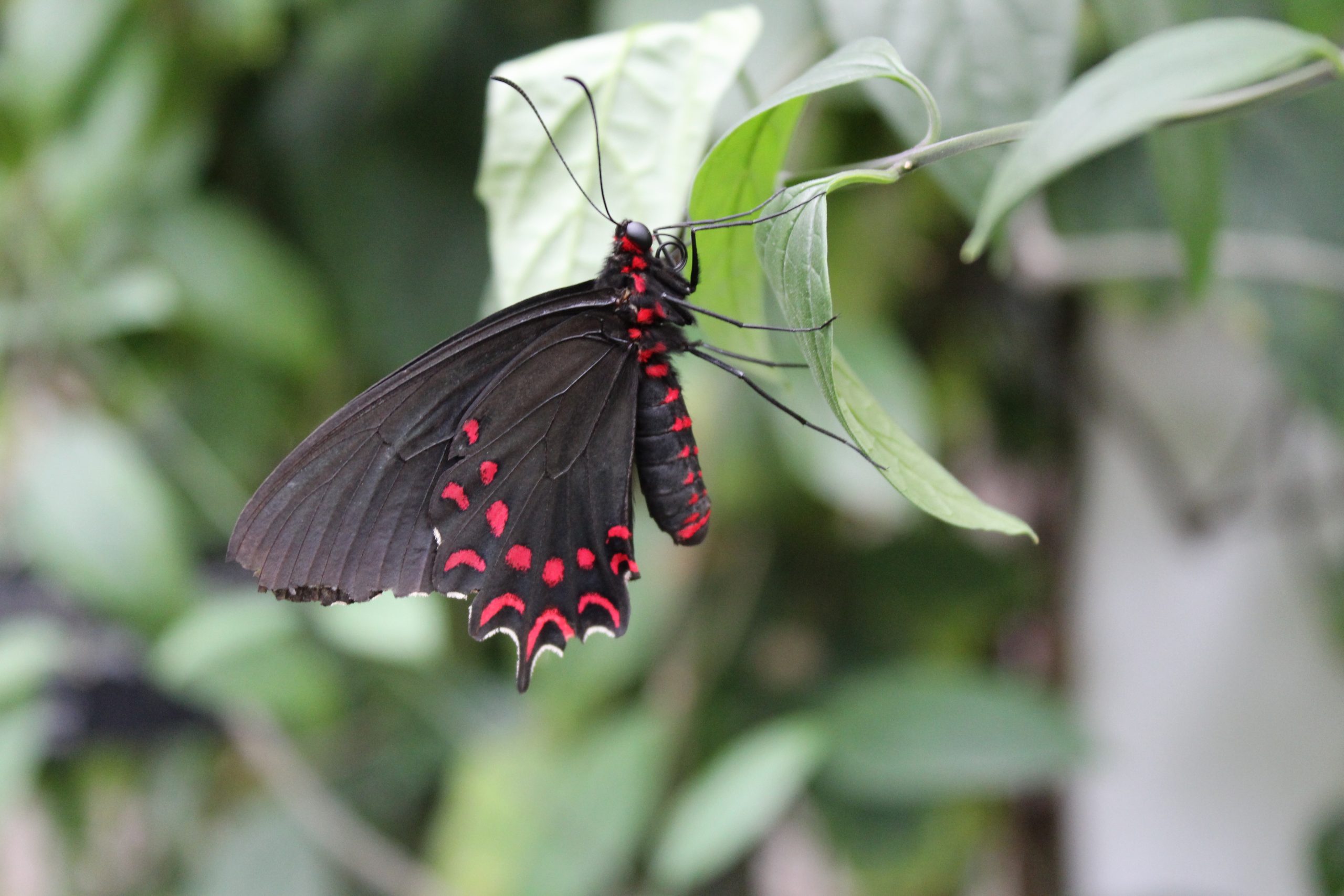
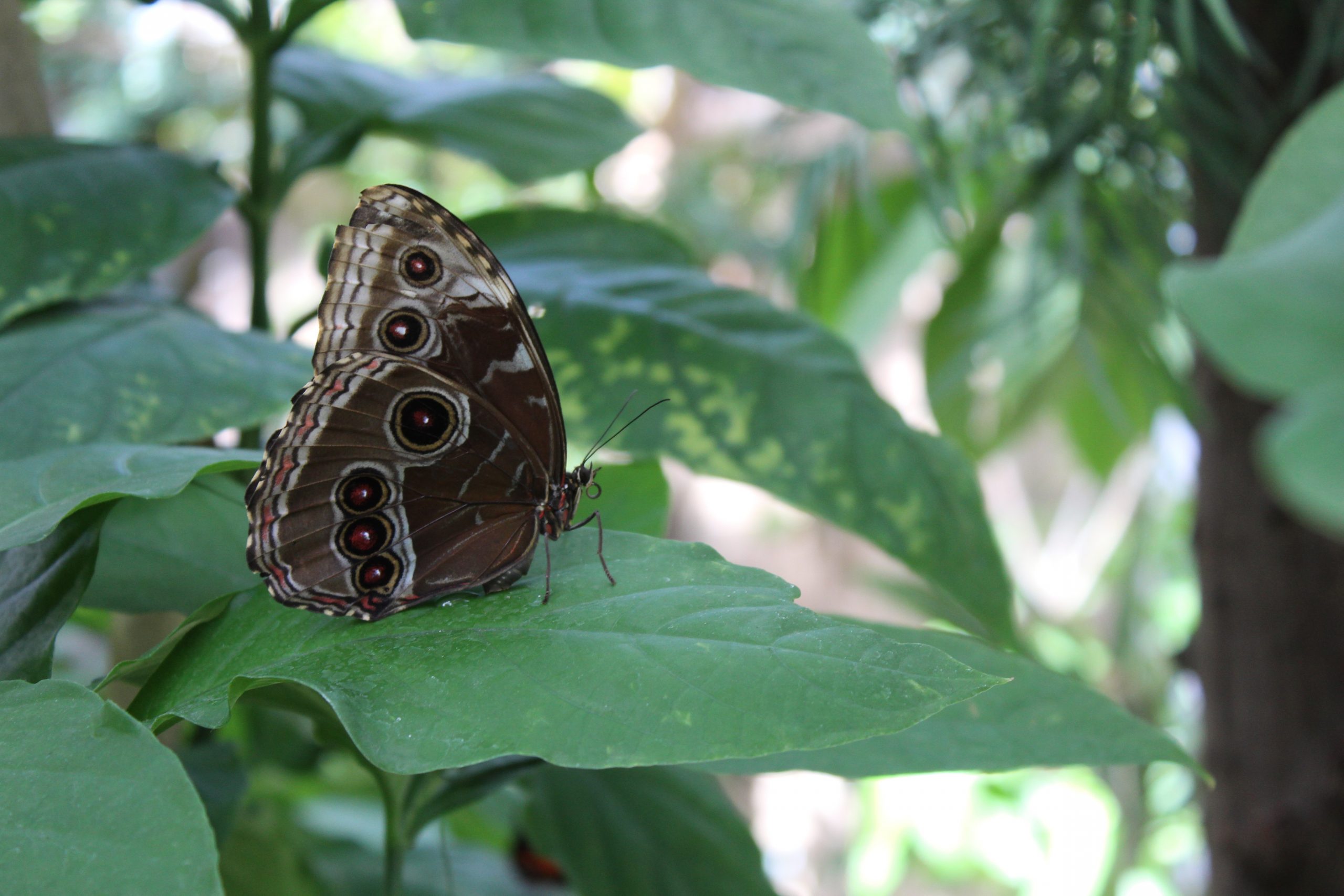
Some butterflies use their wings for camouflage, while others, often those with brighter colors, use them as a warning to predators that they are poisonous or unpleasant to taste. Others, like the Magnificent Owl Butterfly, have wing patterns that mimic large eye spots, scaring predators by making them appear bigger or more dangerous. Some butterflies even have specific colors or patterns to help attract mates. The next time you see a butterfly in the wild or at Butterfly Pavilion, ask yourself why it carries the pattern on its wings. There’s likely an important reason behind it. It’s not just their wings that display beautiful colors; butterflies show a unique appearance at every stage of their metamorphic journey. Butterflies undergo four stages of complete metamorphosis: egg, larva (caterpillar), pupa (chrysalis), and adult. During the larval stage, caterpillars eat frequently and grow rapidly. With stripes, spots, spines, and even horns, many caterpillars use these striking features to help deter predators.
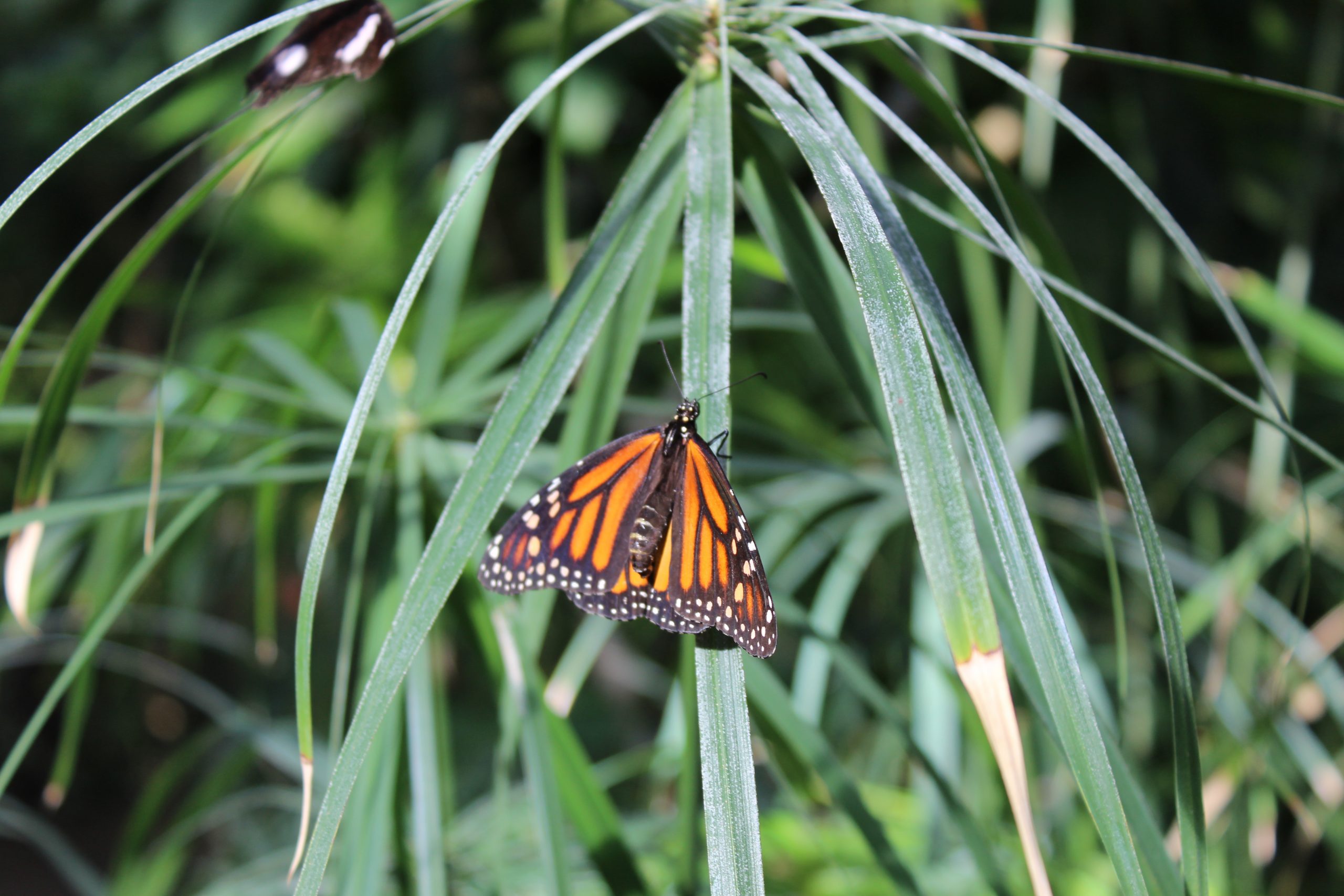
Once they transform into pupae, their chrysalids are often green, metallic, or brown, allowing them to blend into their surroundings. Metallic chrysalids may mimic dew drops, while green or brown ones resemble leaves and other plant material. After reaching adulthood, many butterflies rely on nectar from flowers as their primary food source. As they fly from flower to flower, these delicate creatures unknowingly carry pollen on their tiny bodies, helping to pollinate plants. Because of this, butterflies play a vital role in ecosystem health. However, habitat loss and climate change threaten butterfly populations around the world, leading to widespread declines. On National Learn About Butterflies Day, we’re reminded that butterflies are far more than just beautiful visitors in our gardens; they are complex, resilient animals with an essential role in the natural world. By learning more about their life cycles, adaptations, and contributions to healthy ecosystems, we can better appreciate and protect them. Whether you encounter a butterfly in the wild or up close at Butterfly Pavilion, taking a moment to observe, learn, and stay curious helps ensure these remarkable insects continue to thrive for generations to come. Visit Butterfly Pavilion to experience the nearly 2,000 tropical butterflies fluttering around our Wings of the Tropics conservatory. Get tickets today: www.butterflies.org Written by: Hannah Hitchcock
From Baseline to the Parkway: How Collaborative Conservation Is Giving Pollinators a Fighting Chance
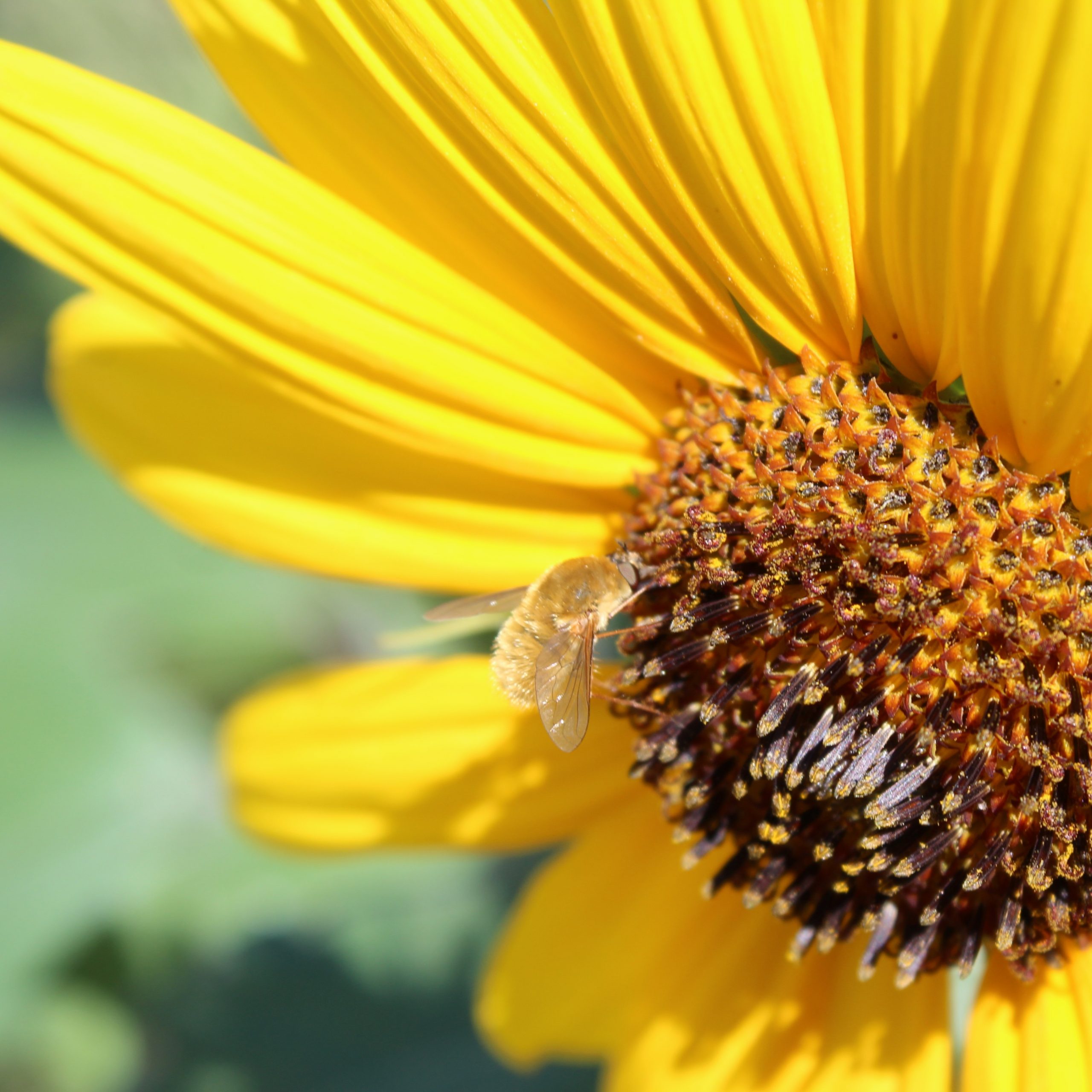
Across North America, bees, butterflies, moths, beetles, and other pollinating invertebrates are declining due to habitat loss, chemical pollution, parasites, and pathogens. These species are essential to food systems, biodiversity, and healthy ecosystems. Without them, as much as one out of every three bites of food we eat could be at risk. At Butterfly Pavilion, we believe conservation is strongest when people work together. When science, planning, and community commitment align, pollinators respond. Two projects in Broomfield show just how powerful collaborative conservation can be.
A Proven Model at Baseline
In 2019, Butterfly Pavilion launched the concept of Pollinator Districts™. These are communities intentionally designed to conserve and improve habitat for pollinators across every stage of development and long-term operation.
The first Pollinator District was created in partnership with Baseline, a 1,100-acre master planned community built around environmental stewardship, healthy living, and innovation. Nearly 170 acres of Baseline are dedicated to parks, natural land, and open space connected by trails, garden paths, and pollinator-friendly plantings.
The results were both measurable and encouraging.
Before construction began at Baseline in 2019, Butterfly Pavilion scientists visited the site and documented only 11 families of pollinators. The site supported no bumble bees, leafcutter bees, or butterflies. Over the past five years, as the landscape has taken root and native plants have matured, that picture has changed dramatically. In late spring and late summer of 2025, Butterfly Pavilion scientists returned to inventory pollinators and documented pollinators in 27 different families. This marked a significant increase in diversity compared to earlier years and reflected steady growth in both native pollinators and honey bees. Researchers consistently observed pollinators visiting native plants selected for habitat value and recorded broadtail hummingbirds, one of the region’s few vertebrate pollinators, for the first time. Several insect families, including longhorn beetles, plasterer bees, and digger wasps, were also documented at Baseline for the first time.
Baseline became Butterfly Pavilion’s first certified Pollinator District™, demonstrating that when habitat is designed with intention, supported by science, and cared for over time, pollinators thrive.
Expanding Conservation Along Northwest Parkway
Building on the success at Baseline, Butterfly Pavilion is now applying the same data-driven approach along the Northwest Parkway, showing how even transportation corridors can become meaningful habitat.
Beginning in spring 2026, Butterfly Pavilion scientists will visit a one-mile stretch of the Parkway’s southern right-of-way to document existing pollinators and vegetation before any habitat improvements are made. These initial site visits will establish a baseline, allowing researchers to understand current conditions and measure change over time.
Based on these findings, Butterfly Pavilion will provide science-based recommendations for native plant selection, seeding, and long-term landscape management. Scientists will return for ongoing monitoring, tracking how pollinator populations respond and using that data to guide future improvements.
This long-term, evidence-based approach mirrors the Pollinator District model developed at Baseline: assess first, design intentionally, monitor consistently, and adapt based on results. By transforming a working transportation corridor into a living pollinator corridor, the project shows how infrastructure can support biodiversity when guided by science and long-term stewardship. Read more here: Groups plan pollinator paradise along Northwest Parkway Groups plan pollinator paradise along Northwest Parkway | Environment | westminsterwindow.com
Joint Partnership Brings Joy and Discovery to 170 Children and Families
Butterfly Pavilion and North Metro Community Services recently partnered to host an exclusive evening event that brought together 170 children and their families for an evening of exploration, connection, and wonder. Moments like these remind us how meaningful community partnerships can be, helping families access hands-on learning experiences while building a shared appreciation for invertebrates and the important role they play in our world.


The December event welcomed families enrolled in North Metro Community Services’ Early Intervention program to Butterfly Pavilion for a special evening of discovery. Fourteen North Metro staff members joined families throughout the evening, creating opportunities to connect with service coordinators and other families in a relaxed, engaging environment.
Creating Meaningful Connections
The collaboration’s success extended beyond attendance numbers. Families explored exhibits at their own pace, enjoying both structured activities and free play opportunities throughout the Pavilion. The event’s flexible format allowed children of varying ages and abilities to engage with invertebrate education in ways that worked best for them.
“It was great to see families and make connections in the community,” North Metro staff shared. “We observed children enjoying each exhibit and liked that there were some structured activities and free play.”
Expanding Access and Building Relationships
For many attendees, the event represented their first visit to Butterfly Pavilion. Several families expressed interest in returning, while North Metro staff members discovered a resource they now plan to share with their own families.
Current Butterfly Pavilion members also attended, demonstrating the partnership’s appeal across diverse family backgrounds. Colorado Rapids Youth Soccer enhanced the evening by providing water bottles and mini soccer balls for all participants.
Looking Forward
Family feedback highlighted both the event’s success and opportunities for future collaboration. Families appreciated the evening format and the chance to connect with service coordinators and other program families. Some suggested daytime programming could better accommodate younger children’s schedules—valuable input as both organizations consider future partnership opportunities.
This collaboration represents a shared commitment to serving diverse communities and creating accessible opportunities for families to experience the wonder of invertebrates together. Both organizations look forward to continuing this partnership and exploring new ways to serve families across the Front Range.
For more information about this partnership, contact Butterfly Pavilion’s Education department or North Metro Community Services.
And how hands-on discovery helps children grow into curious, caring stewards of the planet
In a world filled with screens, schedules, and constant stimulation, moments of quiet curiosity in nature are becoming increasingly rare for children. Yet research and lived experience continue to show that early connections with the natural world play a powerful role in how young people learn, grow, and understand their place in it. At Butterfly Pavilion, Rosie’s Discovery Camps are rooted in a simple but meaningful idea. When children are given time, space, and guidance to explore nature hands on, they develop skills and values that stay with them long after childhood.
Learning Through Wonder
Young children are natural scientists. They ask questions, make observations, test ideas, and learn through doing. Whether it is watching a butterfly feed, gently holding a walking stick insect, or discovering how spiders build webs, these experiences spark genuine wonder. That sense of awe is often the first step toward deeper learning.
When kids learn about animals and ecosystems through direct experience, concepts like life cycles, habitats, and interdependence become tangible rather than abstract. Nature is no longer something distant or theoretical. It becomes something real, personal, and worth protecting.
Building Confidence and Curiosity
Nature based learning also supports social and emotional growth. Navigating new environments, trying unfamiliar activities, and asking questions without fear of being wrong helps children build confidence. Camps centered on exploration encourage kids to follow their curiosity, collaborate with peers, and problem solve in creative ways.
For many children, encounters with invertebrates are especially impactful. These animals are often misunderstood or overlooked, yet they make up the vast majority of animal life on Earth and play essential roles in pollination, soil health, and food systems. Learning about them early helps shift fear into fascination and respect.

Developing Environmental Empathy
One of the most lasting benefits of early nature experiences is empathy for living things. When children care for animals, observe their behaviors, and learn what they need to survive, they begin to understand that humans are part of a larger ecosystem, not separate from it.
This kind of learning does not rely on lectures or worksheets. It grows from moments of connection. A child who watches a caterpillar transform into a butterfly gains an understanding of change, patience, and resilience. A child who learns how small creatures support entire ecosystems begins to see how individual actions matter.
Planting Seeds for the Future
Not every child who attends a nature based camp will become a scientist or conservationist. But every child who spends meaningful time in nature carries something forward: curiosity, respect, and a sense of responsibility for the world around them.
Rosie’s Discovery Camps are designed to nurture those early connections. By blending play, science, and exploration, they help children build a foundation of environmental understanding at a time when it matters most.
Because when kids learn to care about the small things in nature, they grow into adults who understand how much those small things truly matter.
Learn more about Rosie’s Discover Camps HERE!
How is romance connected to invertebrates?
Although surprising to many people, invertebrates have mating and courting rituals that are not too different from humans! Of course, there are higher stakes for male invertebrates, because for many of them, if their mate is not impressed, she will end up devouring him instead of mating!
1. Femme fatale: In many spider’s species if the male is not fast enough after mating the female will eat him, securing that extra protein for her new babies.
2. Femme fatale (A bit more hardcore): In some mantises also, the male will mate with the female and if again, not fast enough she will start devouring him, starting from the head and thorax which allows the body to still mate even without a head!
3. Nuptial gift in Opilionids (daddy long legs): Males may offer a secretion from their chelicerae to the female before copulation, if she likes it, she will mate with the male.
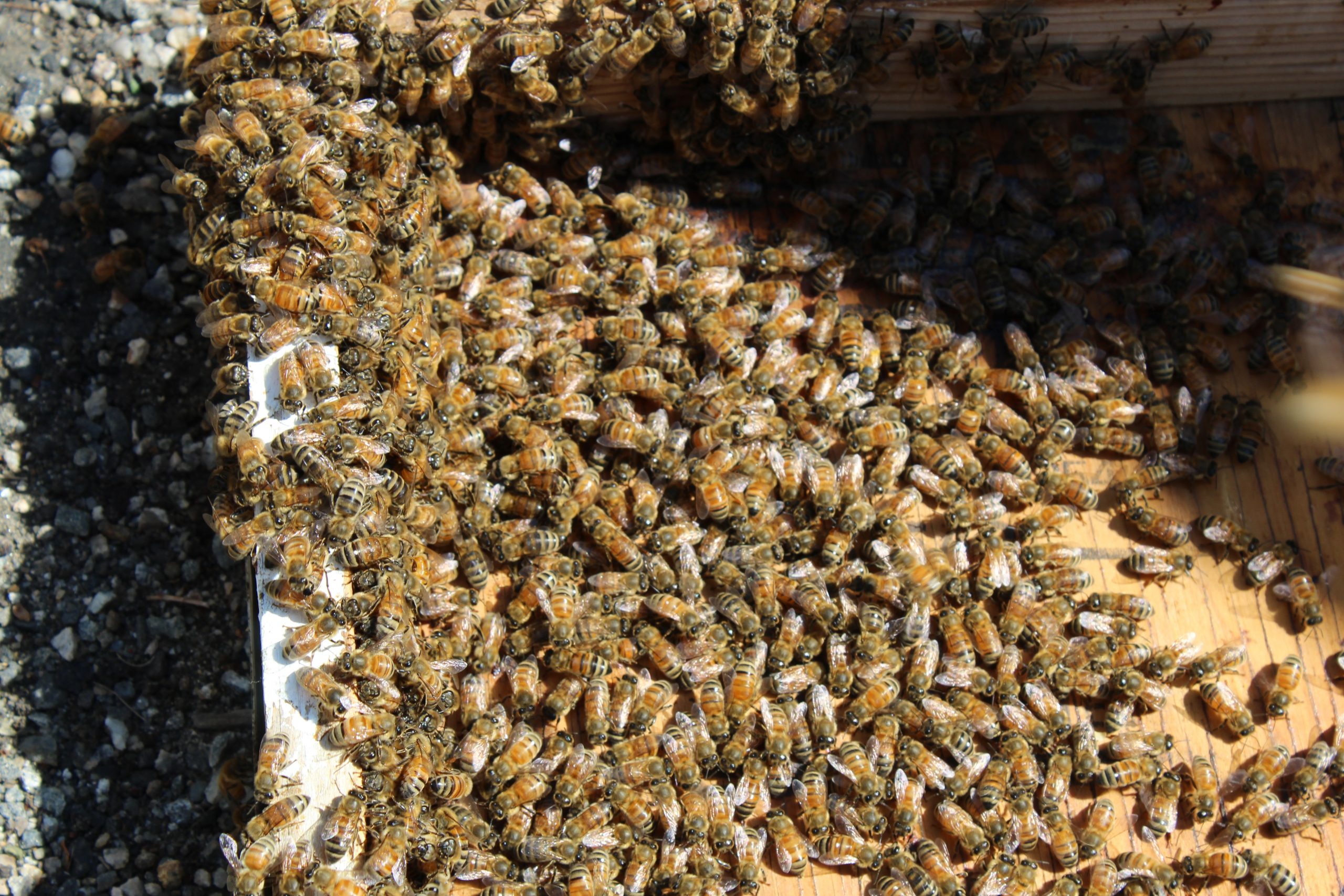
4. Big bachelor parties for honeybees and stingless bees: In social bees, males gather in groups called leks or swarms, these groups wait patiently for virgin queens to fly around so, they can mate. After mating, the males lose their genitalia and die, their purpose has been accomplished.
5. Male fireflies transform the night sky into a spectacular light show, each species performing its own signature pattern. Female fireflies, nature’s discerning critics, watch from below, responding only to the most impressive displays with their own species specific flash. But beware – some femme fatale fireflies have mastered the art of deception, mimicking other species’ signals to lure unsuspecting males into a deadly trap.
6. Deadly Romance Speaking of femme fatales, the praying mantis takes this concept to the extreme. In a fascinating display of evolutionary adaptation, male mantises continue their reproductive mission even after losing their heads to their mates, ensuring their genetic legacy lives on.
7. Dragonflies and damselflies perform their own unique courtship, creating heart-shaped formations in mid-air like skilled aerial acrobats.
8. Nature’s Most Dramatic Performers Meet the peacock jumping spider, the undisputed star of arthropod entertainment. These tiny performers put on a show that would make Broadway jealous, complete with vibrant fan displays and choreographed leg movements. Their iridescent abdomens unfurl like living jewelry, while specialized leg tufts wave like natural pom-poms in a mesmerizing dance routine.
9. The Spider’s Web of Romance: The world of spider courtship is remarkably diverse. Wolf spiders and tarantulas moonlight as percussion artists, drumming out species-specific love songs by tapping their legs and abdomens on various surfaces.
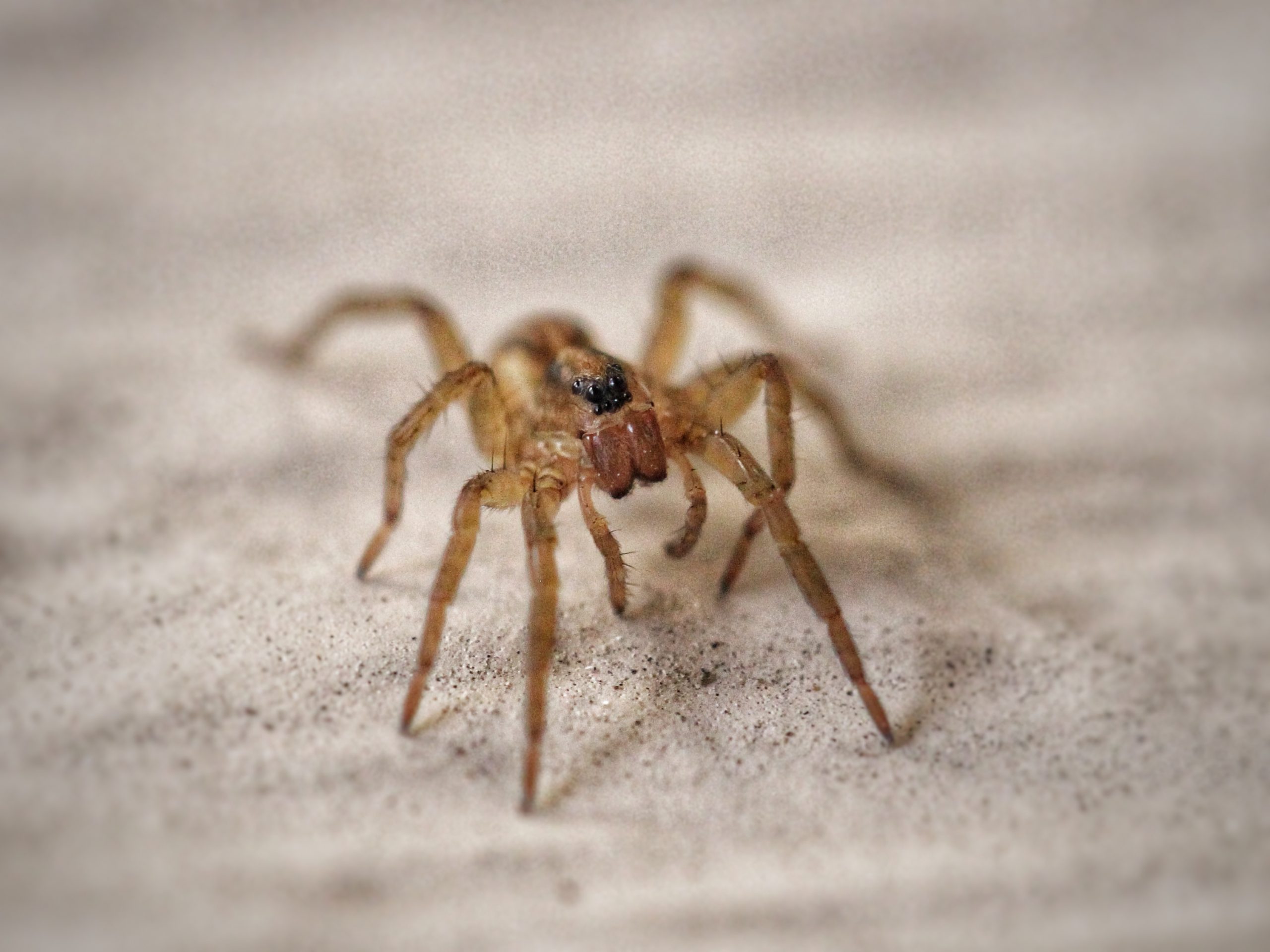
10. Male jumping spiders must perform an intricate zig-zag dance while waving their front legs in specific patterns. If they make even one wrong move in their choreography, the female might reject them – or worse, decide they look more like prey than a potential mate! It’s like having to perform a perfect tango while your dance partner decides whether to kiss you or eat you!
11. Nature’s Gift-Giving Specialists: The male nursery web spider knows the way to a female’s heart is through thoughtful gift-giving. These eight-legged romantics present carefully wrapped insect packages to potential mates. The stakes? Nothing less than life or death – forget the gift, and you might become dinner instead of winning a date.
12. Dance Flies’ Dating Innovation: These innovative insects have developed their own version of luxury gift-giving. Males carefully wrap smaller insects in silklike packages, presenting them to potential mates like tiny, natural jewelry boxes. Some creative males have even developed a clever workaround – presenting beautifully wrapped empty packages, nature’s version of style over substance.
13. Male balloon flies take “dinner date” to another level: they catch prey insects and wrap them in silk balloons that get bigger and more elaborate with each wrapping. The bigger the balloon, the more interested the female becomes. Some males even create intricate chains of multiple balloons, like an insect version of a fancy-tasting menu!
14. Nature’s Ultimate Multi-Talented Suitor: The rhinoceros beetle embodies the perfect balance of strength and artistry. By day, these impressive insects engage in spectacular jousting tournaments, using their horns to lift rivals from tree branches in feats of strength. As night falls, they transform into talented musicians, creating unique songs by playing their own bodies like instruments. Each performance is as unique as the beetle himself, with larger males producing deeper, more resonant serenades.
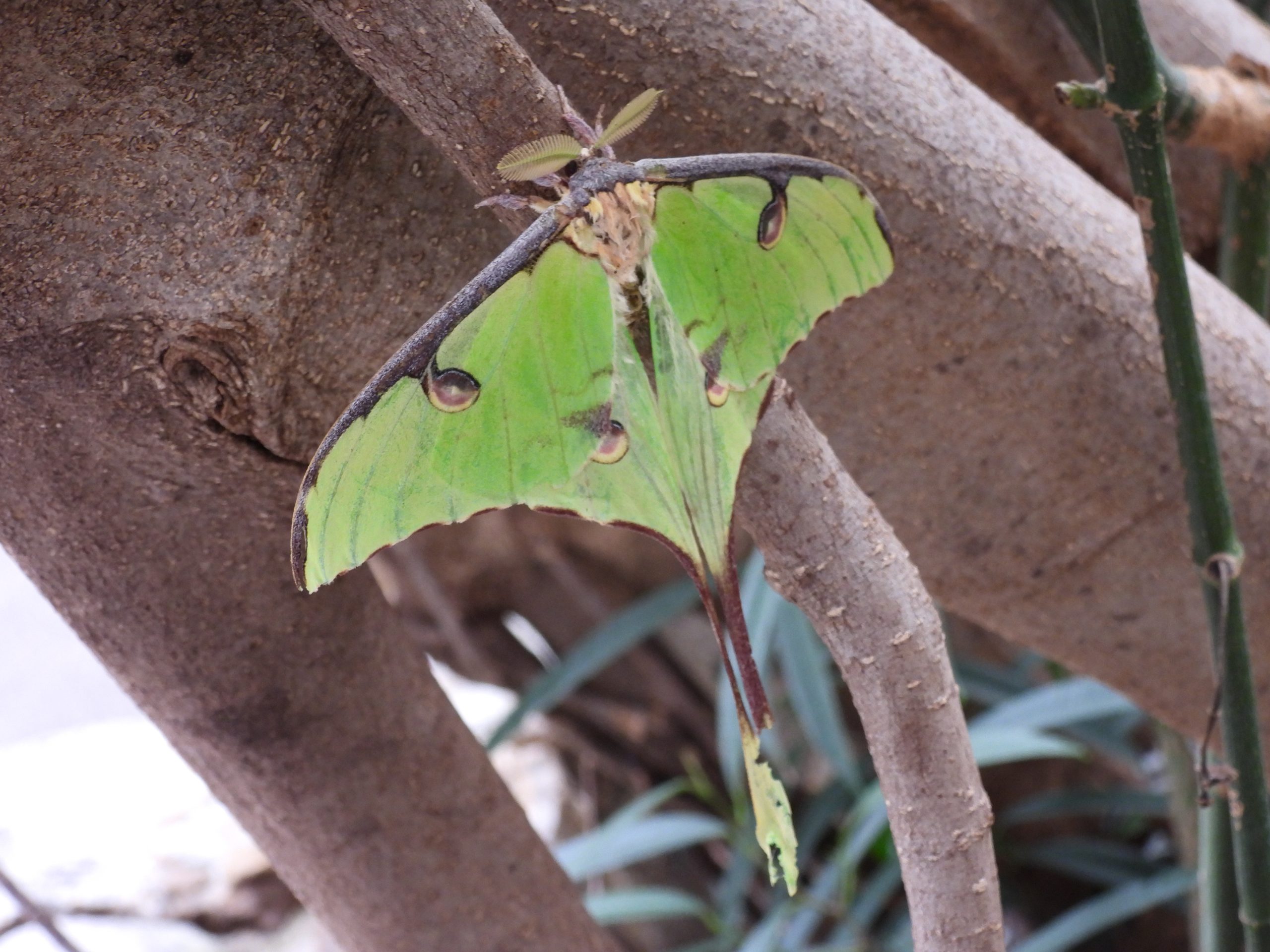
15. Long-Distance Love Affairs: Male moths are the ultimate long-distance romantics, capable of detecting a potential mate’s perfume from miles away. Their antennae serve as sophisticated chemical receptors, allowing them to navigate vast distances in pursuit of love. Once united with their potential partner, they engage in elaborate courtship dances and produce their own aromatic responses, sometimes even employing special techniques to ensure their mate’s fidelity.
16. Nature’s Symphony: The insect world is full of talented musicians. Male crickets are nature’s virtuosos, each species composing its unique symphony. Female crickets act as sophisticated talent scouts, able to assess everything from physical fitness to genetic quality through these acoustic performances.
17. Meanwhile, Male treehoppers take their musical pursuits to the next level, carefully selecting plants with the best acoustic properties for their vibrating serenades.
18. The Patient Romantics In a world of speed dating, snails remind us that true love is worth waiting for. These unhurried romantics engage in hours-long courtship dances, complete with ethereal blue-green bioluminescent displays and the exchange of crystalline love darts, proving that sometimes the most spectacular romances unfold at nature’s own perfect pace.
High in the mountains of central Mexico, a quiet transformation is taking place that is giving Monarch butterflies a fighting chance.
Between July and September 2025, Butterfly Pavilion, in collaboration with the Government of Mexico and local community partners, planted 100,000 native Oyamel fir trees across 32 reforestation sites in the Monarch Butterfly Biosphere Reserve. These newly restored forests will serve as safe winter havens for millions of Monarchs completing their incredible 3,000-mile migration from Canada and the northern United States.
“This reforestation marks a historic milestone for Monarch conservation,” says Shiran Hershcovich, Lepidopterist Senior Manager at Butterfly Pavilion. “This large-scale effort has united communities, scientists, and governments across borders to protect one of nature’s most extraordinary migrations. Every tree planted represents a promise to the Monarchs and to future generations.”

The Monarch’s epic journey is one of the world’s great natural wonders, and one of its most fragile. In just 30 years, Monarch populations have declined by nearly 80 percent due to climate change, deforestation, and habitat loss. Mexico’s Oyamel fir forests, which once covered vast mountain ranges, now remain on less than five percent of their original range. Butterfly Pavilion’s reforestation project, Preservation of Critical Overwintering Habitat for the Migratory Monarch Butterfly in Central Mexico, was made possible through a start-up grant from the Association of Zoos and Aquariums Conservation Grant Fund, additional foundation and individual supporters, and implemented through collaboration with the Consulate General of Mexico in Denver, the Mexican Agency for International Development Cooperation, the Secretariat of Environment and Natural Resources, the National Commission of Protected Natural Areas, and the essential work of the surrounding communities.
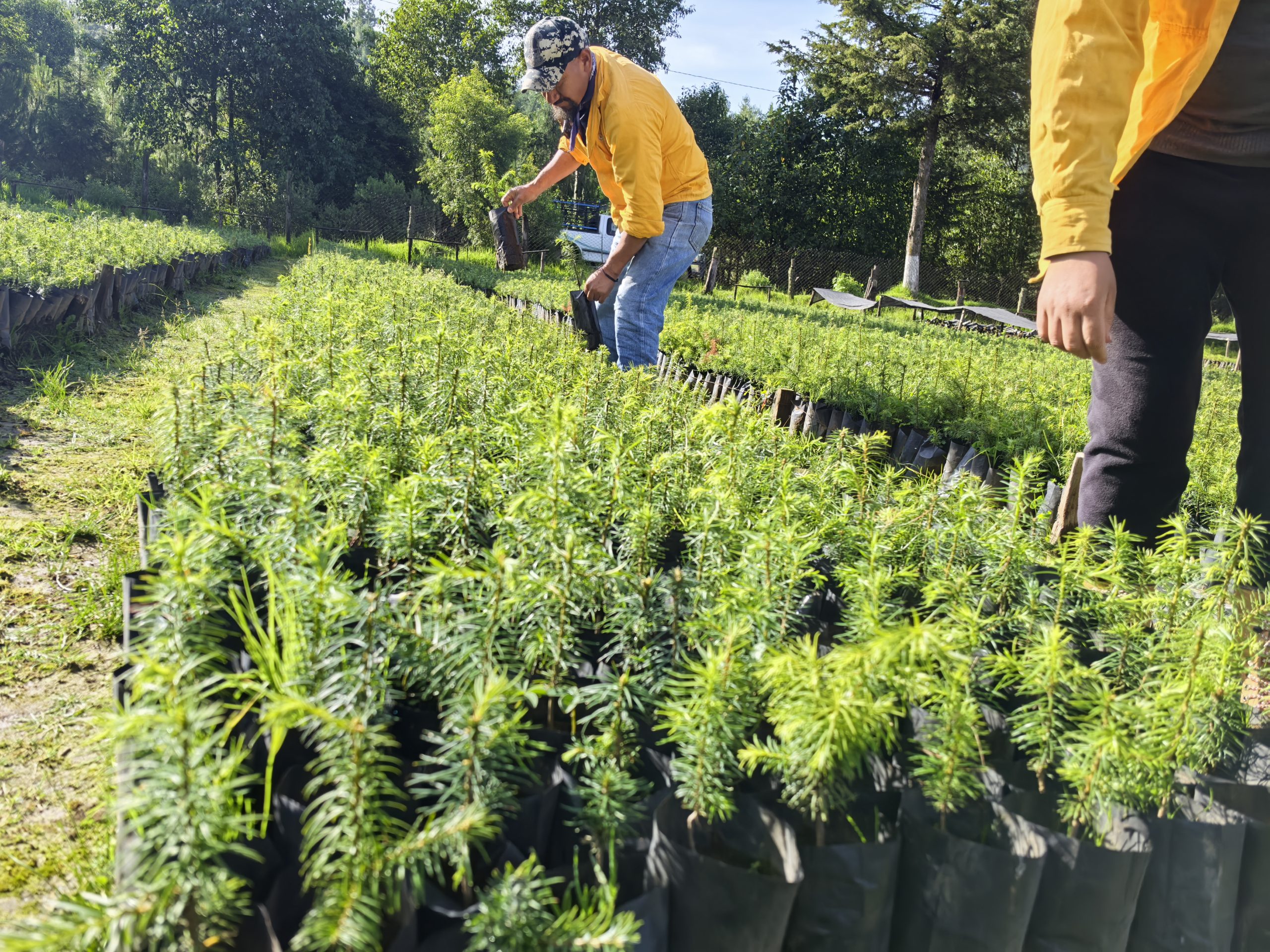
Working alongside the local nonprofit Alternare and community landholders from six ejidos, teams replanted degraded forests in the Sierra El Campanario and Sierra Chincua sanctuaries. The effort also included the creation of 20 native pollinator gardens at nearby schools, inspiring young people to become stewards of the Monarch migration.
“Standing in these restored forests today, it’s clear that our collective efforts matter,” Hershcovich adds. “Each Oyamel fir we planted strengthens the delicate chain that keeps the Monarch migration alive. This work gives hope that with continued collaboration, this remarkable journey will endure.”The Monarch migration connects us all, and thanks to these restored forests, future generations will continue to witness this breathtaking symbol of resilience and renewal. Learn more about Butterfly Pavilion’s global conservation work at butterflies.org/monarch-butterfly-biosphere-reserve.
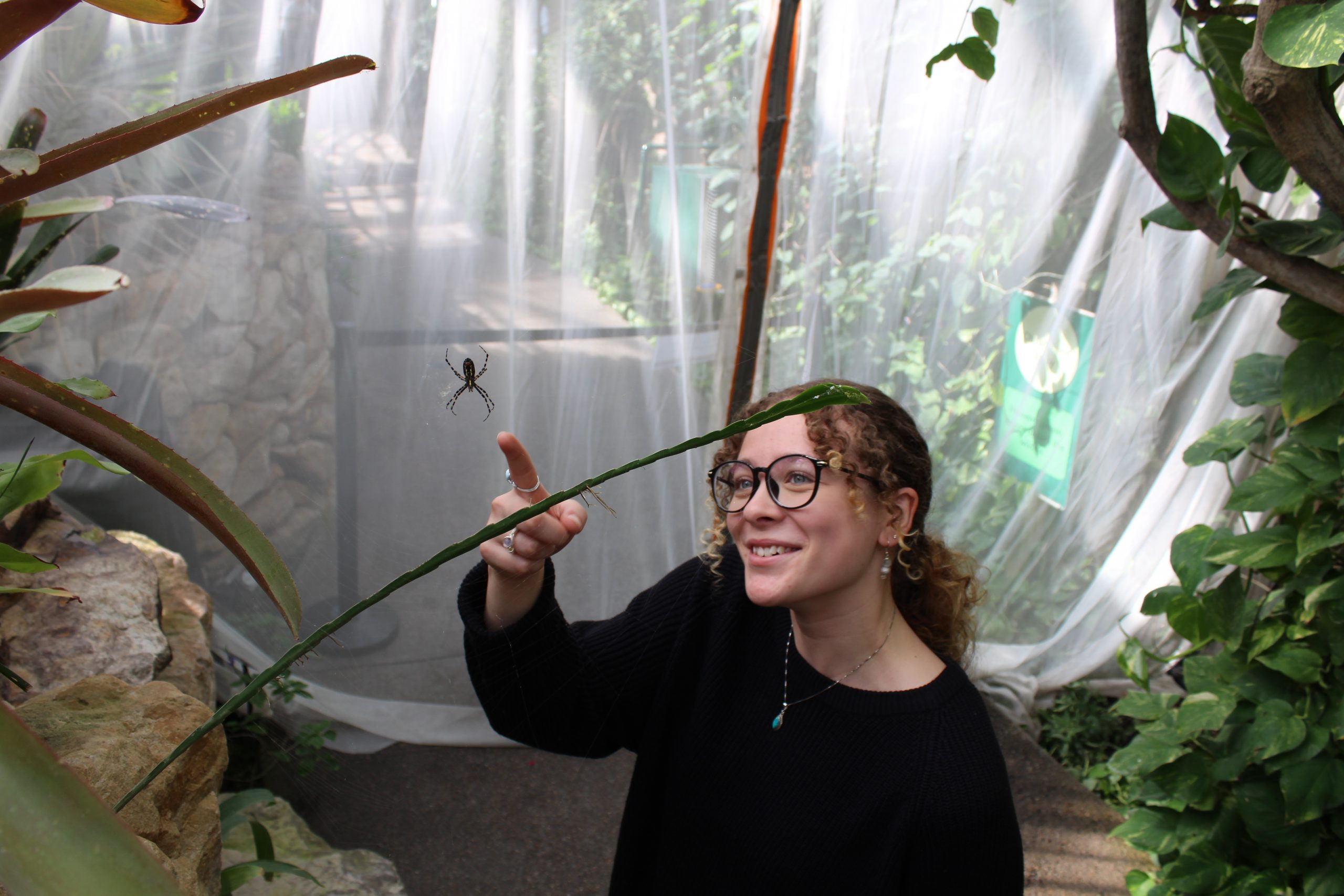
Orb weavers are one of the most common types of spiders, most famous for their well-known circular webs. Shy, harmless, and widespread, many different species of orb weavers are important for reducing local pest populations. They also often consume their own webs, making them remarkably tidy. From Asia to the Americas, many orb weavers live for about one year and reproduce when females lay eggs, sometimes up to 3,000 at once. Although their webs follow the same shape, orb weavers do not have a uniform look among species; the Spiny Crab Orb Weaver gets its name from its unique crab-like appearance, and often has contrasting yellow, red, black, or white spots and spines that help provide camouflage as they hide in the center of their webs. Although the main diet for orb weavers consists of smaller insects, the Yellow Garden Spider and Golden Orb Weaver have been known to eat small reptiles that get ensnared in their webs. Both species are also prone to parasitic wasps, which lay eggs in the spider so that larvae have a food source when they hatch.
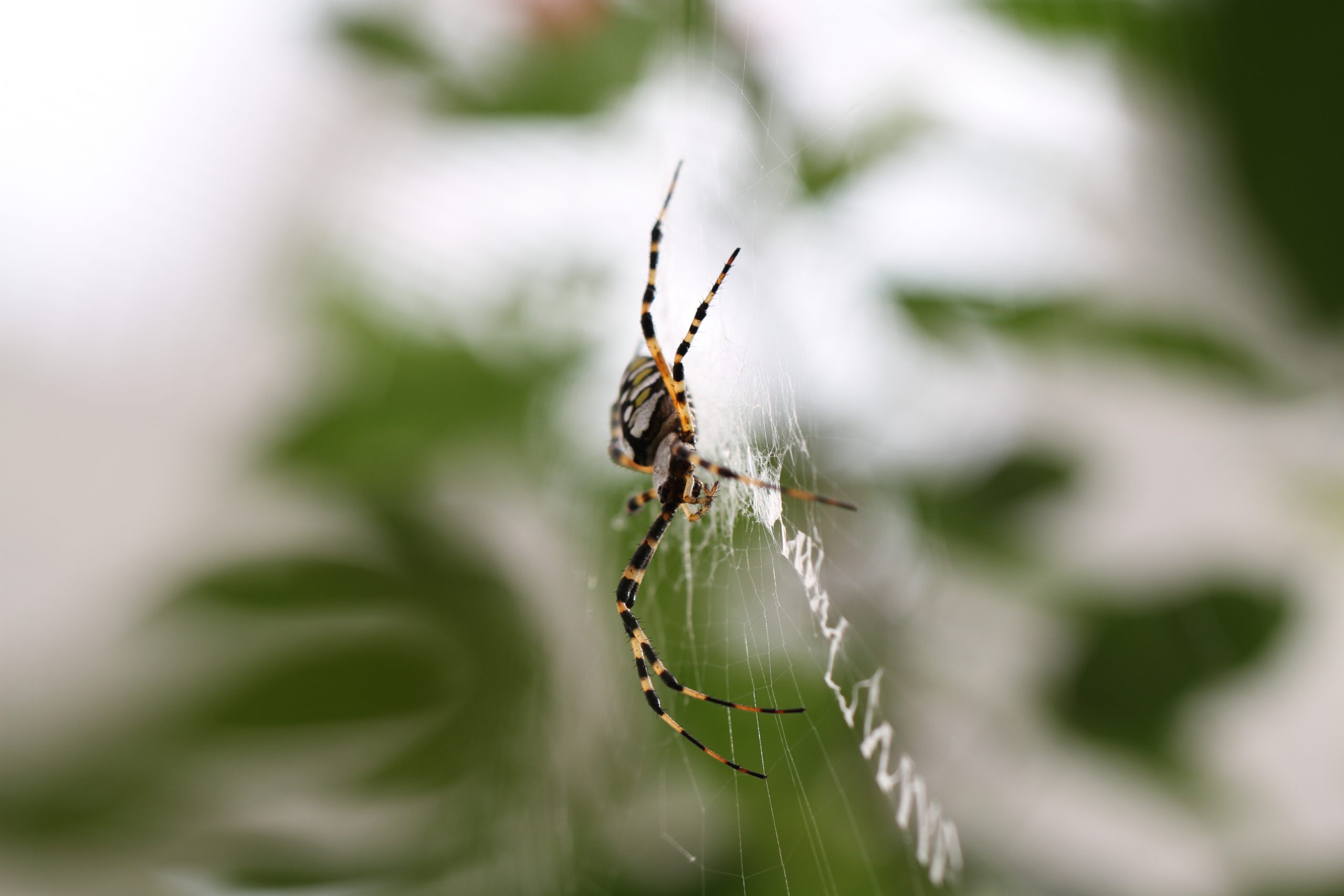
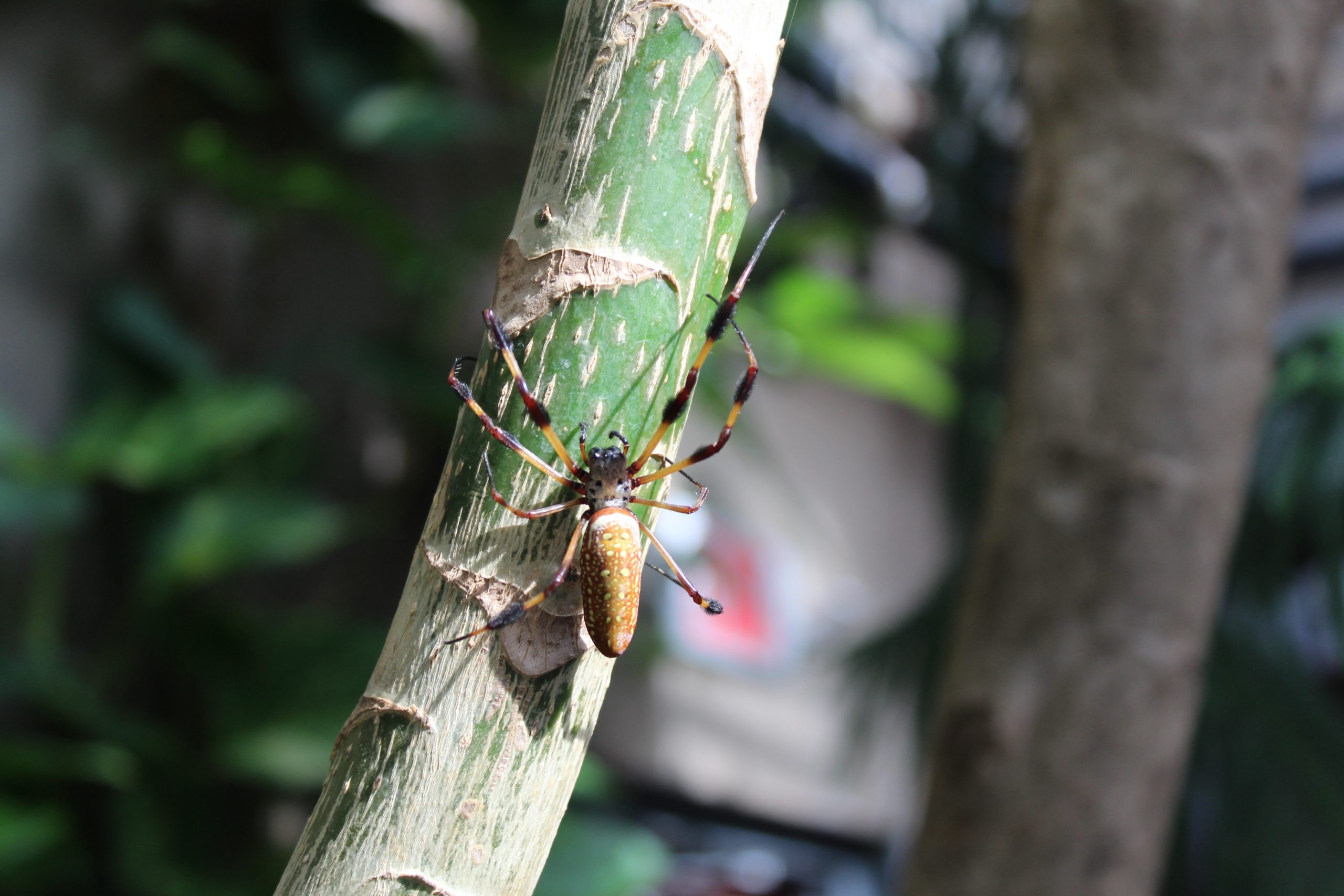
One thing that unites many species of orb weaver is sexual dimorphism, where the males are significantly smaller than the females. In the case of Giant Golden Orb Weavers, it has been theorized that female gigantism or male dwarfism are responsible for such a drastic difference. Most species of orb weaver are also not aggressive, which makes them a great source of pest control for forests, fields, and gardens worldwide.
As a celebration of these amazing creatures, and as part of Butterfly Pavilion’s Spiders Around the World Exhibition, visitors can wander among free-roaming orb weavers and marvel at their creations in showstopping Spider Zone. An exotic enclosure filled with hundreds of free-roaming orb weavers, Spider Zone gives guests the opportunity to get very close to the brilliance of orb weavers. However, these spiders have jobs far beyond just educational display. After Spider Zone closes for the season, all the specimens will be sent to the Natural History Museum of Los Angeles County to be studied.
Orb weavers play a crucial role in their ecosystems, and parts of the human world have taken advantage of their incredible traits. The Joro Spider, for example, makes its webs with yellow silk, which has been used in Japan for making textiles like fishnets. Golden Orb Weaver silk has also been used for human innovation; it has been tested as a potential way for severed nerve cells within human bodies to connect. Orb weavers are essential to their ecosystems. As invertebrate numbers decline, it becomes important to learn about and protect these animals. Spider Zone is just one way that Butterfly Pavilion commits to research, conservation, and education aimed at preserving the invertebrates that share the world with us. Written by Rachel Zing
Four Facts about Butterfly Pavilion’s Butterflies
Butterfly Pavilion has been home to thousands of butterflies and moths since opening our doors 30 years ago! Over the years, we’ve shared their wonders with countless visitors, but there’s always more to discover. Here are four things you may not know about our Wings of the Tropics butterfly conservatory, so you can arrive next time with even more curiosity.
1. Chrysalids vs. Cocoons
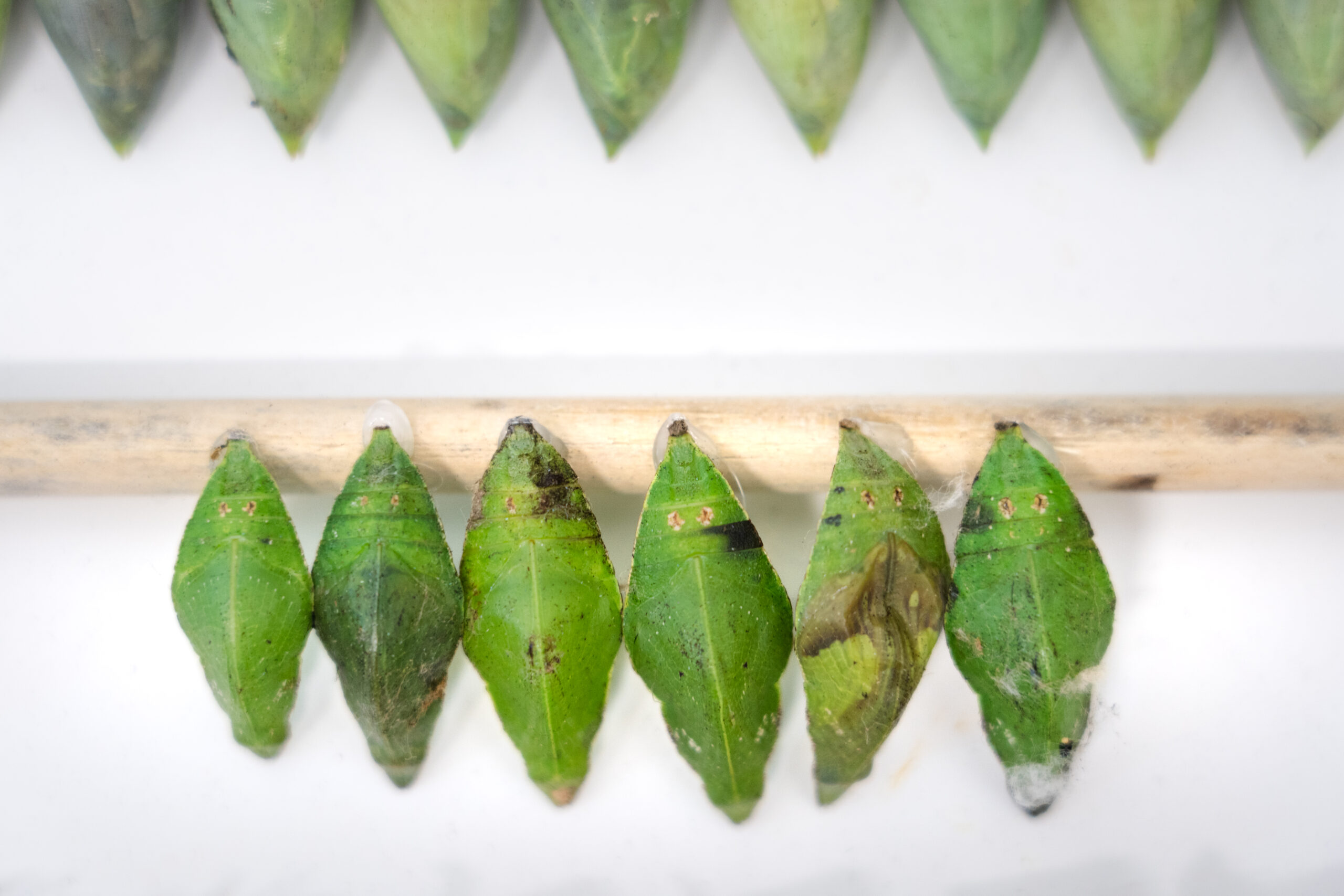
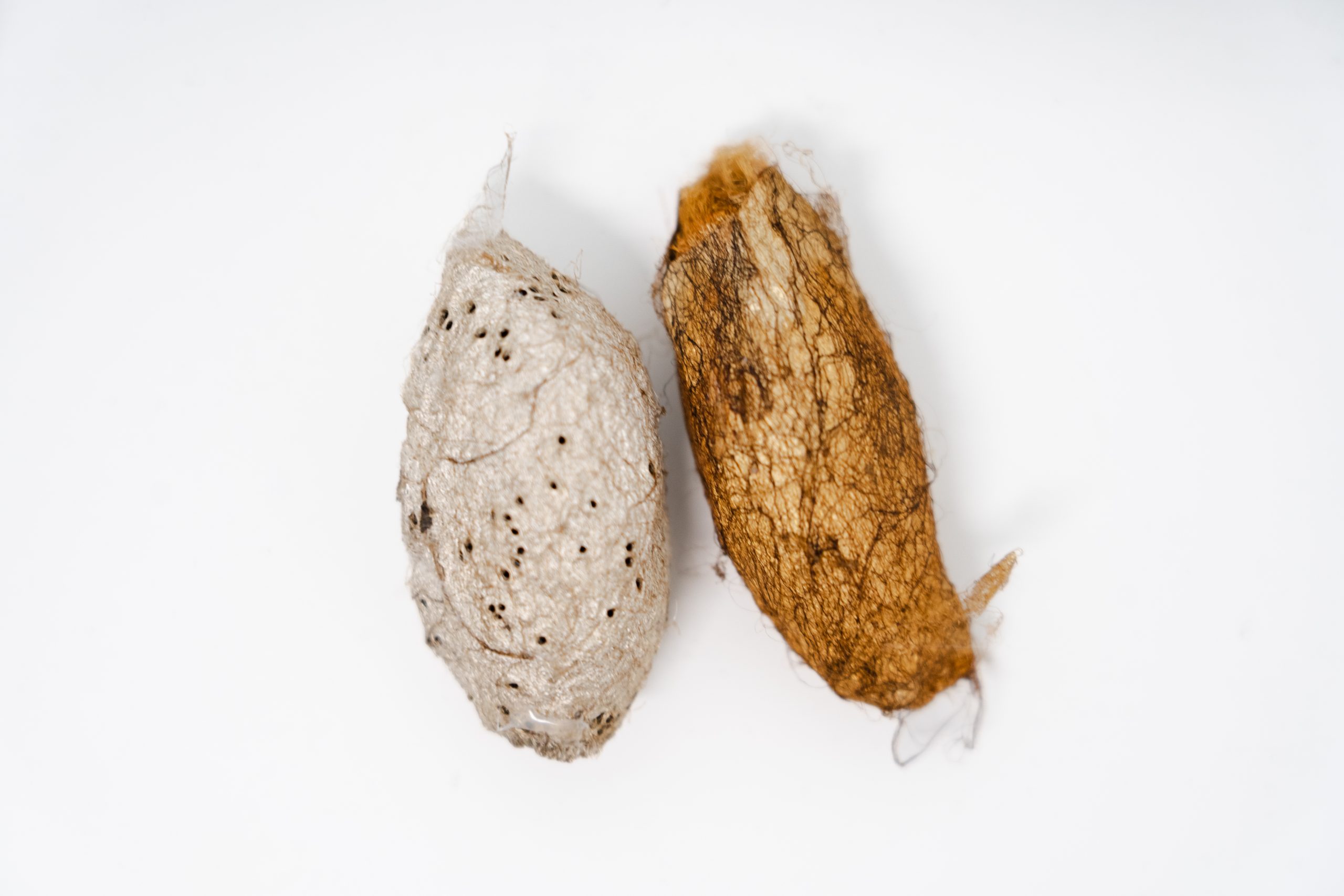
They’re not the same thing! Both are part of the amazing transformation from caterpillar to adult, but chrysalids are the hardened outer cases that protect butterflies during their pupal stage while cocoons are silk coverings spun by many (but not all) moth caterpillars to protect the pupa inside. Butterflies don’t spin anything around themselves; the chrysalis is their pupal “shell”, and some moths use leaves or soil instead of silk. At Butterfly Pavilion, the chrysalids and cocoons you see in our Chrysalis Chamber are real, and you can watch butterflies and moths emerge right in front of you when you visit our zoo.
2. Touching Butterflies Can Be Harmful
Even a light touch can rub off the delicate scales on a butterfly’s wings and can confuse them with our scents and oils. Butterfly wings are composed of thousands of tiny scales that form the pattern and colors that you see. But those scales aren’t just for looks; they help butterflies fly, stay camouflaged, attract mates, and even deter predators. To keep them safe and healthy, please enjoy butterflies with your eyes, not your hands when visiting or out in nature.
3. We Don’t Raise our Butterflies at Butterfly Pavilion
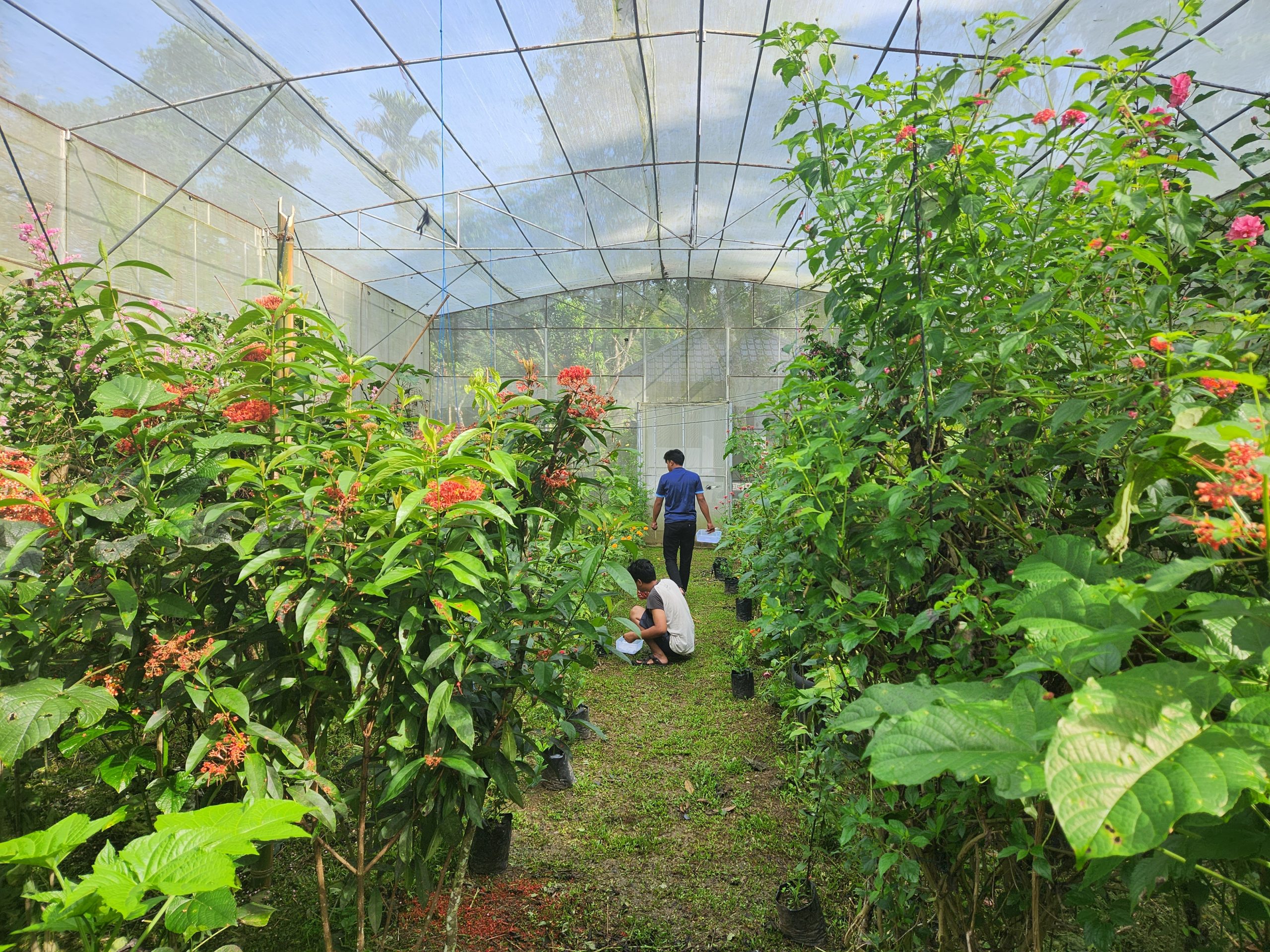
Caterpillars need large amounts of host plants to eat and grow and Butterfly Pavilion doesn’t have the space to provide that. Instead, we partner with sustainable butterfly farms around the world. These farms raise caterpillars and send us chrysalids and cocoons, which we care for until they emerge. Some of these butterflies are even raised in Sumatra, Indonesia at Butterfly Pavilion’s Ketambe Butterfly Farm! To prevent butterfly breeding in our facility, we don’t plant host plants in Wings of the Tropics, so while butterflies may still mate, they won’t lay eggs in the conservatory.
4. We Have to Separate Some of our Moths
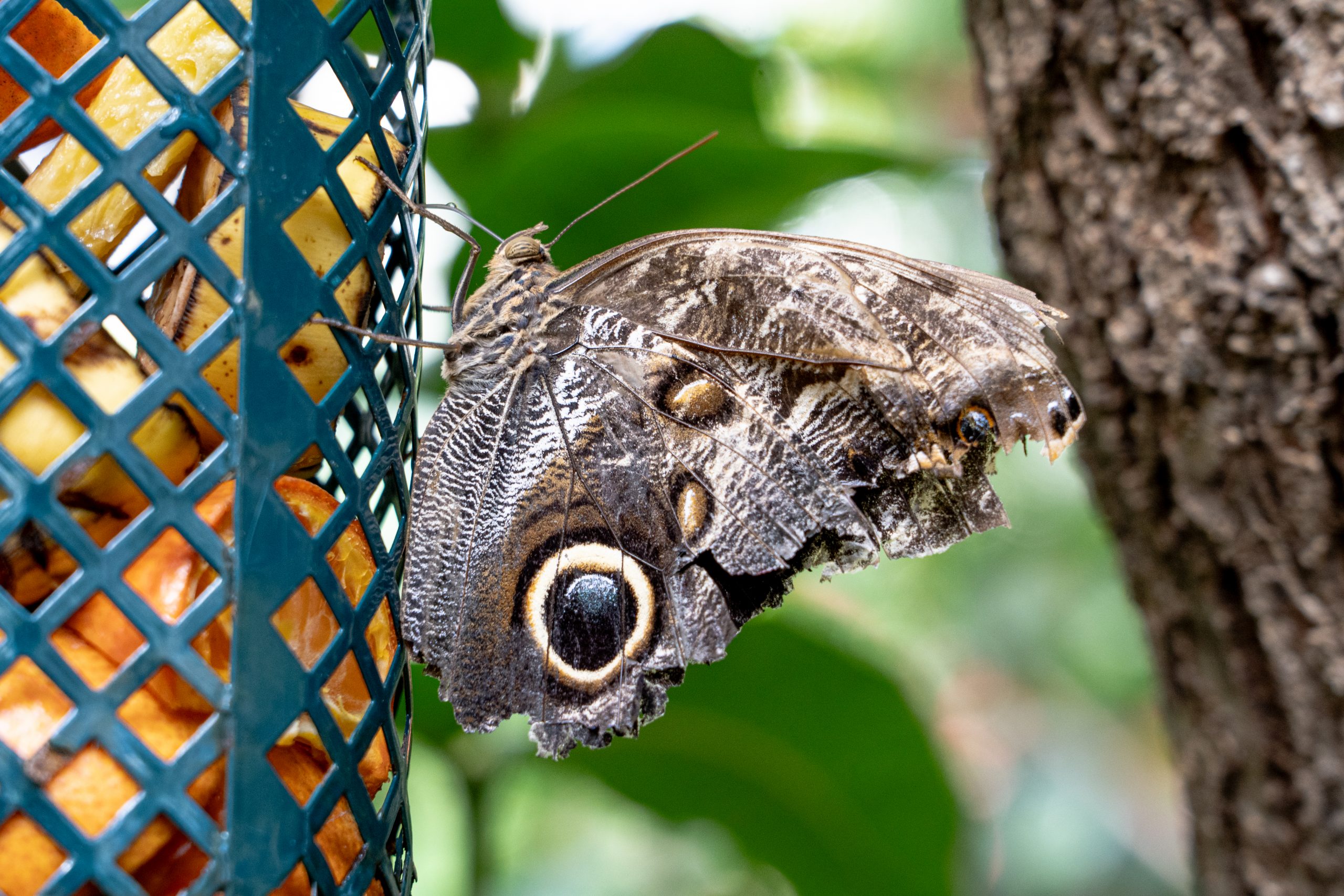
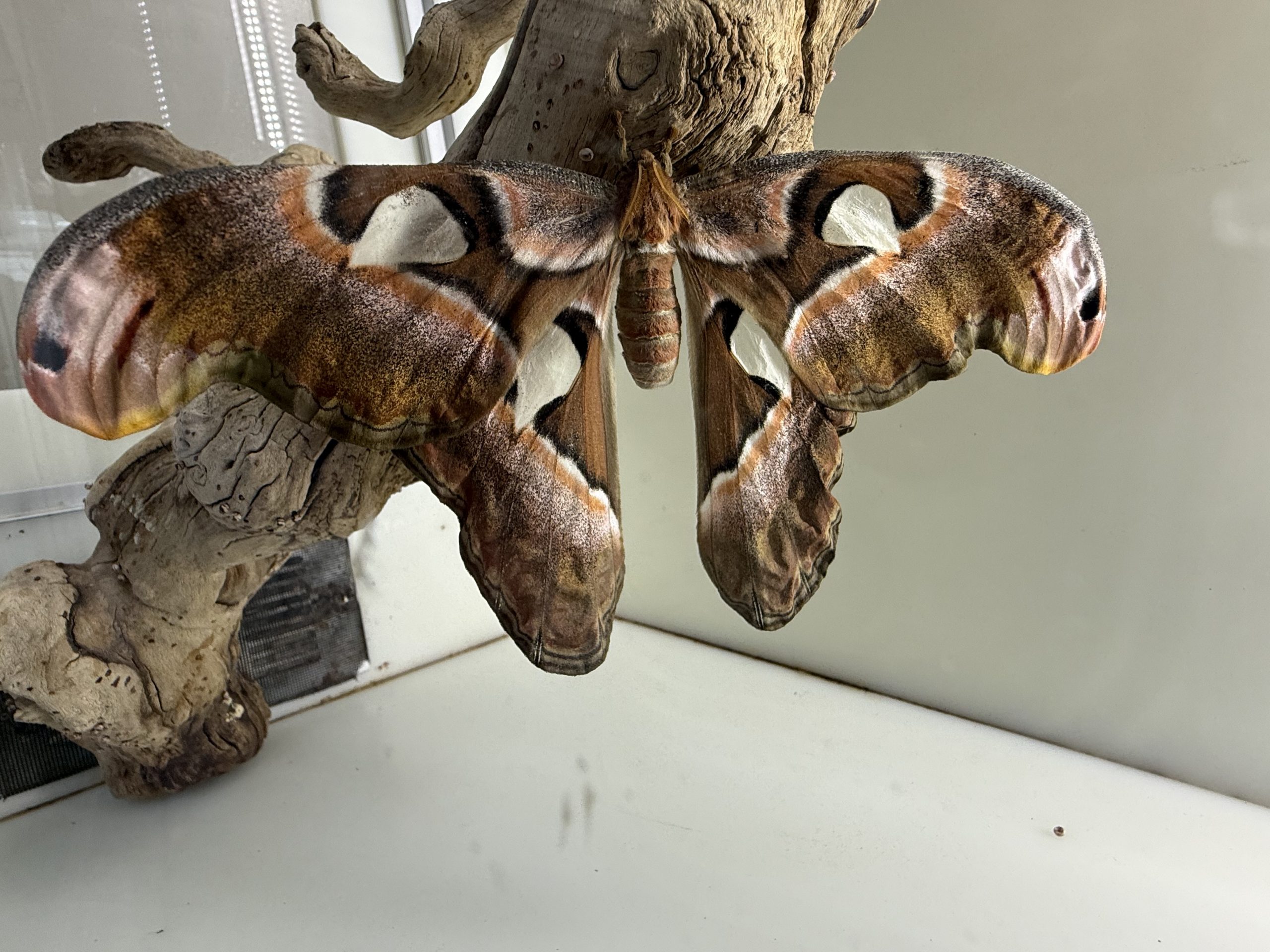
When you visit, you’ll find that some of our moths are in a separate area near the chrysalis chamber. Spectacular species like the Atlas moth don’t eat as adults; they don’t even have functional mouths! Instead, they survive on the energy stored as caterpillars and spend their short adult lives focused on reproduction. To prevent them from laying eggs in Wings of the Tropics, we keep these moths in a separate space.
Written by: Carter Chen