
We’re proud to announce that last week, Mongolian President Khaltmaagiin Battulga issued a decree awarding Butterfly Pavilion’s own Richard P. Reading, Ph.D., the high state decoration of Mongolia, the Order of the Polar Star, in recognition of his significant contributions to wildlife conservation, leadership, strengthening bilateral cooperation, and building the capacity of the next generation of Mongolian conservationists over the last 26 years.
 The Order of the Polar Star is the highest honor Mongolia can bestow upon a foreign citizen. Past recipients have included former U.S. President Barack Obama and the former U.S. Ambassador to Mongolia, Alphonso La Port.
Dr. Reading began working in 1994 as a consultant for the United Nations and has worked throughout the country on a wide range of species, from butterflies to wild Bactrian camels. Much of Rich’s work from 2000 to 2017 focused on conservation of Ikh Nart Nature Reserve Sitting on the northern edge of the Gobi Desert in Mongolia, Ikh Nart Nature Reserve was established to protect a fascinating area of rocky outcrops and a globally important population of argali sheep. Yet, the 160,000 acres of Ikh Nart protects much more. Because the reserve lies within the transition between steppe and desert habitats, it contains a relatively high diversity of plants and animals, including one of the last great temperate grassland systems in the world.
 The preservation of grasslands is essential for many reasons, including:
-
They provide an important ecosystem service as a carbon sink, taking carbon out of the air and storing it below the ground.
-
They are a genetic repository for many of the crops we depend on for food, such as wheat. When our crops suffer from diseases, scientists can go back to the source (grasslands) for answers on how to battle them.
-
Understanding how grasslands work is key to the management of ranches in the U.S., which helps ensure a reliable source of meat production.
Despite its importance, Ikh Nart remained no more than a “paper park” (one that existed only on paper, without any management) following its creation in 1996 due to resource constraints and lack of capacity. In 2000, Dr. Reading and a team of conservationists began work to transform Ikh Nart into a well-managed protected area that could serve as a model for other nature reserves and parks in Mongolia and elsewhere.

The team’s efforts resulted in several successes, including a significant decrease in threats such as poaching, illegal mining and over-grazing; effectively doubling the size of the protected area; establishing a zone that eliminated most livestock grazing; increased wildlife populations and expansion in their ranges; developed a steady stream of well-trained professionals, including rangers, park managers, researchers, and students to manage the park; and created strong support for the local economy, including the creation of women’s cooperatives and tourism to enhance livelihoods.
Currently, Dr. Reading and Butterfly Pavilion focus on conducting research on the ecology and population dynamics of several threatened species of native Mongolian Parnassius butterflies as a basis for developing a conservation program for these species working in close cooperation with Mongolian colleagues and graduate students from the Mongolian Academy of Sciences and Mongolia National University. He also led the effort to conduct a two-year assessment of invertebrate biodiversity in the Ikh Nart Nature Reserve, providing a sample of the collection to the reserve for their use and house the rest of the collection with the Mongolian Academy of Sciences. He is now working to write a guidebook for the most common invertebrate species of the reserve.


Congratulations, Dr. Reading, for this amazing recognition of your important, world-changing work!
If you would like to make a tax-deductible gift to support Dr. Reading and Butterfly Pavilion’s research and conservation efforts around the world, click here.
Programs you would help support include Dr. Richard Reading’s work toward the conservation of the Parnassius butterfly in Mongolia, especially population monitoring, habitat assessment and host plant identification, as well as the development of a butterfly farm in Sumatra, Indonesia, Butterfly Pavilion’s work on the Florida Reef Tract Rescue Project, and multiple breeding and monitoring programs.
About Butterfly Pavilion:
Butterfly Pavilion is the world’s only stand-alone, Association of Zoos and Aquariums-accredited invertebrate zoo dedicated to transforming the way people think about the small but mighty animals that are the hidden heroes of the animal kingdom. As the leader in invertebrate knowledge, inspiration and connection, and as a member institution of the Scientific and Cultural Facilities District, Butterfly Pavilion works to foster an appreciation of these critical animals by educating the public about the need to protect and care for threatened habitats globally, while conducting research for solutions in invertebrate conservation. Whether it is providing unique, hands-on learning experiences in our exhibits and educational programs, conducting new research that sets the standard for zoos across the country or building innovative solutions for species and habitat conservation in countries around the world, Butterfly Pavilion is leading the way in ensuring invertebrates are protected for the future. Learn more at butterflies.local.
Invertebrate vs. Vertebrate With Examples
Invertebrate or Vertebrate?
Approximately 97% of animals on our planet are invertebrates, or animals with no backbone. When we think of “animals,” we often think of vertebrates (animals with backbones) like lions, tigers, bears and, of course, humans. However, given their large numbers and important functions in our ecosystem, learning how to identify them and their roles is critical to ensuring a sustainable future for our world. In this post, we’ll lay out what makes an animal an invertebrate, how they differ from vertebrates and how they ensure the survival of their vertebrate neighbors.
Invertebrates are animals without spines, while vertebrates have a spine. Invertebrates are sometimes (mistakenly) thought of as primitive because of their lack of developed organs. Their simple internal systems include respiratory systems such as gills or trachea and they often use an open circulatory system to pump their blood. As invertebrates lack an internal skeletal structure, they sometimes have an external skeleton that protects their soft bodies called an “exoskeleton.” In general, invertebrate success often comes from their ability to reproduce extremely quickly, unlike many vertebrates who take years to become fully grown.
Vertebrate animals, on the other hand, have a spine that develops from a notochord they possess as an embryo. They also have defined internal systems like complex respiratory structures, a closed circulatory system and sensory organs that build the nervous system. Vertebrates tend to be larger than invertebrates, thanks to their backbone, which allows their bodies to grow larger and move faster than many invertebrates.
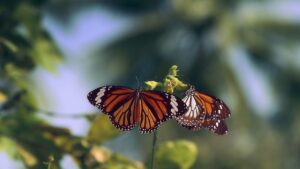
Invertebrate Importance to Vertebrates
Invertebrates can be found in every ecosystem on earth, spanning from rainforests and oceans to deserts and polar regions. Ranging in size from tiny mites to giant squids, the look of invertebrates differs greatly, often depending on their environment. There are roughly 1.25 million invertebrate species that have already been discovered, but, scientists believe that there could be as many as 30 million invertebrate species that have yet to be found.
Comparatively, there are slightly more than 66,000 vertebrate species that have been discovered. That number will continue to grow as more are found, but invertebrates will likely still dominate by a wide margin. Like invertebrates, vertebrates span the ecosystems of all 7 continents. The unique traits of some vertebrates, like mammals, allow them to adapt to the cold by growing thick fur. The quicker motion of vertebrates also helps in cases of migration and running from predators. Invertebrates in similar situations must find other (often slower) ways to adjust to their environments.
Like vertebrates, invertebrates play important roles in our ecosystem, though invertebrates are often overlooked. Pollinators such as bees, butterflies and beetles aid in the reproduction of 80% of the world’s flowers and without them our food system would collapse. The plants pollinated by invertebrates are responsible for textiles like cotton or hemp cloth. Invertebrates are also fantastic soil aerators, which means they keep our soil healthy and full of nutrients for our crops. Vertebrates such as cows, horses, bears and other herbivores (plant eaters) and omnivores (meat and plant eaters) are also dependent on the actions of invertebrate pollinators, given that sources of food come directly from plants those pollinators visit.
Explore Butterfly Pavilion’s invertebrate research and conservation efforts.
Not only do invertebrates help us grow delicious food, but like vertebrates, they can also be delicious food. After all, if you choose to be an omnivore (eating meat and plants), you may not only consume hamburgers, BBQ chicken and ham along with your fruits and veggies – you probably eat invertebrates as well. Crabs, lobsters, octopus and shrimp are all popular invertebrate seafood choices. In many Asian and African countries, insects are one of the main sources of protein, with crickets, grasshoppers, maggots and tarantulas on the menu. While you might be saying “yuck!”, know that insects are often a more environmentally-conscious protein choice when compared with animal protein like beef, chicken or park, which are commonly consumed in the United States. Insects require less food, water and land to grow and their populations grow at a faster rate. Some invertebrates, like ants, don’t even need to mate to produce offspring and it often takes only weeks for invertebrates to reach their full size. By contrast, most vertebrates must mate, give birth and go through a years-long growth process to reach maturity.
Invertebrates also ensure biological control, which means they control pests in a natural way. For example, spiders are beneficial in keeping mosquitos, flies and other pesky insect populations down. Without them, insect populations would rise, creating an imbalance in the ecosystem, and undoubtedly frustration for vertebrates.
In sum, invertebrates are critical to our way of life!
Essential, but not Invincible
Many invertebrate species are in danger due to climate change, habitat loss, parasites, pathogens and other challenges. But you have the power to make small changes that can protect the spineless creatures that carry the weight of our world. Buy organic, don’t use harmful pesticides, reduce single-use plastic, plant pollinator-friendly gardens, participate in citizen science projects in your community, and more.
Access free virtual learning programs that can expand your invertebrate knowledge and give you step-by-step instructions on how you can take action for conservation.
Examples of Invertebrates & Vertebrates
Test Yourself: Invertebrate or Not?
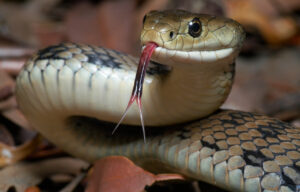
1. Snake
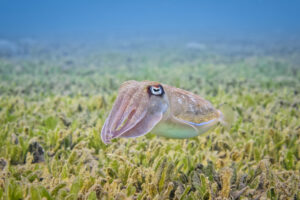
2. Cuttlefish
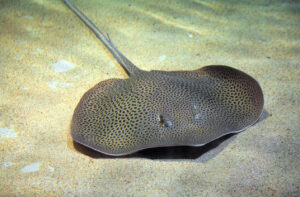
3. Stingray
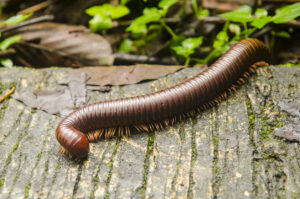
4. Millipede
Answers:
- Vertebrate. Though very flexible, snakes have many vertebrae (small bones that form the backbone).
- Invertebrate. This adorable cuttlefish is closely related to squids.
- Vertebrate. Though it is similar in shape to a horseshoe crab, the stingray does indeed have a backbone.
- Invertebrate. With two legs per body segment, the millipede belongs in the myriapoda (many legged) subphylum.
Sources
CurrentResults.com, Liz Osborn. “Number of Species Identified on Earth.” Number of Species on Earth – Current Results, www.currentresults.com/Environment-Facts/Plants-Animals/number-species.php.
“Invertebrates Pictures & Facts.” Animal Encyclopedia, National Geographic, 2012, www.nationalgeographic.com/animals/invertebrates/.
“Mantis Shrimp Eye Could Improve High-Definition CDs, DVDs.” ScienceDaily, ScienceDaily, 24 June 2011, www.sciencedaily.com/releases/2011/06/110624111944.htm.
“Pollinators.” U.S. Forest Service, U.S. Department of Agriculture, www.fs.fed.us/wildflowers/pollinators/.
Radford, Tim. “Tarantula Venom May Save Lives.” The Guardian, Guardian News and Media, 4 Jan. 2001, www.theguardian.com/science/2001/jan/04/uknews.
By Ellen Rigell, Educator at Butterfly Pavilion
If you’ve ever enjoyed a rich tomato sauce on a pizza, appreciated a glorious field of wildflowers, or indulged in a delectable mouthful of chocolate, you’ve benefited from pollinators! These animals provide a key ecosystem service by facilitating plant reproduction and, in turn, supporting food production around the world. To further understand the importance of pollinators, we’ll uncover what a pollinator is, how it impacts our ecosystems and communities and take a closer look at the pollinators in our own backyard.
A pollinator is an animal that transfers pollen between the anther of one flower to the stigma of another, helping the plant produce seeds. These animals (including species of bees, butterflies, moths, beetles, ants, bats, birds, and even some small mammals) visit the flowers to feed on the nectar or pollen, and consequently fertilize the plant.
Pollination benefits both the plant and the animal, making these relationships a great example of mutualistic symbiosis – a relationship in which each species has a net benefit. Pollination happens when a pollinating animal visits a flower to seek out the food rewards: protein-rich pollen and carbohydrate-rich nectar [2]. In the process, the pollinator collects some of the pollen grains on its body (e.g. the bee’s pollen basket and the hummingbird’s bill), which then rubs off on the stigma of the other flowers it visits. After this transfer, the flower is fertilized and can develop the fruit that will protect and disseminate the seeds. The process of pollination is key to both sustaining the food source for the pollinators while also facilitating the reproduction of the majority of the world’s flowering plants. Plants and pollinators need each other to survive!
In fact, the relationships between plants and their pollinators present some of the most stunning examples of coevolution on earth. While some pollinators are generalists and can visit a multitude of different flowers, many pollinators have developed a preference for types of flowers, and vice versa. To start, most pollinators have their favorite color of flower: bees are most attracted to blue, butterflies to pink and red, flies to yellow and white, beetles and bats to white, and hummingbirds to red. Additionally, the flower’s phenology, shape, and food reward offering can all influence what kinds of pollinators visit [3]. For example, bees can see ultraviolet light and are more adept at perceiving bilateral symmetry. Therefore flowers that hope to attract bees will likely take advantage of these visual cues to draw the bee toward the flower’s center [2].
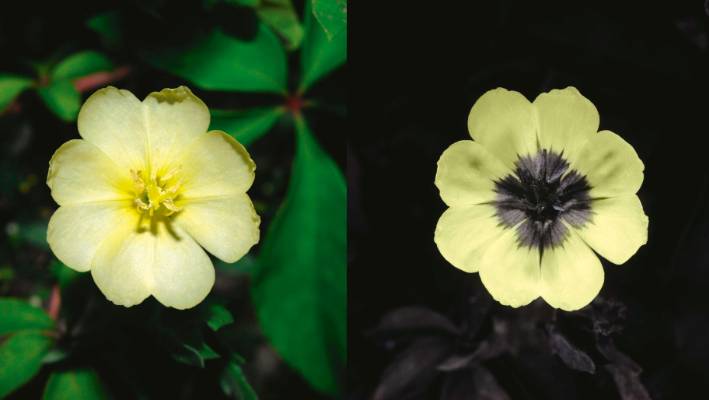
Compare the same flower under natural and ultraviolet light to glimpse how bees see the world.
Plants and their affiliated pollinators have influenced each others’ development dramatically, often resulting in specialization that can even trend toward an exclusive relationship. A favorite example of this is Madagascar’s Star Orchid (Angraecum sesquipedale) which has a foot-long nectar tube that can only be pollinated by a species of hawk moth (Xanthopan morganii praedicta) with its 8-14 inch long proboscis. The exquisite Star Orchid-Hawk Moth relationship even helped Darwin support his theory of evolution [4]!
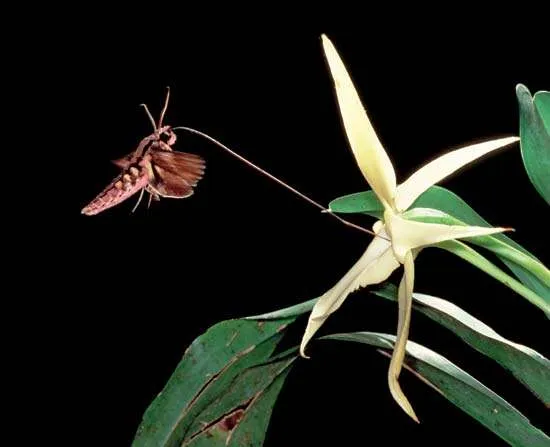
Hawk moth pollinating the Star Orchid
Why are pollinators important?
There are approximately 200,000 animal species that act as pollinators worldwide, and 99.5% of these are invertebrates (animals without spines). Animal pollinators are responsible for the pollination of an estimated 87.5% of the world’s flowering plants [1]. All across the globe, these tiny critters provide one of the most critical ecosystem services, keeping both our culinary experiences and the world’s habitats thriving.
The status of pollinator populations has huge implications for agriculture. While some crops, like wheat and corn, are wind pollinated and some others reproduce vegetatively like potatoes, a whopping 35% of crop production relies on animal pollinators [6]. That means we have pollinators to thank for one in every three bites of food we eat! Because so many of the world’s fruits, vegetables, nuts, and seeds rely on pollinators, that 35% encompasses a huge diversity of flavors and nutrients [5,6]. To further put this into perspective, pollinators add upwards of $200 billion to the world’s economy [7,8]. The immensity of this service is being realized in Brazil where increased insecticide use and the subsequent decline of carpenter bees has necessitated the expensive and time-consuming process of pollinating passion fruit plants by hand [5].
Beyond our gardens, kitchens, and dinner tables, the impact of animal pollinators can easily be extrapolated to global biomes. With so many of the world’s plants relying on pollinators for reproduction, these flower-loving friends are inadvertently supporting soil stabilization, animal habitats, and carbon sequestration. Supporting healthy pollinator populations translates to supporting healthy ecosystems.
Colorado Pollinators
With about 950 bee species, Colorado has the fifth highest bee diversity in the county, not to mention the hundreds of species of butterflies, moths, beetles, wasps, flies and hummingbirds that also grace our flowers [9,10]. Native species are often more effective pollinators and outperform the non-native honeybee when pollinating native plants like blueberries, tomatoes, squash, and apples [11].
Most of our friendly neighborhood pollinators are solitary bees. Often ranging from black to metallic blue in color, these bees don’t match the image most people picture when they think “bee” [12]. Unlike honeybees and bumblebees which live in colonies with delegated roles, solitary bees lead more independent lives with the female building and provisioning her own nest. Depending on the species, these nests might be burrows in the ground or tucked inside a small beetle-excavated cavity on a log [13].
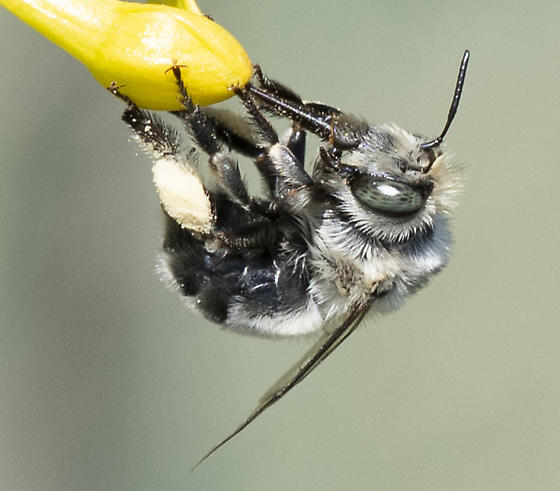
Colorado Solitary Bees L-R: Digger Bee (Anthophorini sp.), Mason Bee (Hoplitis fulgida), and Cuckoo Bee (Coelioxys sp.)
Another charming example of Colorado’s native pollinators is the Pawnee Montane Skipper (Hesperia leonardus montana). This member of the Hesperia leonardus species group is endemic to the South Platte River Valley, meaning that the 38 square miles in the Colorado mountains is the only place in the world to find this tiny butterfly. Because the Pawnee Montane Skipper occupies such a limited range, it is very vulnerable to changes in its environment. Habitat loss, catastrophic wildfire, and climate change all pose risks that have resulted in the Pawnee Mountain Skipper being federally listed as a threatened species [14].
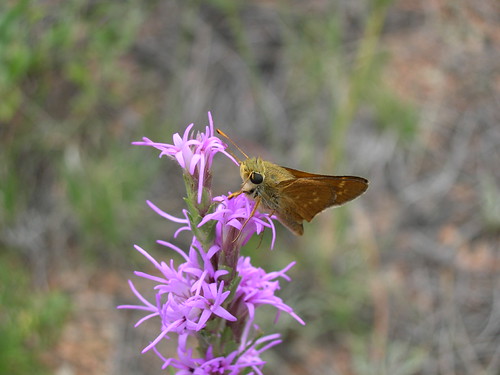
Pawnee Mountain Skipper on the flowers of Prairie Gayfeather
Coming in all shapes and sizes, pollinators around the world provide a crucial service to our communities and environments. These species have developed incredible adaptations, often evolving alongside their plant communities to form the dialed mutualistic relationships we see today. The act of transferring a few pollen grains between flowers may seem small, but the impact these creatures have on global food production and ecosystem health is undeniably large.
With an incredible diversity of pollinators right in our Colorado backyards, it’s easy to appreciate the value they bring to our beloved gardens and open spaces. While Insecticides, habitat loss, and climate change have caused pollinator populations to decline, increasing nesting habitat and food availability are powerful actions that can boost pollinator densities [6]. Whether you want to go all in on an apiary (collection of beehives), create solitary bee house or plant a native pollinator garden, supporting pollinators can be easy and rewarding [15,16]!
Sources
- https://onlinelibrary.wiley.com/doi/full/10.1111/j.1600-0706.2010.18644.x
- https://www.storey.com/article/how-flowers-bees-evolved/
- https://academic.oup.com/aob/article/118/2/249/1741474
- https://www.researchgate.net/publication/270876418_The_Pollinators_of_the_Malagasy_Star_Orchids_Angraecum_sesquipedale_A_sororium_and_A_compactum_and_the_Evolution_of_Extremely_Long_Spurs_by_Pollinator_Shift
- www.sciencedaily.com/releases/2006/10/061025165904.htm
- http://doi.org/10.1098/rspb.2006.3721
- https://academic.oup.com/bioscience/article/56/4/311/229003
- https://www.sciencedirect.com/science/article/abs/pii/S0921800908002942
- https://beesneeds.colorado.edu/introtonativebees.html
- https://www.colorado.gov/pacific/agplants/native-pollinators
- https://www.biologicaldiversity.org/campaigns/native_pollinators/pdfs/NativePollinatorFactsheet11-17-2014.pdf
- https://planttalk.colostate.edu/topics/insects-diseases/1480-solitary-bees/
- https://beesneeds.colorado.edu/introtonativebees.html
- https://www.arcgis.com/apps/MapJournal/index.html?appid=579f9f334de143cf8faf5262f3901a06
- https://pollinators.msu.edu/publications/building-and-managing-bee-hotels-for-wild-bees/
- https://extension.colostate.edu/topic-areas/insects/creating-pollinator-habitat-5-616/
By Blake Scarborough, Educator at Butterfly Pavilion
So you want to get your kids excited about science? There’s a world of opportunity right in your backyard – invertebrates! In this post, we will define what an invertebrate is, provide a few examples, and explain why invertebrates are critical to a healthy planet.
 An invertebrate is an animal without a backbone. In fact, invertebrates don’t have any any bones at all! Invertebrates that you may be familiar with include spiders, worms, snails, lobsters, crabs and insects like butterflies. However, humans and other animals with backbones are vertebrates.
3 Familiar Groups of Invertebrates
There are over one million invertebrates (1.25 million to be exact) that have been described by scientists (National Geographic 2012). There are three main groups that may be very familiar to you: insects, arachnids and crustaceans.
INSECTS
Insects are the largest group of invertebrates and have six legs, two antennae, and three body parts. Some have wings, but not all. However, if an invertebrate has wings, it is definitely an insect. Some common examples of insects are butterflies, beetles, bees and stick insects.

ARACHNIDS
Arachnids are animals with eight legs, no antennae and two body parts. Two arachnids you are probably most familiar with are spiders and scorpions. Arachnids are often feared, however, they are very beneficial to humans. Arachnids eat pest insects, keep insect populations down and are mostly harmless to humans.

CRUSTACEANS
Crustaceans are animals with 10-14 legs, four antennae and two body parts. Some examples that might come to mind are crabs, lobsters and shrimp. While many crustaceans live underwater, there is one crustacean that is commonly seen outside in the dirt: a pillbug, commonly known as a roly poly. Pillbugs are crustaceans that have adapted to live on land.

Why are Invertebrates Important?
Believe it or not, 97% of all the animals in the world are invertebrates. That means just 3% of the animals in the world are vertebrates (animals like humans, lions, tigers and bears). But not only do invertebrates dominate the world in numbers, but they are the most diverse and important group of animals for a healthy ecosystem.
Invertebrates are a vital food source for many animals. They live towards the bottom of the food chain – a critically important spot to ensure all the other animals further up the chain can survive. For example, crickets are eaten by spiders, then spiders are eaten by birds and then the birds are eaten by bigger predators such as lizards, snakes, foxes and bobcats. If the bottom of the food chain does not provide nutrients to higher up the chain, then the whole system fails.
Invertebrates ensure biological control, keeping an ecosystem in balance. “Biological control” means the control of pests in a natural way – without chemicals. Invertebrates simply eat the pests. Hate mosquitos and flies? Spiders are your friends! Without spiders making a meal of them, insect numbers would rise, creating an imbalance in the ecosystem.
Invertebrates are essential to the creation of products and services that benefit humans. Their “ecosystem services” ensure the production of food, medicines and ensure necessary decomposition of materials in our environment. Without bees, butterflies, beetles and other invertebrate pollinators, many plants would not be able to reproduce and humans would lose access to many essential food sources. Common food products resulting from pollination include vegetables, fruits, seeds, nuts and oils. In fact, it’s estimated that one out of every three bites of food a human takes is the result of a pollinator!
Another important invertebrate to humans is the horseshoe crab. Horseshoe crab blood is use to detect bacterial endotoxins, so they are a vital resource to the medical field. It has been extremely beneficial for cancer patients and others who are extremely vulnerable to medical intervention.
Lastly, many insects are scavengers that feed on dead animals and plants, which recycles nutrients back into the soil, creating a cleaner environment and boosting soil quality. This is critical to ensuring thriving forests and other natural areas.
These are just a few examples of the many ways invertebrates impact our world. Next time you head outside, make sure to thank an invertebrate! If you’re interested in learning more about the incredible diversity of these animals and the many ways they ensure a healthy planet, check out Butterfly Pavilion’s virtual learning opportunities at butterflies.local/virtuallearning.
Sources
https://www.nationalgeographic.com/animals/invertebrates/
Celebrating New & Old Life at Butterfly Pavilion
This month at Butterfly Pavilion we are excited to announce the arrival of several new animals in our Rocky Shore Touch Tank! We have 3 large black sea hares, 3 giant-spined sea stars and 1 California sea hare. The black sea hares, a type of sea slug, are the largest species of sea slug in the world and are the most amazing texture. Swing by Water’s Edge and give ‘em a feel – we promise you won’t regret it. Also, one of the new giant spined sea stars has a leg span of at least two feet which is definitely something you can’t miss!
On a sadder note, we announce the passing of our beloved day octopus, Ininko Montoya. Ininko joined our family here at Butterfly Pavilion in August and has been the highlight of our Water’s Edge exhibit ever since. Ininko was always filled to the brim with an unstoppable curiosity that brought a smile to the face of all who had the opportunity to know him. Ininko’s engaging personality made it easy for our staff, volunteers, and guests to fall in love with this amazing animal. One of his favorite pastimes was silently judging people from the cave he created next to the glass, if he wasn’t following guests around his habitat. It could also be tough to scrub the algae in Ininko’s tank because he loved to grab onto new things. We often had to trade with him to get our cleaning tools back.

Whenever Butterfly Pavilion has an animal join our collection, they become ambassadors for their species. These animals help us to show the important interconnectedness we have with invertebrates all over the world, big and small. Few were better at this than Ininko. When Ininko joined our team we knew that his time with us would be short. Most species of tropical octopuses have a finite lifespan of only 1-2 years. At his passing Ininko was found to be a sexually mature adult male, which shows he was at the end of his lifespan. While we wish we could have had more time with him, we are very grateful we were able to have such a special animal live with us and he will be truly missed by staff and guests alike.
PLEASE NOTE: World Spider Day on March 14, 2020 has been cancelled due the facility’s temporary closure. Read more >>
By Leanne Deschenes, Registration and Communication Coordinator
What is your favorite day of the year? Mine is March 14th. Falling about a week before the spring equinox, it marks a time when the days get longer and the ice in Big Dry Creek behind Butterfly Pavilion starts to melt. There are signs of spring and remnants of winter, two very special seasons here in Colorado. The reason I am most excited for this day, however, is because it is World Spider Day! This year, Butterfly Pavilion is going all-out to celebrate.
Spiders are extraordinary creatures that help humans tremendously, making it no surprise to arachnid-enthusiasts that they’ve earned their own holiday. Some spiders prey on insects that are considered pests and are used by farmers in place of pesticides. Spiders are also excellent bio-indicators, meaning that fluctuations in their populations can tell us about the health of the environments they inhabit. Some species’ venom is used to make medicine for heart disease, muscular dystrophy and chronic pain, and their silk is being studied for use in medical sutures. Spiders are as diverse as they are helpful, with over 40,000 different species in the world!
To get ready for World Spider Day, and to learn more about what makes them unique, I decided to observe some of Butterfly Pavilion’s resident arachnids in the Colorado Backyard exhibit. Here’s what I discovered:
Colorado tarantula
The brown-and-tan Colorado tarantula found in Colorado Backyard is a calm, patient critter. Its habitat provides lots of burrows for hiding, but today the tarantula was in clear view. It remained still as children watched from the viewing dome, casting shadows over the animal’s photoreceptors. If only I could stay as still while sitting at my desk!
Cellar Spider
The Cellar spider looks remarkably different from the Colorado tarantula. given its smooth, spindly legs and translucent, tan body. It is no wonder that these long-legged arachnids can be mistaken for harvestmen, or daddy long-legs, which look similar, but are in a different order, than spiders. As I observed the animal in its dimly lit habitat, I could understand why the Cellar spider is named for its fondness of small, dark corners. If I see one in my basement I’ll leave it be, and thank it for eating those pesky fruit flies!
Jumping Spider
The jumping spiders featured in Colorado Backyard are my favorite. With big, round photoreceptors that resemble googly-eyes and a tiny, fuzzy body, the jumping spider looks like a miniature version of your favorite childhood stuffed animal. Although this cutie was stationary while I observed it, I knew that it could dash away with its hyper-fast hop if it wanted to. If I’m lucky enough to find one in my home, I’ll bring this outdoor-loving arachnid into my garden.
While these are just a few of the spiders found at Butterfly Pavilion, they are also many more that share our great state of Colorado with us. This close proximity means they’re also the spiders easiest for me to conserve! If you encounter a local spider, I encourage you to react with fascination rather than fright (even if it feels a little scary). World Spider Day at Butterfly Pavilion is a great opportunity to get started!
Whether you’re a lifelong spider-saver or new to saying “no” to squishing specimens, there are plenty of opportunities to learn more about arachnids at Butterfly Pavilion. According to Brittany Oram, Camp Lead and Exhibit Interpreter, “World Spider Day at Butterfly Pavilion is a chance for guests of all ages to learn about our eight-legged friends. Through animal encounters, zookeeper talks, scavenger hunts and games, guests will come to appreciate the many things all arachnids do in their daily lives.” Brittany and the Butterfly Pavilion team invite you in on Saturday, March 14 to join the fun. You might even end up with a new favorite holiday!
For more information on World Spider Day at Butterfly Pavilion, click here to learn more! This experience is included with General Admission and free for current Butterfly Pavilion members.
By Sara Stevens, Director of Animal Collections at Butterfly Pavilion
Working in conservation has taught us many things. The first is that an ecosystem, and the animals that call it home, are often far more fragile and susceptible to environmental change than we might think. Here in Colorado, we’ve seen many examples of something small and seemingly insignificant growing into a large and unstoppable force. Whether it is an unattended camp fire during a dry season, or a pine boring beetle, little changes can spark the destruction of thousands of acres of forest habitat before we often realize their threat. One important takeaway: It is often the small things that are the downfall of giants. And this is the case far beyond the borders of our state. In the case of the Florida reef tract, it is a microscopic enemy that has led to an unprecedented threat to an invaluable ecosystem.
The Florida reef tract is a 360-mile stretch of coral reef ecosystems forming the third largest barrier reef in the world, and the only living barrier reef in North America. It is America’s barrier reef. While barrier reefs serve important ecological functions as nurseries for fish and storm barriers for coastal habitats, they are also vital to local economies. Activities utilizing the reef tract are estimated to generate up to $6.4 billion dollars in income each year, supporting over 70,000 jobs within the region. Coral reefs are delicately balanced and when the corals themselves die the consequences are often huge. Like a rainforest without trees, the other animals are forced to move on now that they are unable to support themselves in the barren landscape of coral skeletons. With over 540 species of coral and fish making the reef tract their home, a future without this habitat is unthinkable.
In 2014, the northernmost tip of the Florida reef tract located off the coast of Port St. Lucie, FL, experienced a small outbreak of a new and unknown disease. This disease, now called Stony Coral Tissue Loss Disease (SCTLD), was quick to spread throughout the different coral species along the reef. As it spread it was found that once a coral was infected it had almost a 100% chance of dying. Global issues like climate change, pollution, and other factors take a heavy toll, weakening habitats and making corals more susceptible to infection. In four years the SCTLD disease has spread over a 100 miles southward, impacting over 20 different species of reef building corals and reducing their abundance by 50-90%.
And while it seems like the odds are insurmountable; all is not lost and there is still hope to save the reef.
Helping Nature Respond to Crisis
In response to the disease crisis, multiple government agencies, including the Florida Department of Environmental Protection, The Florida Keys National Marine Sanctuary, the Florida Wildlife Conservation Commission and National Oceanic and Atmospheric Administration Coral Reef Rescue Program, came together to form the Florida Coral Rescue Team. This team went on to develop a revolutionary Coral Rescue Plan. The plan required the removal of healthy coral specimen, lovingly dubbed ‘reef-ugees’, of the most susceptible species from places still untouched by the disease and placing them in land-based ‘arks’. The goal was to save as many ‘reef-ugees’ as possible to ensure these species wouldn’t be brought to the brink of extinction. This monumental undertaking is an unprecedented response to an epidemic in coral reefs and an example of everyone coming together to give Mother Nature a helping hand.
In 2018, the Association of Zoos and Aquariums (AZA) – the organization which sets the accreditation standards for zoological facilities in the United States – was approached and invited to support this first-of-its-kind, large-scale rescue operation. The request was for AZA-accredited institutions, like Butterfly Pavilion, to volunteer their expertise and space to maintain these healthy corals until a time when they can be returned to the reef. To maintain the necessary genetic diversity to support future restoration efforts, once the reefs are healthy again, nearly 5,000 corals need to find homes within facilities across the country. Of the 236 zoos and aquariums accredited by AZA, only 22 facilities have been accepted as coral holders. Butterfly Pavilion, having the necessary invertebrate expertise, is one of those facilities accepted as a holder for the project. This commitment, a willingness to volunteer the resources and facility space required to house these corals for a minimum of 3 years without any funding provided by the project, was something we were honored to take on.
In early 2019, Butterfly Pavilion committed to having a system ready to receive coral by early 2020. Since then, we have been working diligently and quickly to create an exhibit capable of supporting these essential animals (pictured below). In early February 2020 we received 21 individual coral to be housed in our new system, located within the entrance to our Water’s Edge exhibit. As the only facility in Colorado currently committed to holding coral, we are excited to welcome these ‘reef-uges’ into our facility and tell their story to our guests and members! Since then, we’ve been able to bring many of these coral back to life and thrive under our conditions.

Though the road ahead is long and uncertain, as most of these corals have never before been kept in human care, we are honored to be playing a vital role in ensuring their survival. While the thousands of miles that separate us from the Florida reef tract may make it seem like it is impossible for us to have an impact, our commitment to this project shows that no crisis is too distant to receive our help and no one is too small to make a difference.
Come visit Butterfly Pavilion to learn more about this amazing project and how you can help, even here in Colorado!
By Kathryn Hokamp, Lepidopterist at Butterfly Pavilion
Wings of the Tropics is an immersive experience where visitors to Butterfly Pavilion can surround themselves with around 1,600 free-flying butterflies that you can watch emerge before your very eyes in our chrysalis chamber. However, the lives of these butterflies actually begin about a month before they reach our facility, at butterfly farms throughout the tropics where caterpillars are raised until they make their pupae and are sent thousands of miles away to Colorado.
Butterfly Pavilion’s butterflies come from eight different countries: Malaysia, the Philippines, Kenya, El Salvador, Costa Rica, Suriname, Ecuador, and the United States. These butterflies are raised on sustainable butterfly farms that work to conserve butterfly habitat as well as to raise butterflies for places like Butterfly Pavilion. Butterfly farming is an extremely sustainable industry because a female butterfly can lay between 200 and 400 eggs in her lifetime, and in the wild only about two of these eggs are expected to reach adulthood. Caterpillars encounter a host of difficulties in the wild from predators to diseases to parasitism. When a butterfly farmer raises these caterpillars in a protected environment, one batch of eggs can produce hundreds of adults rather than the two to three that would survive in the wild. The farmer can then send some of these butterflies to butterfly centers around the world like Butterfly Pavilion, keep some of these butterflies for breeding purposes, and re-release some of these butterflies into their natural environment to help supplement the local population. This is the model used by many of the farmers that work with Butterfly Pavilion. Butterfly farming also provides an economic incentive to protect vulnerable habitats. Butterflies need a robust habitat in order to thrive, so butterfly farmers are a huge part of protecting that habitat. Butterfly Pavilion works with butterfly suppliers in the tropics to support the conservation of threatened habitats for butterflies and other invertebrates.
El Bosque Nuevo is a butterfly farm and conservation project run by Ernesto Rodriguez. In addition to supplying butterflies to Butterfly Pavilion, this Costa Rican butterfly farm sends butterflies around the world, including to butterfly centers in Europe and Asia. El Bosque Nuevo raises caterpillars in protected structures designed to keep out wasps and other predators, and so is able to produce a large amount of butterflies, some of which are sold to butterfly centers and others which are released back into the forest. The money earned from these butterfly sales goes back into purchasing large swathes of rainforest that are then protected. El Bosque Nuevo has also become a center for butterfly research, with researchers and students coming from around the world to work with their butterflies.
El Bosque Nuevo is not alone in its conservation efforts; Heliconius Works, Butterfly Pavilion’s supplier in Ecuador, also works to conserve habitat. Jacob Olander of Heliconius Works maintains several conservation projects including working with indigenous communities in Ecuador to conserve the rainforest. In the Philippines, butterfly farmers coordinated in lobbying the government to ban neonicotinoid use on the island of Marinduque. Marinduque has a large concentration of butterfly farms and the excessive use of these pesticides was significantly affecting the number of butterflies in the area. Butterfly farmers on the island worked together to create educational resources and arrange meetings with government officials with an eventual result of the total banning of neonicotinoid-based pesticides on the island. This work by butterfly farmers allows butterflies in one of the most diverse areas in the world to continue to thrive.
By working with butterfly farmers around the world, Butterfly Pavilion is able to expand its international reach, and the butterfly farmers we work with are able to continue their conservation efforts at home. We are also able to bring a little bit of the tropics to Colorado, inspiring people to work to conserve these incredibly biodiverse areas of the world no matter where they live.
By Taylor Bennet, Exhibit Interpreter at Butterfly Pavilion
When asked “why visit Wings of the Tropics?” many people will tell you they come for the thrill of being chosen as a butterfly’s perch or for the simple joy of exploring the tropics.
But what may be less apparent at first glance is how simply having fun exploring our conservatory and interacting with butterflies that call it home, you and your kids are making valuable connections to local and global conservation.
Butterfly Pavilion exists to foster an appreciation of invertebrates, and one of the best ways we can do that is by getting you up close and personal with our butterflies, moths, chrysalides and plants. While wandering our rainforest you might see for the first time the small tree that provides the coffee that fuels your busy day. And if you stick around for our Rainforest Walking Tour, you will discover the environmental benefits of naturally shade-grown coffee. You could find yourself learning about the sustainability of butterfly farming, or how we can protect butterflies by creating pollinator districts. Whatever your take-away, it can sometimes be difficult to communicate these important messages to young kids. Fear not, though, because your child is gaining just as much conservation knowledge as you are, only in different ways.
Guiding safe interactions with our butterflies by encouraging no harm and mindful exploration begins instilling respect for these and other insects from a young age. When children discover for themselves that being kind to a butterfly means they get to watch it dance through the sky or walk along the trails with them, they are learning the fundamentals of conservation. When children see butterflies feeding on nectar from the flowers they chose not to pick, they are beginning to understand the importance of habitat preservation. These lessons may seem intangible in the moment, but over time this exploration of a living, breathing rainforest and its inhabitants can grow into a desire to protect and care for these forms of life.
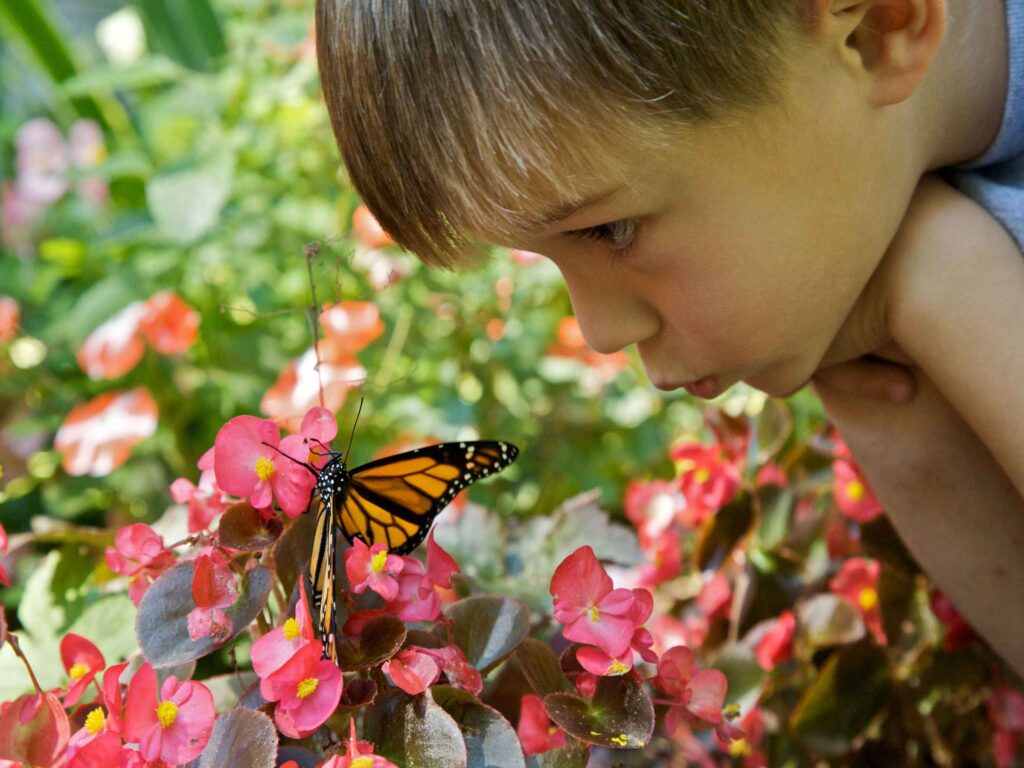
As adults, it’s easy to attribute our environmentally-friendly attitudes to the education we may have received on recycling, ecology, deforestation, etc. While these are all great topics to learn about, research has shown that conservation-minded adults actually gain their tendencies as children by exploring nature first-hand. However, living in an increasingly urban area can make it difficult to provide today’s children with enough of this type of nature play. Butterfly Pavilion’s forested conservatory fills this important niche by creating space for this type of inquiry. In this space, different age groups will go about investigation and learning in unique ways that most benefit their needs.
For children up to three years old, it is important to begin building a conservation-based outlook by simply helping them discover that animals are fascinating. They can begin to learn this through sensory exploration; taking in the sights, smells and feel of a tropical rainforest. Come spring, children in this age group may even start to recognize butterflies that they saw in our conservatory, like Painted Ladies or Tiger Swallowtails, flying around their own backyard! As they get a little older, they will start to draw connections between these butterflies and the habitats they live in. Children as young as four to seven years old will be able to observe areas like our chrysalis chamber and begin to understand butterfly lifecycles. It is also at this age that children can start to grasp ideas like recycling and conserving energy. As they continue to grow older, children’s’ capacity to learn and appreciate more complex conservation messages increases as well, but the foundation for this caring and understanding starts before they may even be able to walk.
Our butterfly conservatory always has something new to see and explore no matter your age and our passionate exhibit interpreters will be there every step of the way to guide you to your next “Aha!” moment. Whether you are learning about butterfly farming on the other side of the world or the Monarch migration right here in Colorado, studying the intricate design of a butterfly’s wings or sitting back and watching them glide from flower to flower, you and your children are building connections to conservation that will last a lifetime.
Follow us on Facebook, Instagram and Twitter to receive updates on our animals and learn about what goes on behind the scenes at Butterfly Pavilion!
We had so much fun on World Honey Bee Day at Butterfly Pavilion, Saturday, August 17, in celebration of the industrious honey bee! We received some awesome questions. If you are interested in becoming a beekeeper check out our Beekeeping Bootcamp.
How do bees make honey?
Honey, or liquid gold, is created by bees and is the only food made by insects that we eat! Worker bees visit flowers and gather nectar using their long, tube-shaped tongue. Nectar is stored in its crop (extra stomach). The nectar mixes with enzymes and undergoes a transformation, preserving it for long-term use. Honey bees then work together to deposit nectar in the honeycomb by passing it through another bee’s mouth! The honey is almost ready – the last step is to remove water from the now thick sugary liquid. Honey bees fan the honeycomb with their wings to speed up the process of evaporation. Honey bees seal the comb with beeswax – honey can be stored forever providing bees, and us, the perfect sugary food source.
Why do honey bees sting and how can I avoid being stung?
Honey bees sting when they feel threatened; they will only sting you if they have to! Usually, honey bees will die after they sting, so it is a very costly defense. You can avoid being stung by respecting honey bees and not disturbing their hive.
I recently saw a swarm of honey bees gathered away from the hive. Why does that happen?
Swarming occurs when a queen leaves the hive to start a new colony and the worker bees follow. Swarming bees are very docile and will most likely not sting, unless they feel their life is at risk. It is a natural means of colony reproduction.
I heard that honey bees are in trouble. What’s going on?
Pollinator populations, from bees to butterflies, are in decline because of habitat destruction, chemical pollution, parasites, and pathogens. Humans can help with many of these issues! Try not to use pesticides on your lawn or in your garden, and plant a habitat garden with native flowering plants that help feed the bees.
I want to do my part to conserve honey bees. What are things I can do at home, other than beekeeping?
If beekeeping isn’t for you there are a lot of things you can do to help out honey bees and other pollinators! Take it from our Horticulture Director Amy, “The good news is that everyone, no matter where they live, can improve this situation for pollinators…If you want to create your own pollinator sanctuary, all you need is some close observation, a little planning and the right plants.” Learn how to Grow a Pollinator Sanctuary.
You can also get involved at Butterfly Pavilion through our Pollinator Awareness through Conservation and Education (PACE) program. PACE programs include habitat restoration projects, education programs for adults and children, citizen science opportunities, and more. Get involved in one of our citizen science projects today and help gather important data scientists can use to help save pollinators, like the honey bee.
How many species of honey bees are there in Colorado? Which species do you suggest keeping for a beginner beekeeper? Any helpful tips for first-time bee keepers?
There are 946 species of native bee in Colorado and one species of honey bee (Apis mellifera)! Honey bees are actually native to Africa and Europe. Beekeeping is not easy, but the best thing you can do when you are just getting started is to get out there! You’ll need a few things to get started:
- Nucleus or package colony to start
- Food (Natural nectar and pollen sources)
- Quality materials for your hive
- Take a class and join a beekeeping club
Honey bees need three things to survive, water, pollen and nectar. The flowers the honey bee visits will determine the taste of the honey. Honey bees love dandelion, lavender, fennel, ox-eye daisy, snapdragon, teasel, rosemary, sunflower, yarrow, nasturtium and more! You can check out our What’s Blooming page for updates on what is blooming in our gardens that attract honey bees and native pollinators.
Timing is crucial – the best time to begin a hive is in the spring.
By Mario Padilla, Entomologist and Beekeeper