
Leafcutter ants are iconic invertebrates, but what do they actually do with all of those leaves? Behind the leafcutter ant lies a fascinating symbiotic relationship that many may not realize! Experience these impressive invertebrates in person! Visit Butterfly Pavilion as we showcase our immersuve Leafcutter Ant Habitat. This exhibit will offer a unique opportunity to observe these remarkable insects in action. Leafcutter ants span from South America, through Central America and Mexico, and all the way up to the Southern United States, like Northern Texas. The name “leafcutter ant” encompasses more than 40 different species of ant that all make a living by cutting and collecting leaves. Leafcutter ant colonies go deep underground and have many rooms. These chambers can be up to 16-feet deep and 50 feet wide. Like honey bees, leafcutter ant colonies are ruled by a single queen. Her daughters — wingless, sterile females — are the worker ants that travel outside of the colony to forage for leaves.
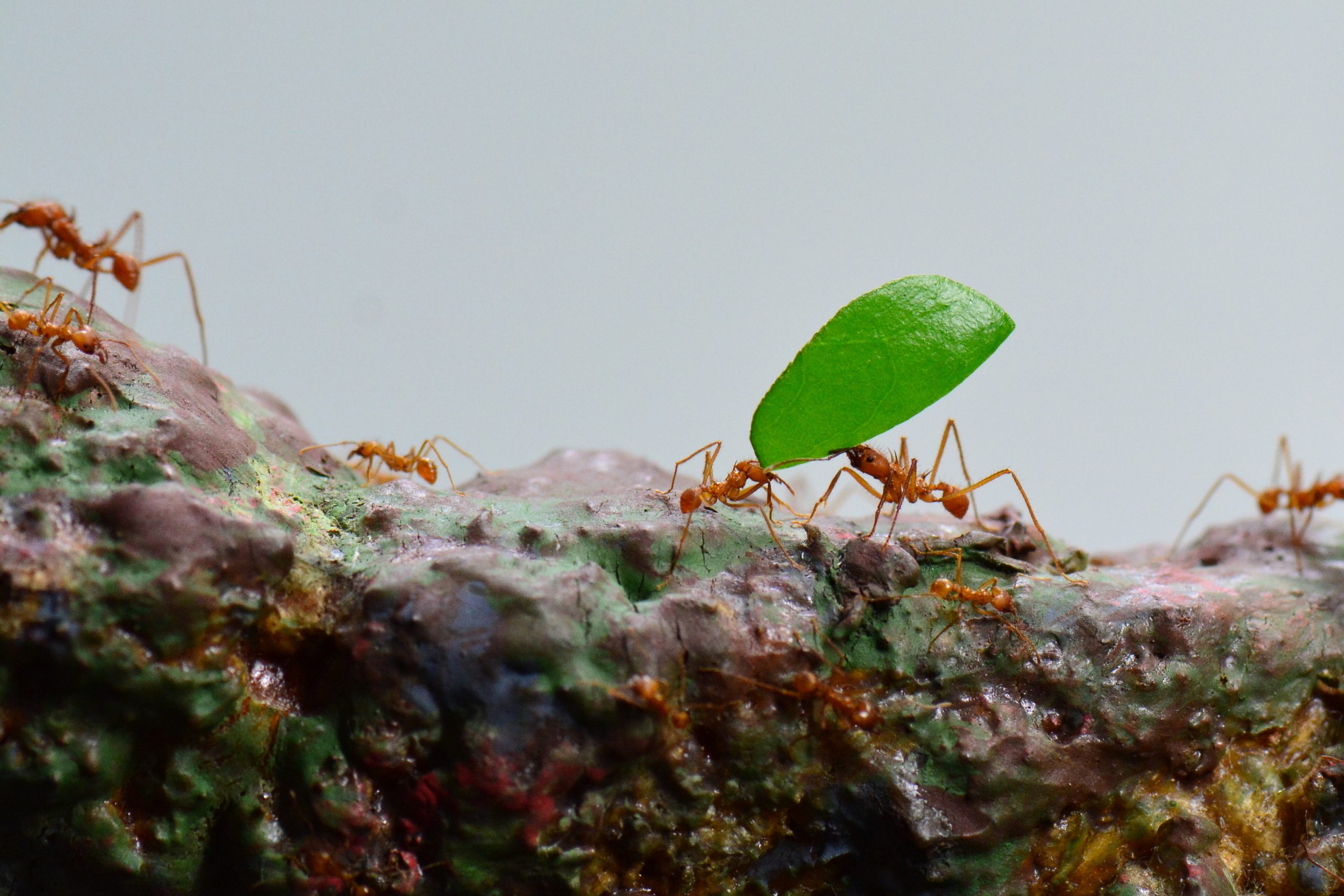
As a colony, leafcutter ants can clear entire trees in just a day! When an ant finds a good foraging location, she will move her abdomen up and down to create a vibration that can be felt by others nearby. This rhythmic signal alerts the rest of the colony to follow her lead. Many may assume they use these leaf pieces to build nests; however, they are used as fertilizer for their fungus gardens! Yes – leafcutter ants are not just foragers, but also farmers. This fungus feeds the little larvae raised in the ant colony, and the ants feed it with their leaf cuttings. Leafcutter ants even cultivate bacteria that can secrete antibiotics, which protect the fungus from parasites and keep it healthy.
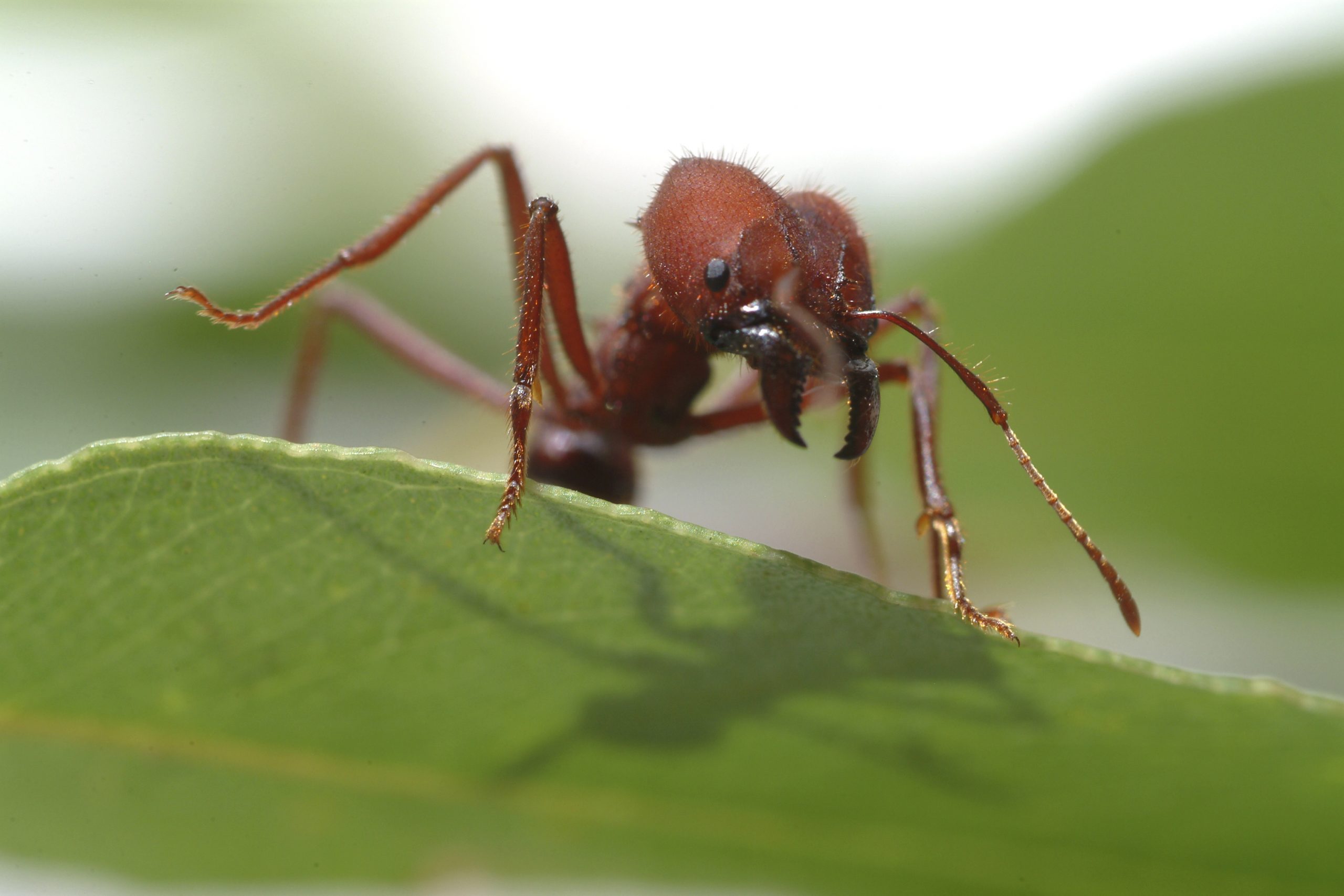
After collecting a leaf cutting, the ants will carry it back to the colony and deposit the clipping at the top layer of their fungus garden. Ants will eat clusters of fungus that live deeper in the garden, also known as gongylidia, in order to ingest necessary enzymes for the digestion of the leaves. Then, they transport these enzymes to the top layers of fungus and deposit them in droplets of feces onto the leaves. Adult leafcutter ants actually do not eat fungus to sustain themselves. Rather, they feed on tree sap, sometimes even hitching a ride back to the colony on the leaves that other ants are carrying, meanwhile snacking on any sap that might be on the leaf. This isn’t a free meal, though – they’re also making sure that the leaf isn’t carrying flies or foreign fungi. Research shows that fungus species have evolved in tandem with leafcutter ants so that their enzymes can be transported in an ant’s body without being digested. This makes it easier for the ants to cultivate the fungus and has created a long and lasting symbiosis – the ants and fungus rely on each other to survive.
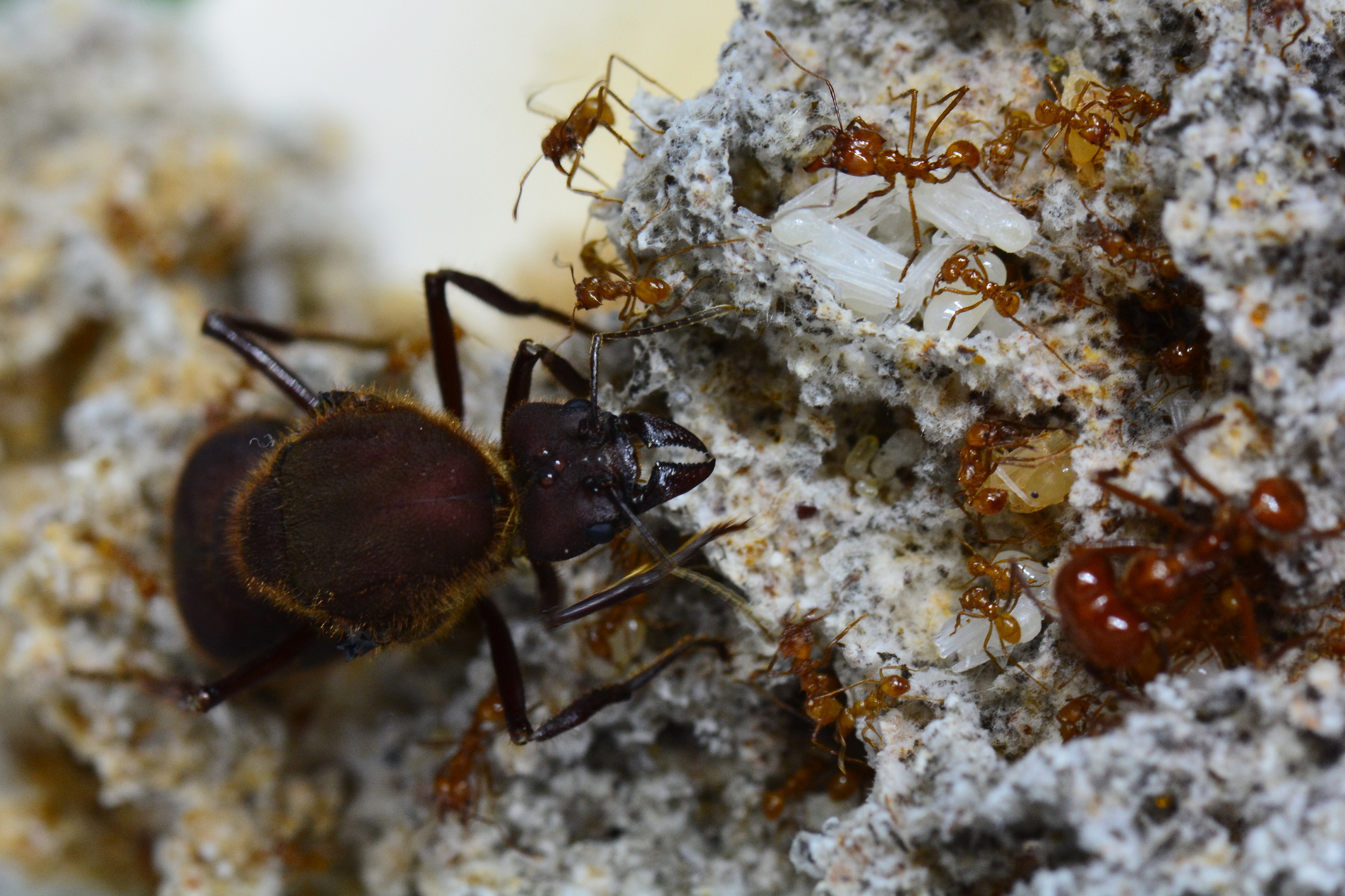
Queen leaf cutter ant and her soldiers on fungus
Leafcutter ant activity is extremely beneficial for the forest and is reciprocal. Their foraging helps to stimulate plant growth in the plant species that feed their fungus. Leafcutter ant society is separated by castes; different ants have different roles to play in the colony, largely based on their size. Leafcutter ants can be as small as 0.7 millimeters wide and as large as 5 millimeters wide. There are large ants that guard and protect the nest, called Majors. The next biggest, Mediae, are the iconic, leaf-carrying ants. Following them are the Minors, who guard the path that the Mediae travel, and, lastly, the miniscule Minims, who remain behind in the colony to raise the larvae and farm the fungus. The Minims also have the very important job of disposing of decaying leaves. They carry the matter to a specific garbage chamber in the colony and then they will isolate themselves from the queen and fungus for the rest of their lives to prevent the spread of disease. Similar to honey bees, all of these worker ants are female! The males in a leafcutter ant colony are called drones and are the only other ant beside the queen that has wings. Their role is to mate with the queen and produce offspring to supply the colony population. Both drones and queens are winged so that they can fly away from their original colony to mate, increasing genetic diversity.
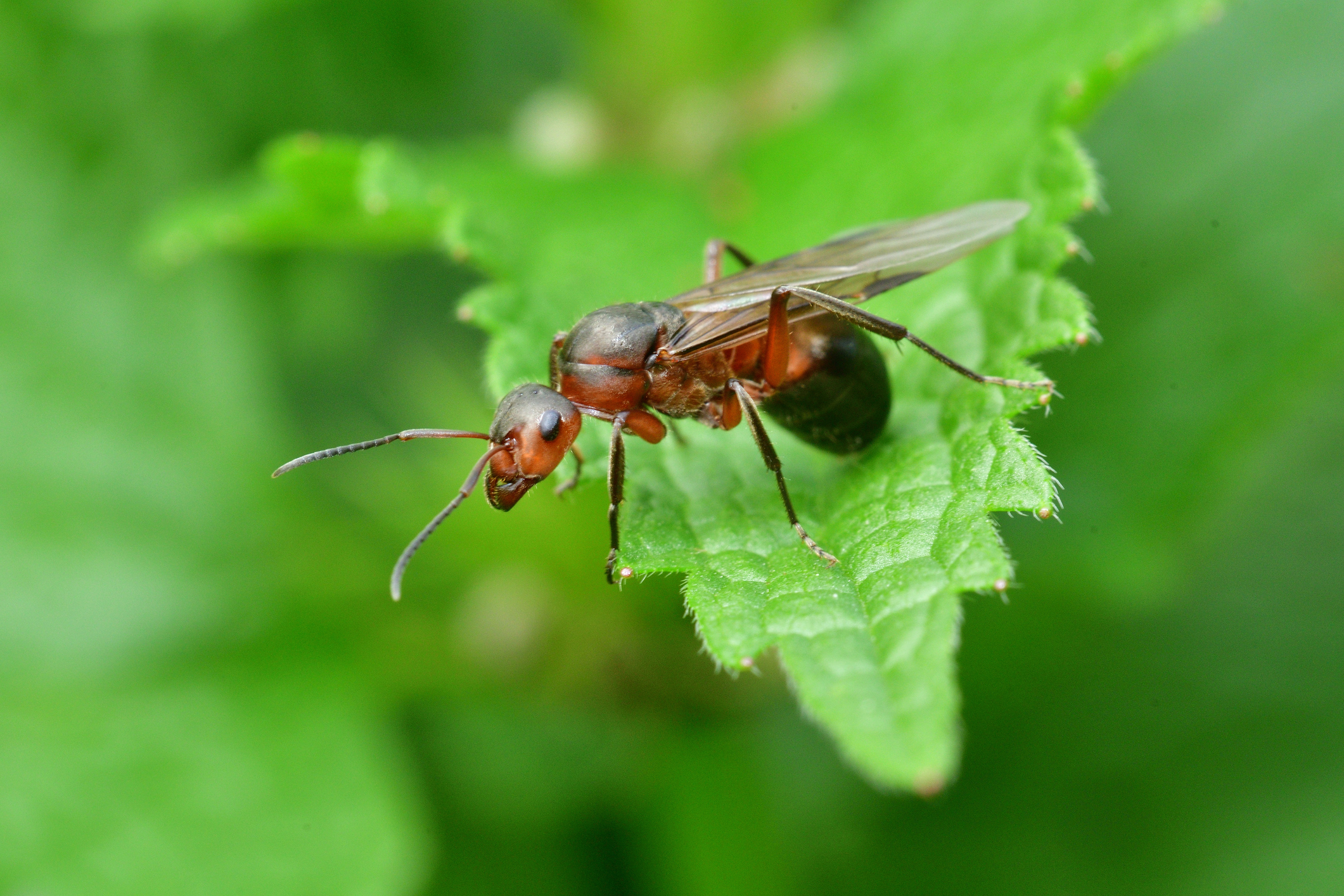
Queen leafcutter ant
One leafcutter ant species is even more spectacular! In addition to its exoskeleton, Acromyrmex echinatior, it wears a biomineral armor of calcite, similar to the make-up of sea urchin teeth. This armor protects them from infection and injury when competing with neighboring ant colonies. Scientists are studying this unique biomineral to determine its applications to modern manufacturing. Leafcutter ants are intelligent creatures with an incredibly complex colony structure. Though they are one of the most studied invertebrates on Earth, scientists are continuing to make miraculous discoveries that have exciting implications in the human world. From their fungus to their bacteria, to their armor, leafcutter ants continue to astound us! Written by Kenzie Claflin
The Ketambe Butterfly Farm
A project more than ten years in the making, the Ketambe Butterfly Farm is now helping to protect Sumatra’s ecosystems and communities.
The Sumatran ecosystem is in danger, and butterflies are helping save it. The largest island within Indonesian territory, Sumatra, is home to Sumatran tigers, rhinos, orangutans, Bornean elephants, thousands of native plant species, and even more incredible invertebrate species. Deforestation, poaching, and industrialization threaten to erase Sumatra’s native flora and fauna. In 2019, Butterfly Pavilion launched the Ketambe Butterfly Farm in the small city of Ketambe, Indonesia. More than ten years in the making, this project is moving to protect endangered species, protect Sumatra’s ecosystems, and support local culture. Building Ketambe was not easy. More than ten years ago, it started as nothing more than a dream. Butterfly Pavilion partnered with Wildlife Protection Solutions and Leuser Conservation Form in Indonesia to make our dream a reality. After working with the Indonesian Government, the Ministry of Environment, and various stakeholders, Butterfly Pavilion finally purchased the land and began building. The Ketambe Butterfly Farm sustainably raises butterflies for Association of Zoos and Aquariums accredited zoos. This lessens the demand for wild-caught butterflies and creates jobs for the local population. By selling chrysalises, the butterfly farm raises money to invest in research, minimize threats to Sumatran wildlife, and provide community resources. For example, funds produced by the farm have been used to hire more rangers to prevent wildlife from being poached. Proceeds have also been used to fund wildlife surveys that collect important data needed for conservation efforts.
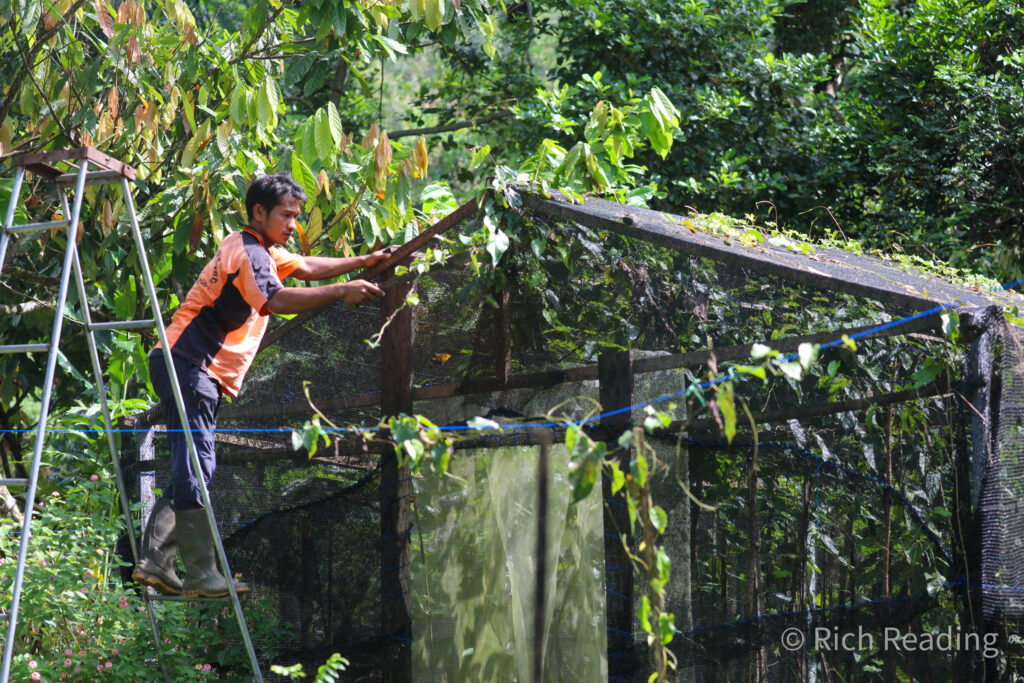
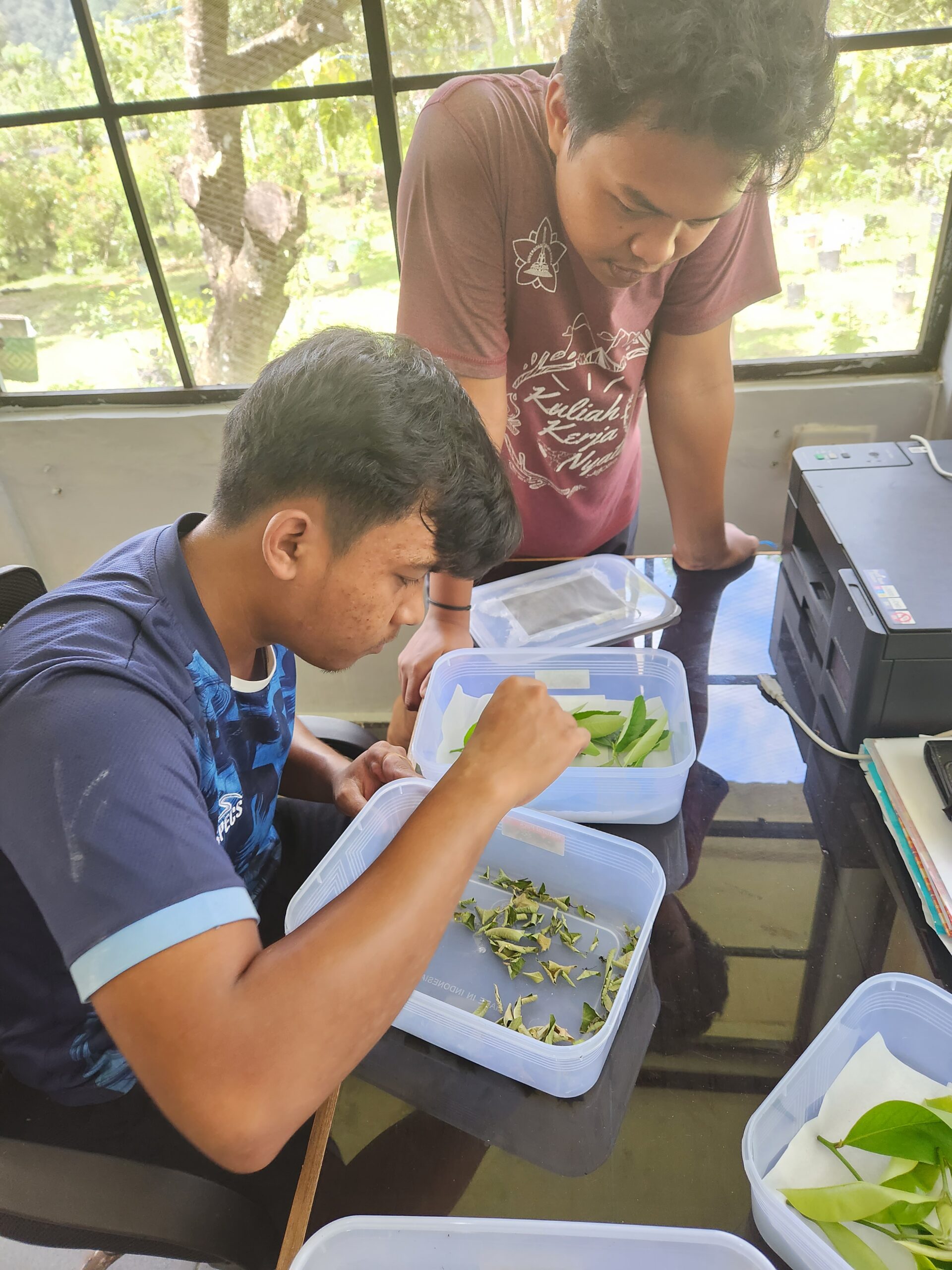
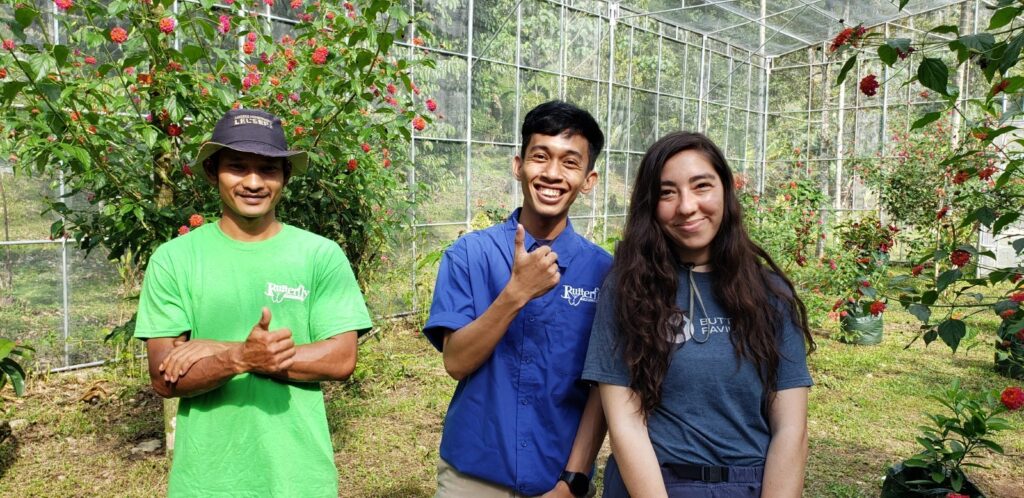
Shiran Hershcovich, Butterfly Pavilion’s Lepidopterist Manager, recently visited the Ketambe Butterfly Farm. It was her fourth visit to the farm over her last three years with Butterfly Pavilion. Shiran visits the Butterfly Farm to help train employees, specifically in butterfly breeding and research. This ensures that the butterflies raised there are healthy and promotes overall welfare and sound science at the farm. Butterflies are severely understudied, and projects like the Ketambe Butterfly Farm provide opportunities for scientists worldwide to understand just how vital these creatures are. However, the benefits do not stop at the boundaries of Indonesia. Each chrysalis sold has a butterfly that will emerge and serve as an ambassador for its species. The general public can observe and connect with a butterfly they would never see in person if not in Sumatra. At Butterfly Pavilion, each chrysalis that arrives at our butterfly house is hung in the chrysalis room so that guests can witness the miracle of butterfly emergence. Guests learn about where the butterfly came from, its role in the Sumatran ecosystem, and why it is worth saving. As Shiran says, Sumatra is home to many amazing species of butterflies that have not been seen in butterfly houses, like Butterfly Pavilion. Bringing these new species in opens up more opportunities for outreach, conservation, and stories previously untold. Shiran has a vision for Ketambe. She dreams it will be a jumping-off point for invertebrate research in Sumatra. Invertebrates are vastly understudied worldwide and commonly fall by the wayside compared to vertebrate research. The Ketambe Butterfly Farm will create sustainable livelihoods for locals and protect Sumatra’s threatened ecosystems. Shiran states that everyone involved in the project is a stakeholder in the conservation of native wildlife, and by continuing to understand invertebrates, everyone can begin to make a difference in the lives of these crucial animals. We depend on invertebrates for life-sustaining ecosystem services like pollination, and so do people from all over the world. Protecting invertebrate cultures does not just support a healthy ecosystem, but also supports the livelihoods of local populations.
Finally, Shiran shared a story from her last visit with us. As she was leaving the butterfly farm, she walked down the road and looked up to see an orangutan. She recalled what a special experience it was to support and conserve such a magical environment where one can go from seeing colorful butterflies to majestic orangutans within a few steps of each other. This breathtaking encounter can remind us about the interconnectivity of life. Orangutans spend most of their lives in trees to avoid predation, and their diet consists of invertebrates, fruit, and vegetation. Invertebrates pollinate most of the fruit and vegetation that orangutans use as shelter and sustenance. In turn, orangutans disperse the seeds of any vegetation they eat, which eventually grow to become food and shelter for invertebrates. We cannot have one without the other; every action toward conserving one form of life saves another. If you see the value of invertebrate research and want to support Butterfly Pavilion’s international projects, consider becoming a donor. Every donation supports our conservation and research efforts at home and around the globe. Please visit the link below to learn more about Butterfly Pavilion’s international efforts.
Governor Signs Landmark Legislation at Butterfly Pavilion Recognizing Invertebrates as Wildlife
Today at Butterfly Pavilion, Governor Jared Polis signed into law Colorado House Bill 24-1117, a groundbreaking step for wildlife conservation by adding invertebrates to the species that may be studied and conserved in Colorado. With invertebrates comprising a staggering 97% of all animal species on earth, this legislation officially recognizes them under the purview of the Colorado Parks and Wildlife (CPW), empowering CPW to protect and conserve these vital creatures of virtually every ecosystem on the planet. “Butterfly Pavilion enthusiastically embraces this milestone and eagerly anticipates the profound impact it will have on invertebrate well-being,” declared Dr. Rich Reading, Vice President of Science and Conservation at Butterfly Pavilion. “This bill signifies a monumental stride in invertebrate conservation in Colorado, offering unprecedented opportunities to propel efforts to prioritize data collection to help protect and conserve these critical creatures which are the foundation of all life on earth.” Prior to this bill, there was no public funding or managing authority dedicated to actively conserving invertebrate populations in Colorado. With this legislation, CPW now has the capability to fund and develop programs aimed at studying and conserving invertebrates, including butterflies, beetles, bees, spiders and many others. Butterfly Pavilion welcomes this legislation as it will significantly benefit invertebrate research, conservation and education efforts in Colorado for several reasons:
-
Recognition and Support
: This bill signals a shift in public perception and will potentially increase support for invertebrate conservation efforts.
-
Research Opportunities
: With the passage of this bill, Colorado Parks and Wildlife (CPW) now has the authority to fund programs dedicated to studying and conserving invertebrates.
-
Collaborative Partnerships
: The bill empowers CPW to develop programs focused on invertebrate conservation.
-
Educational Impact
: As invertebrates gain recognition as an integral part of Colorado’s wildlife, there will likely be increased interest in learning about these creatures. Butterfly Pavilion is pleased to offer educational programs to raise awareness about invertebrates and their importance in the ecosystem.
-
Long-term Conservation
: This bill helps ensure the long-term survival of these species. Butterfly Pavilion contributes to this goal through our research, conservation, breeding programs and public engagement activities.
Butterfly Pavilion passionately testified in support of this bill at the Capitol on two occasions; February 22 and April 3, 2024. Embedded within this legislation is a powerful message:
“With a few exceptions, Colorado Parks and Wildlife does not have statutory authority over invertebrate species, nor does any state agency have oversight of native rare plants. Lack of data limits Colorado’s ability to assess the status of threats to, and conservation needs of invertebrates and rare plants. Creating programs designed to support conservation of rare native plants and invertebrates can lessen the likelihood that the species will be added to federal threatened or endangered lists. … Therefore, the general assembly determines that the Parks and Wildlife division should study and determine the conservation needs of native rare plants and invertebrates and implement voluntary programs to conserve and protect them” “Together with Colorado Parks and Wildlife and community partners, Butterfly Pavilion will work tirelessly to safeguard the well-being of invertebrates and the ecosystems they inhabit,” concluded Dr. Reading.
Impact Beyond the Numbers: A Spotlight on Our Urban Prairies Project
Over the last century, the shortgrass prairie ecosystem that once dominated the Colorado Front Range has declined to less than one-fifth of its original area. In addition, we have witnessed a significant loss in crucial plant and animal species, including critical pollinators.
To combat this issue, in 2016 Butterfly Pavilion partnered with the City of Broomfield and City of Westminster to create the Urban Prairies Project, where we train community members to become Master Restoration Volunteers who help restore and enhance Colorado open spaces. With this program, Master Restoration Volunteers focus on areas in need of restoration and collect data about plants and wildlife, lead restoration workdays, conduct post restoration assessments, and educate the public about their local open spaces and the need for restoration efforts. Restoration helps protect and revitalize invertebrate populations, a critical piece of healthy ecosystems.
In 2023 alone, 43 new Master Restoration Volunteers contributed over 100 hours of field work to restore Colorado open space at 11 different work sites. Since 2016, 134 volunteers have given over 1,000 hours restoring over 3,500 acres of land.
Ashley White, Butterfly Pavilion’s Community Habitats Manager who leads the Urban Prairies Project shares that the Urban Prairies Project is a very holistic restoration program. “We focus on it not just being one and done, but getting the whole picture of the health of the site. Volunteers go through a 15-hour training where they learn restoration best practices from start to finish. This includes conducting initial land assessments, conducting restoration activities, monitoring for changes in the ecosystem, post-restoration assessments, leave no trace principles, and more.” says, White.
Yet, the numbers only tell half the story.
White explains, “The idea behind the Urban Prairies Project is to facility ripple effects in the community, where beyond training volunteers to restore land, we are empowering volunteers to lead their own restoration projects in their own communities. This project helps build a sense of comradery between neighbors and allows people to spend more time outdoors in nature. We’re building up community leaders and forming a supportive and engaged community right before our eyes.”
Brandon and Michelle are two Master Restoration Volunteers who joined the program in 2023 and have since started their own restoration project in Northglenn.
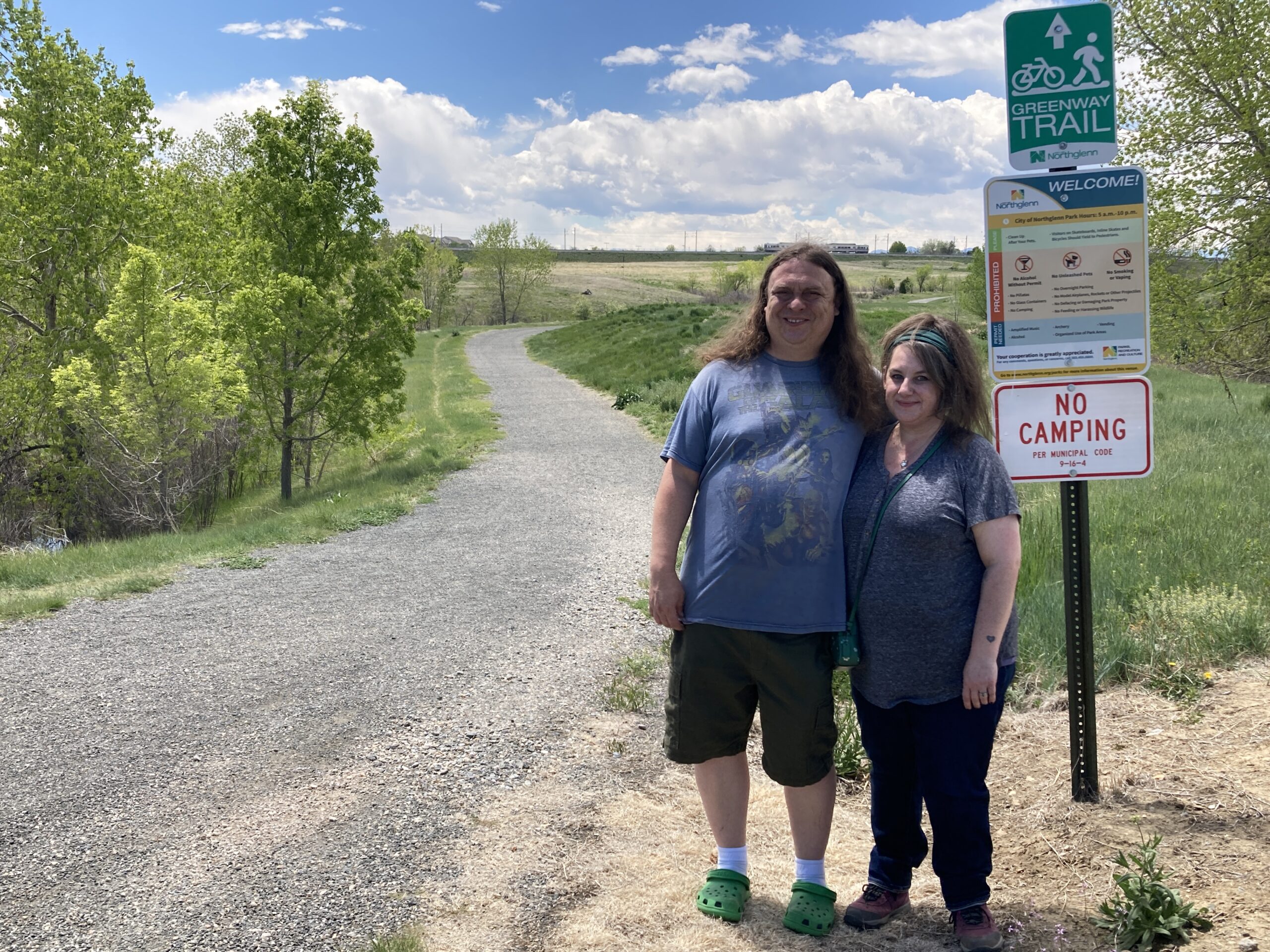
“Our intrigue started a few years ago when milkweed started popping up in our yard. At the time, we didn’t know what it was, but we did some research and learned that it was food for monarchs. When we learned that monarch populations were in decline, we planted more milkweed and now our yard is a monarch waystation.” says Michelle.
“We also had this beautiful and lush canal that backed up to our backyard. But a few years ago, they cut down all the trees. It was devastating.” said Michelle, “We emailed the city and started bugging them, trying to figure out what we could do about it”.
After these experiences, Brandon and Michelle felt inspired to get involved in the Urban Prairies Project. “We’ve learned so much about our natural surroundings. We’ve learned what’s what, which plants are weeds and what do we really need.” says Brandon. “It’s been a wonderful learning experience.”
With a year of restoration efforts under their belts, Michelle and Brandon connected Butterfly Pavilion with their contacts at the city of Northglenn and are now leading collaboration efforts to help restore Fox Run Open Space. Though it’s not the private canal behind their house, it’s a valuable start to getting restoration projects underway in their community. They’ll invite their neighbors to support the efforts and leverage their knowledge as Master Restoration Volunteers.
In reference to UPP, Michelle says, “We are loving it so far. I just love getting outside and working on something. Working from home, I don’t feel like we get outside enough anymore. I love nature, and pollinators, and flowers and plants, so being part of this work is perfect.” Brandon adds, “I also like how Butterfly Pavilion teams up with the city. Such a big focus is on educating the community, and it’s important to have those connections.”
The vision for the Urban Prairies Project is for Butterfly Pavilion to further evolve as a resource for municipalities seeking to restore their community spaces, and to continue empowering people to initiate their own restoration projects in their communities. Restoration work is so vital to our local ecosystems, and with all of us working together, we can make an incredible difference!
To learn more or get involved in our Urban Prairies Projects, visit our program webpage!
The Cicada-geddon is Coming!
They’re alive! Millions of cicadas will emerge from the ground in the midwestern and southeastern US from late April to early June. These cicadas are members of Brood XIX (13 year periodical cicadas) and Brood XIII (17 year periodical cicadas). Brood XIX includes four species of cicadas: Magicicada neotredecim, Magicicada tredicim, Magicicada tredecassini, and Magicicada tredecula. Isn’t that magical! This cicada-geddon, coined by John Cooley, only happens every 221 years. The last time these two broods emerged together was when Thomas Jefferson was president!
Cicadas are true bugs (heteropteran), meaning they have two pairs of wings and a straw like mouthpart for sipping fluids from plants or animals. They are most known for their large eyes that are set wide apart, transparent wings and the distinctive loud song males make. Periodical cicadas spend most of their lifecycle underground as nymphs and emerge to become adults. Scientists have hypothesized that periodical cicadas spend so much time underground to avoid being eaten. When multiple cicadas emerge simultaneously, it’s hard for predators to get all of them. Survival in numbers!
Once these cicadas emerge, they shed their old exoskeleton, and males begin chorusing to find a mate. They do this by vibrating a noise-producing organ on their abdomen called a tymbal. Many people associate this sound with summer. Once they mate, the female cicada lays her eggs on a tree. After the eggs hatch, the new nymphs travel underground, and the cycle continues!
Emerging cicadas pose no threat to agriculture. They mainly feed on juices and sap from trees; mature, healthy trees are not seriously affected. Cicadas actually provide a huge benefit to the ecosystem. They aerate the soil while underground, enrich it when they die, and are a food source for birds and other larger animals.
While we won’t see any Brood XIX or Brood XIII members in Colorado, we can still appreciate this once-in-a-lifetime natural event!
Written by Celena Romero
Joining forces for the good of Flatiron Park, Boulder
March 18, 2024 – Butterfly Pavilion, the first Association of Zoos and Aquariums (AZA)- accredited, stand-alone, non-profit invertebrate zoo in the world and BioMed Realty, a Blackstone portfolio company and leading provider of real estate solutions to the life science and technology industries, announced today a partnership to develop and enhance pollinator habitat in BioMed Realty’s Flatiron Park in Boulder. It represents Butterfly Pavilion’s first partnership with a life science and technology campus through its Environmental and Ecological Services offerings. The partnership involves a multi-year
project that officially began in 2023 with a baseline fall assessment. In 2024, pollinator friendly habitats will be designed and implemented at four buildings in Flatiron Park, with other buildings planned for 2025 and 2026.
The model of collaborative conservation creates pollinator habitats by increasing the presence of diverse plant species to attract beneficial insects and birds, creating a balanced ecosystem. This ripple effect extends beyond the property, positively impacting the broader environment and promoting a healthier, more resilient ecosystem.
“This initiative will promote the cultivation of native plants that cater to the specific needs of local butterfly species, bees, and other invertebrates, thereby enhancing biodiversity and building a greater appreciation for these critical species and their habitats,” said Hannah Brown, Environmental and Ecological Services Manager at Butterfly Pavilion.
Pollinators, such as honey bees, native bees and butterflies, play a critical role in ecosystem function and are vital to the human production of food and the reproduction of native plants. Yet global pollinators are at risk with habitat destruction, chemical pollution, parasites, and pathogens…
Read the full press release here.
Want to learn more? Check out the pages below:
Environment and Ecological Services
What You Should Plant This Spring
Written By Amy Yarger, Senior Director of Horticulture, Butterfly Pavilion In many parts of the country, April can be an unpredictable month. One day, the tulips are blooming, and the birds are singing, but the next day could be a soggy, chilly mess. Experienced gardeners know how to proceed with caution during this time of year. On the other hand, spring often brings a welcome dose of moisture, which helps new plants to establish and thrive. April is also known as Earth Month, so it is a wonderful time to make a commitment to make your garden better for the planet and its inhabitants, including invertebrates. Invertebrates, animals without backbones, make up 97% of animal species and contribute significantly to every ecosystem on Earth, and yet they are understudied and often feared. One key group of invertebrates are pollinators, insects that carry pollen, facilitating plant reproduction. Our food security and ecosystem health rides on the back of these bees, flies, beetles, butterflies, and other creatures. One of the most impactful things you can do in your garden is make it friendlier for pollinators by choosing a variety of native plants and avoiding pesticides. Native shrubs and perennials can weather the uncertainties of spring, so gardeners can start planting them as the night-time temperatures warm in late April. Native plants not only are adapted to our local conditions, but they also have long-standing relationships with local pollinators and other wildlife. Butterflies require specific plant species to lay eggs and feed caterpillars. Some notable examples are asters for painted ladies or violets and stonecrop for fritillaries. There are native bees that forage from a narrow selection of plants for their pollen, so plants such as sunflowers and rabbitbrush are key to support those species. And then there are the wild and naturalistic plantings that support the full life cycles of beetles, flies, and other insect pollinators. An ideal pollinator habitat garden will include native plants with different flower shapes and colors, blooming at different times of year. Diversity is the gardener’s friend – landscapes with many kinds of native plants are less likely to be overtaken by pests and disease, while also supporting many kinds of pollinators and other beneficial invertebrates. Some examples of native plants that are great for sunny pollinator gardens in the western United States include dwarf rabbitbrush (Ericameria nauseosa nauseosa), sunset hyssop (Agastache rupestris), swamp milkweed (Asclepias incarnata), and narrow-leaf coneflower (Echinacea angustifolia). If you have part shade, species such as Wood’s rose (Rosa woodsii), golden currant (Ribes aureum), and golden columbine (Aquilegia chrysantha) are great choices. These native plants usually require less maintenance, especially when factored over their life. Since these species have adapted to our local soils, they don’t require regular fertilization. They also use much less water compared to conventional landscaping. Spring snow and rain can help a lot to get these plants established – just be sure to set aside time (and a little of your water budget) to continue regular, deep watering through the first summer and early fall. These plants, once they are thriving, will yield substantial dividends – providing habitat for pollinators and birds, sequestering carbon, while saving water and other resources. A little preparation this spring can lead to a vibrant and successful landscape later in the coming months and years. Habitat gardeners, whether they have an enormous native plant garden or a few containers with wildflowers, are stewards supporting our most important resource – biodiversity. Who knew that a little digging could have such an enormous impact on our environment and ourselves? Butterfly Pavilion has resources and upcoming programs about gardening just for you! Pollinator gardening resources here: https://butterflies.org/pollinator-resources/ April 21: Pollinator Gardening Bootcamp workshop: Pollinator Garden Design https://butterflies.org/event/pollinator-garden-bootcamp/ April 28: Expert lecture: “Get Ready, Get Set, Garden” https://butterflies.org/expert-lecture-get-ready-get-set-garden/
Jump into Conservation: A Q&A with Rich Reading, Ph.D. Vice President of Science and Conservation
Q: Butterfly Pavilion engages in a lot of work globally to protect, sustain, and grow varying ecosystems. Can you describe some of these global projects?
A:
For starters, we engage in a large variety of projects around the world such as our Bees for Elephants project in Tanzania, we build bee fences to mitigate human-elephants conflict which happens when elephants raid communities, destroying farms and homes. Elephants are very smart, but they are afraid of bees, so when they hit the wires connecting hives that form a fence, the bees come out of their hives and sting elephants in sensitive areas like their trunks, eyes and ears. Elephants will run away from even just the sound of bees. We train farmers and community members on how to build bee fences, how to keep the bees and how to sell honey, giving them an additional source of income. We also do work in Sumatra, Indonesia where we have a butterfly farm. We will be able to supply many of our own butterflies to Butterfly Pavilion, including endangered Birdwings, as well as sell them to other butterfly houses. The money we generate goes into not only supporting local people but goes to supporting the conservation of the ecosystem that they inhabit. So, it’s not only helping butterfly populations but also helping support rhino, elephant, and tiger conservation too.
Q: What are some local or national projects in which Butterfly Pavilion is involved
A: Domestically, we have a project where we’re trying to head start both firefly and dragonfly species that are in trouble. There are very few populations of fireflies left in Colorado, in fact most people don’t even know that we have them here through the management of these creatures under human care, we’ve endeavored to breed and nurture them until adulthood. This is what we call head starting them. In doing so, we’re able to help populations through the really crucial early stages where mortality rates are very high, and get them to a later stage in life, when they have a higher chance of survivorship.
We’re also working with the Colorado Department of Transportation to help tarantulas during mating season. Currently, our focus lies in determining the optimal locations for tarantula underpasses, since during the fall season, male tarantulas venture out in search of females and often traverse busy roads in the process. This is obviously a risk because they can get run over so we’re trying to set up what we call drift fences, where an animal hits the fence and then goes along it until it reaches an underpass. Then hopefully, native tarantulas will have a way to safely find mates in the area. We like to call it creating tunnels of love!
Q: What can people be doing locally to support these projects and sustainability efforts?
A:
There are numerous ways individuals can support invertebrates and Butterfly Pavilion. One avenue is through participation in our community science initiatives such as the Urban Prairies Project and the Colorado Butterfly Monitoring Network. These projects engage community scientists—local individuals eager to contribute by either assisting in habitat restoration efforts or conducting butterfly counts. Additionally, individuals can contribute by making donations to our various projects.
The nice thing about invertebrates is that they live everywhere. So, you can plant habitats for pollinators in your own yard or planter at home. If you lack a yard, consider engaging in community gardening initiatives. By establishing pollinator habitats throughout urban areas, you can foster connectivity crucial for the survival and thriving of pollinators.. I’ve done that in my own yard where I’ve replaced all my bluegrass with native grasses and pollinator plants and floral arrays of things.
Q: What advice do you have for others who aren’t interested in conservation efforts or feel that they can’t make a difference?
A:
I think there’s hope in the invertebrate and conservation world. In urban and suburban areas with more or less a biological desert, replacing Kentucky bluegrass and similar grasses with native grasses and flowers really does help pollinators do better. I think there’s been an increase in the number of people who really want to do that, and I think it’s changing the landscape. It’s going to save water which we need to do in the Front Range and basically anywhere. Water is life, of course, so doing what’s going to save water is going to help in some capacity. It’s going to create a pollinator habitat, and I think that’s what’s happening and we’re seeing more and more of this occurring. So I think there is hope. I think we’re seeing the newer generation have a renewed commitment to conservation that was maybe a little lost for a while considering Earth Day was first created in the 70s. After a while, it’s resurging, and I think climate change has a lot to do with that. We have to get on top of it now because we’re already seeing the impacts of climate change.
Thanks to our following partners and sponsors for supporting many of these projects: National Environmental Education Foundation, Wildlife Protection Solutions, Tanzanian Elephant Fund, PT Sama Seudati Lestari (SSL), Katie Adamson Conservation Fund
At Butterfly Pavilion, we believe in conserving, protecting and educating the public about invertebrates from habitats around the globe. The reason we do this is because many of these animals are often forgotten.
They tend to be small, hide in dark places and may trigger a fear in many people. The truth is invertebrates make up 97% of the animal life on earth, with 1.2 million described species. Invertebrates are the foundation of countless food chains, control pests, pollinate our food, have vast research implications and are eaten by humans around the world.
In order to protect these important animals, Butterfly Pavilion participates in the Safety Web for Arthropod Reproduction and Management (SWARM). This program focuses on keeping vulnerable arthropods (invertebrates like insects, spiders and crustaceans) in zoo collections by breeding and refraining from wild collection. SWARM is a program sanctioned by the Association of Zoos and Aquariums (AZA) Terrestrial Invertebrate Taxon Advisory Group (TITAG). If you have ever been to Butterfly Pavilion, you have probably had an up close experience with one of our most important ambassador animals: Rosie the tarantula and she is the focus of the SWARM that Butterfly Pavilion holds. Our large collection of Rosie tarantulas (also called the Chilean Rose Hair, Grammostola rosea) allows us to communicate with other zoos about breeding, husbandry, welfare and conservation of this important species.
Chilean Rose Hair tarantulas are native to the edges of the Atacama Desert in Chile, which is the driest desert on earth. In their natural habitat, female Rosie tarantulas stay in their burrows and wait for an unsuspecting insect to walk by. These tarantulas may make their own burrow, or take a premade or naturally occurring space as their home. Males are much more active than females, as they wander around to find suitable mating partners. Once mated, a female tarantula produces a large egg sac made of silk which can hold hundreds of young. Males can live 5-10 years and female can live 20-25 years! It is because of this lifespan, that we can use tarantulas as an indicator species; they are sensitive to potentially massive changes in their environment and may not live to sexual maturity based on these changes.
Butterfly Pavilion believes that an up close interaction with animals such as Rosie can provide an invaluable experience to all of our guests, which helps them understand more about the importance of invertebrates to humans and the world at large. This is why we continue to work on keeping these magnificent animals in zoos and protect their habitats around the world.
Written by Sara Stevens, Director of Animal Collections at Butterfly Pavilion
Invertebrates in STEAM: Q&A with Sara Stevens, Director of Animal Collections at Butterfly Pavilion
Q: How do invertebrates utilize engineering in their everyday lives?
A: Invertebrates use engineering in a lot of different ways which are also utilized within architecture and engineering design by people. Some examples of this are honeycombs in a beehive. That honeycomb is designed to hold the honey that the bees use for food and resources. It’s also where they grow their larva that eventually pupate and turn into worker bees. This is all done by females within the hive.
Q: What’s one way that you’ve seen human engineering evolve from our knowledge of invertebrates?
A: The mantis shrimp is a really cool example of an animal that has evolved in such a way that they have become very beneficial to engineering due to the way their body works. When it comes to mantis shrimp, their eyes have 16 cones and are so uniquely developed that they’ve allowed researchers to develop a camera that can see cancer cells. The punch for the smashing mantis shrimp allows them to hit with the force of a 22-caliber bullet. Because of that, the recoil and design of their arms that can take this pressure, have researchers looking for ways to design better bulletproof armor and things of that nature. So, the mantis shrimp is a great example of how we can take something from nature and use it to benefit people.
Q: How does math influence the work you do and the decisions you make around your research?
A: Math helps my job in a variety of different ways. We use statistics a lot to help us make scientifically based decisions, not only for our scientific research and understanding if the data that we are collecting is significant or not, but also within our animal collections. So, we look at the longevity of our butterflies. For instance, using our Community Science Interactive within our Wings of the Tropics exhibit, called Butterfly Quest, our guests can report data to us of what our butterflies are doing. We’re then able to turn that into meaningful metrics for us to see how our butterflies are doing. Are we seeing good welfare? Are they living longer than we would have anticipated? We actually had one butterfly that had lived just under 11 months. Usually, we say on average an adult butterfly lives two to four weeks, so being able to have that data turned in, we can then take something that’s kind of qualitative and make it quantitative, which allows us to make good, informed decisions that we can then share with others.
Q: How is technology currently being used to progress invertebrate research?
A: A really cool use of technology related to invertebrate conservation is around the Florida Reef Tract Rescue project. This project is responsible for helping to preserve and protect Caribbean coral found in the Florida Reef Tract that was imperiled due to disease. Some really cool technology that’s being utilized for this project is helping to mimic the annual light and moon cycles and temperature cycles of the Caribbean. Using this technology, they’ve been able to spawn this coral in human care to help produce sexually unique offspring, which will be responsible for helping to replant and restore the Florida Reef tract. The coral we have at Butterfly Pavilion will go on to be parents of coral that will be planted there and the work they’ve been able to do to have these spawning events occur in human care would not have been possible without the really incredible controllers and technology that’s been developed.
Q: What’s one way that you’ve seen invertebrates and art intersect?
A: A really cool relationship between invertebrates and art is the historic dye red dye made from cochineal. Cochineal is a scale like invertebrate that is found and was used in a lot of Mayan and Aztec cultures. Cochineal was used as this beautiful vibrant red dye, and to this day, is actually utilized in non-vegan red dye. That’s why it’s non vegan and the relationship of this invertebrate dye was so important because it was able to have a lot of cultural impacts across these very long spanning cultures. So, that’s a really unique way that invertebrate and art kind of came together.