
Overview
The International Union for the Conservation of Nature (IUCN) announced it has added migratory monarchs to their “Red List” as endangered, although this list is
not connected to the
USFWS Endangered Species Act
. Therefore, monarchs have not been listed as endangered under the ESA.
The IUCN announcement will be great for continuing awareness about the great need for monarch conservation – but it does not have the same ramifications as an ESA listing in the U.S.
While it’s not the same as being listed as “endangered” by the EPA, it is a positive and important step in the conservation of Monarchs – if for no other reason than it has us all talking about them. It can also help encourage increasing national efforts to help protect and preserve these iconic butterflies through programs such as Butterfly Pavilion’s Colorado Butterfly Monitoring Network community science program https://butterflies.org/community-science/
What does an IUCN red list assessment mean?
- The IUCN scientific team performed a species assessment on the monarch butterfly’s (Danaus plexippus) population status. Monarch population declines have been strong and well-documented in the past decades, so IUCN listing analyzes and stems from the multi-year body of research reporting these declines. The ESA released a similar assessment for their 2020 review on monarchs.
- The
IUCN designation does not provide any protections
or regulatory authority as the ESA ruling would provide and has no impact on the ESA listing process. The designation does inform ongoing global conservation efforts and independent research programs.
Is the monarch butterfly listed under the Endangered Species Act? Why or why not?
- The monarch butterfly IS NOT listed under the Endangered Species Act
- On December 15, 2020, the US Fish and Wildlife Service (USFWS) announced that listing the monarch butterfly under the Endangered Species Act is warranted but precluded. This means assessments found the species is at risk and a candidate for listing under the ESA, but other more urgent priorities were selected for listing. You can learn more about this decision on our partner’s website here.
- Listing for the monarch under the ESA will be reassessed in 2024 by the USFWS
I thought monarchs were doing better. What’s going on?
- 2021 was a surprising year for monarch butterflies. You may remember recent media coverage reporting increases in counts across North America, including in our own Colorado backyard.
- Butterfly Pavilion’s 9th Annual Colorado Butterfly Monitoring Network (CBMN) Report on the state of Colorado native butterfly populations for 2021, revealed heightened sightings and reporting of Monarch Butterflies throughout Colorado. CBMN, celebrating its 10th year of consecutive monitoring in 2022, is a long-term community science project relying on volunteer monitors to record and identify butterflies throughout Colorado. The report suggests that 2021 was the best year in the past decade for monarch butterflies in the state, which is consistent with the increased monarch sightings across North America this past year.
- Butterfly Pavilion was enthused to find that monarchs in Colorado showed an approximate 180% increase from the mean over the past seven years of our monitoring efforts. The results are promising with the 2021 CBMN field season seeing a return of butterfly, monitor, and survey numbers higher than those in 2019, yet there is still more work to do.
- Invertebrate populations are well known for large annual fluctuations in size. Fluctuations as the ones we saw with monarchs from 2020-2021 are significantly large and unusual in scale, and the factors responsible for these large changes are not clear yet. This means we are still in the process of understanding monarch population dynamics, and we have much more to learn!
- We will likely still see more unexpected changes in monarch populations in the coming years, and changes to our understanding of their dynamics. Until we do, protection of the species and their ecologically and culturally significant migration is still important. Monarchs are often representative of pollinators and invertebrates at large, so monarch conservation programs often support pollinator health at large.
- The ecological migration of the monarchs is more at-risk than the species itself, so migratory populations are of particular concern.
Is this good news? Bad news?
The IUCN is an impactful international organization that has the power of increasing awareness and conservation participation that can make a direct impact in pollinator health, so this can be seen as an important and urgent call to action. You may use this designation positively to start conversations in the forums you have access to (guests, friends, family, etc.) to create a safer space for our impressive invertebrates. Do note this new designation does not change any existing programs, regulations, or laws around monarch or pollinator health. With more focus on monarchs there will hopefully be more conservation efforts continued and created to help protect current and future populations.
What does the future for monarchs look like?
Monarchs are a resilient and adaptable species! Numbers have been low in the past and may be low again in the future. Fluctuations in population size for invertebrates often mean trials with new survival strategies, which are particularly important in a modern world full of challenges including climatic changes and habitat loss. Monarchs have developed one of the most incredible adaptive strategies in the animal kingdom and perform one of the most spectacular migrations that life has to offer. The Western monarch counts reported an abysmally low number of 2,000 overwintering individuals in 2020. It jumped to 200,000 in 2021. Awareness and action could turn them into 2,000,000! Conservation is in our hands
Butterfly Pavilion aims to understand the husbandry and rearing of fireflies in preparation for restoration of wild populations of fireflies suffering from habitat loss in Colorado.
Did you know that Colorado has native fireflies?
Most people are unaware of this due to light pollution and development destroying their habitat. To conserve fireflies and their habitat, Butterfly Pavilion is studying how to breed and raise fireflies under human care. Check out this video to experience our most recent collection in Fort Collins!
Fourteen species of fireflies in North America are threatened with extinction, and one species was petitioned for an emergency Endangered Species Act listing in 2019. The imperiled status of wild firefly populations makes understanding their environmental needs for survival a pressing topic. Breeding fireflies under human care in the US has only been intermittently accomplished in academic settings. In 2022, Butterfly Pavilion continued our project to study, breed, and raise these animals under human care to develop industry best practices, determine their potential for display in outdoor zoo exhibits, and gain insight to inform future efforts to reintroduce native firefly species into the wild. As their native wetland habitats continue to be lost due to development and to light and water pollution, it is important that we continue to study what fireflies need to survive and reproduce in both lab settings and natural habitats. Last year, we continued to study how over-wintering firefly larvae at different temperatures affects their transformation from larvae to pupae. Butterfly Pavilion is committed to making fireflies a part of every Coloradan experience, and our goal is to have fireflies in our new facility when it opens in 2027. You can play a role in the conservation of fireflies by reducing light pollution stress that affects fireflies and other nocturnal animals. By supporting Butterfly Pavilion, you are supporting local and global research and conservation programs like this one!
Learn about our other important research programs, and support our mission by making a donation today!
Research and Conservation Projects
Donate Today!
Happy Pi Day! Let’s Talk About Math!
When most people think of zoos, math is not necessarily the first topic that comes to mind. I would imagine that most people think about conservation, or sustainability, or biology, or even animal science long before they get to math.
And I understand why that is. When we are learning biology in school or thinking about the natural world, plants and animals naturally come up. If you were to stretch your mind a little, you might start pondering about the chemical reactions that make fireflies glow or even watch Rosie and begin to wonder about the physics that control the movement of her legs.
Math is still not top of mind. But I want to change this because math is everywhere.
Now before we go any further, I think we need to address the stinkbug in the room—math is not always everyone’s favorite subject, and that’s okay! To those people, I would challenge you to read a little further with an open mind and see how amazing math can be, especially at the zoo.
With me still? Awesome!
Imagine, if you will, that you’ve just entered Butterfly Pavilion, walked into our exhibit, Survival, and stopped in front of our indoor beehive. It’s a quieter day, so you can really hear the buzzing of the hive as the bees exit and enter the hive. At this point, you are probably wondering where math fits in. Look closer at their home. Every single one of the cells in the honeycomb is a hexagon—a six-sided shape. Why? Math!
No, really. It’s geometry, a type of math that studies shapes.
When bees build hives, the cells in the honeycombs need to tightly fit together, hold a lot of weight because honey can be heavy, and use as little wax as possible. If we use a little geometry, we can see that hexagons are perfect for this.
Circles wouldn’t work because they don’t fit tightly together—if the cells were circles there would be a lot of gaps.
Squares fit together very tightly but are not very strong—think about how easy it is to flatten a cardboard box. That’s great for storage but not good for holding heavy honey.
Triangles fit together well and are very strong but take a lot of wax to create.
Hexagons are strong, fit together tightly, and take less wax to create. They are the perfect shape for honeycombs.
Looking for a deeper mathematical adventure, take a walk to the next exhibit, Water’s Edge, and peer into the Florida Reef Tract Tank. The coral in there are special, and not just because they will be returned to their natural habitat when scientists learn more about the disease affecting the Florida Reef Tract where they once lived. Some of these corals have a very special pattern. Look very closely, can you find shapes that repeat and cover the entire surface? If so, you’ve spotted a tessellation. Tessellations are a special pattern made up of repeating shapes covering an entire surface. They are one of the major patterns that we can spot in nature and there is another pattern that you might see in Water’s Edge.
Head over to the touch tank and ask one of the interpreters if you can see one of the shells that we display there. They might hand you a nautilus shell to examine. Nautilus are a marine invertebrate related to the octopus, but their shells have a very special shape: a spiral. The spiral of the Nautilus is very close to a Fibonacci spiral—a spiral that is created from the Fibonacci sequence. This sequence goes 1,1,2,3,5,8…on and on with the next number in the pattern being created by adding the two numbers before it. This pattern shows up throughout the natural world, in spirals, the number of petals on flowers, and even the growth of cacti.
Another important pattern at Butterfly Pavilion can best be found by stepping into our rainforest.
Walk through the double doors, take a moment to enjoy the warm air, and then look closely. Have you spotted a butterfly yet? If so, you’ve found the pattern in their colorful wings. Watch the butterfly flit about until it lands and folds its wings. Did the colors match up? They should have; butterflies have a line of symmetry running down the middle of their bodies which means if you were to fold them over, like they do when they are resting, the two sides would match. Symmetry is a big part of mathematics because we can use it to learn a lot about curves, shapes, and equations leading us to solve big challenges in mathematics. Isn’t it cool that such an important thing can be seen in the wing of a butterfly?
Math is everywhere at the zoo; in every animal and plant you see. Math describes and even explains the ways in which our animals look, sound, move.
So, have I done it? Do you love math now? Can you see it everywhere you look? Since I’m sure there are some examples I’ve missed, what other math can you spot around our zoo?
Resources used:
Tessellation (mathsisfun.com)
Fibonacci Numbers – Math Images (swarthmore.edu)
Why Do Bees Make Hexagons In Their Hives? – Northwest Public Broadcasting (nwpb.org)
Why Are Honeycombs Shaped Like Hexagons? | Bee Removal (jjext.com)
Butterfly Pavilion is thrilled to announce the first annual Butterfly Quest – a fun, engaging, and educational event launching on February 22, 2022. By participating in this event, aspiring scientists, butterfly enthusiasts, and any adventurous guest can assist with ongoing butterfly research through an interactive experience.
Taking place in Butterfly Pavilion’s Wings of the Tropics butterfly conservatory, Butterfly Quest allows guests to act as scientists. Guests will track and observe tagged butterflies, record meaningful data, and capture beautiful pictures of our butterflies- all through your phone!! By participating in Butterfly Quest, you are helping scientists here at Butterfly Pavilion and around the world. What better way is there to make a direct impact on animal welfare here and in zoos around the world?
“Butterfly Pavilion is always seeking new approaches to understand and observe the lifespan of different invertebrate species to lead the way in improving invertebrate welfare,” says Shiran Hershcovich, Lepidopterist Manager at Butterfly Pavilion. “Butterfly Quest is an immersive experience to fuel our guests’ sense of curiosity and exploration as they discover butterflies in a fresh new way.”
Butterfly Quest is a longevity study, which allows our scientists to learn how long butterflies live in our conservatory’s tropical environment. At Butterfly Pavilion, when a new butterfly emerges in the butterfly conservatory’s chrysalis chamber, our research team tags it with a special sticker and number. Then, the butterfly is released into the conservatory. At this stage, guests can participate in the study through Butterfly Quest. Tracking and observing all the tagged butterflies is a very time-consuming process for our scientists so by getting involved, guests help gather information that indicates how long butterflies live, the way they act, and if changes are needed in animal care.
Tagged butterfly example is pictured below:
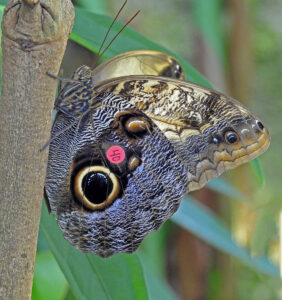

With the purchase of a Butterfly Quest ticket pack, you can save up to $16 off admission. AND, ticket packs include one Bug Bucket which allows children to bring the science home with them! These buckets give kids all the materials they might need to observe any invertebrate in their own backyard! Purchase tickets here.
How You Can Help Butterfly Longevity When Visiting Butterfly Pavilion:
-
Refrain from touching/grabbing/handling the butterflies
-
Butterfly wings are extremely delicate. They have protective scales on their wings which protect from the elements and work to stabilize their internal body temperature. By touching their wings, humans cause them to lose those protective scales. Should you accidentally tear or injure their wings, they could lose the ability to fly.
-
-
Watch where you step
-
Many butterflies will rest on our paths throughout Wings of the Tropics. It can be difficult to remember butterflies aren’t only flying above us!
-
-
Check your clothing before you exit
-
Wings of the Tropics butterfly conservatory has additional points of entry and exit with mirrors surrounding guests. This is to ensure our butterflies aren’t accidentally hitching a ride out of the conservatory with a guest.
-
Butterfly Pavilion offers other opportunities for guests to extend their involvement in conservation by volunteering with one of our community science projects, including Butterfly Monitoring, Dragonfly Monitoring and Urban Prairies Project. Learn more about all opportunities here.
Butterfly Pavilion released the 9th Annual Colorado Butterfly Monitoring Network (CBMN) Report on the state of Colorado native butterfly populations, revealing heightened sightings and reporting of Monarch Butterflies throughout Colorado. CBMN, celebrating its 10th year of consecutive monitoring in 2022, is a long-term community science project relying on volunteer monitors to record and identify butterflies throughout Colorado. The report suggests that 2021 was the best year in the past decade for monarch butterflies in the state, which is consistent with the increased monarch sightings across North America this past year.
“We are enthused to find that monarchs in Colorado showed an approximate 180% increase from the mean over the past seven years of our monitoring efforts, said Shiran Hershcovich, Lepidopterist Manager, Butterfly Pavilion. “The results are promising with the 2021 CBMN field season seeing a return of butterfly, monitor, and survey numbers higher than those in 2019.”
Since its inception in 2013, CBMN, one of the nation’s fastest-growing butterfly monitoring program, has recorded 107,811 individual butterflies and logged 3,166 butterfly surveys, accounting for 3,795 hours of volunteer monitoring through 2021. This past year included 12 counties including Adams, Arapahoe, Boulder, Broomfield, Douglas, El Paso, Gilpin, Jefferson, Larimer, Ouray, Routt, and Weld.
A Special Thank You To our Gardens on Spring Creek Team:
- Elise Willcox, our butterfly coordinator, led the efforts on the program this year, served as the liaison to all our wonderful community scientists, expanded our monitoring reach through establishing new routes, and gathered the data that made the report possible. Her passion for the program, our volunteers, and community science shines through daily!
- Coral Hosford, our butterfly keeper, provided great support to our monitors all throughout the monitoring season which helped create high quality data we see today
2021 Top Findings:
-
- In 2021, all categories saw improvement from 2019 numbers and two categories set new high records: the hours spent monitoring and the number of surveys submitted.
- Monitors observed and reported Monarch butterflies in all but two monitoring counties (Gilpin and El Paso) this season, with a count of 124 placing the species into the Top 25 Butterfly Species seen for the first time since CBMN was established.
- Between 2014 and 2020, monitors observed and recorded an average of 44.3 monarchs each year. In 2021, monitors recorded 124 monarchs, roughly a 180% increase from the mean over the past seven years of monitoring.
-
- Monitors observed and reported 120 total unique, identifiable species among all counties surveyed this season. Jefferson County exhibited the highest number of species seen, likely because of the county being home to the largest number of monitors, routes, and surveys submitted.
- The 2021 CBMN field season experienced a return to numbers comparable to the 2019 field season across all categories evaluated. The decline in numbers seen in 2020 was likely attributed to the record-setting wildfire season in Colorado that impeded butterfly populations and outdoor activities, and the ongoing, global COVID-19 pandemic impacted volunteer participation.
“While we’ve got a lot of great data, we still need more,” said Shiran Hershcovich, Lepidopterist Manager, Butterfly Pavilion. “That’s where the public comes in with community science programs, such as our monitoring networks at Butterfly Pavilion, to cover more geographies and support pollinator conservation.”
Volunteers Make it Happen
The CBMN is above all a community science project, and the most valuable resources are the monitors who volunteer their time to the program.
“This is people-powered science”, says Hershcovich. “When our community gets involved in these efforts, they become stakeholders in conservation and stewards for the protection of our native invertebrates!”
The 61 active monitors in the program in 2021 contributed 551.2 hours of time toward butterfly monitoring, helping to assess and identify butterflies throughout Colorado. In total, the active monitors submitted 502 surveys; this is the highest number of both surveys and hours that the program has seen across nine seasons of monitoring.
How it works
The CBMN involves trained volunteer monitors walking the same route at least six times throughout the butterfly monitoring season (here defined as May 15 – October 15, 2021) and recording every butterfly seen in a 6-meter radius.
During a survey, only one monitor observes butterflies at a time, however monitors are advised to work in pairs, allowing one to conduct the survey while the other keeps notes and aids with identifications. At the beginning and end of each monitoring session, monitors record the time, the temperature, the cloud cover conditions (clear, mostly clear, partly cloudy, mostly cloudy, overcast, or hazy) and the wind conditions (calm, relatively still, moderately windy, wind, or very windy). The monitors then walk the route at a steady pace, recording every butterfly seen inside their area of choice within their community.
About Colorado Butterfly Monitoring Network
The Colorado Butterfly Monitoring Network (CBMN) is a community science project led by Butterfly Pavilion that harnesses the power of volunteers to conserve Colorado butterflies. Butterflies are not only beautiful, but they also play a vital role in the ecosystem. CBMN data informs us on which butterflies are active in our state, giving us important insight on the health of our local ecosystems. CBMN volunteers observe and count butterflies in open spaces and parks multiple times per season, gathering essential data that land managers can use when making conservation decisions. It’s a fantastic chance to get outdoors and learn about butterflies, while having a positive impact on conservation in Colorado.
CBMN, one of the nation’s fastest-growing butterfly monitoring program, began in 2013 with four active monitors collecting data on five routes. The 2014 season saw major growth to 54 active monitors surveying 49 routes. The program has seen consistent monitoring since the 2014 season, with between 52 and 63 monitors reporting data on between 51 and 61 routes each year from 2015 through 2021.
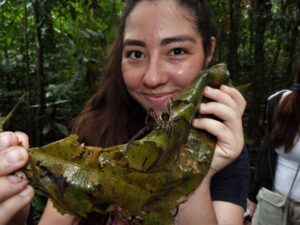
Shiran Hershcovich, Lepidopterist Manager at Butterfly Pavilion, is the newest member of the International Association of Butterfly Exhibitors & Suppliers (IABES) board of directors! She will be completing a 3-year term in her new position. Congratulations Shiran – this is an exciting and well-deserved achievement!
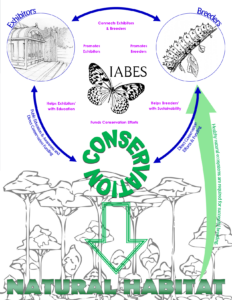
IABES is the world’s only organization specifically focused on butterfly exhibition and breeding. Their mission is to protect wild butterflies and their natural habitats. No other organization brings together more butterfly exhibitors and breeders. IABES also works to support lepidopterans – an order of insect that includes butterflies and moths – through direct financial support for conservation and research efforts with the purpose of protecting wild butterflies and their habitats.
They do so by:
-
Promoting sustainable butterfly exhibits and their suppliers
-
Supporting conservation, research, and public education
-
Promoting public education and awareness by supporting butterfly exhibitions like those at Butterfly Pavilion
“I’m most excited to strengthen the bridge between butterfly farms and exhibits. I consider it a privilege to work with our global partners and among so many different perspectives and backgrounds,” said Shiran. “And of course, being from the tropics myself, I’m passionate about creating a safer tomorrow for our tropical rainforests through the sustainable butterfly industry.”
Shiran is passionate about expanding the understanding of Lepidopteran biology, ecology, and welfare and is currently running a longevity study here at Butterfly Pavilion’s conservatory, Wings of The Tropics. The purpose of this study is to develop best welfare practices for butterflies under human care and increase understanding of their life cycle. You can help participate in the longevity study through “Butterfly Quest,” an engaging, fun, and interactive event where you assist with Butterfly Pavilion research! Learn more about how visitors like YOU can help scientists like Shiran gather crucial data here while visiting Butterfly Pavilion, February 22 – March 20.
To learn more about IABES or get involved, visit their website, here!
Big, Beautiful, But in Danger.
Birdwing butterflies include some of the largest butterflies in the world, with some species reaching up to one foot in length in wingspan. Birdwings are also recognized for their beautiful and unique coloration, like the male Common Green Birdwing (Ornithoptera priamus), which have bright green wings that contrast against a velvety black outline. While their aposematic coloration is a danger signal to most predators, unfortunately, it also draws in the most menacing apex predators – human poachers. Their breathtakingly large size and colorful patterning seem to defy nature, making them a highly sought-after animal as part of the illegal trade.
What do you think of when you think of the illegal wildlife trade? Probably, images of tiger pelts or elephant tusks popped into your head. However, many invertebrates, like scorpions and butterflies, are also negatively impacted by this underground multi-billion-dollar business. In an effort to protect them, all species of Birdwing are listed under CITES, an international treaty that regulates the trading of vulnerable animals across borders. However, this is not enough to stop the illegal actions of poachers who will stop at nothing to steal these beautiful butterflies from their homes.
Are you wondering how to support our fragile invertebrate jewels?
- Grow native plants! Habitat restoration helps keep wild invertebrate populations healthy and resilient.
- Be a scientist! Join community science efforts in your area to help identify and research at-risk species
- Support sustainable wildlife-based economies like butterfly farms! By visiting Butterfly Pavilion, you’re supporting conservation-forward projects around the world and reducing human-nature conflict.
- Participate in education and awareness about the importance of affected animals and the negative impacts of the illegal trade. By visiting today, or by sharing what you’ve learned with friends and family, you’ve played a vital role in invertebrate conservation!
Butterfly Pavilion always advocates for the protection of Tiny Giants, and that includes Birdwings. As of January 7, we have introduced Common Green Birdwings into our butterfly conservatory, Wings of the Tropics (WOTT). As the name suggests, these butterflies can sometimes resemble small birds due to their unusual shape and bird-like movements, and are sure to stand out among the thousands of butterflies in the conservatory. Not only does this experience offer a rare opportunity to see these amazing animals up close, but it also raises awareness about the troubles they face in the wild, including poaching, habitat loss, and climate change.
AZA-accredited zoos, like Butterfly Pavilion, are leaders in the protection of animals. In addition to field conservation projects, captive breeding, and public education, animals receive the highest quality of care during their stay at our zoo. Having these ambassador Birdwings in WOTT helps Butterfly Pavilion’s mission to educate the public about the importance of wild invertebrate populations and biodiversity around the world.
Are you interested in seeing some of the largest butterflies in the world and learning more about their conservation? You can learn more and purchase tickets here!

Butterfly Pavilion mourns the passing of Dr. E.O. Wilson. On Sunday, E.O. Wilson, a true giant in the fields of Entomology and Conservation Biology, passed away at the age of 92. The former Harvard professor was a Pulitzer Prize-winning author of numerous books on diverse topics, such as sociobiology, ants, biophilia (a term he coined that refers to humanity’s natural affinity for nature), and biological conservation. His contributions to his fields of study cannot be overstated. Like Butterfly Pavilion, Dr. Wilson never shied away from audacious goals. Most recently he was championing a cause he first proposed that has come to be known by the phrase Nature Needs Half – the idea that humanity should shoulder the responsibility of conserving and acting as stewards for half of the Earth for the rest of nature. While his legacy will endure, Dr. E.O. Wilson’s contributions will be sorely missed. For more about Dr. Wilson, his life, and his contributions to science and conservation we direct readers to the following biography (more are sure to follow).
https://www.reuters.com/lifestyle/science/obituary-modern-day-darwin-eo-wilson-dies-92-2021-12-27/
Habitat Loss is Contributing to the Decline of Dragonflies Around the World
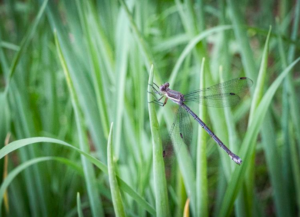
The International Union for Conservation of Nature (IUCN) recently released their latest Red List of Threatened Species update, which included the first global assessment of dragonflies. Findings from the assessment revealed that damage to wetlands and rivers is contributing to the decline of dragonfly species around the world, putting one in six species at risk of extinction.
Dragonflies are of great interest to Butterfly Pavilion for conservation action and future restoration efforts. Although a few organizations raise dragonfly nymphs, none in the United States have been able to maintain these animals through their entire breeding cycle. Butterfly Pavilion is planning its own breeding program for dragonflies through conducting research to understand the husbandry of these insects and then maintaining them under human care as a part of the conservation of these species in the wild. Eventually, Butterfly Pavilion would like to create a dragonfly exhibit. Meeting this goal will help our organization on our mission to become an industry leader in invertebrate husbandry.
Beyond this propagation under human care, Butterfly Pavilion conservationists are also conducting fieldwork on dragonflies to better understand their population dynamics, habitat associations, and distributions. Eventually, we hope to work to restore locally uprooted populations and expand existing ones. In 2018, Butterfly Pavilion also began a citizen science project to monitor dragonfly populations in Colorado. These types of projects not only gather important ecological information but also help educate and engage the public in conservation and research projects.
We invite you to join us in these efforts by supporting Butterfly Pavilion on our journey to build and open a new, world-class facility that will serve as the global hub for invertebrate research, education, and conservation. You can learn more about how to support Butterfly Pavilion and our mission on our website!
Butterfly Pavilion Conservationists are Studying Colorado Fireflies Through Hand-rearing
There are several invertebrate conservation projects that are being conducted every day by Butterfly Pavilion – and they don’t just involve butterflies. Fireflies are another charismatic invertebrate that our researchers work with, and Colorado has its own native species. A majority of the fireflies in this state are “dark”, or non-glowing. However, there are at least one species of “glowing” fireflies that can be spotted lighting up the night sky, as well as a few genera of “flashing” fireflies. These luminous invertebrates belong to the beetle order, Coleoptera, and they use their iconic flashing patterns to communicate with one another. Their radiant light displays make these beetles a favorite among people of all ages, often kindling memories of childhood and warm summer nights.
Fireflies are an indicator species, meaning their population numbers represent the health of ecosystems and the many organisms that live within them. With limited population numbers throughout our state, Butterfly Pavilion took the initiative in 2017 to start researching these unique beetles and how we can expand their populations in the wild. In 2021, as part of Butterfly Pavilion’s Firefly Life Cycle Project, we collected adult fireflies and bred them under human care, and have reared larvae from the resulting eggs produced by the females. Our goal is to rear those larvae to adulthood and continue the cycle, with a long-term goal to rear the young past their vulnerable early stages and release larger individuals to help create or restore new populations in the wild.
Little is known about the life cycle of fireflies, and it has only been intermittently accomplished in academia. Our goal is to understand the husbandry and rearing of these beetles to create a set of industry best practices and opportunities for a unique, outdoor zoo exhibit. Meeting this goal will enable Butterfly Pavilion to become an industry leader of invertebrate husbandry. This can also support the reintroduction of native species that have been otherwise lost to habitat destruction. After a brief interruption from the global pandemic that halted the study, the Firefly Life Cycle Project has started up again. Our researchers are working to hand-rear these beetles from their larval stage to their final adult stage. We hope to establish husbandry practices along the way that will teach us more about the way Colorado fireflies live and survive in the wild.
Conservation projects like our Firefly Life Cycle Project exist to help provide our community, and beyond, with expert knowledge about invertebrates and their conservation. Educating our community helps people foster an appreciation for the small and underappreciated organisms that we affectionately call, Tiny Giants. One day, Butterfly Pavilion hopes to display fireflies at our facility for our community to see up close and learn more about these special invertebrates. You can learn more about all of our conservationists and the work that they do for invertebrate conservation here!