
Masters of Disguise: How Plants Dress Up for Pollinators
Pollination is crucial for the survival and reproduction of most flowering plants. For this reason, many plants have evolved unique methods to attract pollinators. Plants manipulate their flower color, shape, scent, and other structures to attract specific pollinators. These adaptations are known as ‘pollinator syndrome.’ Flowers attracting bees are brightly colored in white, blue, or yellow and have a fresh scent. Bees are a diverse species that range in size and shape, and so do the flowers they pollinate. Asters, coneflowers, penstemon, bee balm, and poppies are all flowers pollinated by bees. A fascinating example of a flower appealing to bees is the bee orchid (Ophrys apifera). The bee orchid has petals shaped like a bee to attract bees looking for a mate. This petal also makes for a perfect landing pad while the bee attempts to mate with what they think is a hot date. In the process, they pick up pollen and move to the next “potential mate.” Butterflies also enjoy brightly colored flowers, specifically those in red and purple tones. These flowers have a faint, fresh scent and have a landing platform. Tubular narrow flowers are also acceptable because butterflies can use their proboscis to sip nectar from the center. These tubular flowers usually sprout in clusters to provide a makeshift landing pad. Notable flowers that are pollinated by butterflies include columbines, goldenrods, and milkweed. Milkweed flowers are particularly attractive to Monarch butterflies. They use milkweed as a host for their caterpillars and visit the flowers as adults once blooming has finished for the year.
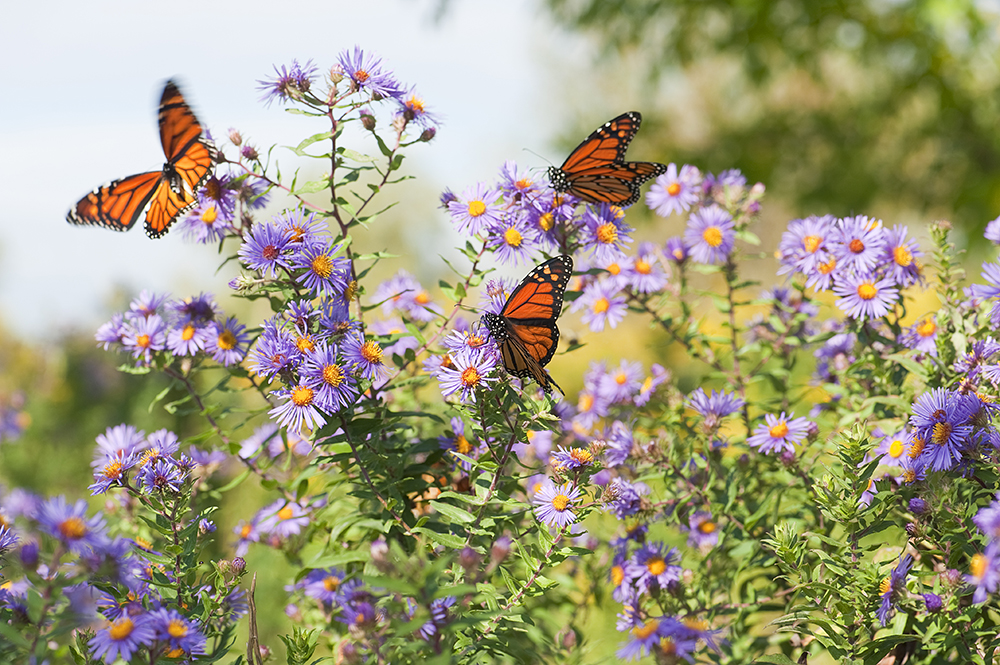
Similarly, moths prefer red, pink, white, and purple flowers. However, bright colors aren’t their style. They prefer flowers that are pale or dark-toned. Pale, fragrant flowers are perfect for nocturnal moths, while darker-toned flowers stand out to day-flying moths. Like butterflies, moths have a long proboscis to sip nectar, meaning they also seek tubular-shaped flowers. Some flowers go to extremes to attract pollinators. The corpse flower (Amorphophallus titanium), native to Sumatra, has the largest unbranched flower head in the animal kingdom and can grow up to twelve feet. When it blooms, it releases a putrid smell reminiscent of rotting flesh. Why? To attract flies and carrion beetles for pollination! Some flies are attracted to flowers with rancid scents, so naturally, they are fooled by the corpse flower’s scent. Pollinating beetles are usually attracted to dull green or white flowers with sturdy petals to protect from beetle mandibles. On the other hand, Carrion beetles feed on carcasses, and in their search for food, they inadvertently pick up pollen from the corpse flower. Corpse flowers bloom for two to three days and only every one or two years. Botanic gardens across the U.S. maintain these flowers in their collection to preserve their genetic material because there are only 1,000 corpse flowers in the wild. It’s no wonder they go to extreme lengths to attract pollinators!
Although flowers have developed interesting ways to attract pollinators, these rules aren’t set in stone. Many flowers attract all sorts of pollinators, and pollinators visit all kinds of flowers. Being aware of these distinctive adaptations can help us know how to attract specific pollinators and accommodate pollinators that share a space with us.
Written by Celena Romero
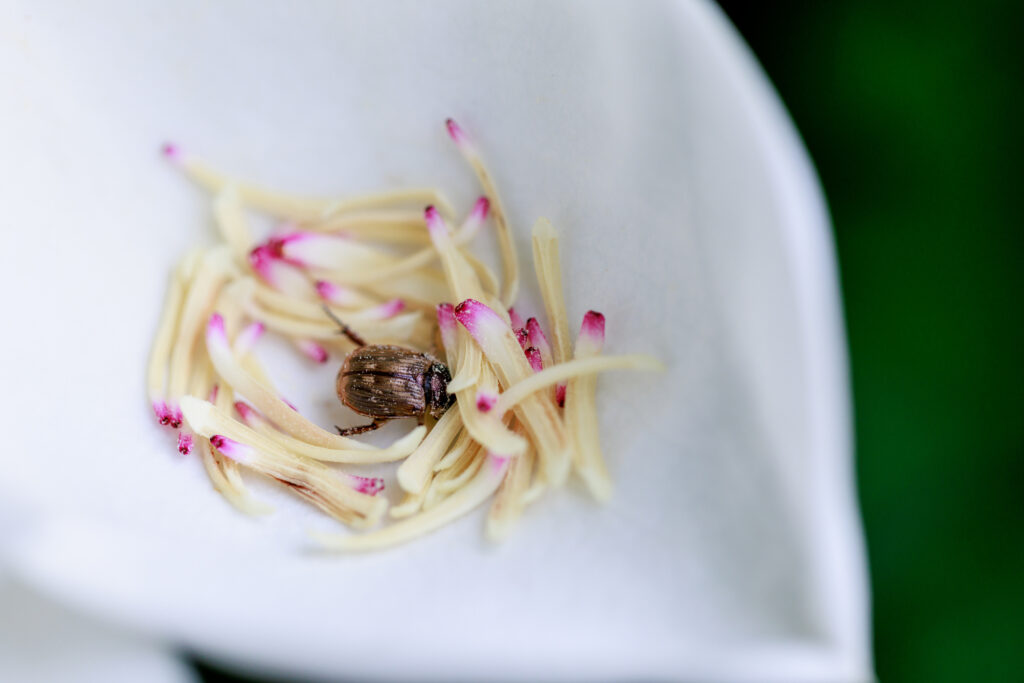
Many of us are familiar with bees and butterflies as pollinators, but other invertebrates contribute to pollination and important plant services. For example, beetles pollinated flowering plants before bees and butterflies even existed! They were abundant during the Mesozoic era, 200 million years ago, and the earliest plant life on Earth appeared soon after. Magnolias, a flower frequently pollinated by beetles, first appeared on Earth about 95 million years ago and still utilize beetle pollination today!
You may notice that magnolias have large, tough petals and sturdy carpals. This helps prevent major damage from beetle mandibles. Beetles are in the order Coleoptera, one of the most diverse species of animals on the planet. There are more than 300,000 described species of beetles in the world! Soldier beetles, scarabs, long-horned beetles, sap beetles, and checkered beetles are all examples of beetle species that pollinate flowers.
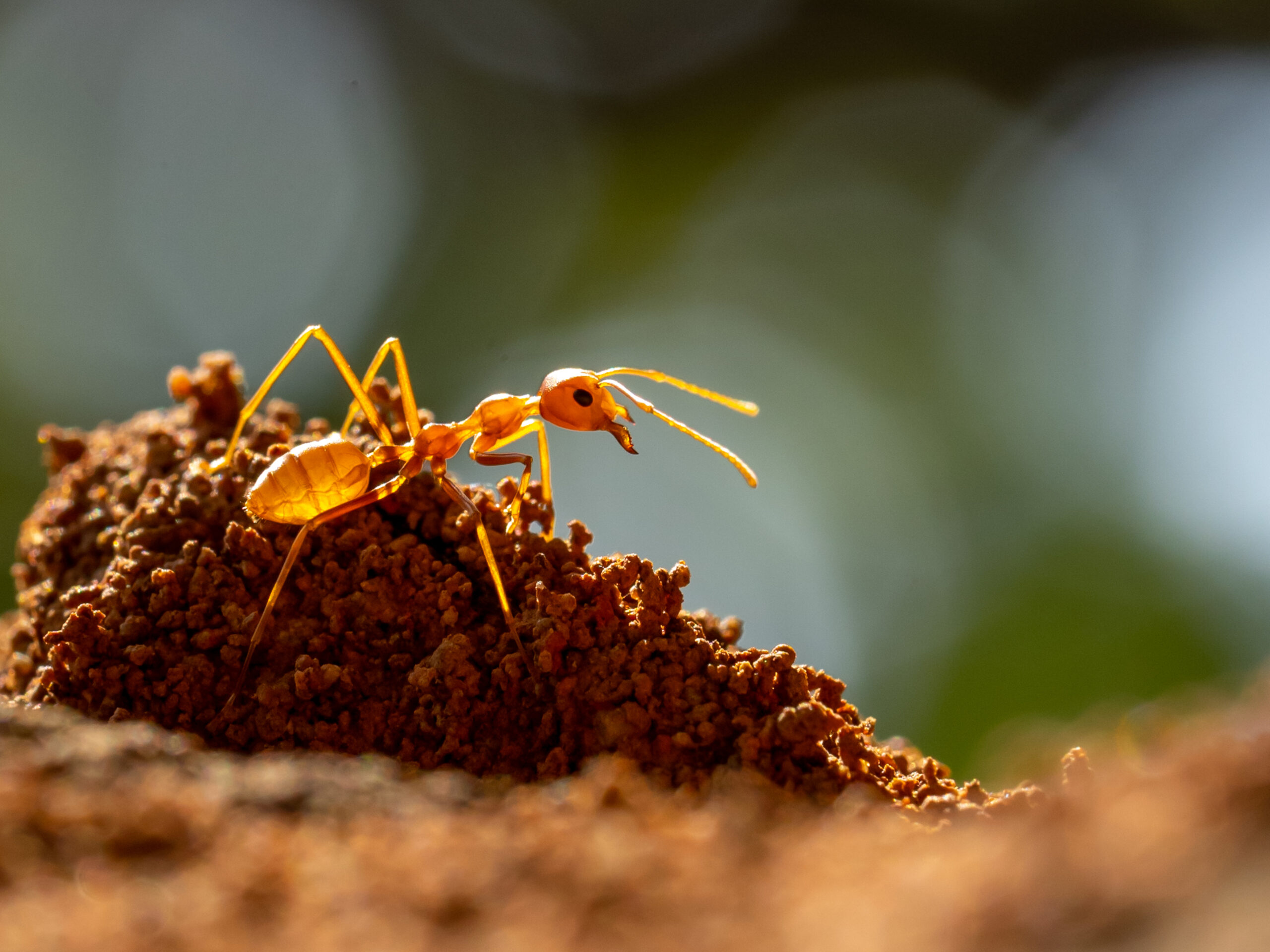
Bees may get most of the pollination glory, but ants are another member of the Hymenoptera order that are pollinators. Ants often seek out the sweet nectar of flowers and may transfer pollen after visiting a flower. Ants aren’t as successful at carrying pollen as other pollinators due to their smooth and hairless bodies. However, some ant species protect plants by providing their stinging power to deter pests. For example, Acacia trees utilize ants for protection against herbivores, and in return, the ants receive food and shelter. Plants that use ant colonies as a defense mechanism are known as myrmecophytes.
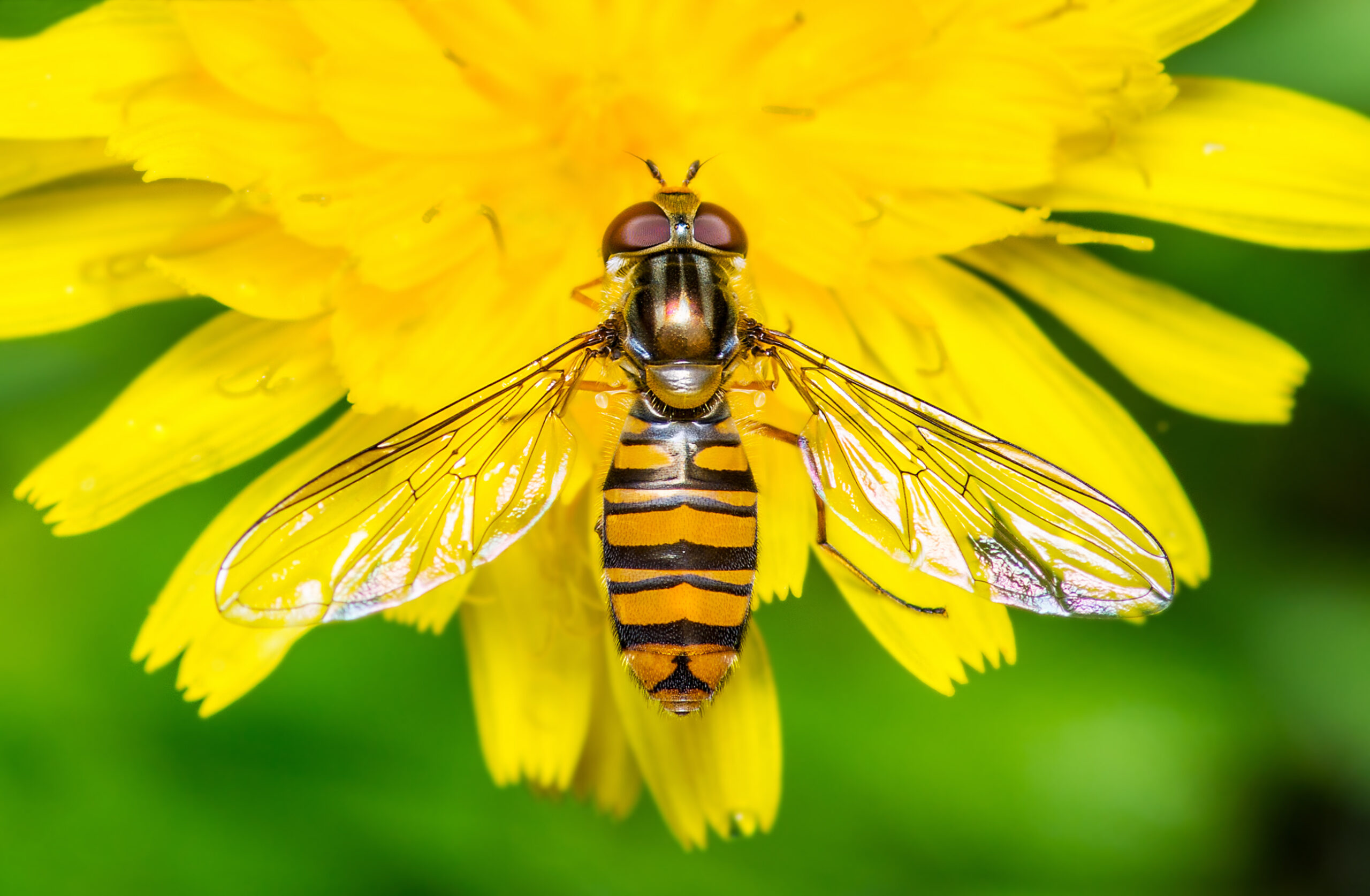
Flies are typically considered pests, but they are another unsung pollinator hero! Flies, gnats, and mosquitoes all visit flowers for nectar. Hoverflies are a species of fly that resemble tiny bees. The difference is that they have one pair of wings, while bees have two pairs. They are often called “incidental pollinators” because they hover over flowers rather than landing on them and, in the process, pick up pollen. Chocolate midges sound like a sweet treat, but they are a species of fly responsible for chocolate! Chocolate midges are smaller than a pinhead, making them perfect for pollinating the tiny downturned flowers of cacao trees. They are the only pollinators for cacao trees, meaning that their survival is crucial to the survival of chocolate!
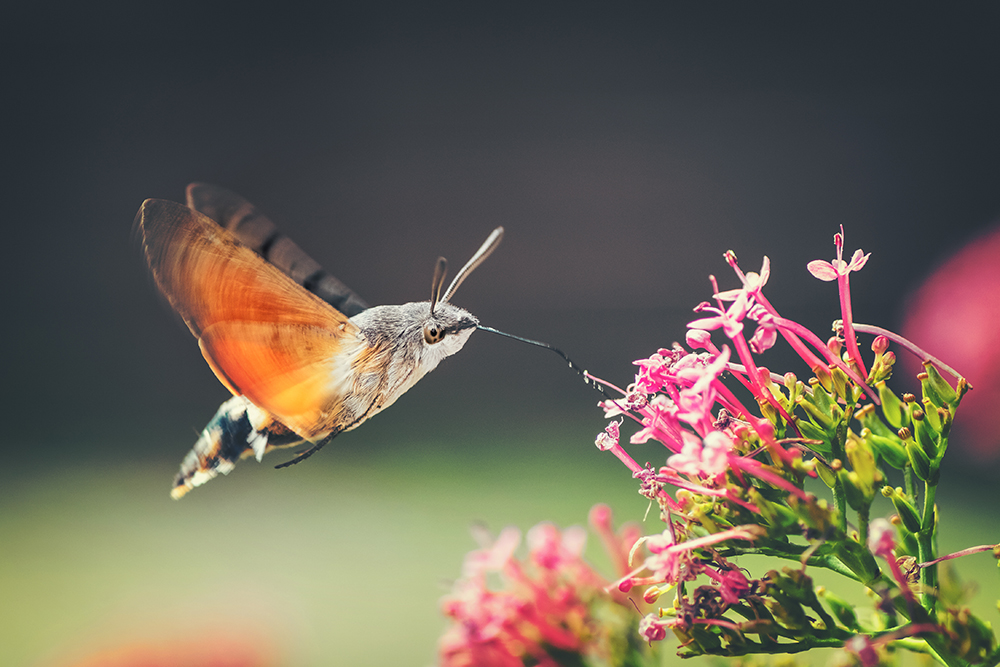
The most interesting unknown pollinator resembles a combination of multiple pollinator species. It is the hummingbird-hawk moth (Macroglossum stellatarum), which is neither a hummingbird nor hawk. The hummingbird hawk-moth is a species of moth that resembles a hummingbird in appearance and movement. It hovers from flower to flower and uses its long straw-like proboscis to sip nectar from flowers. Like hummingbirds, their fuzzy bodies are perfect for picking up pollen and dispersing it to the neighboring flowers. The most commonly seen species of hummingbird moth in northern Colorado is the whitelined sphinx (Hyles lineata). Next time you hear a humming noise and see a flying creature darting from flower to flower, double-check. It may be a hummingbird moth!
We now know we can’t give all the pollination credit to bees and butterflies. Many pollinator conservation efforts are focused on these more well-known species. The good news is that most effort put toward saving a butterfly can also save a beetle, ant, fly, or any other pollinator! Actions such as avoiding pesticides, cultivating a pollinator garden, choosing native plants for your garden, and participating in community science can increase the biodiversity of our landscapes. This ultimately helps us and our pollinator heroes!
Written by Celena Romero
A World Without Pollinators: Why Pollinators Matter and How You Can Help Ensure Their Survival
Imagine starting your morning without a cup of coffee. A salad with nothing but lettuce. No fragrant flowers in the spring or sweet watermelons in the summer. These are a few of the food items we would be missing without pollinators; others include almonds, apples, apricots, bananas, carrots, tomatoes, strawberries, kale, vanilla, and chocolate. 80% of all flowering plants that produce fruits, vegetables, nuts, and spices require pollination. Pollination is the process of pollen moving from the male part of a flower to the female part. For most flowering plants, this cannot be done without help from pollinators. Pollinators move from flower to flower in search of food, and in the process, they pick up and drop off pollen. Pollinators come in all shapes and forms. You may be most familiar with bees and butterflies, but other invertebrates like beetles, ants, flies, moths, and wasps are also pollinators. In the US, it is estimated that the pollination of crops is valued at $10 billion annually. Globally, pollinator services are valued at $3 trillion! Pollinators are not only crucial to our economy and health, but they also play a pivotal role in sustaining life on Earth. Most flowering plants require pollination to reproduce. Plants provide habitat for other living organisms, reduce soilerosion, and convert carbon dioxide into oxygen for the planet. It’s crucial to understand that despite their vital role, pollinators are facing a global decline. This is primarily due to habitat loss, pollution, climate change, and the use of harmful chemicals. The urgency of this issue cannot be overstated. Pollinators need our help now more than ever. How can we contribute to the survival of these life-sustaining creatures? Fortunately, Butterfly Pavilion offers accessible ways for everyone to participate in pollinator conservation. Here are a few ways you can make a difference: Create a space for pollinators in your garden! We have some helpful tips here. Butterfly Pavilion also frequently hosts Pollinator Gardening Boot Camps, which are workshops that focus on cultivating a pollinator-friendly space in your garden.
Take part in pollinator conservation projects at Butterfly Pavilion! The Colorado Butterfly Monitoring Program involves counting butterflies to compile data useful for land managers when making conservation decisions. If you’re looking for more variety in work, join the Urban Prairies Project! The Urban Prairie Project utilizes volunteers for pollinator habitat restoration, data collection, and community outreach.
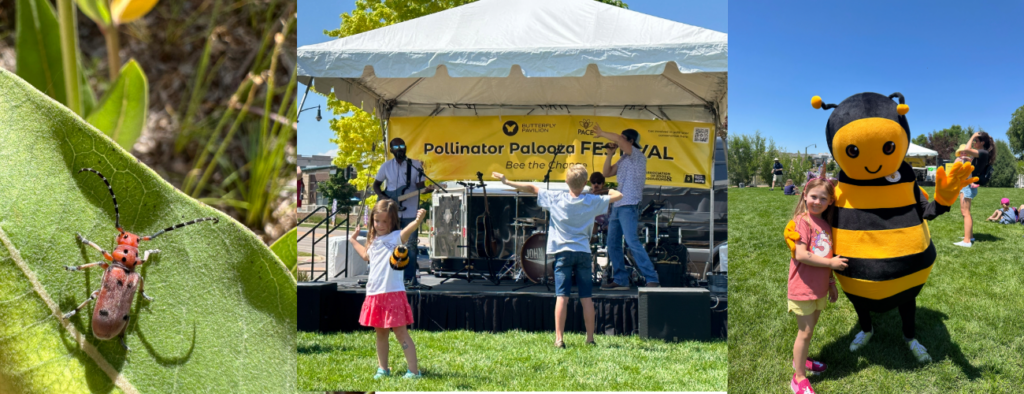
Finally, celebrate Pollinator Palooza with Butterfly Pavilion! June is National Pollinator Month, and we are hosting a series of events all month long to engage and educate the community in pollinator protection and conservation. The grand finale is our Pollinator Palooza Festival on June 29th from 12:00 2-8:00 p.m. a hybrid outdoor-indoor pollinator celebration featuring live bands, a pollinator artisan market, beer garden, food trucks, pollinator workshops, garden tours, live butterfly releases and more!
Written by Celena Romero
Butterfly Pavilion Partners with Ronald McDonald House to Offer Families Free Access to Invertebrate Zoo
Butterfly Pavilion and Ronald McDonald House of Denver (RMHC) are pleased to announce a new partnership. Families staying with their loved ones receiving treatment at RMHC can now explore the world’s premier invertebrate zoo for free. RMHC provides a comforting home away from home for families seeking medical treatment for their seriously ill children in Denver, with no charges for their stay. Butterfly Pavilion creates a haven where invertebrates and the community can engage and interact, fostering an appreciation for these remarkable creatures.
We make the wonders of the natural world accessible to our community so that they can deepen their understanding of the vital role invertebrates have within ecosystems worldwide. Guests connect with thousands of invertebrates, from tropical rainforest butterflies to colorful coral that call the barrier reef home. We are grateful and excited to allow families to explore the wonders of the natural world, partake in engaging educational experiences, and create lasting memories with their loved ones. We aim to provide RMHC families with solace during their extended stays by allowing them to discover the beauty and complexity of the invertebrate world. Butterfly Pavilion has been a staple in Colorado for decades, and providing this opportunity to families is one way we can give back to our community.
Trees for Pollinators!
By Amy Yarger, Senior Director of Horticulture
When we think of gardens that support pollinators such as butterflies and bees, we often think of flower beds and sunny meadows. However, with over a thousand species of bees in Colorado and the countless flies, beetles, moths, butterflies, and wasps that pollinate plants, habitat can be as diverse as these important insects are. Pollinators not only move pollen from one flower to another but have other interactions with plants in their environment. Some pollinators are leaf chewers during their larval stage or spend part of their life cycle nesting inside plants. Others are predators or parasites of plant-eating bugs. And most insects use plants or plant material for shelter, whether that is pupating under leaf litter or roosting on a protected branch. For that reason, plantings for pollinators should feature a diverse selection of native plants, including woody plants such as trees and shrubs.
If you are considering planting a tree in your landscape, this is the time of year to do it; the temperatures are mild, and moisture is readily available. Here are a few recommendations for trees that have special relationships with local pollinators.
Prunus virginiana and Prunus americana – Chokecherry and American plum – These early spring bloomers provide festoons of pale fragrant blossoms which feed many bees, butterflies, and flies, but they also are hosts for swallowtail butterflies and the magnificent Weidemeyer’s admiral (Limenitis weidemeyerii).
Amelanchier alnifolia – Saskatoon serviceberry – This small tree is also an early spring bloomer and larval host for swallowtail butterflies. Their berries are also great food for birds.
Gleditsia triacanthos inermis – Thornless honeylocust – Honeylocusts and other related trees provide larval food for the silver spotted skipper (Epargyreus clarus) and thrive in our climate extremes and heavy soil.
Quercus spp. – Oaks – Oaks have been celebrated for the hundreds of caterpillar species they feed, especially in other parts of the country, but they also are a key habitat tree here for the shelter they provide. A special tree shout-out goes to our native shrubby Quercus gambelii, or Gambel’s oak, which is the host for our state butterfly, the gorgeous Colorado hairstreak (Hypaurotis crysalus)
Celtis occidentalis – Hackberry – This species is another tough tree for our prairie climate, provides berries for birds, and also hosts for the American snout (Libytheana carinenta), mourning cloak (Nymphalis antiopa), and the question mark (Polygonia interrogationis). This tree species doesn’t look like much when small, but they mature into stately shade trees.
Some of the other key woody plants for pollinators, such as cottonwoods and willows, are harder to manage in smaller home landscapes, but we can advocate for them in natural areas where they provide resources for many kinds of wildlife, including pollinators. Butterflies such as the beautiful mourning cloak feed on cottonwood leaves as caterpillars, while many bees rely on the pollen of willows early in the spring.
Trees provide so many benefits to our landscape – they provide shade and shelter, cool our urban areas, feed people and wildlife, and even provide recreation if you are a climber. It’s nice to know that we can enjoy both pollinator habitat and trees to make our landscapes better for people and other living things.
Shiran Hershcovich, Lepidopterist Manager and Rich Reading, Ph.D, VP of Science and Conservation share about importance of butterflies, invertebrates, community science opportunities, and new partnership with Colorado State University.
The following is an excerpt of the full article. To read the full article, please visit gazette.com, or click the button at the bottom of the page.
In the meadows of southern Colorado, a new life begins.
Under the leaf of a bog violet, near shallow groundwater, a butterfly flutters her brown wings and lays her eggs. The underside of her wings are lined with silvery-white spots, an ode to the species’ name. After about two weeks, the cooling October air welcomes the new hatchlings. For now, it is time for them to rest for winter.The silverspot butterfly, native to southwest Colorado, has been listed as threatened under the Endangered Species Act. With its new classification, Colorado scientists are hoping to protect the creature’s habitats — and ultimately preserve the species as a whole.
“It is quite rare for invertebrates to be listed, even though they make up the majority of known animal life on Earth,” said entomologist Shiran Hershcovich, the lepidopterist manager at the Butterfly Pavilion in Westminster. “They have not been traditionally given as much research efforts or research funding, so this is a monumental decision that gives a little more visibility to these butterflies.”
The threatened status, Hershcovich said, is a way to say that while the butterfly is not in immediate danger of extinction or full loss, things are not looking great for it. From the impact of climate change to development and improper livestock grazing, here’s what to know about the silverspot butterfly.
Read the Full Article on Gazette.com
Psst…here’s some more for you!
To read more butterfly approved blogs, click here
To learn more about Butterfly Pavilion’s conservation efforts, click here
For Zoo Conservation, click here
What’s the deal with Miller moths this time of year?
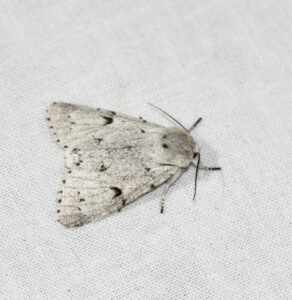
As the weather warms and spring descends on Colorado, Front Range cities and towns are beginning to witness the migration of Miller moths. These winged creatures are embarking on a journey from now through early June, flying from the plains to the mountains, and often catching the attention of Coloradans in the process. The migration of Miller moths begins on Colorado’s high plains, where adult moths lay their eggs underground. These eggs hatch in early spring, giving rise to army cutworm caterpillars (Euxoa auxiliaris) about the size of a grain of sand. These tiny creatures feed on vegetation, cutting through stalks of wheat and corn, and rapidly growing to about the size of a child’s forefinger. Then they turn into moths with wings, commonly called “Miller moths” due to their fine scales that rub off, resembling the dusty flour on millers’ clothing. During their migration, these resilient insects are capable of flying over 100 miles from the plains to the mountain ranges. Despite their large numbers and occasional presence in our homes, Miller moths pose no threat to humans or to our pets. They do not carry diseases, sting, or bite. In fact, their presence attracts animals that rely on them for food, like birds, who we often like to see in our backyards. Colorado is home to about 1000 known species of moths. However, compared to their more charismatic butterfly cousins, moths remain heavily understudied. Moths are not pests, but fill a vital role in our ecosystem, serving as a food source for birds, bats, spiders, and even bears. Additionally, moths function as pollinators, facilitating the reproduction of plants, which we require to sustain our economy, environment, and food systems.
As moths are nocturnal, they pollinate plants that daytime pollinators, such as bees, cannot, or cannot do nearly as efficiently. Moths are responsible for propagating crops worldwide, worth billions of dollars.
We can help these important animals and keep them away from our spaces by being mindful of our use of artificial light. Moths are nocturnal creatures; they rely on light from the moon and stars for navigation. When they see artificial lights such as a porch lamp, they become lost and confused and attempt to use it as a navigational source, thinking it is the moon or another celestial object. By reducing unnecessary lighting, we can help our invertebrate neighbors, including not only moths, but other nocturnal animals, such as Colorado fireflies, in maintaining their natural behaviors. It is important to view moths, with compassion, recognizing the vital role they play in our ecosystem. As Miller moths flutter through Colorado this year, try to approach them with curiosity and acknowledge their importance in maintaining our natural world. By valuing these creatures and implementing small changes, such as reducing unnecessary outdoor lighting, we can coexist. By educating ourselves and attempting to understand and protect these often-overlooked creatures, we contribute to the preservation of our environment.
As with all invertebrates, moths are understudied, underappreciated and misunderstood.
Butterfly Pavilion is a leader in pollinator protection and conservation, including creating pollinator habitat, conducting research, leading conservation programs and community science volunteer opportunities.
Learn more about invertebrates and pollinators at butterflies.org
Backyard Bug- Tarantula Hawk
By Emily Racine, Guest Services & Membership Coordinator
Backyard Bug
Join us as we explore our backyards, gardens, and windowsills to learn more about our native Colorado invertebrates!
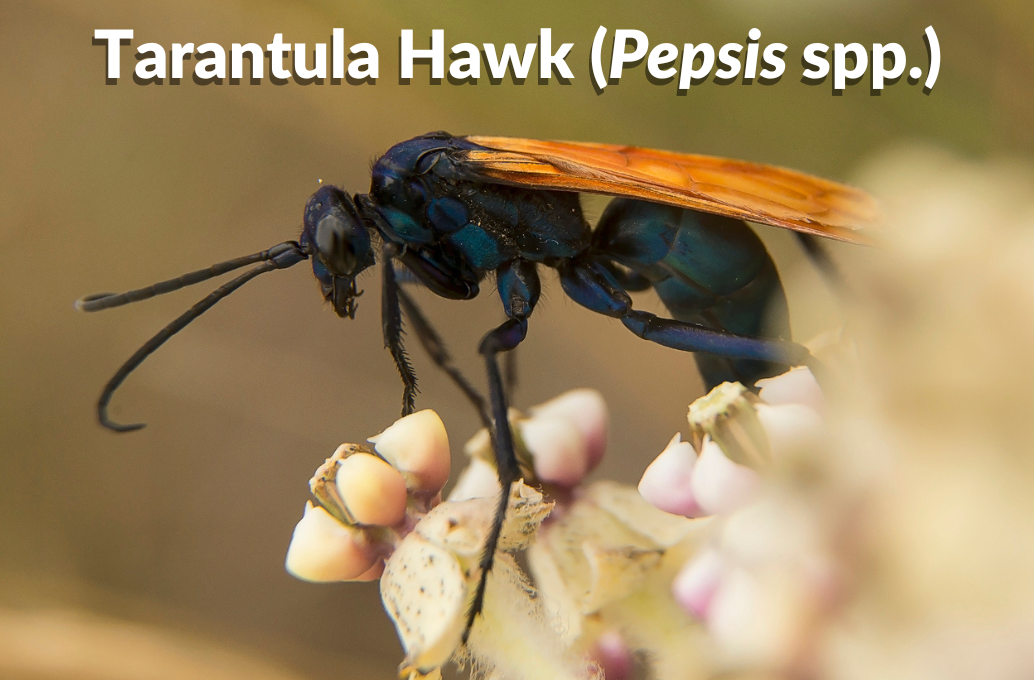
It’s a bird, it’s a plane, it’s a…. what is that? With the ability to reach up to four inches in length and color diversity that rivals that of butterflies, Tarantula Hawks or Tarantula Hawk Wasps (Pepsis spp.) are an intimidating force, especially if you
happen to be a tarantula.
Species Identifiers
Tarantula Hawks are a type of spider wasp, with 133 known species and ranges that span across South and Central America and the southern United States. Within Colorado, there are six different species that are known to occur, the most common being Thisbe’s Tarantula Hawk (Pepsis thisbe) which can typically be found in the southeastern portion of the state. These wasps have dark blue, iridescent bodies, bright orange wings, and grow up to two inches in length.
Common Misconceptions
Contrary to what their name may suggest, adult Tarantula Hawk Wasps do not consume the tarantulas they catch. Instead, female wasps will hunt and sting a tarantula to immobilize it, bring it back to its burrow or a similar shelter, and lay their eggs in the spider. The opening to the burrow is then covered with debris to provide a safe shelter for the wasp larvae to grow, and the tarantula provides them with a food source to do so.
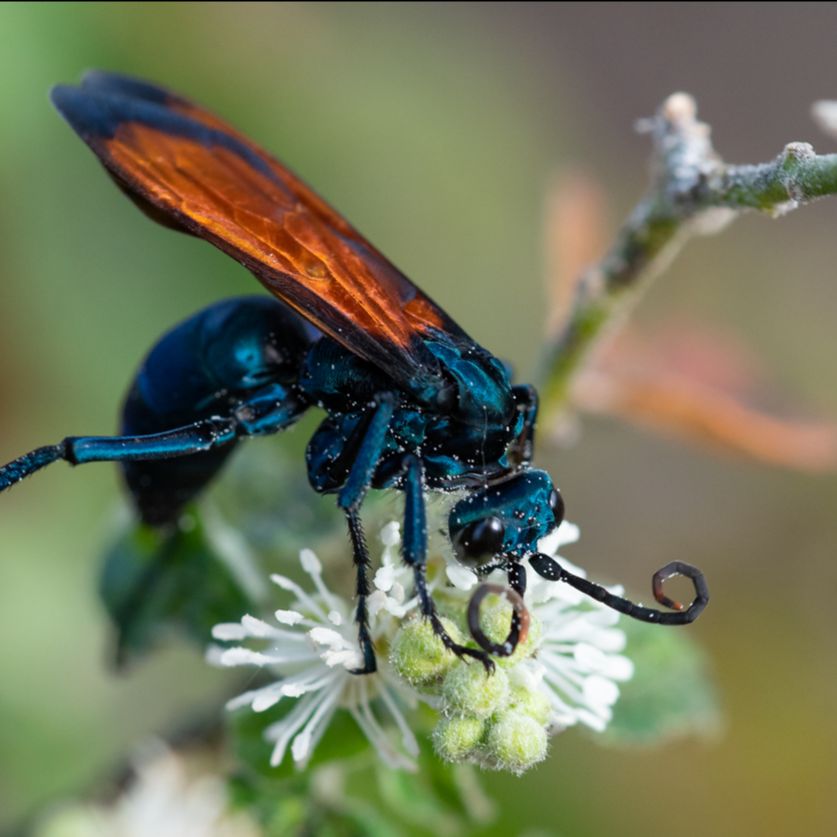
Despite their fearsome appearance, Tarantula Hawks are important pollinators! Adult wasps are nectivores, meaning both males and females feed almost exclusively on pollen and nectar from flowers, and even enjoy sipping on the juice of fruits and berries. Tarantula Hawks can also be excellent indicators of biodiversity within the habitats they occupy – even providing important information that can be used to survey their prey’s populations!
Big, Beautiful, But in Danger.
Birdwing butterflies include some of the largest butterflies in the world, with some species reaching up to one foot in length in wingspan. Birdwings are also recognized for their beautiful and unique coloration, like the male Common Green Birdwing (Ornithoptera priamus), which have bright green wings that contrast against a velvety black outline. While their aposematic coloration is a danger signal to most predators, unfortunately, it also draws in the most menacing apex predators – human poachers. Their breathtakingly large size and colorful patterning seem to defy nature, making them a highly sought-after animal as part of the illegal trade.
What do you think of when you think of the illegal wildlife trade? Probably, images of tiger pelts or elephant tusks popped into your head. However, many invertebrates, like scorpions and butterflies, are also negatively impacted by this underground multi-billion-dollar business. In an effort to protect them, all species of Birdwing are listed under CITES, an international treaty that regulates the trading of vulnerable animals across borders. However, this is not enough to stop the illegal actions of poachers who will stop at nothing to steal these beautiful butterflies from their homes.
Are you wondering how to support our fragile invertebrate jewels?
- Grow native plants! Habitat restoration helps keep wild invertebrate populations healthy and resilient.
- Be a scientist! Join community science efforts in your area to help identify and research at-risk species
- Support sustainable wildlife-based economies like butterfly farms! By visiting Butterfly Pavilion, you’re supporting conservation-forward projects around the world and reducing human-nature conflict.
- Participate in education and awareness about the importance of affected animals and the negative impacts of the illegal trade. By visiting today, or by sharing what you’ve learned with friends and family, you’ve played a vital role in invertebrate conservation!
Butterfly Pavilion always advocates for the protection of Tiny Giants, and that includes Birdwings. As of January 7, we have introduced Common Green Birdwings into our butterfly conservatory, Wings of the Tropics (WOTT). As the name suggests, these butterflies can sometimes resemble small birds due to their unusual shape and bird-like movements, and are sure to stand out among the thousands of butterflies in the conservatory. Not only does this experience offer a rare opportunity to see these amazing animals up close, but it also raises awareness about the troubles they face in the wild, including poaching, habitat loss, and climate change.
AZA-accredited zoos, like Butterfly Pavilion, are leaders in the protection of animals. In addition to field conservation projects, captive breeding, and public education, animals receive the highest quality of care during their stay at our zoo. Having these ambassador Birdwings in WOTT helps Butterfly Pavilion’s mission to educate the public about the importance of wild invertebrate populations and biodiversity around the world.
Are you interested in seeing some of the largest butterflies in the world and learning more about their conservation? You can learn more and purchase tickets here!

Butterfly Pavilion mourns the passing of Dr. E.O. Wilson. On Sunday, E.O. Wilson, a true giant in the fields of Entomology and Conservation Biology, passed away at the age of 92. The former Harvard professor was a Pulitzer Prize-winning author of numerous books on diverse topics, such as sociobiology, ants, biophilia (a term he coined that refers to humanity’s natural affinity for nature), and biological conservation. His contributions to his fields of study cannot be overstated. Like Butterfly Pavilion, Dr. Wilson never shied away from audacious goals. Most recently he was championing a cause he first proposed that has come to be known by the phrase Nature Needs Half – the idea that humanity should shoulder the responsibility of conserving and acting as stewards for half of the Earth for the rest of nature. While his legacy will endure, Dr. E.O. Wilson’s contributions will be sorely missed. For more about Dr. Wilson, his life, and his contributions to science and conservation we direct readers to the following biography (more are sure to follow).
https://www.reuters.com/lifestyle/science/obituary-modern-day-darwin-eo-wilson-dies-92-2021-12-27/