
After winter’s cold gloom, sunny days in early March can make us feel like spring is just a breath away. It’s hard not to want to start gardening after weeks of looking at bare trees and brown grass. But spring’s unpredictable weather can lead gardeners to premature exuberance, resulting in disappointment and regret under a foot of snow. Never fear, the horticulture team here at Butterfly Pavilion can help you survive these last few weeks before gardening season really starts.
Myth 1 – “Zero-scape” is the landscape of the future: Removing turf can be a great step for the environment, but landscape fabric covered by bare rock doesn’t help the planet much more. These landscapes still need maintenance while providing no food or shelter for pollinators and other wildlife. Without care, landscape fabric gets torn, weeds work their way through, and rocks get kicked away. But habitat gardens can significantly save water, provide beauty, and support our invertebrate neighbors. Our landscapes can be part of the solution instead of just another problem.
Myth 2 – Cut everything down in fall and winter: Many of us were raised to believe that “cleanliness is next to godliness”, but tidy landscapes are bereft of the life we want to cultivate. The “fall cleanup” of perennial gardens is a common practice, leaving gardens bare through the season when animals are looking for shelter. For pollinators and other beneficial species to survive winter, gardeners should leave last year’s growth in garden beds at least until new growth greens up in mid to late spring, unless a plant is diseased or poses a hazard. If you have spots where you can leave the old growth for longer into the summer, do that!
Myth 3 – To prep for your spring garden, till every year: The more we till the soil, the more we degrade the natural structure and encourage weed seed germination. We also disturb the habitat for some of our soil-dwelling beneficials; even pollinators such as some bees, moths, and beetles spend part of their lives as underground dwellers. If you’d like to amend your soil, try just top-dressing with about 2-3 inches of organic matter, which will foster the invertebrates and other living things that help to make the soil workable and easier to grow plants in. Sometimes it makes sense to till, but it’s not something you should do every year or in every situation.
Myth 4 – Spring means emptying your wallet at the garden center: “Window shopping” at a nursery can be a dangerous game if you are trying to stay within a budget. Everything looks so colorful as you walk the aisles; how can you resist? But decisions made in haste seldom result in long-lasting gardens. For a landscape that is sustainable for our environment, as well as our pocketbooks, it’s best to come prepared with a plan. Find out what does well with your soil, water, and light conditions. Phase your work over a longer time so you can take time to establish your new plant babies. And if you are short on money, but still want to grow some pollinator-friendly plants, species such as prairie coneflower, desert four o’clocks, and blue flax come up readily from seed.
Myth 5 – Plant your annuals on Mother’s Day: The average last frost date for much of the Denver metro area is around May 15. However, the average means that sometimes it’s earlier and sometimes it’s much later. It’s disappointing when you come home with your beautiful annuals, only to lose them to a spring freeze days later. If you can hold off until Memorial Day, the chances of freezing your annuals decreases significantly. And it never hurts to watch the weather and have a backup plan, such as covering your plants, if winter re-asserts itself.
Gardeners can do a lot to help reverse declines of pollinators and other wildlife, while saving resources and connecting with their communities. The myths discussed above are commonly held, but the truth is that you can save money, labor, and time by choosing native plants that thrive in your locale and support the animals that support our ecosystems and our livelihoods. While you don’t need to spend time tilling, planting or cutting things back right now, you can use this precious time to learn and prepare for a busy spring in the garden.
Written by Amy Yarger, Horticulture Director
Butterfly Pavilion has resources and upcoming programs about gardening just for you!
Pollinator gardening resources
March 10: Pollinator Gardening Bootcamp workshop: Plants for Pollinators
April 28: Expert lecture: “Get Ready, Get Set, Garden”
Butterfly Pavilion and Colorado State University Announce Partnership to Battle “Invertebrate Apocalypse”
Westminster and Fort Collins, Colo., Feb. 27, 2024
– With habitat loss and climate change threatening invertebrates – animals without backbones who form the essential foundation for every ecosystem on the planet – Butterfly Pavilion and Colorado State University announced a formal agreement to create a partnership to benefit entomology, as well as human and ecosystem well-being. The partnership will see Butterfly Pavilion work with three of CSU’s colleges: Agricultural Sciences, Natural Sciences, and the Warner College of Natural Resources to increase research, conservation and management of invertebrate species, engage and provide opportunities for aspiring biologists, ecologists, agriculturalists and conservationists working globally, and connect that work to the public, creating more awareness and support for invertebrates. “Butterfly Pavilion is delighted to be working collaboratively on this unprecedented partnership pairing an Association of Zoos & Aquariums-accredited invertebrate zoo with a respected academic research partner like CSU to help us find solutions to some of the most pressing research and conservation challenges facing us today,” Butterfly Pavilion CEO Patrick Tennyson said. “Working together, we can move invertebrate research, conservation and education to new heights.” “CSU is proud to formalize this unique partnership with such an important research and cultural institution,” CSU President Amy Parsons said. “Butterfly Pavilion and CSU have long connected students for internship opportunities and engaged in collaborative research. This partnership will prepare the future workforce, enhance conservation efforts, and elevate our research abilities, which is more important than ever given the critical impact of invertebrates on the food web, agriculture and the environment.” Invertebrates exist on every continent and in every ocean, making up 97 percent of all animal species. These tiny giants pollinate our crops, recycle waste and decompose dead material, build healthy soil, and improve water quality. They make nutrients available to plants, control pest populations and protect crops. Invertebrate pollinators are responsible for over $40 billion of agriculture production in Colorado, and a half trillion dollars globally. According to the International Union for Conservation of Nature (IUCN), less than one percent of all known invertebrate species have been adequately evaluated. “Invertebrates are foundational to entire ecosystems and yet we’re experiencing a global biodiversity crisis brought on by an insect apocalypse,” said Richard P. Reading, Ph.D., Butterfly Pavilion’s vice president of research and conservation. “We don’t have a basic understanding of them, let alone how to conserve them. Through this partnership with CSU, we can have a real impact on invertebrate conservation by identifying and acknowledging them as social, economic and environmental resources.” Together, Butterfly Pavilion and CSU will improve the quantity and quality of conservation, management and research projects conducted by the partners. They will increase the educational opportunities for students at CSU through internships, jointly conducted research and conservation projects, and conservation education opportunities. The partnership will also create pathways and inspiration for K-12 students to achieve higher education through the colleges within CSU and increase the awareness of the collaborative research and educational work among the public, especially among Butterfly Pavilion guests and stakeholders. “As a professor and researcher at CSU, I am very excited for this partnership. Butterfly Pavilion does great work and is an amazing venue where CSU entomologists can communicate their research to large audiences. It is also a fabulous place for our students to gain hands-on experience with live invertebrates through volunteering and paid internships. I look forward to working on initiatives that will strengthen both our entomology program at CSU and offerings at Butterfly Pavilion,” said Marek Borowiec, CSU assistant professor of Agricultural Biology. “In this groundbreaking partnership between CSU and Butterfly Pavilion, we’re unlocking a world of boundless opportunities for both current and future students,” said Shartrina White, Butterfly Pavilion’s vice president of Education. “Together, we’re not merely pushing the boundaries of invertebrate research, conservation, and education – we’re igniting a spark of inspiration that will fuel future generations. By championing the often overlooked yet essential role of invertebrates, we’re empowering students to become pioneers in understanding and safeguarding these vital species, making a lasting impact on the world.”
About Butterfly Pavilion
Butterfly Pavilion has been part of the Colorado community since 1995 and is the first Association of Zoos and Aquariums (AZA)-accredited, stand-alone, non-profit invertebrate zoo in the world, currently occupying a 34,000-square foot facility situated on an 11-acre campus provided by the City of Westminster, Colorado. Butterfly Pavilion’s mission is to foster an appreciation of invertebrates by educating the public about the need to protect and care for threatened habitats globally, while conducting research for solutions in invertebrate conservation.
About CSU Research
Colorado State University, a Carnegie R1 institution, reached $498.1 million in sponsored project expenditures in 2023, representing a 62% funding increase in the last decade and expanded impact and discovery across all eight colleges. With more than 100 research centers and institutes, the university is breaking barriers and collaborating to solve society’s greatest challenges.
Written by Russ Pecoraro
Media Contact: Jennifer Quermann
Winter Blooms in Wings of the Tropics
The butterflies in our Wings of the Tropics exhibit need nectar no matter the season, so Butterfly Pavilion’s horticulturists keep the rainforest blooming 365 days a year. Here are a few spectacular flowers you can see right now:
Red powderpuff –
Calliandra haematocephala
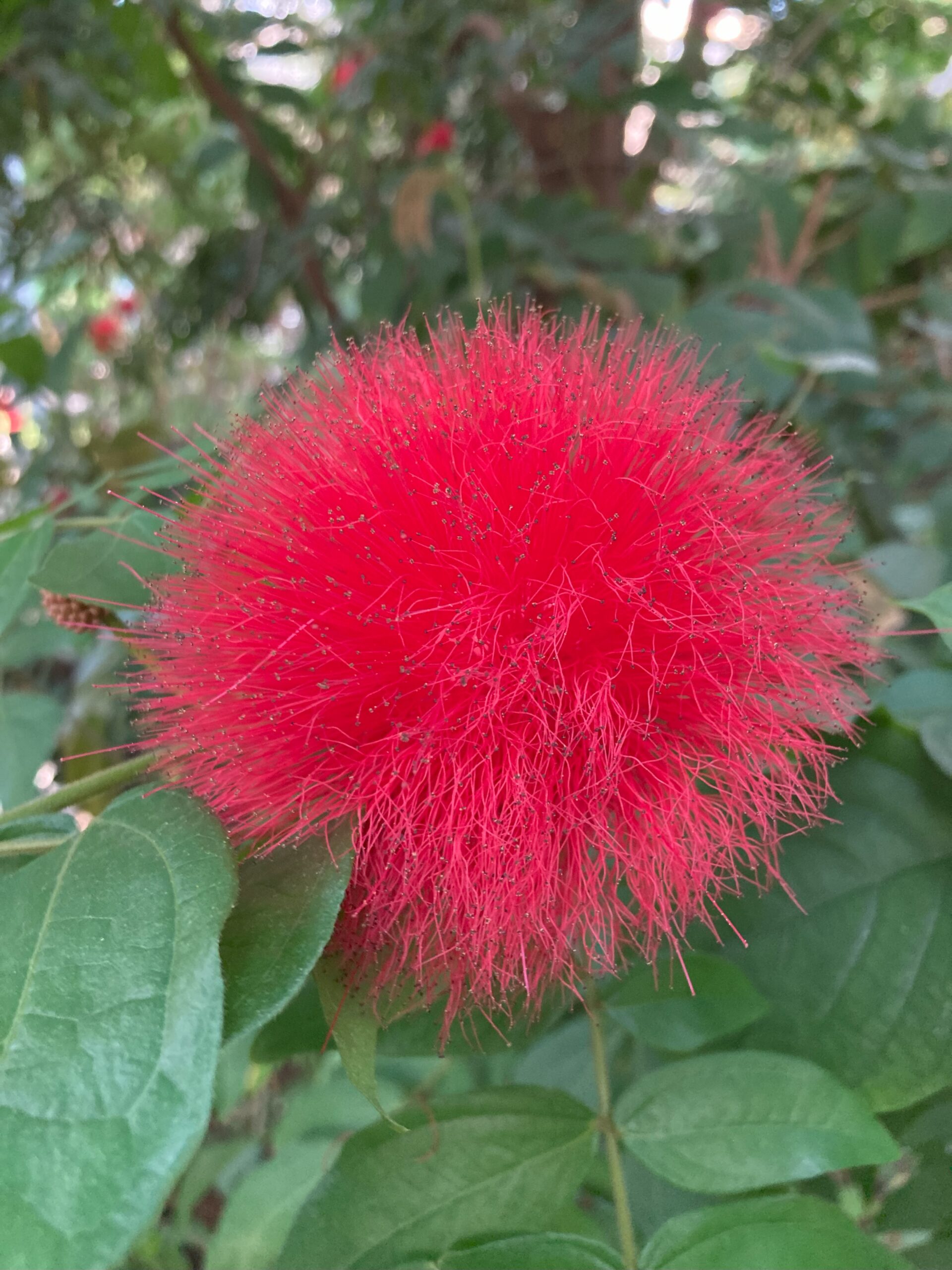
The red powderpuff, a native of Bolivia, is a small tree growing to about 16 feet tall with bright red puff-like flower heads. These fabulous flowers are favorites of scarlet Mormon butterflies and other swallowtails.
Glory bower –
Clerodendrum splendens
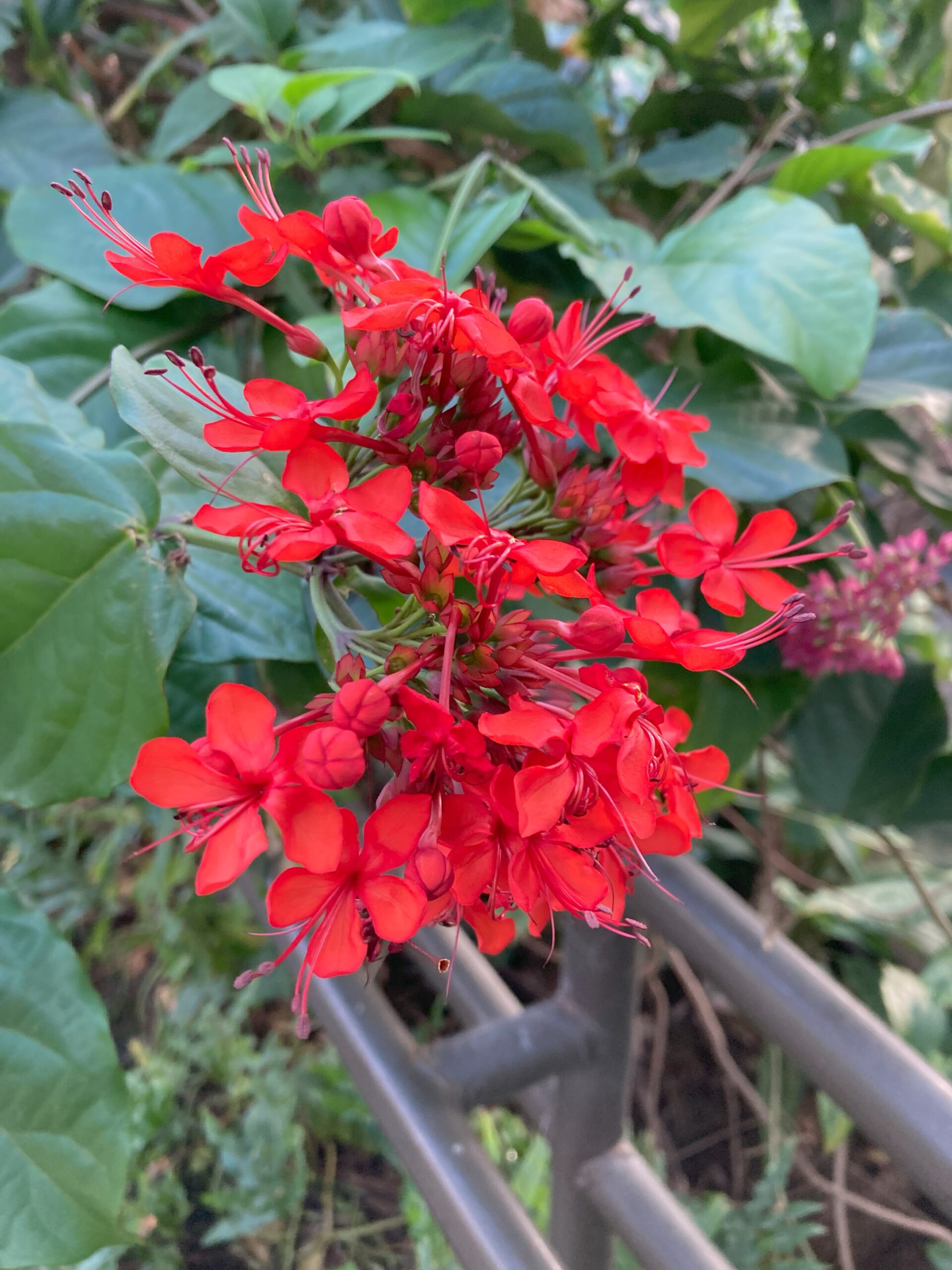
Glory bower is a twining shrub native to West Africa. The flowers are brilliant red, and even after the corollas fall, the calyxes become purplish-pink or red, retaining a bit of cheerful color. This species feeds most of our nectar-feeding butterflies from little yellow sulfur butterflies to large swallowtails.
Flame vine –
Pyrostegia venusta
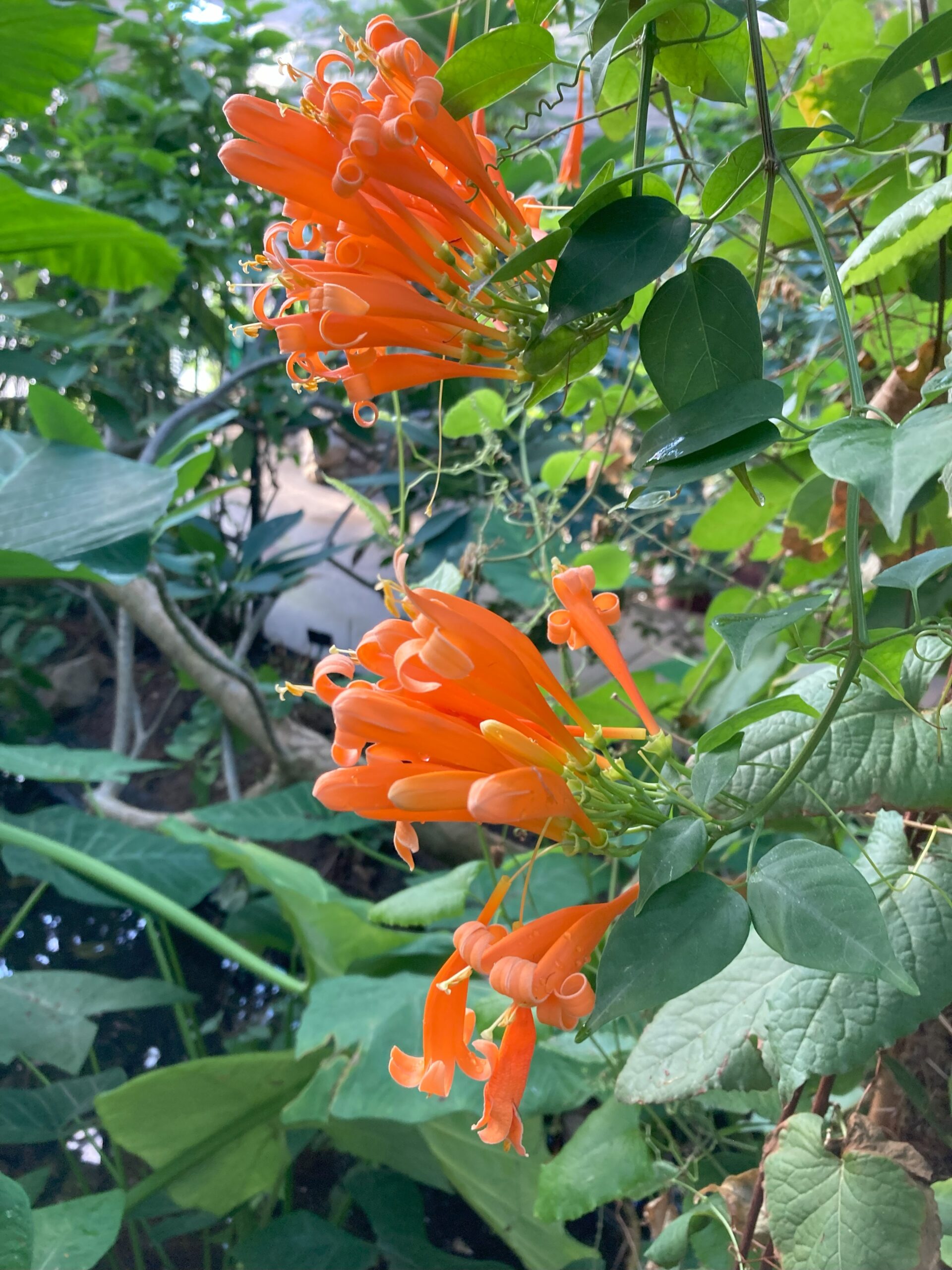
Flame vine is a native of Brazil, and its name is from the Greek pyr, fire, and stege, a roof, referring to the color and shape of the upper lip of the flower. Large nectar-feeding butterflies with long tongues, such as paper kites, visit this flower.
The word metamorphosis derives from the Greek words
meta
, meaning beyond or transformation, and
morphosis
, meaning a forming, and represents significant change or transformation in shape, structure, or form.
Invertebrate metamorphosis is truly captivating! In biology, metamorphosis often involves a series of distinct stages where an organism undergoes a radical change from one life stage to another. It’s an incredible transformation showcasing nature’s remarkable adaptability and life cycle diversity. This metamorphic diversity enables invertebrates to thrive in various environments and fulfill different ecological roles. It’s a testament to the adaptability and resilience of these creatures, each transformation representing a marvel of biological evolution.
This process often involves an organism undergoing significant structural and physiological changes, and includes complete and incomplete metamorphosis. Complete metamorphosis is a type of development in certain insects, characterized by four distinct life stages: egg, larva, pupa, and adult. This process is in contrast to incomplete metamorphosis, which has three stages and lacks a pupal stage. Insects that undergo complete metamorphosis belong to the orders Lepidoptera (butterflies and moths), Diptera (flies), Coleoptera (beetles), and Hymenoptera (ants, bees, and wasps), among others. Insects that undergo incomplete metamorphosis belong to various orders, including Orthoptera (grasshoppers, crickets, and katydids), Odonata (dragonflies and damselflies), and others. One of the most well-known examples of metamorphosis is the life cycle of butterflies and moths. In this case, the stages typically include egg, larva (caterpillar), pupa (chrysalis), and adult (butterfly or moth). The transformation from a crawling caterpillar to a winged adult is a remarkable example. Metamorphosis, however, is not limited to invertebrates; it can also occur in other organisms, such as amphibians like frogs and toads. These organisms undergo metamorphosis as they transition from aquatic larvae (tadpoles) to terrestrial adults. The term metamorphosis is also used more broadly in a metaphorical sense to describe any profound change or transformation in form, structure, or character. This could apply to various aspects of life, such as personal development, societal changes, or the evolution of ideas. Butterfly Pavilion is committed to enriching the understanding and admiration of invertebrates and their transformative processes. By delving into the captivating life cycles of these creatures, our goal is to ignite a profound connection with and respect for the wonders of the natural world.
Amy Yarger, Horticulture Director Many of us learn from a very young age about the cycles of life, such as egg, caterpillar, pupa, adult butterfly. We learn that part of being alive is constant change. Just by looking out our windows, we can see the cycle of seasonal changes (with some unpredictable hiccups – this is Colorado, after all) year after year – frost and bare branches, the first green shoots, rampant growth, then leaf fall. But landscapes also shift and change over grander time scales. Landscape metamorphosis, otherwise known as ecological succession, is the process of changing species composition in a living community over time. A landscape may start off as a grassland and gradually be replaced with a variety of woody species, until it becomes a forest. However, this mature plant community is only stable until the next disturbance. Human-induced change can disrupt the soil structure and hydrology and import exotic species. Human-driven change has happened very rapidly in the geological sense, with species removed or moved around at an unprecedented rate over the past 200 years. This rapid transformation has contributed to the decline of many animal, plant, and fungi species around the world. Out of the nearly 32,000 populations analyzed in the World Wildlife Fund’s most recent Living Planet report, there has been an average decline of 69% since 1970. So there’s no better time for us to guide landscape metamorphosis to be better for ourselves and other living things. Just by how we manage our landscapes, we can create habitat for invertebrates and other wildlife, sequester carbon, conserve soil, and reduce pollution. Butterfly Pavilion is a leader in educating the community to plant biodiverse landscapes. Our outdoor gardens provide a model of how you can create habitat in your own backyard. We also work with local and global communities to restore hundreds of acres of pollinator habitat. If you find that this is the time of year when you are excited about change, consider guiding your own ecological succession in favor of the little species that have a big impact on our lives. Doing so not only saves resources, money, and maintenance time, but also adds a source of beauty and lifelong learning about our shared home. Your personal landscape is part of the big picture; in this ecological approach, the metamorphosis of our landscapes can lead to metamorphosis in our communities and even in ourselves. Want to get started? Register for our Pollinator Gardening Bootcamp here: https://butterflies.org/event/pollinator-garden-bootcamp/
When we think of bees and their vital role in pollination, honey bees are often the first to come to mind. However, honey bees (Apis mellifera) are not the only bees found in America. This country boasts a diverse population of native bee species that have been quietly pollinating plants for millions of years.
Honey bees were introduced to America by European settlers in the early 17th century. Since then, they have become an integral part of agriculture and our daily lives. Here are some key aspects that distinguish honey bees from their native counterparts:
-
Social Structure:
Honey bees are social insects, living in large colonies with a well-organized hierarchy. The colony comprises a queen, worker bees (females), and drones (males). They work together as a cohesive unit to maintain and protect their hives.
-
Honey Production:
Honey bees are renowned for their ability to produce honey. Beekeepers manage honey bee colonies to harvest honey, which has various culinary and medicinal uses.
-
Commercial Agriculture:
Honey bees have become the go-to pollinators for large-scale commercial agriculture. They are highly mobile, allowing beekeepers to transport colonies across vast distances to pollinate monoculture crops like almonds, apples, and blueberries.
-
Non-Native Species:
As an introduced species, honey bees can sometimes outcompete native bees for resources and nesting sites. This competition can have implications for the ecological balance of local ecosystems.
In contrast to honey bees, native bees have been part of America’s ecosystems for millennia. They are a diverse group, with over 4,000 species identified across the country. Here’s what sets native bees apart:
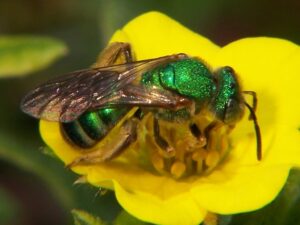
A Sweat bee native to Colorado
-
Solitary and Social Behavior:
Native bees exhibit diverse social structures. Some are solitary, meaning they live and work individually, while others are social, forming smaller colonies with fewer members compared to honey bees.
-
Habitat Specificity:
Native bees have evolved alongside native plants, making them specialists in pollinating certain species. Their close relationship with local flora makes them important contributors to local biodiversity.
-
Efficiency in Pollination:
Native bees have co-evolved with native plants, resulting in efficient pollination. Their unique body sizes, shapes, and behaviors make them ideal partners for specific flowers, ensuring better pollen transfer.
-
Conservation Value:
Many native bee populations are currently threatened due to habitat loss, pesticide use, and climate change. Protecting native bees is crucial for maintaining the delicate balance of ecosystems and preserving biodiversity.
While honey bees play a vital role in commercial agriculture, native bees contribute significantly to the health of natural ecosystems. A diverse range of pollinators is essential to ensure that various plant species get the attention they need for reproduction and survival. To support both honey bees and native bees, here are some key steps to take:
-
Protect Natural Habitats:
Preserving and restoring native habitats like wildflower meadows, forests, and wetlands provides a sanctuary for native bees and other pollinators.
-
Reduce Pesticide Use:
Limiting the use of harmful pesticides and adopting sustainable agricultural practices can help safeguard pollinator populations.
-
Promote Native Planting:
Encouraging the growth of native plants in gardens and green spaces provides nourishment for native bees and supports local biodiversity.
-
Support Local Beekeepers:
Backing local beekeepers who use responsible beekeeping practices helps sustain honey bee populations.
Honey bees and native bees are both essential players when it comes to pollination in America. While honey bees contribute significantly to agriculture and our daily lives, native bees are vital for maintaining biodiversity and ecosystem health. Understanding and appreciating the differences between these pollination powerhouses will help us take informed actions to protect and support all bees, ensuring a sustainable future for both human society and nature. By working together, we can create a harmonious environment where both honey bees and native bees thrive side by side. To learn more about how you can help both honey bees and native bees visit: Pollinator Awareness Through Conservation and Education (butterflies.org)
Honey bee Beekeeping, also known as apiculture, is a practice that dates back thousands of years. The symbiotic relationship between humans and honey bees (Apis spp.) has evolved over time, transitioning from simple honey-hunting to sophisticated beekeeping techniques. The origins of beekeeping can be traced back to prehistoric times, where early humans discovered sweet honey hidden within beehives. Honey-hunting, as it was initially known, involved following wild bees to their natural hives in trees or rock crevices and harvesting the honey, comb, and beeswax.
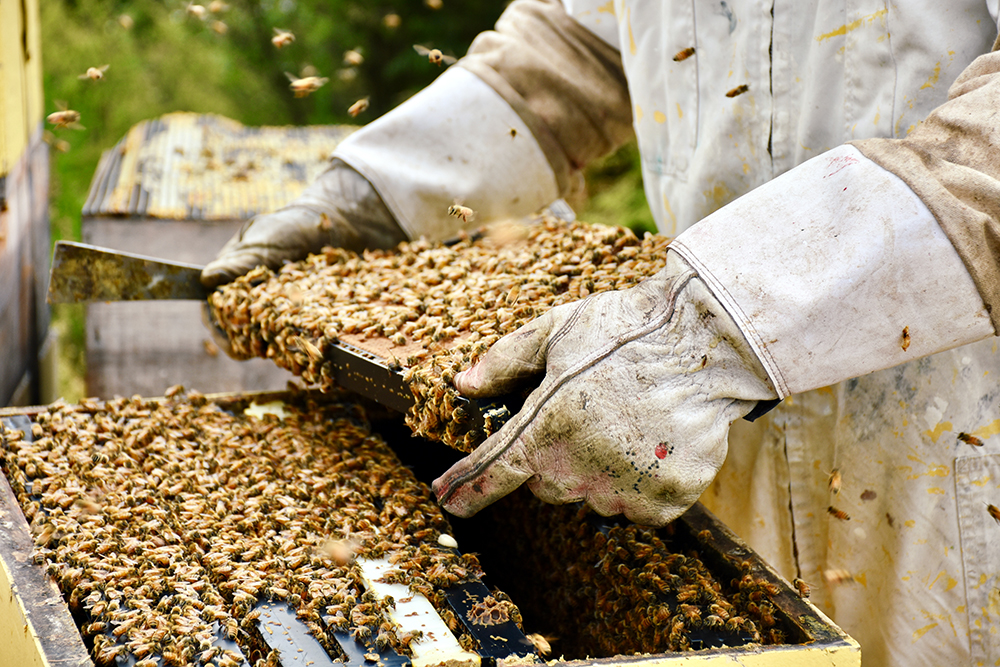
One of the earliest recorded instances of organized beekeeping comes from ancient Egypt, around 3000 BCE. The Egyptians created artificial beehives made from clay or straw, resembling the traditional beehives seen in history books. Hieroglyphs and wall paintings depict beekeepers tending to hives, emphasizing the value of honey and beeswax in religious rituals and medicinal remedies. Beekeeping continued to flourish in ancient Greece and Rome. In fact, Aristotle observed the complex social structure of bees and identified the queen as the central figure, while Virgil’s poetic work, “Georgics,” included detailed instructions on beekeeping techniques. During the Middle Ages, monks practiced beekeeping as a form of self-sufficiency, using honey as a sweetener, beeswax for candles, and mead (honey wine) for sacramental purposes. Monasteries often kept hives in specially designed apiaries, and beekeeping knowledge was shared and preserved within these secluded enclaves. The 18th and 19th centuries saw significant advancements in beekeeping practices and the birth of modern beekeeping. One of the most notable figures was Reverend Lorenzo Langstroth, an American apiarist, who invented the movable frame beehive in 1851. This invention revolutionized beekeeping, as it allowed beekeepers to inspect and manage hives without destroying the entire colony. Industrialization in the 19th century led to mass production of honey, beeswax, and other bee products. With advancements in transportation and packaging, honey became more accessible to a broader population. However, this era also saw the emergence of commercial beekeeping practices, sometimes at the expense of sustainable beekeeping principles. In recent times, beekeeping has faced numerous challenges, such as the spread of diseases like Varroa mites, deformed wing virus (DWV), and Colony Collapse Disorder (CCD). These issues have highlighted the importance of sustainable beekeeping practices and the urgent need to protect bee populations worldwide. Beekeepers, scientists, and conservationists have been working together to find innovative solutions, promote pollinator-friendly practices, and raise awareness about the significance of bees in maintaining ecosystem balance.
Honeybees are among the most fascinating creatures on our planet. Beyond just producing honey, these small but mighty pollinators play a critical role in supporting the health and abundance of our ecosystems and agricultural landscapes. They are much beloved by the public, frequently in the news, and often the subject of panic over what happens if they disappear. But what are honeybees?
Honeybees, scientifically known as Apis mellifera, are social insects that belong to the family Apidae. These creatures have a highly evolved and complex societal structure, living in well-organized colonies with distinct roles for each member. Within a colony, you’ll find three main castes:
-
Queen Bee: The largest and longest-lived member of the colony, responsible for laying eggs and ensuring the continuity of the hive.
- Worker Bees: These are the female bees that undertake various tasks, including foraging for nectar and pollen, building and maintaining the hive, and caring for the young.
-
Drones: The male bees, whose primary purpose is to mate with a queen.
The survival of honeybees is deeply intertwined with the well-being of our ecosystems and agriculture. One of the most critical roles honey bees play is pollination. As they forage for nectar, bees inadvertently transfer pollen from one flower to another, facilitating fertilization and fruit production. A significant portion of the world’s food crops, including fruits, vegetables, nuts, and seeds, rely on honeybees for pollination. It is estimated that honeybees contribute to the pollination of more than $15 billion worth of crops annually in the United States alone according to the US Department of Agriculture.
By pollinating a wide variety of plants, honeybees contribute to biodiversity, or the variety of life in an ecosystem. We need a biodiverse ecosystem to maintain and support life on earth. Honey bees’ actions help in the reproduction of wildflowers and other plant species, which, in turn, provide habitat and sustenance for countless other organisms.
Of course, honey bees’ most famous contribution is honey production. Honey is not only a delectable natural sweetener, but it also boasts medicinal properties that have been used for centuries. Honey bees also play a vital role in supporting the livelihoods of beekeepers and farmers. Beekeeping is an essential agricultural practice that generates income for many rural communities. Unfortunately, honey bees are facing numerous challenges that threaten their populations worldwide.
As wild landscapes are converted into urban areas or agricultural land, natural habitats for bees and other pollinators diminish. The use of pesticides, particularly neonicotinoids, poses a significant risk to honey bees and other pollinators, leading to declines in bee populations. Shifting weather patterns and extreme weather events can disrupt bee populations, impacting their foraging and nesting patterns.
Honeybees are not just insects that produce honey; they are ecological superheroes and help to sustain life as we know it. From pollinating our food crops to supporting biodiversity and providing us with honey, honeybees are vital to our planet’s health and human well-being. To protect these incredible creatures, it is essential to raise awareness about their importance, support sustainable agricultural practices, and take collective action to safeguard and create new pollinator habitat. By doing so, we can ensure that the melodious buzz of honeybees continues to resonate in our world for generations to come.
Butterfly Pavilion works to ensure a peaceful co-habitation between humans, bees and other pollinators through our Environmental and Ecological Services (EES) department, including our Pollinator DistrictsTM and Honey Bee Hive Rentals. Learn more about these programs and what you can do to help honey bees and other pollinators by visiting Protecting Pollinators (butterflies.org)
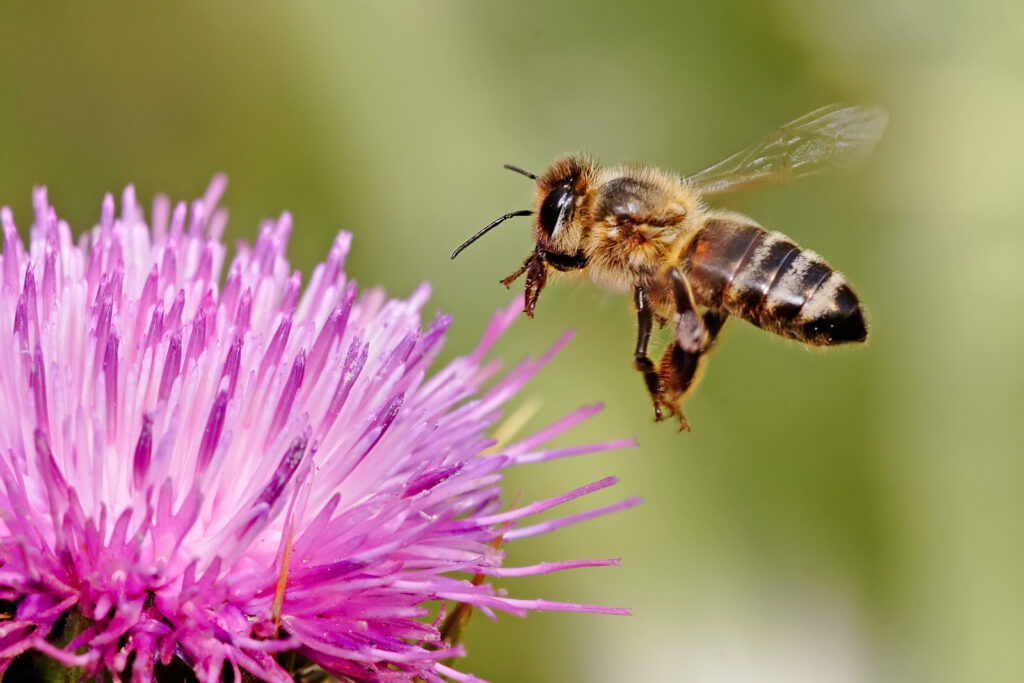
The year 2022-2023 witnessed the second-highest rate of American honey bee colony losses reported since record-keeping began in 2007. The Bee Informed Partnership conducted an extensive survey involving over 3,000 beekeepers, revealing a significant decline of 48.2% in honey bee colonies over the course of the past year. While the honey bee population itself remains stable due to beekeepers’ efforts in establishing new colonies, it is crucial to address the underlying issues affecting bee health to ensure the long-term survival of honey bees and safeguard native pollinators as well. Despite annual losses of 30-50% reported by beekeepers, the overall honey bee population in the United States has remained relatively stable at around 2.6 million hives over the past two decades. This is attributed to beekeepers replenishing lost colonies by creating new ones through a process called “splitting.” By redistributing worker bees and establishing new hives with new queens, beekeepers can sustain the population. However, this practice is a temporary solution, and addressing the root causes of honey bee decline is essential for their long-term well-being. Honey bees face similar challenges as native pollinators. Habitat loss, primarily due to the reduction in diverse food plants for pollinators, has severely impacted their nutrition and overall health. Inadequate diets result in developmental and immune issues within colonies. Exposure to pesticides during foraging activities also hampers learning abilities and immunity in honey bees. Furthermore, new pests and pathogens, such as the varroa mite, have become major threats to honey bee colonies. Preserving habitat quality plays a pivotal role in safeguarding honey bees and all pollinators. Planting a wide variety of flowering plants throughout the year can enhance their diet, strengthen immune systems, and improve overall health. Therefore, habitat restoration initiatives are vital for the success of pollinators. Reducing pesticide use and exploring alternative methods for pest control also play a crucial role in promoting pollinator health. By adopting these practices, we can contribute to the protection of honey bees and other vital pollinators. Butterfly Pavilion offers several ways for people to learn about and help bee conservation efforts:
-
Urban Prairies Project (UPP)
– Part of our community science program, volunteers with UPP are directly contributing to improving invertebrate conservation, environmental sustainability and informing local policy, as well as getting outdoors and having fun with great people. These projects not only gather important ecological information, but they also help educate and engage the public in invertebrate conservation and research. Learn more here: Urban Prairies Project (butterflies.org)
-
-
Garden Design and Consultation
– Butterfly Pavilion experts will analyze your existing garden or yard and develop detailed strategies to cultivate a visually stunning, flourishing garden teeming with a healthy pollinator population.
-
-
-
Beekeeping Bootcamp
– Work alongside Butterfly Pavilion beekeeping experts and other beginner beekeepers, developing the skills necessary to achieve thriving beehives.
-
New research is being conducted to develop new management methods and treatments to combat pests and diseases affecting honey bees. Promising advancements, such as the introduction of the first honeyb ee vaccine, offer potential solutions. Beekeepers must stay informed about these developments to protect their own hives and support the well-being of pollinators within their communities. Beginner beekeeping classes, mentoring programs, and local beekeeping clubs provide valuable knowledge and training for beekeepers to adopt measures such as mite testing, treatments, regular hive checks, and proper ventilation.
An exciting event just occurred at Butterfly Pavilion! Three firefly larvae from our collection in 2021 pupated into adult fireflies!
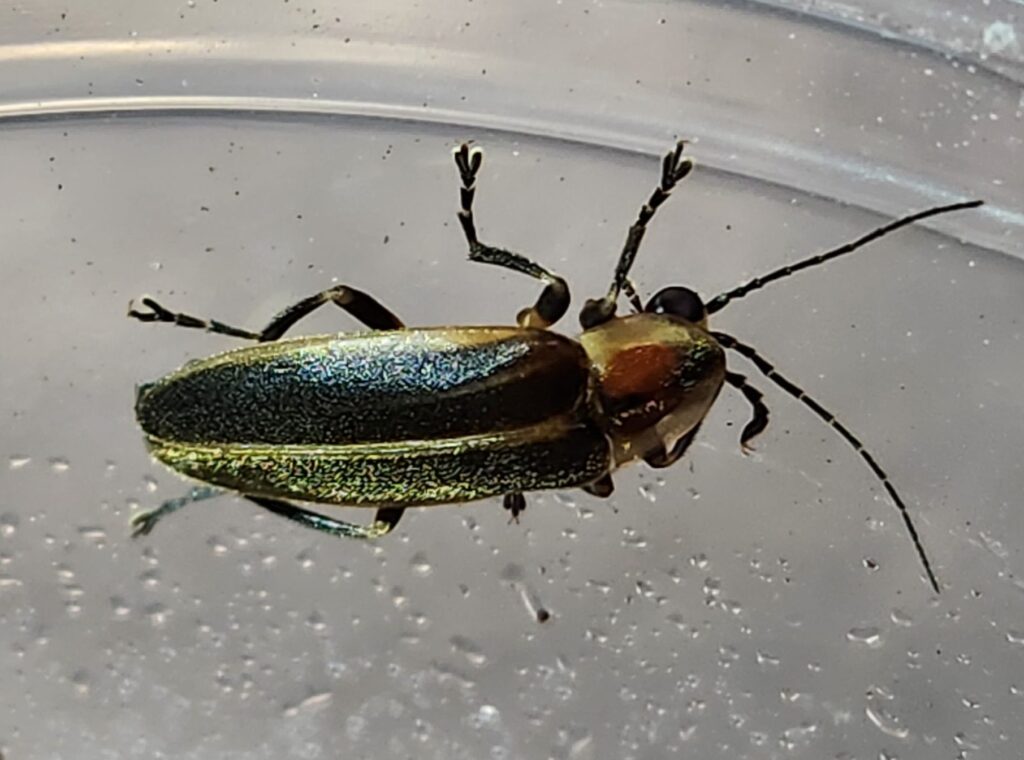
To the best of our knowledge, we are the first to have successfully bred and reared this Coloradan species of firefly to adulthood. This is a critical first step in long-term conservation efforts to help protect and support our native species of fireflies in the Front Range and beyond. Butterfly Pavilion researchers have been working towards understanding the lifecycle of fireflies in Colorado since 2017. Very little is known about the lifecycle and needs of our local fireflies. Many people don’t even know we have fireflies in Colorado! But they do exist in small, little-known populations throughout the state.
To study the firefly lifecycle, researchers from Butterfly Pavilion travel to Fort Collins one night a year to collect wild adult fireflies under a research permit. The adult fireflies are taken back to Butterfly Pavilion to breed and lay eggs. These eggs transform into larvae and are cared for in our lab. We have spent four years regularly feeding, misting, and making small changes to their enclosures to try to trigger the larvae to pupate. The two females and one male which emerged last week have been in our care since they were eggs laid in our lab in 2021, meaning that we now know that it can take two years for both male and female fireflies of this species to go from eggs to fully formed adults! To the best of our knowledge, we are the first to have successfully bred and reared this Coloradan species of firefly to adulthood. This is a critical first step in long-term conservation efforts to help protect and support our native species of fireflies in the Front Range and beyond. Besides providing fascinating summer lightshows for humans, fireflies are an indicator species for wetland habitats. Their health and survivability indicate the overall health of an ecosystem Rearing a species to adulthood allows us to fully understand their life history to better support conservation efforts driven by scientific data. Studying their needs in a lab setting allows us to better concentrate conservation efforts on their needs for food, shelter, and overall habitat. Colorado species of fireflies are currently very poorly understood. This greatly expands our understanding of these species and will help with future efforts to describe species, improve habitat, and protect their magical experience for future Coloradans. This knowledge enables us to rear animals for release and “head start” fireflies (in other words, raise them past their most vulnerable early life stages to increase survivorship). Indeed, we hope to re-establish populations of fireflies in Colorado in the future The next step is to have more of our fireflies emerge as adults and to ultimately breed them to create a sustainable population of lab reared fireflies. We would like to fully describe this species of firefly and continue collecting additional species of fireflies to expand Colorado’s knowledge of the species in our care. We will also share our knowledge of firefly husbandry techniques with other facilities across the United States to further the study and conservation of these unique beetles.