
Butterfly Pavilion Supports the Listing of American Bumble Bees Under the Endangered Species Act
Bumble bees are ambassadors for all pollinators, yet, unfortunately, their rapid decline has them on the road to extinction. Bumble bees play a critical role in sustaining healthy ecosystems, contributing to the survival of every living organism on this planet. Their role in pollination directly impacts the survival of many plant species that are necessary for our agricultural industry to produce food. The disappearance of bumble bees could cause devastating effects on the food industry, an essential contributor to our economy. Listing American bumble bees under the United States Endangered Species Act (ESA) could be this species’ last chance at survival.
Butterfly Pavilion supports listing the American bumble bee (Bombus pensylvanicus) as the third endangered bumble bee species under the ESA. This species was once one of the most common bumble bee species in the United States. However, the range of its habitat has shrunk, and the majority of states throughout the country have reported significant population declines. The combined consequences of habitat loss, fragmentation, harmful pesticide use, climate change, and diseases place the American bumble bee at risk for extinction.
To help protect bumble bees and other important pollinators, people can take sustainable actions that promote healthy ecosystems for these species to survive in. We can start by making changes at home with thoughtful landscaping of native flowering plants and reducing harmful pesticide use in our gardens. Community members can also get involved in projects through Butterfly Pavilion’s Pollinator Awareness through Conservation and Education (PACE) initiative. PACE is a global initiative aimed at protecting pollinators through restoration projects, community science programs, and collaboration with local honey producers.
Here are some of the PACE projects that you can get involved in:
Urban Prairies Project (UPP): The UPP improves the ecological health of urban and suburban open spaces in Broomfield and surrounding cities through the restoration of pollinator habitats. Getting involved in this project is easy, and volunteers can help with weeding, planting, and monitoring habitat. Contact us at volunteering@butterflies.org if you’re interested!
Butterfly Monitoring Network (CBMN): Butterflies are crucial pollinators, and their population numbers are indicators of ecosystem health. CBMN volunteers can gather data by simply observing and counting the numbers of butterflies in their local areas. Here’s how you can sign up to volunteer!
Local Hive Honey: Butterfly Pavilion produces honey from its own hive that is bottled by local honey producers and is available for purchase online or in our gift shop. Proceeds of these purchases go back to funding our PACE initiatives.
With help from our community, Butterfly Pavilion will continue to protect all pollinators and further spread awareness about the conservation of the American bumble bee. We can all do our part to help this important species for years to come and prevent their extinction by getting them listed under the ESA.
Better Business Bureau (BBB) Torch Awards for Ethics Recognizes Butterfly Pavilion for Outstanding Ethics
Butterfly Pavilion is excited to announce that our organization was named as a 2021 Finalist for the Better Business Bureau (BBB) Torch Awards for Ethics. Out of 300 submissions, Butterfly Pavilion is proud to have placed among the top 25% of applicants. The BBB recognizes organizations that make ethical business practices a priority within their daily operations. This award is a prestigious honor, and finalists are selected based on their commitment to their organization’s character, culture, customers, and community.
The BBB has eight Standards for Trust:
- Build Trust
- Advertise Honestly
- Tell the Truth
- Be Transparent
- Honor Promises
- Be Responsive
- Safeguard Privacy
- Embody Integrity
As the premier global hub of invertebrate conservation, research, and education, Butterfly Pavilion is committed to being a role model for our community. We offer professional development opportunities as well as immersive, entertaining, and educational events for people of all ages. We also lead conservation projects within our community and around the world. We serve our community by always telling the truth, advertising honestly, holding ourselves accountable, and always being responsive to the needs of our community members.
Being named a finalist for an ethics award reinforces Butterfly Pavilion’s commitment to being an ethical and trusted institution. Maintaining a high level of integrity helps contribute to a trustworthy culture that benefits everyone in our organization as well as the public. We will strive to continue being a prominent role model for our community. Our ethical business practices help contribute to our mission of educating the public about invertebrate conservation, while also encouraging more businesses to operate with these same principles.

Butterfly Pavilion Supports Sustainability in Colorado
Butterfly Pavilion is proud to announce that our organization has been recognized as a Silver Level Partner in the Colorado Environmental Leadership Program (ELP). The ELP identifies organizations within Colorado that not only contribute to, but go above and beyond to improve the sustainability of the environment in our state. As a Silver Partner, it reinforces our commitment to Butterfly Pavilion’s Environmental Management System, a plan set in place with milestones to further our sustainability efforts.
Butterfly Pavilion has always been dedicated to implementing sustainable practices in our daily operations. Conserving resources and reducing waste is directly tied to our mission of promoting conservation efforts to provide a better future for invertebrates. All of our staff and volunteers at Butterfly Pavilion work hard every day caring for the animals, conducting research, and spreading our message of conservation to audiences around the world. This award comes to us because of the combined efforts from every single team member at our organization.
Butterfly Pavilion follows several sustainable practices throughout all levels of our organization:
- We are mindful of our energy sources
- LED bulbs are used throughout our facility
- Temperature is strictly monitored to ensure appropriate environments for our animals without excessive usage of energy
- Timed lighting systems guarantee that lights never get left on for too long
- Solar-powered heating systems offer an efficient resource of energy
- We use water responsibly
- Overall water usage has decreased due to our native and drought-tolerant gardens
- State-of-the-art efficient plumbing systems are found throughout the facility from bathrooms and kitchens to animal care rooms
- We reduce our waste
- Cleaning products with chemicals are used at the minimum amount needed to maintain guest safety and experience
- Improved recycling and composting efforts have diverted over half of our waste from landfills
- We collaborate with and educate our community
- We partner with open space departments in neighboring communities to restore habitat through our Urban Prairies Project
- Pollinator habitat plantings are scheduled throughout the community through our PACE Programs
- Invasive species are kept at bay among parks in Westminster and Broomfield so native plants can thrive
Not only is Butterfly Pavilion committed to protecting invertebrates and their ecosystems, but we also strive to be a leader in conservation research that benefits everyone in the local community and beyond. We promise to continue following these practices and constantly refine them when better solutions arise. Thank you to everyone who has helped us along the way in achieving this monumental goal!
Butterfly Pavilion was at the forefront of the Colorado State University’s (CSU) BioBlitz when the project was first initiated in 2017. The BioBlitz will assess the plants and animals around three buildings CSU is constructing for their new Spur campus along the South Platte River. The SPUR campus forms part of the 250-acre re-development of the National Western Stock Show site. The first survey fieldwork for the project was conducted in 2019.
A bioblitz is a rapid, intensive period of biological surveying in which teams of scientists, students, teachers, and other community members work together to find, identify, and record all living species within a specific area. Coordinated by CSU, the survey data will help build a biological baseline of species as development transforms the city. The goal for the bioblitz is to track changes in the ecosystem and biodiversity of this area and eventually open it to the public as a community science event.
According to Rich Reading, Director of Research and Conservation, Butterfly Pavilion, who has been involved in the project from the beginning, “We became involved because of our expertise in invertebrates and are helping CSU assess the potentially beneficial impacts of their work to create pollinator habitat on their SPUR campus.”
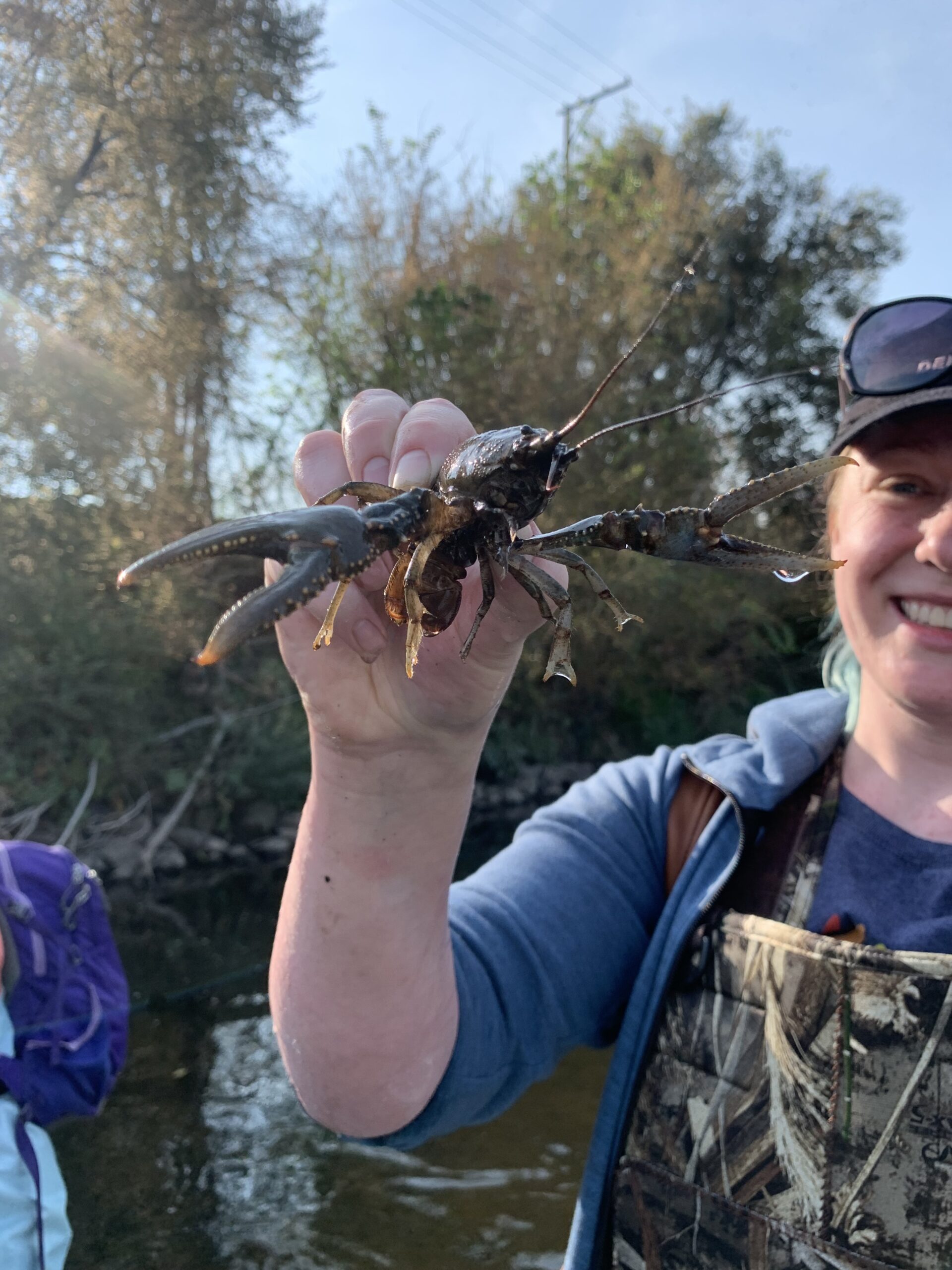
The BioBlitz will also hopefully help local people understand the importance of restoring nature in general and especially pollinators. On September 23, to help foster community engagement, Rich and Lorna McCallister, Target Species Manager at Butterfly Pavilion, led a group of student volunteers from the Community College of Denver with bioblitz surveying in and along the South Platte River.
The group wore waders to walk in the water to ten sampling locations along the river’s edge. At each site, five collection methods were used to survey for aquatic and terrestrial invertebrates, including:
- Seine nets were placed in the water to capture invertebrates that team members kickup in the riverbed, including crayfish, freshwater clams, leeches, and stonefly and dragonfly larvae.
- Mesh aerial nets targeted and caught flying insects, such as cabbage white butterflies and grasshoppers.
- Hardier sweep nets swept through the brush to collect invertebrates, such as bees, wasps, ants, beetles, spiders, and others from plants.
- White, yellow, and blue water pan traps were placed at each site to collect small insects such as wasps, bees, flies, and beetles. The pan traps are shallow bowls filled with water and soap (to break the water tension). The different colors attract different types of insects.
- And lastly, pitfall traps, a cup with a funnel dug into the ground, were placed at each location to catch crawling insects, such as ground beetles and ants, which inadvertently fall inside the trap.
“With this recent bioblitz, joined by volunteer students, we are already involving the local community, but hope to increase this participation in the future,” said. “Restoring pollinator habitat and pollinator populations will help the local community by restoring the beneficial aspects of nature in an urban environment.”
Following the river visit, aquatic samples were taken back to the Butterfly Pavilion lab to be identified by Sara Stevens, Aquatics Manager where she discovered the clams collected were an invasive Asian clam, Corbicula fluminea, which had not been reported in this area before. The next day, Shiran Hershcovich, Lepidopterist Manager, and Lorna returned to the river to collect the pan and pitfall traps after they sat out overnight. The first few sets of traps did not collect many invertebrates. However, as they moved slightly further from human disturbance to sites with more vegetation, they noticed a higher abundance of ground beetles caught in the traps. Butterfly Pavilion staff at the Gardens at Spring Creek in Fort Collins are pinning and preserving these specimens. Once they have been preserved, Butterfly Pavilion will identify the specimens and analyze the data to investigate how the invertebrate biodiversity around CSU’s Spur campus has changed over the past few years.

A sad goodbye…

By Sara Stevens, Aquatics Manager, Butterfly Pavilion
When it comes to conservation, zoos and aquariums are often reactionary, trying to protect a species or habitat after the initial threat has become established. This historic model often results from a lack of resources. It takes time, money, and manpower to effectively implement conservation work around the globe. It’s like trying to fight a raging fire with limited water, so most organizations are forced to target their efforts at providing the greatest impact as efficiently as possible. One of the biggest issues in animal conservation is how much we don’t know about a species. When it comes to invertebrates, animals that are often the foundations of our ecosystems, this lack of understanding can lead to catastrophic ecosystem collapses. While it is impossible to learn the needs of every animal that exists, Butterfly Pavilion has worked to develop two highly effective strategies for conservation success through animal husbandry.
Husbandry on the Fly
How do you care for an animal when you don’t know what it needs? In the year 2021, it may seem unthinkable that there are animals in the world that have not been cared for by zoos and aquariums. While zoos and aquariums have cared for thousands of animals over the years, there are still millions more, many invertebrates, which zoological institutions have never held. This means that when an emergency strikes and these animals require human care to ensure their survival, the stakes can be very high!
At Butterfly Pavilion we strive to maximize our impact when it comes to protecting invertebrate species around the globe. This has led to a proactive approach to conservation through animal husbandry that revolves around being a resource to large, cooperative programs like our participation in the Association of Zoos & Aquariums-Florida Reef Tract Rescue Project (AZA-FRTRP) and developing rearing protocols for species of concern that remain poorly understood in case intervention is necessary in the future, like our Hudsonian emerald dragonfly program.
Our work with the AZA-FRTRP centers on caring for healthy coral rescued ahead of the stony coral tissue loss disease zone in the Florida Reef Tract. These healthy colonies of coral will serve as the foundation of future restoration efforts. Due to the rapid pace of the disease’s spread, the large number of specimens requiring care to preserve the genetic diversity of the species, and the lack of knowledge on the specialized needs of the species, this project has become a first-of-its-kind response that could change the future of coral conservation.
When the call for aid went out in 2018, our team knew we could leverage our animal expertise and our educational platform to not only safeguard these coral, but also to share their story with an audience mostly unaware of their peril. Due to our limited behind-the-scenes space and the highly specialized needs of the coral, we quickly realized the only place we could house these new animals was on display for our guests. This was a huge risk since we did not know how difficult their care would be, what their condition would be when they arrived, or how our guests would react to viewing an active research project. At Butterfly Pavilion we believe understanding is best achieved through transparency, which meant putting the science on display and allowing our guests the opportunity to participate in the journey with us. It allows our guests to learn as we discover new things, mourn with us when we have losses, and celebrate when we have triumphs. It allows us to foster a connection that could not exist if these animals remained behind closed doors.
While the initial risk created stress for our animal care staff, we found it to be revolutionary for our guests. In the year we have cared for these corals, we have seen growth and health beyond what we could have ever imagined. While we did lose a colony that arrived to us after having been infected with an unknown disease, the majority of our corals have flourished. This wasn’t just luck but the culmination of hours of extra time dedicated to supporting their care, weekly calls working with other holding facilities to troubleshoot health issues in real time, and innovating new care techniques on the fly. In addition, the exhibit has managed to capture the attention of our guests in a way we never saw before. Overall, the program is not merely a conservation success as we safeguard the future of the Florida Reef Tract, but also an educational success as well.
Conservation Foresight
Our second strategy for conservation through care is more proactive. In 2017, Butterfly Pavilion identified a need to pursue dragonfly conservation. Dragonflies are important indicators of ecosystem health and their presence, or absence, can have large impacts on local wildlife. Dragonflies are valuable predators helping to control mosquito and midge populations. They are also a valuable food source for fish and birds. This makes them an important animal to monitor, like a canary in the coal mine. When their populations begin to decline there can be vast cascading consequences. We still have much to learn about dragonfly conservation, particularly the best ways to help bolster populations that start to decline.
In 2017, Butterfly Pavilion launched a program to learn more about the husbandry needs of native Colorado dragonfly species as a way to proactively conserve dragonflies in our state. Colorado provides a variety of unique habitats, particularly along the Front Range. These alpine and subalpine ecosystems are incredibly narrow and fragile, making the animals that call it home vulnerable to even minor ecological and manmade changes. The species we became particularly concerned about was the Hudsonian emerald (Somatochlora hudsonica). This jet black dragonfly with emerald eyes only occurs in a handful of locations in Colorado and over the years has become more difficult to find.
In cooperation with Boulder County Open Space wildlife biologists, we created a plan to develop husbandry protocols to support rearing the Hudsonian emerald under human care. This began by working with a more common cousin called the Mountain emerald (Somatochlora semicircularis). In 2017 we collected eggs from female Mountain emeralds to hatch and rear at Butterfly Pavilion. These baby dragonflies spent three years growing in our aquatic systems under the care of our staff. In June of 2020, we had our first dragonflies emerge as adults, and we released them back into the wild. To the best of our knowledge, this represents the first time anyone successfully reared this species under human care. Thanks to the success of this three-year effort, this summer our scientists will venture into the wilderness to collect eggs from female Hudsonian emeralds to rear at Butterfly Pavilion.
This important step was necessary to help us systematically and rigorously develop techniques that will help support future conservation needs. By being proactive and monitoring invertebrate populations we can intervene earlier. This approach can often provide more effective conservation while utilizing fewer resources. As Butterfly Pavilion continues its invertebrate conservation around the world we will continue to push for a proactive model, even as we help address crises that develop rapidly.
By Chris García-Hellmuth, Butterfly Coordinator, Butterfly Pavilion
Monarch butterfly ESA listing decision
Migrating monarch butterflies (Danaus plexippus) are experiencing a drastic decline in population numbers. Some populations are suffering, while others remain static. The US Fish and Wildlife Service (USFWS) have announced their decision that listing monarchs under the Endangered Species Act (ESA) is “warranted but precluded”. This means that monarchs will become a candidate species for listing under the ESA. For more information on the decision, the official press release can be found here.
Why warranted but precluded?
The decision to list monarchs as threatened or endangered has been a nuanced process for the USFWS. This listing does not mean that monarchs will never be considered for an ESA listing, just at a later date. Analyzing all of the information through a scientific lens has led them to this decision. The constraints of the ESA prevents it from considering only a specific population of monarchs from being listed. The complexity of the monarch endangerment requires a considerate approach. The USFWS has announced a proposal to be released for a monarch listing under the ESA in 2024 as long as the listing is still warranted. Monarch populations will be monitored yearly to assess the potential need for an ESA listing.
Monarchs still need our help
Every November, the Xerces Society for Invertebrate Conservation monitors all of the known overwintering sites along the California coast. The past few years have yielded counts just below 30,000 total individuals, the proposed quasi-extinction threshold for the Western population. This year, however, preliminary results indicate that the total overwintering count for all sites will not exceed 2,000 individuals. (For more information about the past overwintering counts and the difference between the Eastern and Western populations, click here)
Conservationists across the country are using this ruling as a call to action to help save monarch butterflies. Climate change, disease, and the use of pesticides and herbicides are the main threats facing the monarchs that overwinter on the West coast.
What can we do?
This listing decision invites communities to continue to work to conserve monarch butterflies. Below is a list of actions we can do to conserve this valuable species.
- Plant native milkweed and other nectar plants to promote pollinator habitat
- Reduce pesticide use in gardens, lawns, and other areas that serve pollinators
- Get involved with monarch and pollinator community science at Butterfly Pavilion and other institutions (such as Monarch Watch and Monarch Joint Venture)
- Support organizations that work to conserve monarchs
Butterfly Pavilion is constantly working to conserve monarchs and the other invertebrates that serve as the backbone to our vital ecosystems.
Butterfly Pavilion Offering a Safe, Socially-Distanced Trick-or-Treating Experience for Colorado Families this Halloween Season
- With only 20 guests allowed in the building every 20 minutes, families can enjoy a safe, well-deserved outing
- Guests are required to wear appropriate face coverings or masks with costumes
Media Note: Photos, video and other editorial material is available by request. Rosie the Tarantula, other animals and scientific experts are available for media appearances and interviews by contacting kstewart@butterflies.org
Westminster, Colo. – Oct. 9, 2020 –Colorado’s Butterfly Pavilion announced today the return of Bug-A-Boo, it’s safe, indoor trick-or-treating event, from Oct. 18 through Oct. 31. Halloween revelers can put on a costume and enjoy a trick-or-treating experience that is educational and fun, while adhering to state and local safety guidance. Hours for trick or treating will be 9 a.m. to 5 p.m. (with the last entry at 4 p.m.) daily from Oct. 18 through Oct. 29. On Oct. 30 and 31, Butterfly Pavilion will extend its hours and be open until 8:20 p.m. (with the last entry at 7:00 p.m.).
“As a non-profit organization, Butterfly Pavilion prides itself on being a resource for the community,” said Russ Pecoraro, Butterfly Pavilion’s Vice President of Marketing. “A lot of families are looking for some sense of normalcy and something fun and safe to do. We think Bug-A-Boo is the perfect event for family fun this Halloween.”
From a safety standpoint, Butterfly Pavilion has used its expertise in exhibit design to create a safe, physically-distanced trick-or-treating experience where kids can trick or treat traditionally, as well as providing goodie bag stations. Only 20 guests are allowed into the building every 20 minutes, reducing crowds and providing plenty of space to move around. Because of the limitations on guest capacity, reservations are required and can be made at http://bplive.wpengine.com/event/bug-a-boo/. Guests are required to wear appropriate face coverings or masks with costumes to visit Butterfly Pavilion. Halloween and costume masks are not considered adequate protection.
Bug-A-Boo allows kids to explore Butterfly Pavilion, whose many creepy-crawlies make it the perfect backdrop for trick or treating. Butterfly Pavilion will also transform Colorado Backyard into a spooky Halloween adventure. Because it is indoors, Bug-A-Boo is ideal for toddlers having their first trick-or-treating experience because they’re not subjected to the weather, and they don’t have to walk too far.
Bug-A-Boo is included with General Admission and free for current Butterfly Pavilion members. Tickets for Bug-A-Boo will go on sale October 9th and will only be available while supplies last. With limited availability, be sure to purchases tickets online ahead of time at http://bplive.wpengine.com/event/bug-a-boo/.
About Butterfly Pavilion:
Butterfly Pavilion is the world’s only stand-alone, Association of Zoos and Aquariums-accredited invertebrate zoo dedicated to transforming the way people think about the small but mighty animals that are the hidden heroes of the animal kingdom. As the leader in invertebrate knowledge, inspiration and connection, and as a member institution of the Scientific and Cultural Facilities District, Butterfly Pavilion works to foster an appreciation of these critical animals by educating the public about the need to protect and care for threatened habitats globally, while conducting research for solutions in invertebrate conservation. Whether it is providing unique, hands-on learning experiences in our exhibits and educational programs, conducting new research that sets the standard for zoos across the country or building innovative solutions for species and habitat conservation in countries around the world, Butterfly Pavilion is leading the way in ensuring invertebrates are protected for the future. Learn more at butterflies.local.
Butterfly Pavilion Media Contact(s):
Kristen Petitt Stewart, Publicist, kstewart@butterflies.org, or 970.389.1561
Russ Pecoraro, Vice President of Marketing and Communications, rpecoraro@butterflies.org or 720.375.9984
• Dragonfly breeding is one of Butterfly Pavilion’s many global programs advancing invertebrate conservation
Media Note: Photos, video and other editorial material is available by request. Rosie the Tarantula, other animals and scientific experts are available for media appearances and interviews by contacting kstewart@butterflies.org or rpecoraro@butterflies.org.
Westminster, Colo – Aug. 27, 2020 –Colorado’s Butterfly Pavilion proudly announced today the emergence of three Mountain Emerald Dragonflies, thought to be the first of their kind to be reared from eggs to adulthood under human care. The three males, dubbed Larry, Moe and Curly, represent three years of work by Butterfly Pavilion researchers, as well as the all-important first step in a three-step process to save endangered Colorado dragonflies.
In addition to helping manage mosquito and other insect populations, dragonflies are an important “indicator species” whose presence signals overall health of wetland ecosystems. While the Mountain Emerald Dragonfly isn’t imperiled, it is a close relative to the Hudsonian Emerald Dragonfly, which is.
“Butterfly Pavilion will be able to take what we’ve learned rearing Mountain Emeralds and transfer that knowledge to helping save the Hudsonian Emerald,” said Sara Stevens, Butterfly Pavilion’s Aquatics manager and the lead researcher on the study. “This proactive approach to conservation sets us up to have a large toolkit to help other species.”
Butterfly Pavilion’s three-stage plan for breeding dragonflies is:
- Rear as many Colorado species of dragonfly from egg to adulthood as possible and release them back into the wild
- Get two of these adults to successfully reproduce
- Rear those eggs to adulthood successfully
“Rearing these dragonflies under human care represents an important advancement in the research and conservation of these important and charismatic animals, and demonstrates Butterfly Pavilion’s leadership,” said Richard P. Reading, Ph.D., Butterfly Pavilion’s Director of Research and Conservation. “Our goal is to breed and rear dragonflies to release back into the wild, as well as to display at Butterfly Pavilion. This is another example of Butterfly Pavilion working to protect our ecosystems here in Colorado, as well as the rest of the world.”
Dragonfly breeding is just one of the many programs and projects Butterfly Pavilion manages all over the world, making a global impact in invertebrate conservation. Active projects include: Parnassian Butterfly conservation in Mongolia; managing protected areas in Saudi Arabia; butterfly farming in Indonesia; and reducing human and elephant conflicts through the use of honey bees in Tanzania and Nepal. Domestically, Butterfly Pavilion manages numerous citizen science programs that include butterfly and dragonfly monitoring, as well as open space habitat restoration to better support pollinators.
Community members interested in supporting these programs can make a tax-deductible donation to Butterfly Pavilion’s Resiliency Fund, or give directly to the Research and Conservation Department. Those interested in joining a citizen science program can find more information at Butterfly Pavilion’s website.
About Butterfly Pavilion:
Butterfly Pavilion is the world’s only stand-alone, Association of Zoos and Aquariums-accredited invertebrate zoo dedicated to transforming the way people think about the small but mighty animals that are the hidden heroes of the animal kingdom. As the leader in invertebrate knowledge, inspiration and connection, and as a member institution of the Scientific and Cultural Facilities District, Butterfly Pavilion works to foster an appreciation of these critical animals by educating the public about the need to protect and care for threatened habitats globally, while conducting research for solutions in invertebrate conservation. Whether it is providing unique, hands-on learning experiences in our exhibits and educational programs, conducting new research that sets the standard for zoos across the country or building innovative solutions for species and habitat conservation in countries around the world, Butterfly Pavilion is leading the way in ensuring invertebrates are protected for the future. Learn more at butterflies.local.
Butterfly Pavilion Media Contact(s):
Kristen Petitt Stewart, kstewart@butterflies.org or 970-389-1561
Russ Pecoraro, Vice President of Marketing and Communications, rpecoraro@butterflies.org or 720.375.9984
By Patrick Tennyson, CEO, Butterfly Pavilion
In its May 2020 edition, National Geographic asks “Where have all the insects gone?,” bringing much-needed global awareness to the soon-to-be catastrophic loss of insects. The sheer diversity of insect species and their astonishing bio mass is unfathomable – almost indomitable – and yet, they represent the largest percent of loss in biological diversity worldwide. Nevertheless, for many people, these incredibly important animals remain rather obscure and commonly forgotten. This crisis, if left unchecked, will immeasurably impact our very existence. It’s a crisis I believe the Association of Zoos & Aquariums has the opportunity, resources and responsibility to impact.
The question is “How?” What if I told you there’s something you can do today, at your zoo or aquarium, it would add another layer to your guest experience, and it’s a lot easier than you think?
Humans and insects are inextricably linked – the nature that surrounds us is because of them and their very existence guarantees ours. Beyond their economic importance and value to critical environmental services we have come to rely on, invertebrates spur endless inspiration and curiosity. There is so much about these foundational species that we have yet to discover or understand. The culprits to their rapid decline are the very same challenges that we and so many other animals on our planet face: Climate change, indiscriminate and unregulated pesticide and herbicide use, and habitat loss and degradation.
Over the last few years, and really for the first time in my long career in conservation, we are witnessing an awakening of the public’s perception of the term “wildlife.” A broadening connection to the world in which we live, and the types of animals we share our world with. Our dedicated work in zoos, aquariums, museums and nature centers around the world has effectively created much more meaningful connections to ALL animal life, as well as a greater rationale for the need for conservation, now, more that than ever before. This progression of conservation ethics and values has opened the door for a very real opportunity to expand our zoos’ conservation work for a far greater number of species – namely, insects.
For a moment, put yourself in your guests’ shoes as they walk from exhibit to exhibit. Don’t focus on the exhibits themselves, but on their experience moving between them. Chances are you’re seeing traveling Lego exhibits, art installations, wayfinding signage and advertisements. What if they could experience more wild animals? Butterflies, native bees and other insects, as well as native plants serving as another animal exhibit, a delight for guests at a fraction of the cost, and another reminder that your zoo takes conservation seriously.
I call this a Zoo Within a Zoo.
Utilizing our partnerships and networks within the AZA, the Zoo Within a Zoo program will integrate international horticultural and zoological practices to make zoos and aquariums around the world an insect sanctuary promoting regional insect population growth, increasing native habitats for insects and, best of all, engaging our guests in small but meaningful ways to contribute to grassroots conservation efforts emerging before their eyes.
The goal is simple: We will use zoo and aquarium grounds to create zoological sanctuaries for native insect populations and tell the conservation story for our guests as they wander and interact with our grounds. The Zoo Within a Zoo program will easily and almost naturally expand every zoo and aquarium’s capacity for advancing their local conservation efforts and expanding their contribution to insect diversity and population health. In many cases this may already be happening unintentionally, so the idea will be to work as partners to make the effort more intentional top to bottom. Again, this will inspire all zoos and aquariums to collaborate more intimately as AZA partners on husbandry, horticulture, education, interpretation, and citizen science data collection and compilation.
Butterfly Pavilion will happily orchestrate this effort and provide guidance and assistance in appropriate habitat development, program creation and collaborative data collection. We will create a database to facilitate following trends and impacts. For almost two decades Butterfly Pavilion has led habitat restoration and citizen engagement programs through programs like Senior Habitat Gardening, the Urban Prairies Project and our Pollinator District Program. Each program engages citizens, businesses and corporate partners in habitat improvement efforts via mutual goals and aspirations. We are well equipped and inspired to team up with each of you to protect insects and help them prosper!
Albert Einstein famously stated, “We cannot solve our problems with the same thinking we used when we created them.” The challenge we face with habitat loss is an uphill battle against human growth and development. We have to stop pointing fingers and reverse these trends using the assets at our disposal. Ultimately, the Zoo Within a Zoo program will help develop a cascading evolution of perception of what wildlife conservation can look like today and resonate loudly during a point in time that many scientists consider the tipping point for international conservation work. I believe it’s time we begin engaging our guests and global citizenry as allies in the race against extinction in ways where they can meaningfully contribute, and moreover be inspired to do more to save wildlife. And now is the time to acknowledge and protect the animals that have, until recently, been denied charismatic relevance. Our guests can witness foraging bumblebees first-hand and even better, they can do something to help them. This makes conservation not an abstract, pie-in-the-sky notion, but something that is active, community building and hopeful for everyone on all parts of the planet.
The awakening we see among our public is real, and we must take advantage of this opportunity for zoos and aquariums to elevate our image and perpetuate our guests’ belief in our intent by creating something tangible – an everyday experience. This will ignite an introduction and an engagement into our already established and successful global impacts in conservation. Through the Zoo Within a Zoo Program we will continue to orchestrate the growing appreciation of all wildlife, wildlife that comes in all shapes and sizes. We will do this by advancing the future of conservation awareness – one zoo, one flower bed, one park space, one acre at a time.
About Butterfly Pavilion:
Butterfly Pavilion is the world’s only stand-alone, Association of Zoos and Aquariums-accredited invertebrate zoo dedicated to transforming the way people think about the small but mighty animals that are the hidden heroes of the animal kingdom. As the leader in invertebrate knowledge, inspiration and connection, and as a member institution of the Scientific and Cultural Facilities District, Butterfly Pavilion works to foster an appreciation of these critical animals by educating the public about the need to protect and care for threatened habitats globally, while conducting research for solutions in invertebrate conservation. Whether it is providing unique, hands-on learning experiences in our exhibits and educational programs, conducting new research that sets the standard for zoos across the country or building innovative solutions for species and habitat conservation in countries around the world, Butterfly Pavilion is leading the way in ensuring invertebrates are protected for the future. Learn more at butterflies.local.