
Habitat Loss is Contributing to the Decline of Dragonflies Around the World
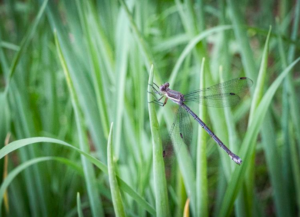
The International Union for Conservation of Nature (IUCN) recently released their latest Red List of Threatened Species update, which included the first global assessment of dragonflies. Findings from the assessment revealed that damage to wetlands and rivers is contributing to the decline of dragonfly species around the world, putting one in six species at risk of extinction.
Dragonflies are of great interest to Butterfly Pavilion for conservation action and future restoration efforts. Although a few organizations raise dragonfly nymphs, none in the United States have been able to maintain these animals through their entire breeding cycle. Butterfly Pavilion is planning its own breeding program for dragonflies through conducting research to understand the husbandry of these insects and then maintaining them under human care as a part of the conservation of these species in the wild. Eventually, Butterfly Pavilion would like to create a dragonfly exhibit. Meeting this goal will help our organization on our mission to become an industry leader in invertebrate husbandry.
Beyond this propagation under human care, Butterfly Pavilion conservationists are also conducting fieldwork on dragonflies to better understand their population dynamics, habitat associations, and distributions. Eventually, we hope to work to restore locally uprooted populations and expand existing ones. In 2018, Butterfly Pavilion also began a citizen science project to monitor dragonfly populations in Colorado. These types of projects not only gather important ecological information but also help educate and engage the public in conservation and research projects.
We invite you to join us in these efforts by supporting Butterfly Pavilion on our journey to build and open a new, world-class facility that will serve as the global hub for invertebrate research, education, and conservation. You can learn more about how to support Butterfly Pavilion and our mission on our website!
Butterfly Pavilion Conservationists are Studying Colorado Fireflies Through Hand-rearing
There are several invertebrate conservation projects that are being conducted every day by Butterfly Pavilion – and they don’t just involve butterflies. Fireflies are another charismatic invertebrate that our researchers work with, and Colorado has its own native species. A majority of the fireflies in this state are “dark”, or non-glowing. However, there are at least one species of “glowing” fireflies that can be spotted lighting up the night sky, as well as a few genera of “flashing” fireflies. These luminous invertebrates belong to the beetle order, Coleoptera, and they use their iconic flashing patterns to communicate with one another. Their radiant light displays make these beetles a favorite among people of all ages, often kindling memories of childhood and warm summer nights.
Fireflies are an indicator species, meaning their population numbers represent the health of ecosystems and the many organisms that live within them. With limited population numbers throughout our state, Butterfly Pavilion took the initiative in 2017 to start researching these unique beetles and how we can expand their populations in the wild. In 2021, as part of Butterfly Pavilion’s Firefly Life Cycle Project, we collected adult fireflies and bred them under human care, and have reared larvae from the resulting eggs produced by the females. Our goal is to rear those larvae to adulthood and continue the cycle, with a long-term goal to rear the young past their vulnerable early stages and release larger individuals to help create or restore new populations in the wild.
Little is known about the life cycle of fireflies, and it has only been intermittently accomplished in academia. Our goal is to understand the husbandry and rearing of these beetles to create a set of industry best practices and opportunities for a unique, outdoor zoo exhibit. Meeting this goal will enable Butterfly Pavilion to become an industry leader of invertebrate husbandry. This can also support the reintroduction of native species that have been otherwise lost to habitat destruction. After a brief interruption from the global pandemic that halted the study, the Firefly Life Cycle Project has started up again. Our researchers are working to hand-rear these beetles from their larval stage to their final adult stage. We hope to establish husbandry practices along the way that will teach us more about the way Colorado fireflies live and survive in the wild.
Conservation projects like our Firefly Life Cycle Project exist to help provide our community, and beyond, with expert knowledge about invertebrates and their conservation. Educating our community helps people foster an appreciation for the small and underappreciated organisms that we affectionately call, Tiny Giants. One day, Butterfly Pavilion hopes to display fireflies at our facility for our community to see up close and learn more about these special invertebrates. You can learn more about all of our conservationists and the work that they do for invertebrate conservation here!
Butterfly Pavilion Supports the Listing of American Bumble Bees Under the Endangered Species Act
Bumble bees are ambassadors for all pollinators, yet, unfortunately, their rapid decline has them on the road to extinction. Bumble bees play a critical role in sustaining healthy ecosystems, contributing to the survival of every living organism on this planet. Their role in pollination directly impacts the survival of many plant species that are necessary for our agricultural industry to produce food. The disappearance of bumble bees could cause devastating effects on the food industry, an essential contributor to our economy. Listing American bumble bees under the United States Endangered Species Act (ESA) could be this species’ last chance at survival.
Butterfly Pavilion supports listing the American bumble bee (Bombus pensylvanicus) as the third endangered bumble bee species under the ESA. This species was once one of the most common bumble bee species in the United States. However, the range of its habitat has shrunk, and the majority of states throughout the country have reported significant population declines. The combined consequences of habitat loss, fragmentation, harmful pesticide use, climate change, and diseases place the American bumble bee at risk for extinction.
To help protect bumble bees and other important pollinators, people can take sustainable actions that promote healthy ecosystems for these species to survive in. We can start by making changes at home with thoughtful landscaping of native flowering plants and reducing harmful pesticide use in our gardens. Community members can also get involved in projects through Butterfly Pavilion’s Pollinator Awareness through Conservation and Education (PACE) initiative. PACE is a global initiative aimed at protecting pollinators through restoration projects, community science programs, and collaboration with local honey producers.
Here are some of the PACE projects that you can get involved in:
Urban Prairies Project (UPP): The UPP improves the ecological health of urban and suburban open spaces in Broomfield and surrounding cities through the restoration of pollinator habitats. Getting involved in this project is easy, and volunteers can help with weeding, planting, and monitoring habitat. Contact us at volunteering@butterflies.org if you’re interested!
Butterfly Monitoring Network (CBMN): Butterflies are crucial pollinators, and their population numbers are indicators of ecosystem health. CBMN volunteers can gather data by simply observing and counting the numbers of butterflies in their local areas. Here’s how you can sign up to volunteer!
Local Hive Honey: Butterfly Pavilion produces honey from its own hive that is bottled by local honey producers and is available for purchase online or in our gift shop. Proceeds of these purchases go back to funding our PACE initiatives.
With help from our community, Butterfly Pavilion will continue to protect all pollinators and further spread awareness about the conservation of the American bumble bee. We can all do our part to help this important species for years to come and prevent their extinction by getting them listed under the ESA.
Better Business Bureau (BBB) Torch Awards for Ethics Recognizes Butterfly Pavilion for Outstanding Ethics

Butterfly Pavilion is excited to announce that our organization was named as a 2021 Finalist for the Better Business Bureau (BBB) Torch Awards for Ethics. Out of 300 submissions, Butterfly Pavilion is proud to have placed among the top 25% of applicants. The BBB recognizes organizations that make ethical business practices a priority within their daily operations. This award is a prestigious honor, and finalists are selected based on their commitment to their organization’s character, culture, customers, and community.
The BBB has eight Standards for Trust:
- Build Trust
- Advertise Honestly
- Tell the Truth
- Be Transparent
- Honor Promises
- Be Responsive
- Safeguard Privacy
- Embody Integrity
As the premier global hub of invertebrate conservation, research, and education, Butterfly Pavilion is committed to being a role model for our community. We offer professional development opportunities as well as immersive, entertaining, and educational events for people of all ages. We also lead conservation projects within our community and around the world. We serve our community by always telling the truth, advertising honestly, holding ourselves accountable, and always being responsive to the needs of our community members.
Being named a finalist for an ethics award reinforces Butterfly Pavilion’s commitment to being an ethical and trusted institution. Maintaining a high level of integrity helps contribute to a trustworthy culture that benefits everyone in our organization as well as the public. We will strive to continue being a prominent role model for our community. Our ethical business practices help contribute to our mission of educating the public about invertebrate conservation, while also encouraging more businesses to operate with these same principles.

Butterfly Pavilion Supports Sustainability in Colorado
Butterfly Pavilion is proud to announce that our organization has been recognized as a Silver Level Partner in the Colorado Environmental Leadership Program (ELP). The ELP identifies organizations within Colorado that not only contribute to, but go above and beyond to improve the sustainability of the environment in our state. As a Silver Partner, it reinforces our commitment to Butterfly Pavilion’s Environmental Management System, a plan set in place with milestones to further our sustainability efforts.
Butterfly Pavilion has always been dedicated to implementing sustainable practices in our daily operations. Conserving resources and reducing waste is directly tied to our mission of promoting conservation efforts to provide a better future for invertebrates. All of our staff and volunteers at Butterfly Pavilion work hard every day caring for the animals, conducting research, and spreading our message of conservation to audiences around the world. This award comes to us because of the combined efforts from every single team member at our organization.
Butterfly Pavilion follows several sustainable practices throughout all levels of our organization:
- We are mindful of our energy sources
- LED bulbs are used throughout our facility
- Temperature is strictly monitored to ensure appropriate environments for our animals without excessive usage of energy
- Timed lighting systems guarantee that lights never get left on for too long
- Solar-powered heating systems offer an efficient resource of energy
- We use water responsibly
- Overall water usage has decreased due to our native and drought-tolerant gardens
- State-of-the-art efficient plumbing systems are found throughout the facility from bathrooms and kitchens to animal care rooms
- We reduce our waste
- Cleaning products with chemicals are used at the minimum amount needed to maintain guest safety and experience
- Improved recycling and composting efforts have diverted over half of our waste from landfills
- We collaborate with and educate our community
- We partner with open space departments in neighboring communities to restore habitat through our Urban Prairies Project
- Pollinator habitat plantings are scheduled throughout the community through our PACE Programs
- Invasive species are kept at bay among parks in Westminster and Broomfield so native plants can thrive
Not only is Butterfly Pavilion committed to protecting invertebrates and their ecosystems, but we also strive to be a leader in conservation research that benefits everyone in the local community and beyond. We promise to continue following these practices and constantly refine them when better solutions arise. Thank you to everyone who has helped us along the way in achieving this monumental goal!
Butterfly Pavilion was at the forefront of the Colorado State University’s (CSU) BioBlitz when the project was first initiated in 2017. The BioBlitz will assess the plants and animals around three buildings CSU is constructing for their new Spur campus along the South Platte River. The SPUR campus forms part of the 250-acre re-development of the National Western Stock Show site. The first survey fieldwork for the project was conducted in 2019.
A bioblitz is a rapid, intensive period of biological surveying in which teams of scientists, students, teachers, and other community members work together to find, identify, and record all living species within a specific area. Coordinated by CSU, the survey data will help build a biological baseline of species as development transforms the city. The goal for the bioblitz is to track changes in the ecosystem and biodiversity of this area and eventually open it to the public as a community science event.
According to Rich Reading, Director of Research and Conservation, Butterfly Pavilion, who has been involved in the project from the beginning, “We became involved because of our expertise in invertebrates and are helping CSU assess the potentially beneficial impacts of their work to create pollinator habitat on their SPUR campus.”
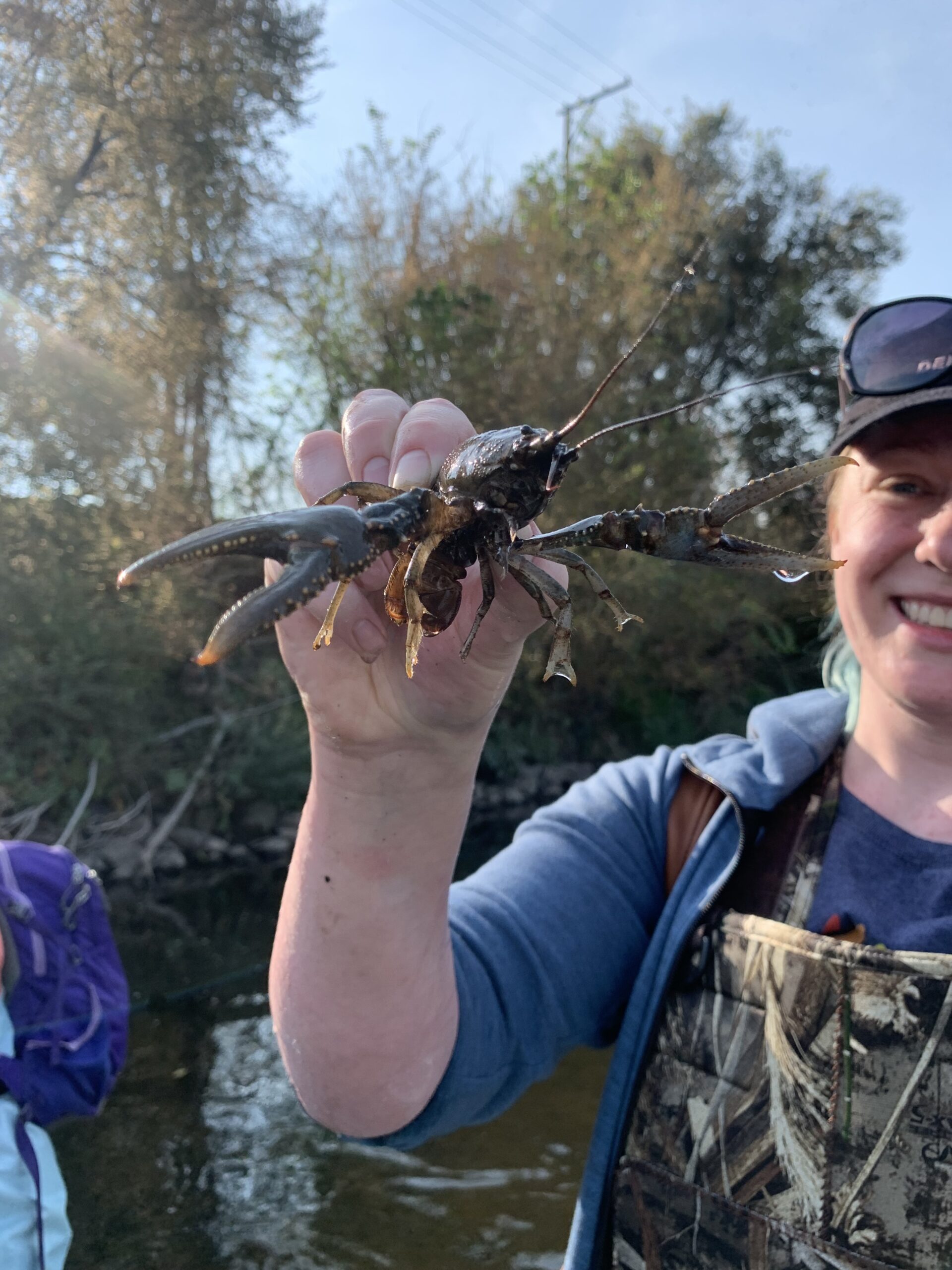
The BioBlitz will also hopefully help local people understand the importance of restoring nature in general and especially pollinators. On September 23, to help foster community engagement, Rich and Lorna McCallister, Target Species Manager at Butterfly Pavilion, led a group of student volunteers from the Community College of Denver with bioblitz surveying in and along the South Platte River.
The group wore waders to walk in the water to ten sampling locations along the river’s edge. At each site, five collection methods were used to survey for aquatic and terrestrial invertebrates, including:
- Seine nets were placed in the water to capture invertebrates that team members kickup in the riverbed, including crayfish, freshwater clams, leeches, and stonefly and dragonfly larvae.
- Mesh aerial nets targeted and caught flying insects, such as cabbage white butterflies and grasshoppers.
- Hardier sweep nets swept through the brush to collect invertebrates, such as bees, wasps, ants, beetles, spiders, and others from plants.
- White, yellow, and blue water pan traps were placed at each site to collect small insects such as wasps, bees, flies, and beetles. The pan traps are shallow bowls filled with water and soap (to break the water tension). The different colors attract different types of insects.
- And lastly, pitfall traps, a cup with a funnel dug into the ground, were placed at each location to catch crawling insects, such as ground beetles and ants, which inadvertently fall inside the trap.
“With this recent bioblitz, joined by volunteer students, we are already involving the local community, but hope to increase this participation in the future,” said. “Restoring pollinator habitat and pollinator populations will help the local community by restoring the beneficial aspects of nature in an urban environment.”
Following the river visit, aquatic samples were taken back to the Butterfly Pavilion lab to be identified by Sara Stevens, Aquatics Manager where she discovered the clams collected were an invasive Asian clam, Corbicula fluminea, which had not been reported in this area before. The next day, Shiran Hershcovich, Lepidopterist Manager, and Lorna returned to the river to collect the pan and pitfall traps after they sat out overnight. The first few sets of traps did not collect many invertebrates. However, as they moved slightly further from human disturbance to sites with more vegetation, they noticed a higher abundance of ground beetles caught in the traps. Butterfly Pavilion staff at the Gardens at Spring Creek in Fort Collins are pinning and preserving these specimens. Once they have been preserved, Butterfly Pavilion will identify the specimens and analyze the data to investigate how the invertebrate biodiversity around CSU’s Spur campus has changed over the past few years.

A sad goodbye…

Dear Butterfly Pavilion Community,
Thanks for your support during our first month of operation under COVID-19 guidelines. We’re proud to be a resource for the community to enjoy a day out with loved ones in a safe, educational environment. We’re all operating under a new set of rules, which has been an adjustment, and in general we’ve received great feedback from those who have visited.
One suggestion by our guests is the guided tour model is a bit limiting. So, in order to give you more freedom to explore Butterfly Pavilion at your own pace, we’ve sought and received approval from the County to adjust our operating model. Starting Monday, July 27, 2020, we’ll transition to self-guided tours. We’ll remain on a timed-entry model that admits up to 20 guests every 20 minutes, so be sure to reserve your tickets online because time slots fill up fast! Also, since we won’t be moving you through the experience, we ask that you please limit your time in the facility to 80 minutes so we can manage the number of people in the building at any one time.
You’ve all been doing so great with your masks, and we’ll ask that everyone three and older continue to wear them at all times. And we’ll also remind you to keep your distance from other families, allowing at least six feet of space between groups.
Some of you really liked the interaction with our interpretation staff and volunteers, and those invertebrate experts will still be available to you in every exhibit. We’ll also have butterfly releases every 30 minutes starting at 9:30am and going until 4:30pm. In alignment with state and county health guidelines, Colorado Backyard and the indoor play area remain closed at this time. Butterfly Pavilion’s Discovery Gardens and nature trail are in full bloom and a beautiful outdoor experience this time of year.
This has been a tough time for everyone and I know our staff thrives on the twinkle they see in your eyes and the excitement they hear in your voices. While we’re open at about 25% of normal guest capacity, there’s still a significant gap to manage our zoo and care for all our animals. If you’re able to come see us, that’s great, and if you’re not, please consider giving to the Butterfly Resiliency Fund, purchasing a membership to Butterfly Pavilion, having a birthday party or private event here, or signing up for one of our virtual programs. Anything you can do makes a difference for our team, as we strive to make a difference for our world and each of you.
In health and safety,
Russ Pecoraro
Butterfly Pavilion Vice President of Marketing, Communications and Guest Experience
For more information on timed-entry and our new self-guided experience, please click here.
Butterfly Pavilion to reopen June 12 to members and June 13 to the general public. New experience features timed, small group tours that provide exclusive access to experts and animals, while meeting health and safety protocols set by the State of Colorado and Jefferson County Public Health. Timed entry tickets for members and guests are available online only at butterflies.local.
Media Note: Photos, video and other editorial material is available by request. Rosie the Tarantula, additional animals and scientific experts are available for media appearances and interviews by contacting rpecoraro@butterflies.org.
Westminster, Colo – June, 9, 2020 – Butterfly Pavilion is set to reopen its exhibits to current members on Friday, June 12, and the general public on Saturday, June 13, with a brand new experience using timed, small group tours that maintains social distance and sanitation, while offering exclusive access to live animals, invertebrate experts and the inspiration that comes from exploring the diversity of the invertebrate world.
Operating hours will be from 9 am to 5:30 pm. Members and guests are required to reserve tickets online at butterflies.local prior to arrival and get in line in front of the building at their scheduled entry time. Time slots will be released online on a bi-weekly basis to ensure flexibility should state and municipal health and safety regulations change. Following check-in, guests will be led on an exhibit tour by trained Butterfly Pavilion staff.
General admission will be $13 for adults, $11 for seniors (65+), $9 for children (ages 2 – 12) and free for children under age 2. Members will continue to receive free admission.
Explorer Pass holders will continue to receive $2 admission per person for up to 10 people. Guests may also continue to use free passes for general admission. In either of these two circumstances, call 303-469-9201 to reserve tickets.
In addition to timed entry, Butterfly Pavilion is taking measures to ensure guest and staff safety that meet requirements set by the State of Colorado and Jefferson County Public Health. All guests and staff will be required to wear a mask covering the mouth and nose in the facility. Masks will also be available for purchase for $5 each at the front desk. Staff will conduct frequent hand washing, use alcohol-based sanitizer and wear gloves when necessary. All facility areas will be sanitized hourly throughout the day.
Guests will not be able to hold Rosie the tarantula, but she will be on exhibit for viewing, and the Colorado Backyard indoor play area will be closed until further notice. However, guests will have the opportunity to explore Crawl-A-See-Em presents Survival, Water’s Edge, the Wings of the Tropics butterfly house, the gift shop and the outdoor gardens and nature trails.
“We can’t thank the community enough for their outpouring of support during the time of closure. We’re incredibly excited to reopen our doors and reconnect our guests with the invertebrate discovery and educational engagement that they’ve been missing,” said Patrick Tennyson, President and CEO at Butterfly Pavilion.
Visit butterflies.local and follow Butterfly Pavilion on Facebook and Instagram for the most up to date information on operations and upcoming events and programs.
Virtual Learning Opportunities
For guests who are not quite ready to visit Butterfly Pavilion in person, the organization will continue to offer virtual education programs that may be enjoyed from the comfort of home for only $3 per computer connection. Information on upcoming programs is available at butterflies.local/virtuallearning.
Emergency Fund for Animal Care and Employee Assistance
For those who are able and would like to support Butterfly Pavilion during this difficult time, consider donating to the organization’s emergency fund supporting the thousands of animals that call Butterfly Pavilion home, as well as the staff that cares for them, at butterflies.local/emergencyfund.
About Butterfly Pavilion:
Butterfly Pavilion is the world’s only stand-alone, Association of Zoos and Aquariums-accredited invertebrate zoo dedicated to transforming the way people think about the small but mighty animals that are the hidden heroes of the animal kingdom. As the leader in invertebrate knowledge, inspiration and connection, and as a member institution of the Scientific and Cultural Facilities District, Butterfly Pavilion works to foster an appreciation of these critical animals by educating the public about the need to protect and care for threatened habitats globally, while conducting research for solutions in invertebrate conservation. Whether it is providing unique, hands-on learning experiences in our exhibits and educational programs, conducting new research that sets the standard for zoos across the country or building innovative solutions for species and habitat conservation in countries around the world, Butterfly Pavilion is leading the way in ensuring invertebrates are protected for the future. Learn more at butterflies.local.
Butterfly Pavilion Media Contact:
Russ Pecoraro, Vice President of Marketing and Communications, rpecoraro@butterflies.org or 720-375-9984.
Every spring, people along the Front Range start seeing small gray and brown moths just about everywhere. These little moths have a knack for getting into houses and buildings and can be seen in massive numbers on the roads, under overpasses, and in pretty much any yard or neighborhood from Pueblo to Fort Collins (and beyond!). We call these abundant insects miller moths, but they are also known as Euxoa auxiliaris or the army cutworm in their larval phase. These moths migrate yearly and almost always leave us with many questions, especially when they are swarming around lights and TVs inside our homes. Why are there so many? Why do they appear so suddenly? And most importantly, why are they so good at getting into our houses?
For some people, the miller moths are annual unwelcome guests, but these moths are essential for our native ecosystems. This abundance of moths is a yearly feast for our local birds and reptiles, providing a much-needed meal at the time it is most needed – spring nesting time. Like many other annual invertebrate guests, miller moths are an incredibly important and reliable food source for adult and baby birds, and the large number of moths we will be seeing through June and July is ensuring that the local swallows and many other insectivorous birds are getting the nutrients they and their newborn offspring need!
2020 is already seeing an influx of miller moths, far more than have been seen in the last four years, according to CSU Entomologists Whitney Cranshaw and Frank Peair. The reason for this is the relatively dry winter and early spring conditions. Miller moths are migratory – the moths we are seeing now were born in the fields of eastern Colorado and even further east into Kansas and Nebraska. While we face the yearly influx of moths, the farmers to our east expect a yearly influx of army cutworms that can decimate crops, eating a huge variety of herbivorous plants as caterpillars. Once the caterpillars pupate and the moths emerge, the moths follow the nectar sources east, pollinating flowers all along their route. They will spend the summer feeding in the mountains before returning to the plains in the fall to lay the next generation of eggs.
Miller moths are also observed clustering in an around buildings in certain years. The low amount of rainfall over the winter paired with a late freeze resulted in fewer wild flowers, encouraging moths to seek food around homes and gardens where the nectar resources are more abundant. If there are moths in your house, that means the flowers around you are getting pollinated and your local birds are feasting, so say hello to our summertime guests (and perhaps enjoy the extra enrichment your cats and dogs get by chasing them)!